

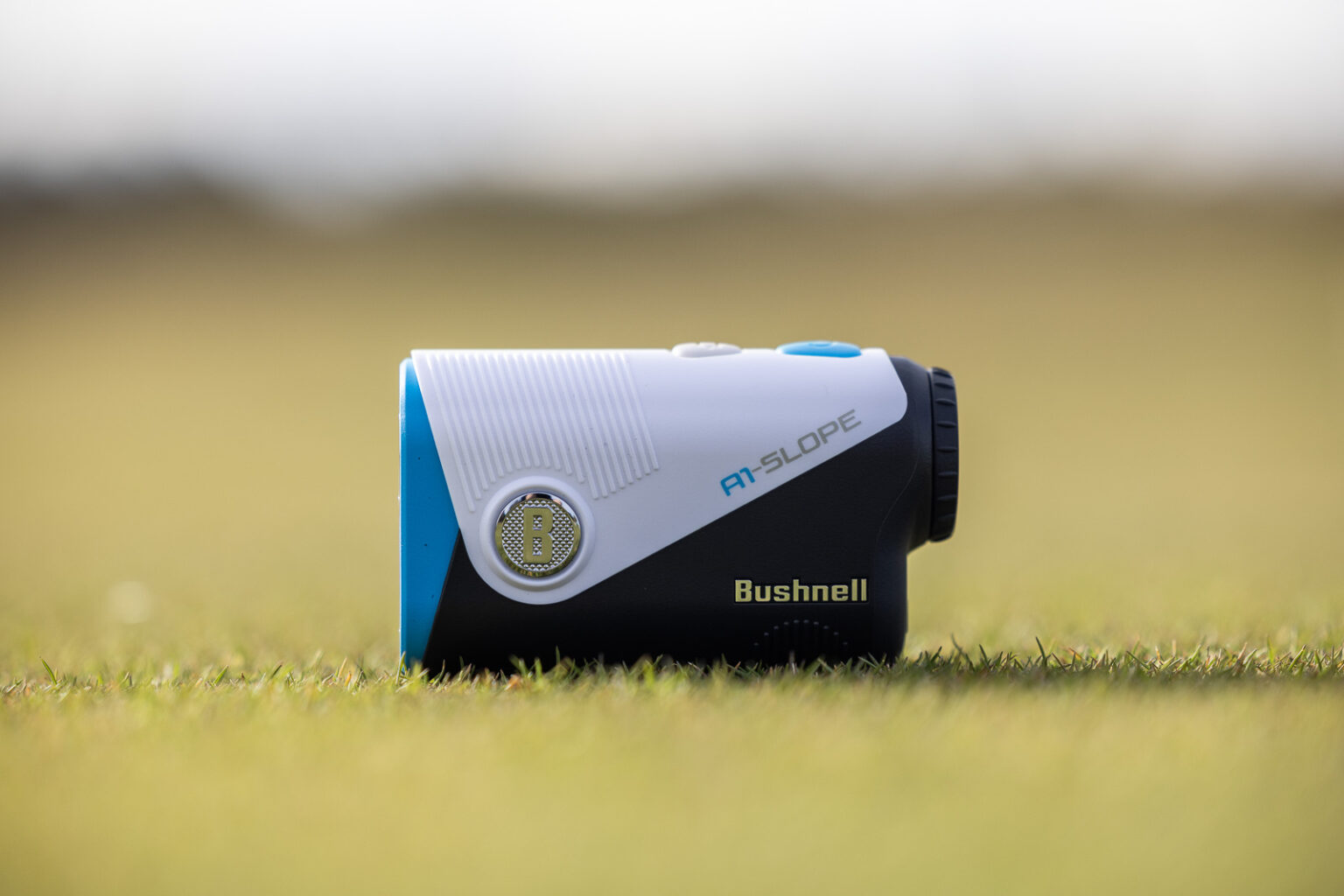
For years when it came to buying a rangefinder, there was really only one main brand people turned to: Bushnell.
They’ve been called the “King of Rangefinders” for years, for a reason. At one point, something like 98% of PGA Tour players used the brand.
But “just buy a Bushnell” isn’t really useful advice anymore, because Bushnell doesn’t make one rangefinder. They make four, and they’re genuinely different devices built for different golfers and different budgets.
Not to mention the fact that there are dozens of other brands that have come up in the past decade, who are creating some very good products as well.
I’ve tested every current model in the lineup, multiple rounds with each, so I wanted to put together one place that breaks down exactly how they compare, what each one costs, and who should actually buy which one. And since I don’t think Bushnell is automatically the right call for everyone anymore, I’m also going to give you a solid alternative for each model, in case one of those makes more sense for your game.
So consider this your “everything you need to know about Bushnell golf rangefinders” post.
Let’s get into it.
Understanding the Current Bushnell Lineup
Before we break down each device, here’s the quick version of how Bushnell has organized things in 2026. There are four current models, and they span an MSRP roughly $300 to $600:
- A1-Slope ($299.99): The smallest, most affordable, and most pocketable Bushnell. No frills, just accurate slope-adjusted yardages in a compact package.
- Tour V7 Shift ($399.99): The best all-around Bushnell for most golfers. New dual-color display, rock-solid flag lock, and Link-Enabled club recommendations at a mid-range price.
- Tour Hybrid ($499.99): A laser rangefinder with GPS built directly into the unit. No app, no phone pairing, just front/middle/back yardages right in the viewfinder alongside your laser number.
- Pro X3+ Link ($599): The flagship. Best optics in the lineup, wind and elements compensation, and the deepest version of the Link club-recommendation tech.
You’ll notice I skipped the Tour V6 and Tour V6 Shift. They’re still floating around and still perfectly good rangefinders, but they’re the outgoing generation now that the V7 Shift is out. If you find one on a serious discount, it’s worth considering, but I’m focusing this post on the four current models.
Also keep in mind that you can use the Bushnell Golf discount code BREAKING10 to save 10% on any of these, so the pricing is actually slightly less than the MSRP may suggest. You’ll also see sales 3-4 times per year that drop prices anywhere from $30-100 depending on which rangefinder you’re looking at, so keep an eye on that.
Now let’s go through each one.
Bushnell A1-Slope: The Compact, Budget-Friendly Option
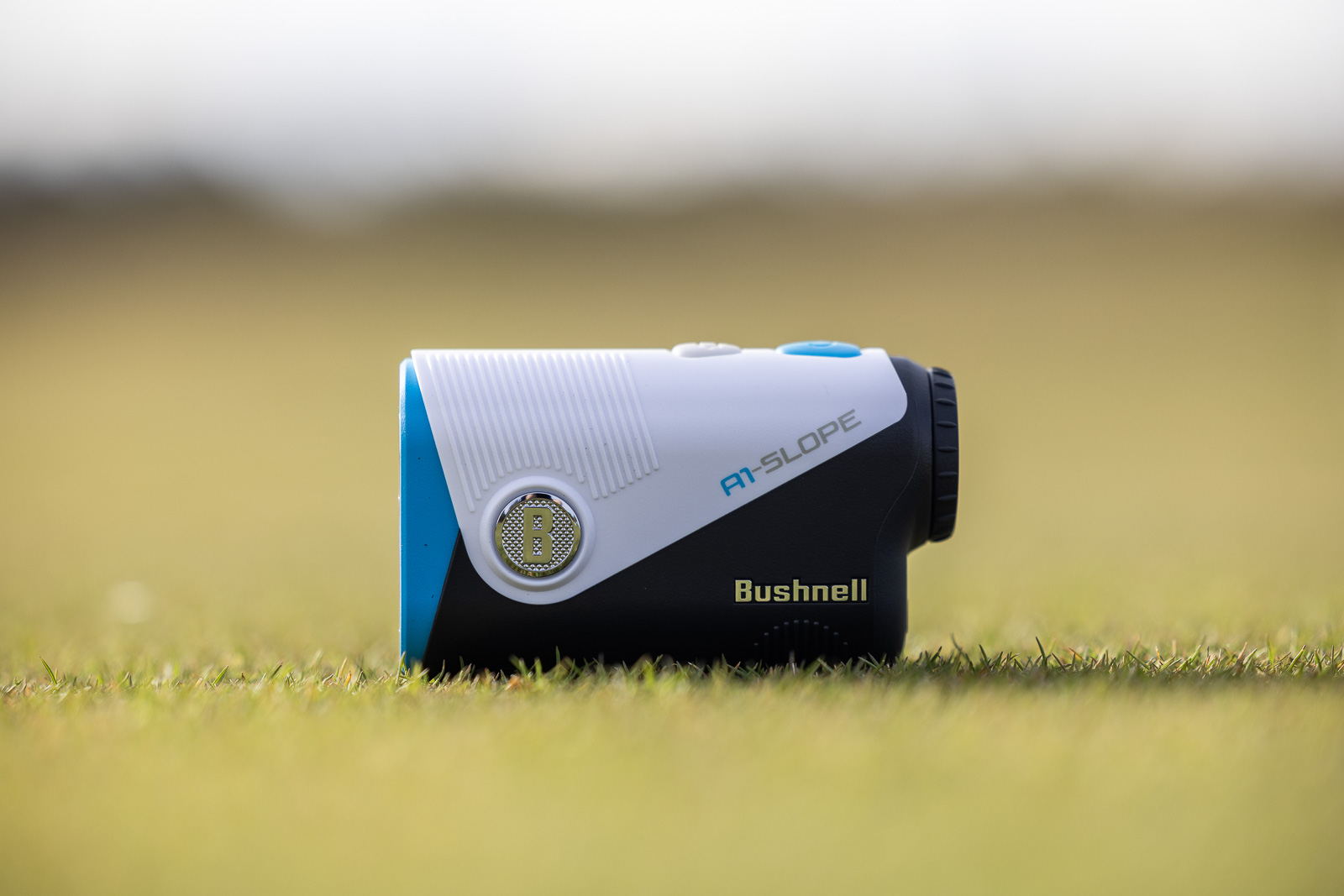
The A1-Slope is Bushnell’s first real swing at the compact rangefinder category, and it introduced a handful of firsts for the brand: a rechargeable USB-C battery instead of the usual CR2, a removable magnetic “skin” so you can go slimmer in your pocket, and it’s the cheapest slope-enabled rangefinder Bushnell has ever sold.
What you get is exactly what you’d expect from Bushnell in a smaller shell: clean 6x optics, fast and confident PinSeeker JOLT flag lock, and reliable slope-adjusted yardages.
What you don’t get is anything flashy. No OLED display, no GPS, no wind compensation. It’s a “point, shoot, done” rangefinder that happens to fit in your pocket.
The tradeoff for going compact is stability and field of view. It’s noticeably less substantial in the hand than the Tour V7 or Pro X3 Link, and the buttons are a bit more recessed, which matters if you’ve got bigger hands or you’re navigating it with a glove on.
- Retail Price: $299.99
- Target Price: $270
- Coupon: Use the Bushnell Golf discount code BREAKING10 to save 10%.
- My Rating: 8.4
- My Full Review: The Bushnell A1-Slope is Good. But is it Good Enough?
- Where to Buy: Buy from Bushnell Golf here.
Bushnell's A1-Slope is their first-ever compact rangefinder, offering slope-adjusted yardages, a magnetic cart mount, and USB-C charging, all for $300.
A Non-Bushnell Alternative: Voice Caddie TL1
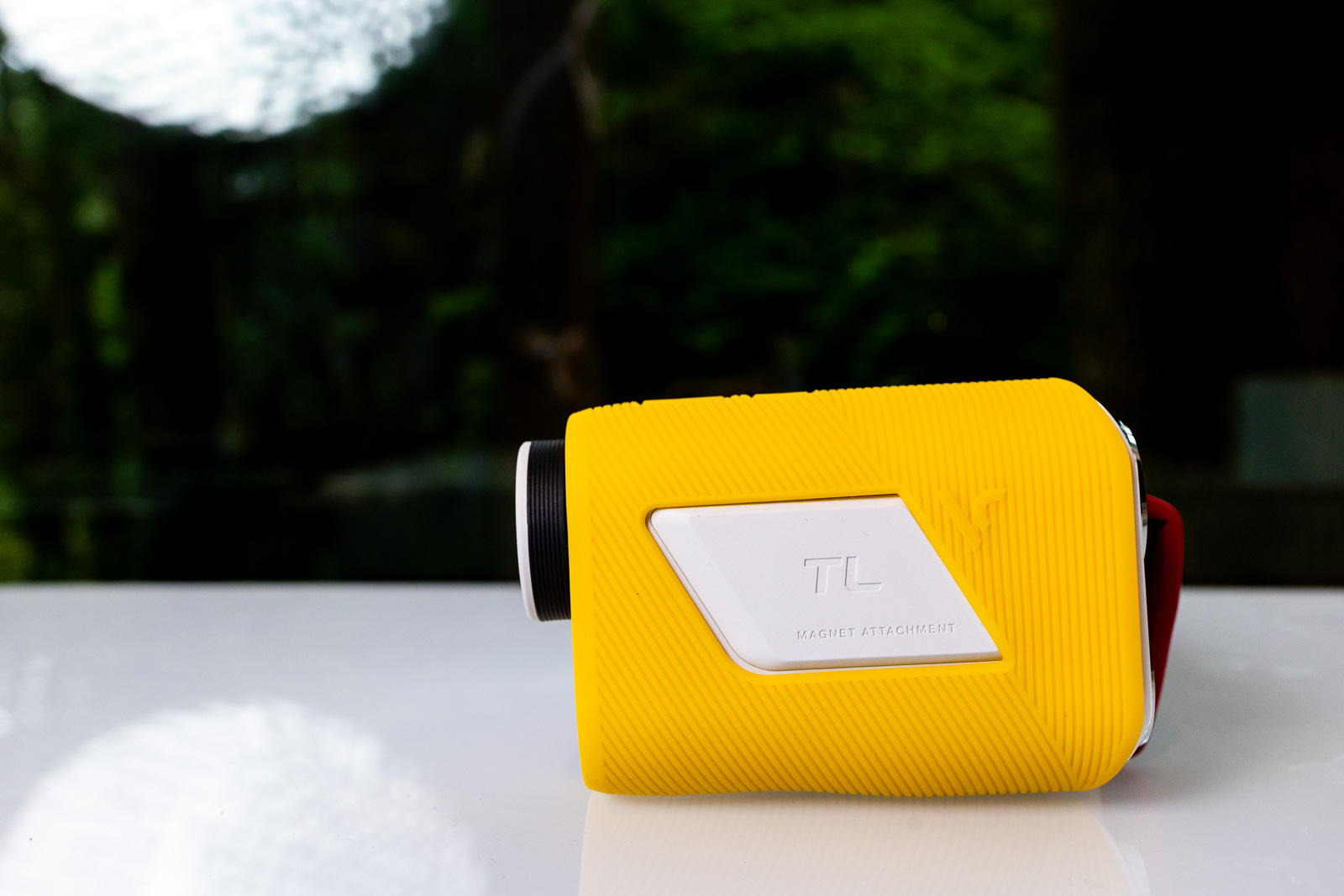
I’ll be honest with you here, because I already said as much in my A1-Slope review: at this price, I think most people are better served by the Voice Caddie TL1.
It originally retailed for $449, but Breaking Eighty readers can currently get it for $280, which is right in the A1-Slope’s neighborhood. For that money, you get a dual color OLED display (something the A1-Slope doesn’t have at all), a built-in magnet, and build quality that genuinely rivals Bushnell’s. It’s bigger than the A1-Slope, so if pocketability is your top priority, that’s the tradeoff. But dollar for dollar, I think the TL1 is the better value.
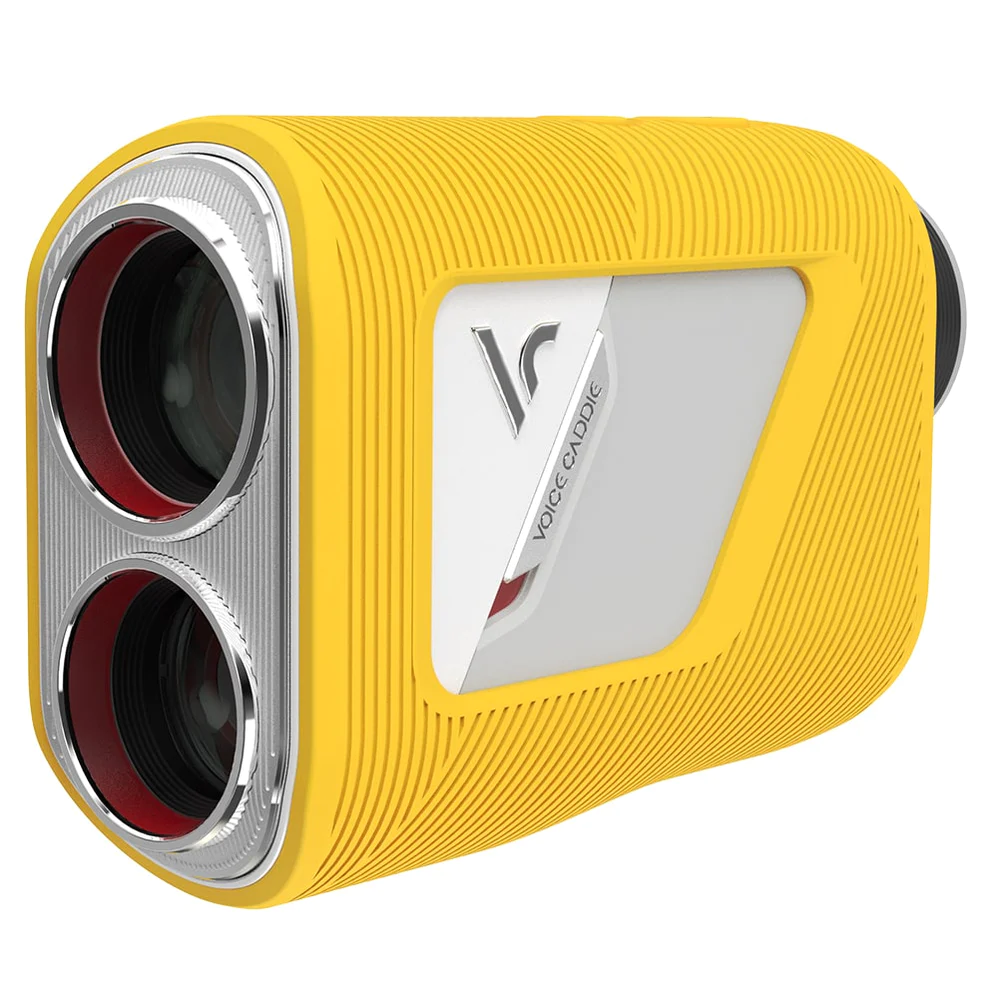
At this special Breaking Eighty reader price of $280, there's no other rangefinder that provides this level of quality at such an affordable price. Hands down the best option under $300. This is the one most people should buy.
Bushnell Tour V7 Shift: The Best Bushnell for Most Golfers
This is the one I’d point most golfers toward if they’ve decided they want a Bushnell specifically.
The Tour V7 Shift is the first Tour-series Bushnell with a dual-color OLED display: your actual distance shows in red, your slope-adjusted number in green, right underneath it. It’s the best display Bushnell has ever put in this price tier, and it’s genuinely one of the better displays I’ve seen in any rangefinder at any price.
But the real reason I’d point people here is flag lock. The Jolt vibration paired with a visual red ring confirmation means you know, with certainty, that you’ve locked onto the flag and not a tree behind it. That sounds like a small thing until you’ve used a rangefinder that gets it wrong, and then you realize it’s the entire point of owning one.
It also picked up Link-Enabled Technology this generation, which used to be exclusive to the $600 Pro X3+. Pair it with a Bushnell or Foresight launch monitor, and the V7 Shift will give you club recommendations based on your actual dispersion numbers, right in the viewfinder. The one gap: it doesn’t factor in wind, elevation, or humidity the way the Pro X3+ does. That’s still reserved for the flagship.
- Retail Price: $399.99
- Coupon: Use the Bushnell Golf discount code BREAKING10 to save 10%.
- Target Price: $360 with the code above.
- My Full Review: Bushnell Tour V7 Shift Rangefinder Review: The Baby Pro X3 Is Here
- Where to Buy: Buy from Bushnell Golf here.
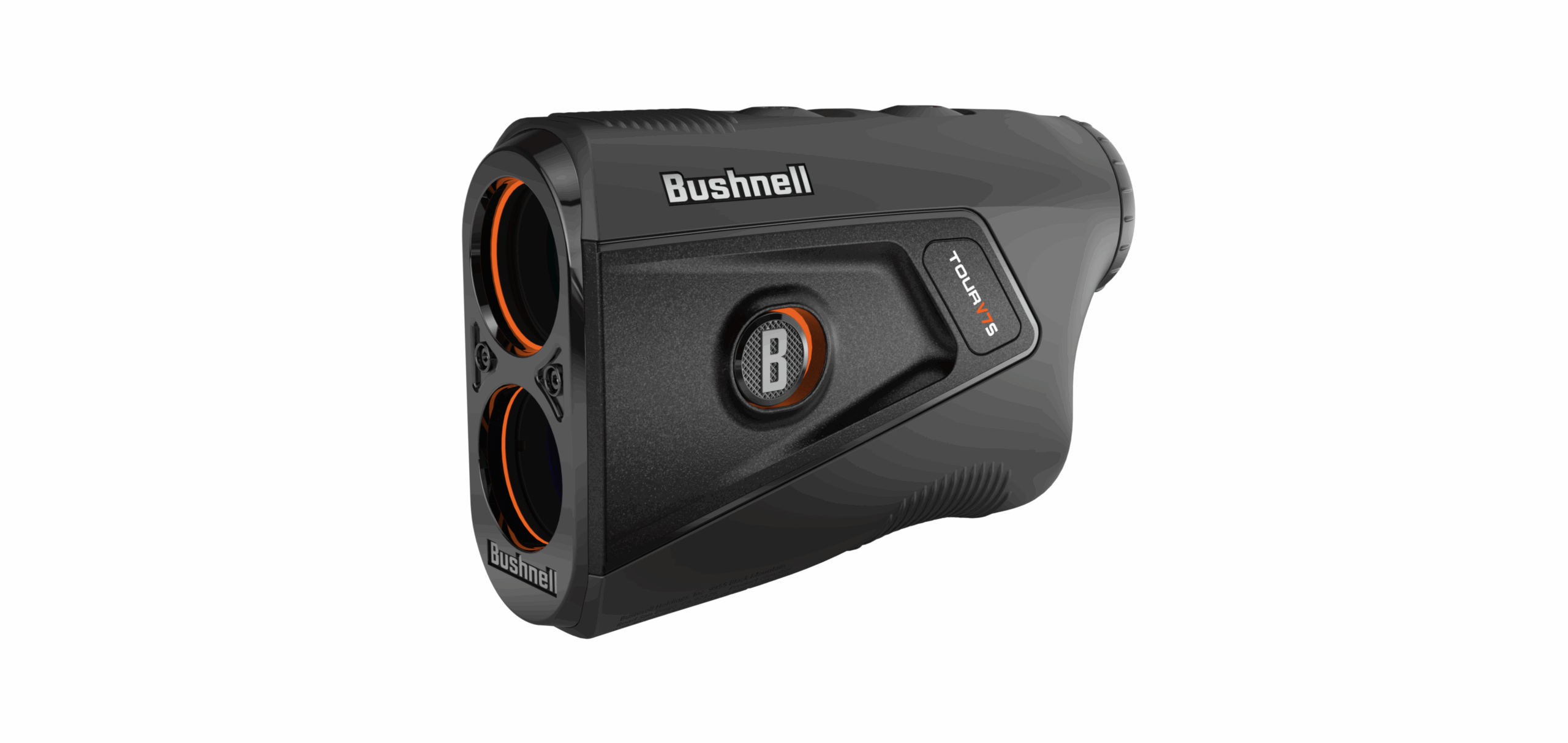
The V7 is Bushnell's first dual color OLED display on a rangefinder. This also has Link-Enabled technology, and is $200 less than the flagship X3. This makes it the most appealing Bushnell model for a lot of people.
Use code BREAKING10 to save 10%.
A Non-Bushnell Alternative: Blue Tees Captain Pro
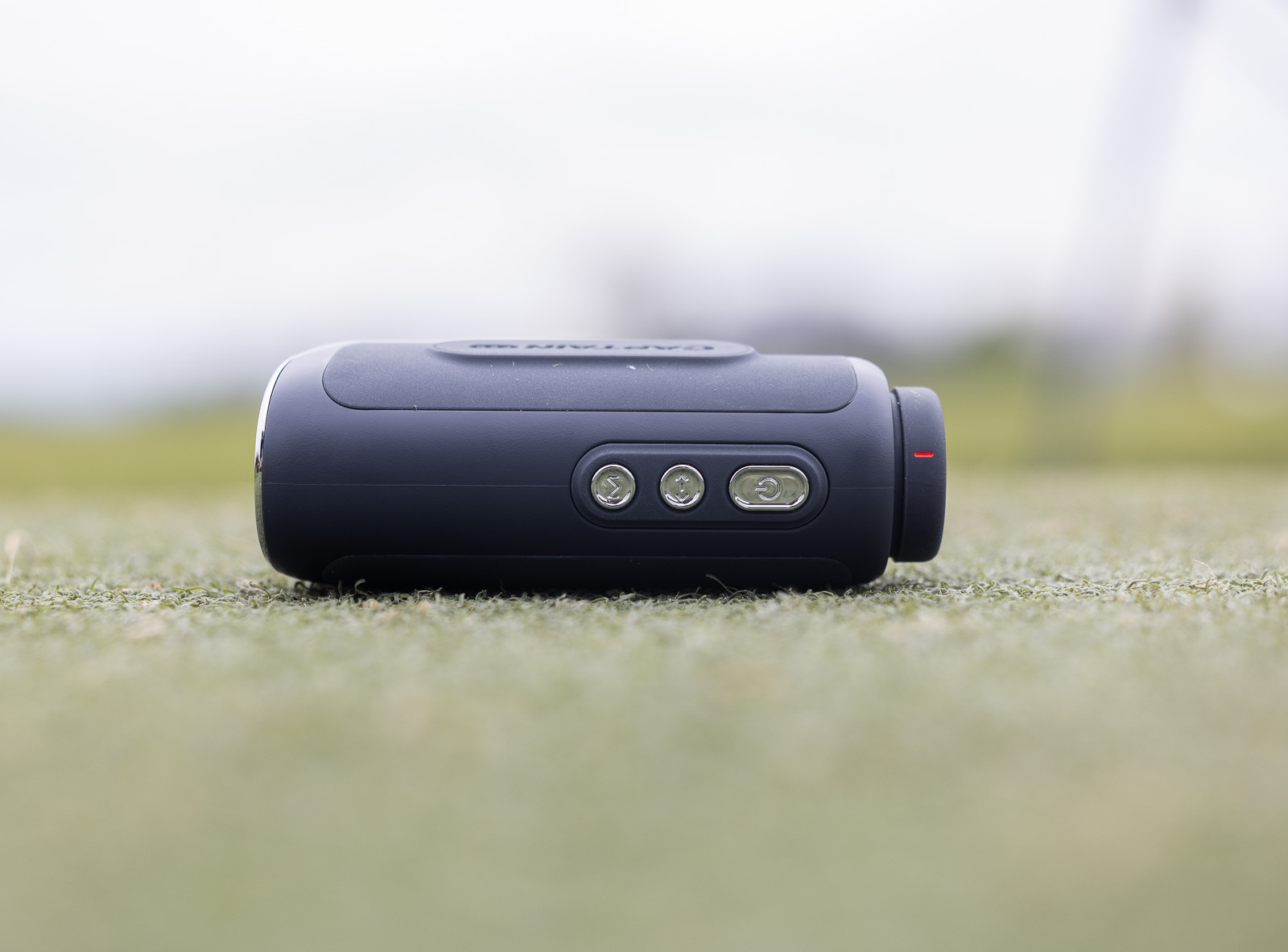
I did a full head-to-head on these two, and it’s genuinely close. The Blue Tees Captain Pro gives you more on paper for less money: 7x magnification instead of 6x, a dual-color OLED display of its own, full GPS smart features, and it retails for $299 (about $270 with our code). That’s $90 less than the V7 Shift after discounts.
The catch is the flag lock isn’t as trustworthy. The Captain Pro’s vibration will fire whether you’re actually on the flag or not, often enough that it matters, and the companion app still has some rough edges. If you want the most device for your money and don’t mind a maturing app, the Captain Pro is the pick. If flag lock confidence is non-negotiable, stick with the V7 Shift.
You can read my full Captain Pro vs. Tour V7 Shift comparison here if you want the deeper breakdown.
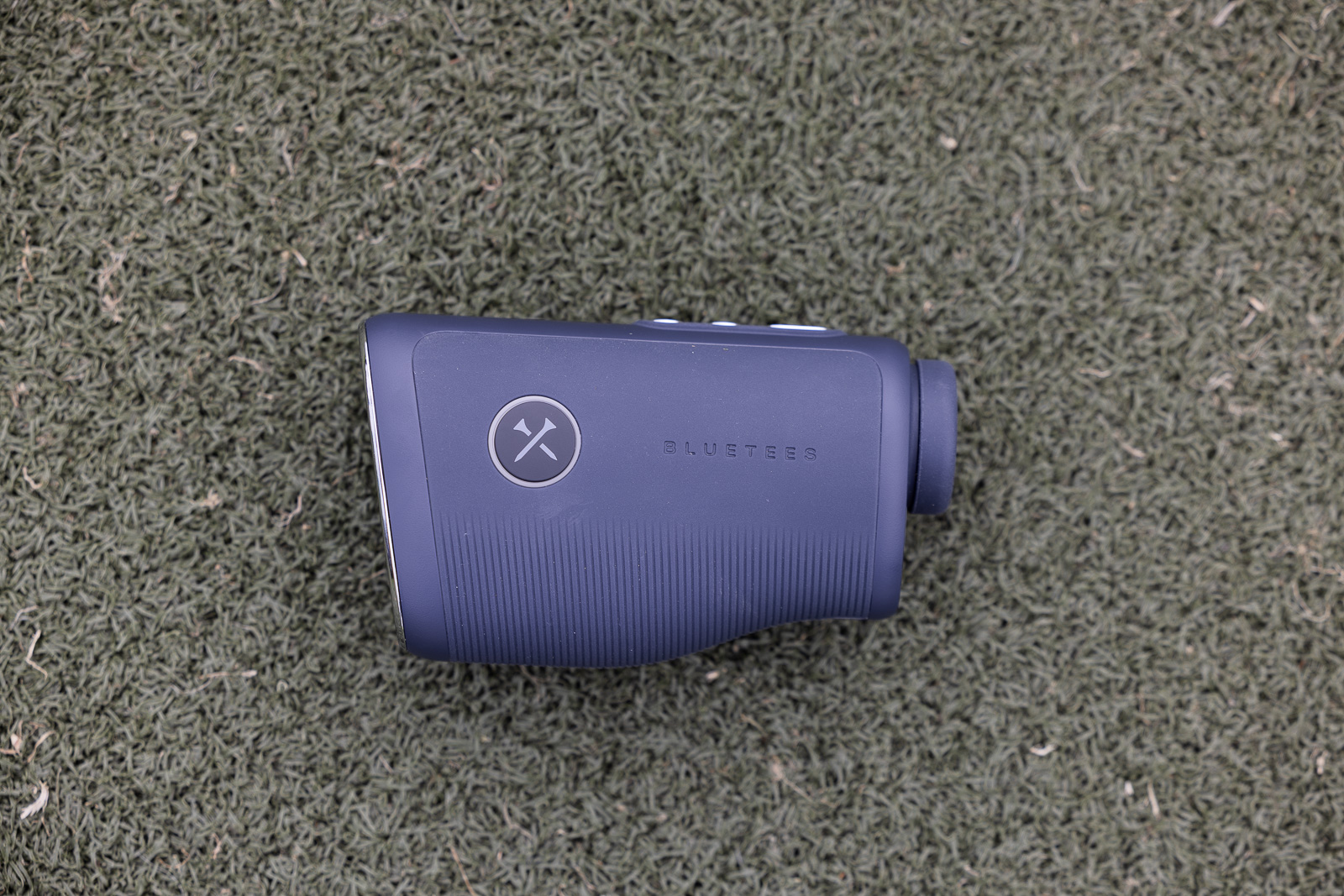
Despite having some app issues, this is one of my favorite rangefinders I've tested and represents an excellent value for what you get. Highly recommended.
Use code BREAKINGEIGHTY10 to save 10%.
Bushnell Tour Hybrid: Built-In GPS, No App Required
The Tour Hybrid solves a specific problem: it puts GPS yardages to the front, middle, and back of the green directly in the viewfinder, without needing to pair it to your phone or open an app. Shoot the flag with the laser, or just toggle to GPS mode and get your green numbers instantly. That’s it. It works exactly like you’d want it to.
It’s the only Bushnell with a GPS chip actually built into the unit, which is what separates it from the app-connected smart features on the V7 Shift and Pro X3+. If you don’t already own a GPS device and you want everything in one piece of hardware with zero setup, this is the most seamless way to get there.
The downside is price and, in my experience, eye relief. It takes a beat longer to get your eye lined up properly with the viewfinder compared to other Bushnells I’ve tested. Not a dealbreaker, but worth knowing.
- Retail Price: $499.99
- Coupon: Use the Bushnell Golf discount code BREAKING10 to save 10%.
- Target Price: $360. I’ve seen it go on sale to $399, and the code stacks on top of that. But I’d only expect this once or twice a year.
- My Full Review: Is the Bushnell Tour Hybrid the Best Smart Rangefinder for Most Golfers?
- Where to Buy: Buy from Bushnell Golf here.
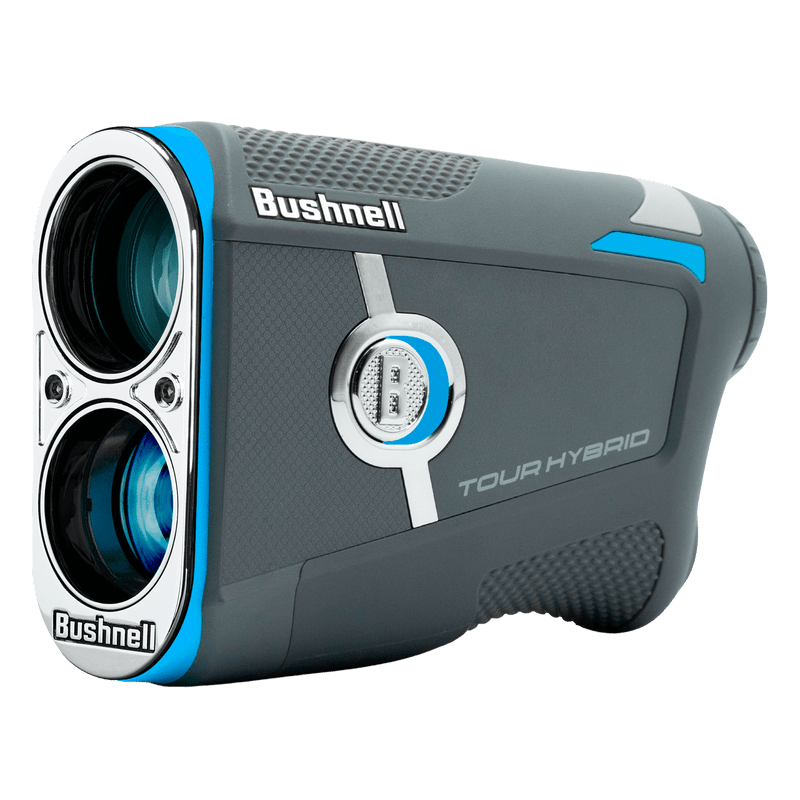
Finally, a rangefinder/GPS hybrid that doesn't require an app connection and that puts the front/middle/back numbers right in the viewfinder. If you don't already own a GPS device, this might be your perfect all-in-one solution.
Use code BREAKING10 to save 10% on anything from Bushnell Golf.
A Non-Bushnell Alternative: Precision Pro Titan Elite
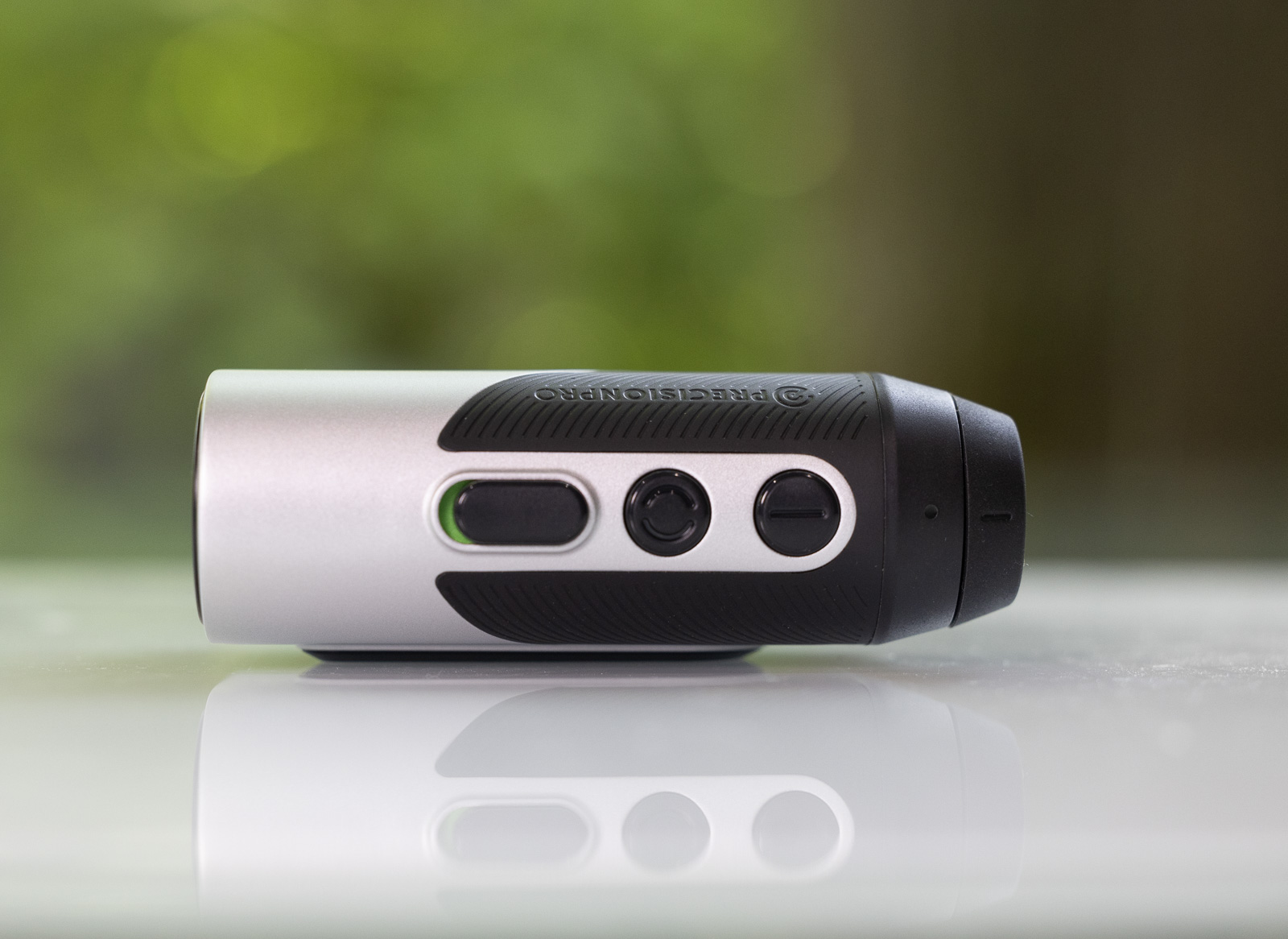
The Precision Pro Titan Elite takes a slightly different approach (it pairs with the Precision Pro app rather than having GPS baked directly into the hardware), but once it’s paired, you get the same front/center/back GPS numbers in the viewfinder. It retails for $399.99 and regularly goes on sale for $349.99, which puts it well below the Tour Hybrid even at the Hybrid’s best price.
The optics are genuinely excellent, and the aluminum shell feels every bit as premium as Bushnell’s build quality. If you’re fine with an app connection in exchange for saving $100-150, this is the one I’d point you to.
One more option worth a mention: if you already wear a Garmin golf watch, the Garmin Approach Z30 syncs GPS data straight to your wrist in real time, which is a genuinely cool combo if you’re already in that ecosystem. I wrote up a full Z30 vs. Tour Hybrid comparison here.
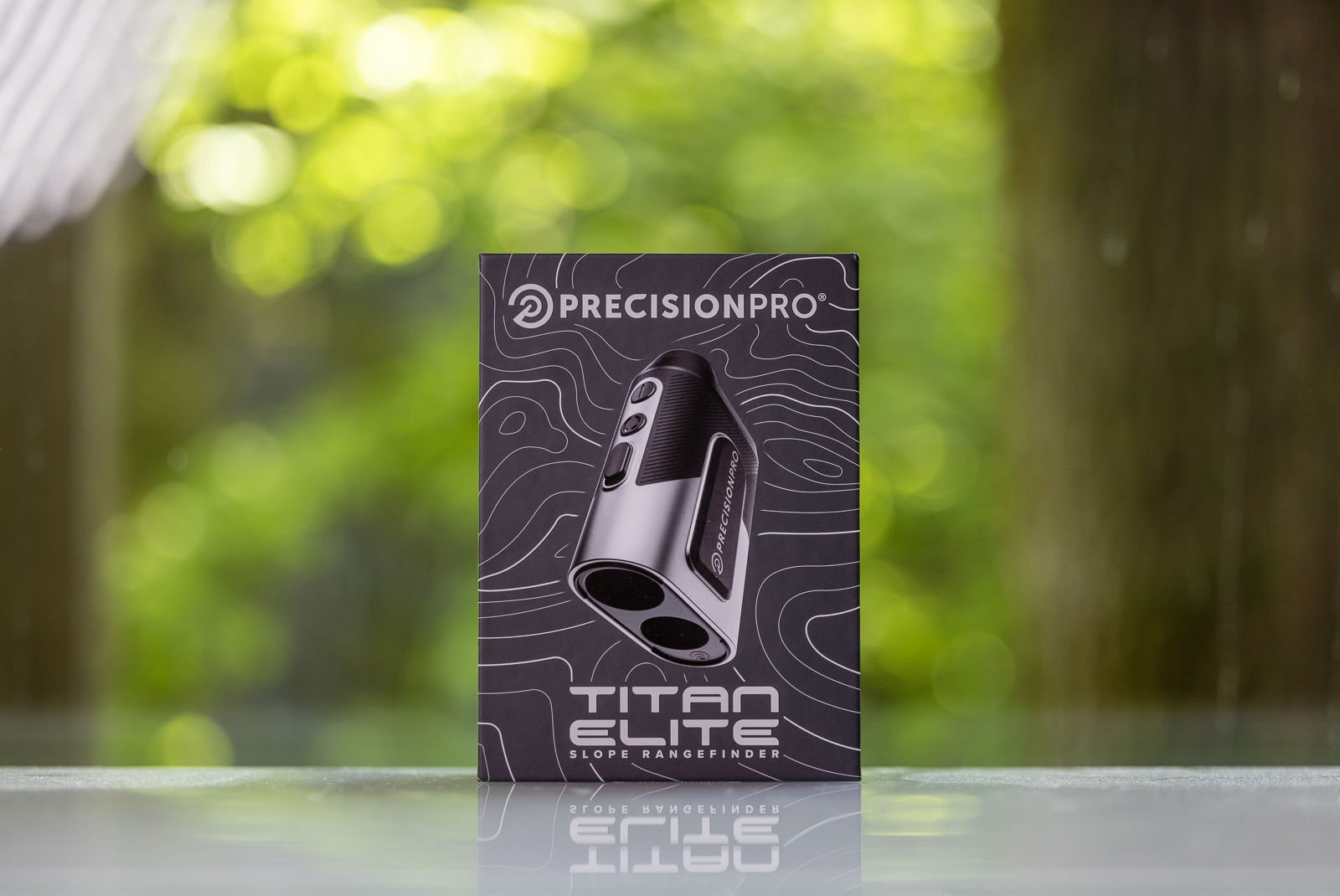
The Titan Elite improves upon other Precision Pro rangefinders in nearly every way. The GPS integration is well done, yet it's also a great high-end rangefinder in its own right. Highly recommended.
Bushnell Pro X3+ Link: Money is No Object
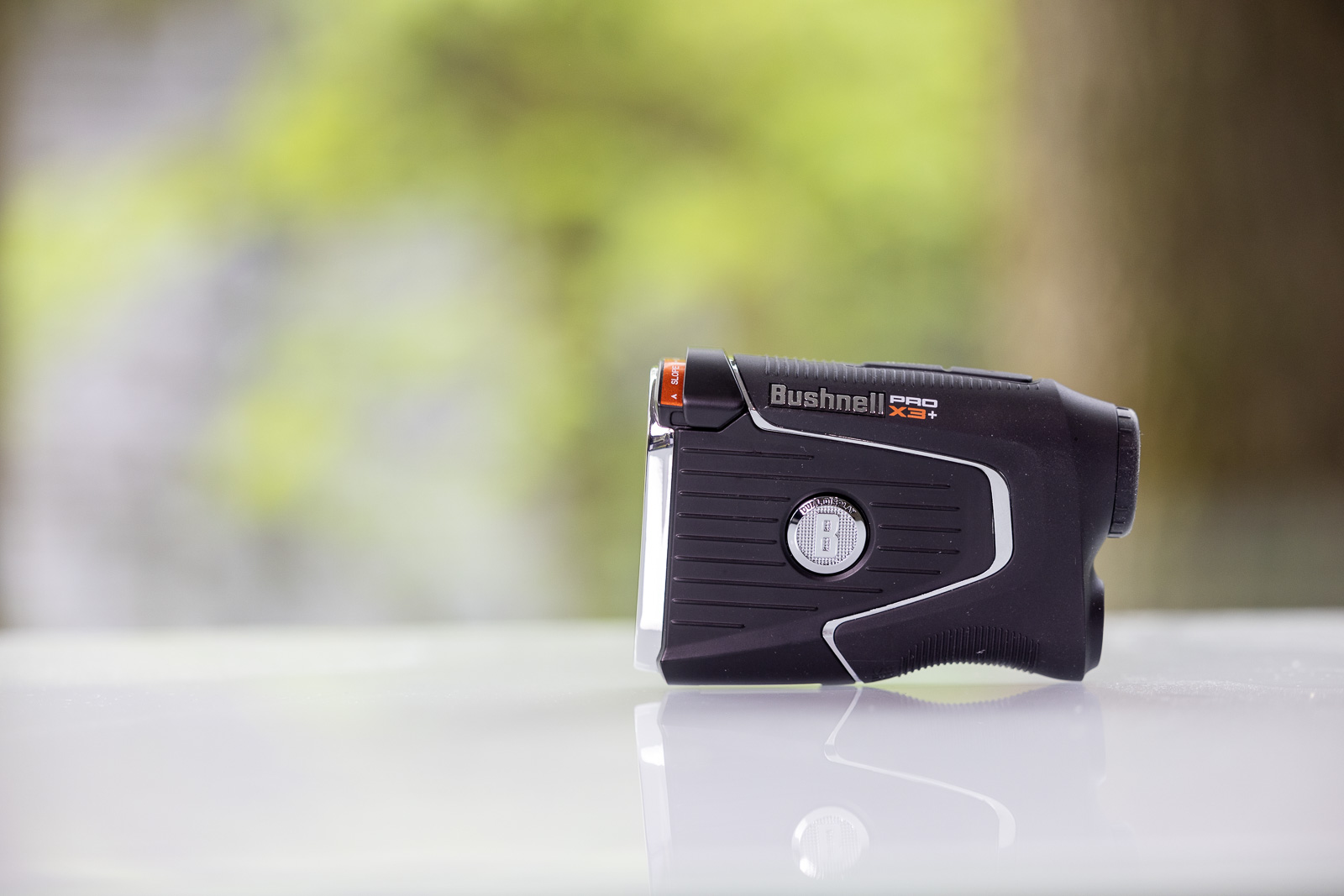
The Pro X3 Link is still the best rangefinder Bushnell makes, and one of the best rangefinders in golf, period. It’s the only Bushnell with Elements Compensation (wind, temperature, and elevation all factored into your yardage), the best optics in the lineup with 7x magnification, and the most complete version of Link-Enabled Technology, connecting your Foresight or Bushnell Launch Pro data to give you club recommendations that account for actual conditions, not just stock yardages.
Do you need to spend $599 for a rangefinder to play good golf? No. Almost nobody does. But if you have a Foresight or Bushnell launch monitor and you want the most complete on-course data package available, this is still the top of the mountain.
- Retail Price: $599
- Coupon: Use the Bushnell Golf discount code BREAKING10 to save 10%.
- Target Price: $539.99 with the code. I’ve seen it drop as low as $499 during sales a couple times a year.
- My Rating: 8.5
- My Full Review: Bushnell Pro X3+ Review
- Where to Buy: Buy from Bushnell Golf here.
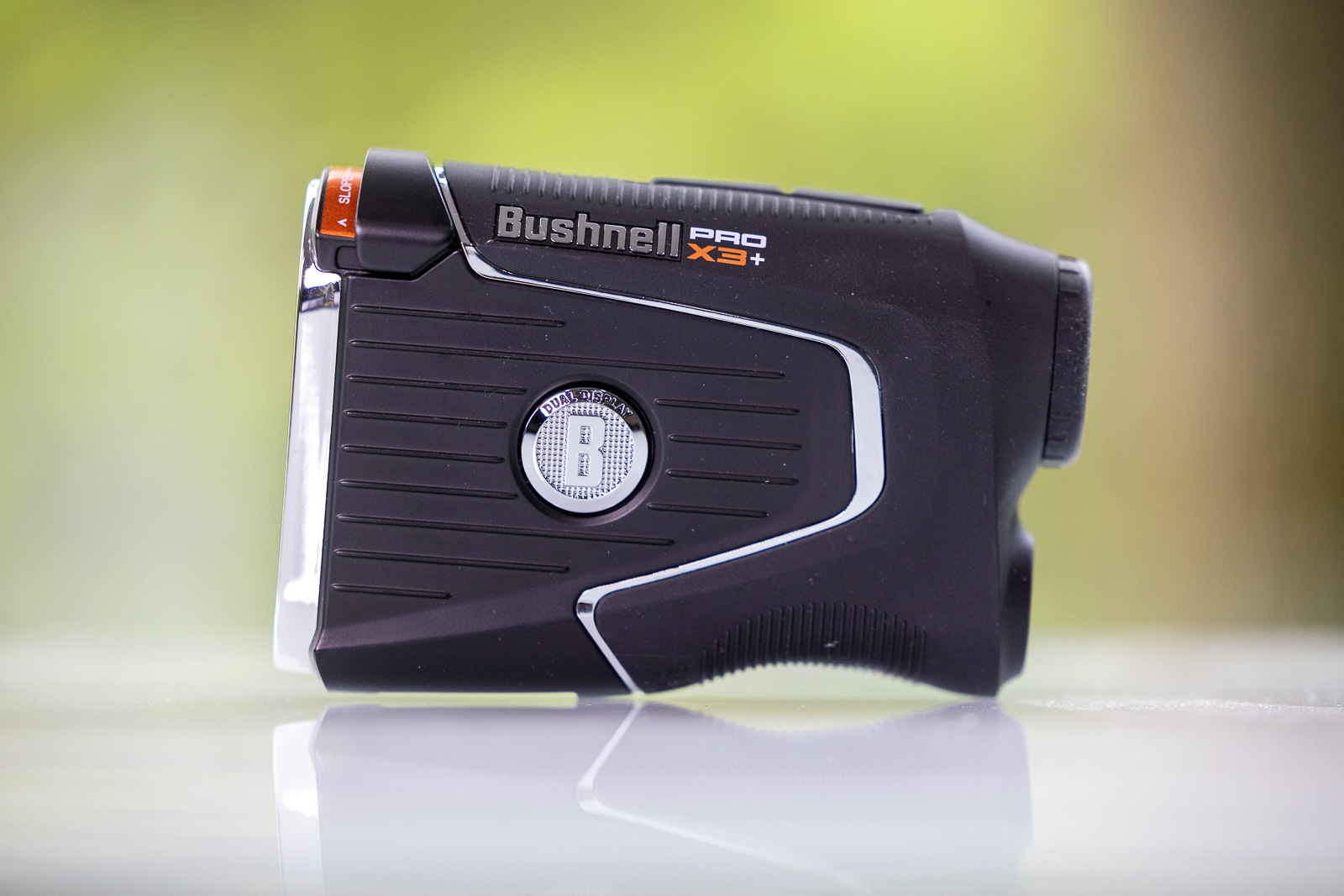
Looking for the best of the best, and price isn't an issue? The Pro X3 series from Bushnell is still top of the heap. This is especially true if you have a Foresight or Bushnell launch monitor.
Use code BREAKING10 to save 10% on anything from Bushnell Golf.
A Non-Bushnell Alternative: Mileseey GenePro G1
If you want a “does everything” rangefinder with some extra features, the Mileseey GenePro G1 is worth a hard look. I call it the kitchen sink rangefinder because, aside from a magnet, it has just about every feature you could ask for: built-in triangulation for cart-path-only rounds, a responsive onboard screen for GPS yardages and scoring, and genuinely accurate, fast performance.
It retails for $499.99, and the code BREAKINGEIGHTY takes another 10% off, making this about $100 less in the real world than typical pricing for a Pro X3. What you’re giving up is the Bushnell name, the Elements wind compensation, and that top-tier 7x glass. For most golfers, that’s an easy trade. If you specifically need the wind/elevation data or you’re deeply invested in the Foresight ecosystem, the Pro X3+ Link still earns its price.
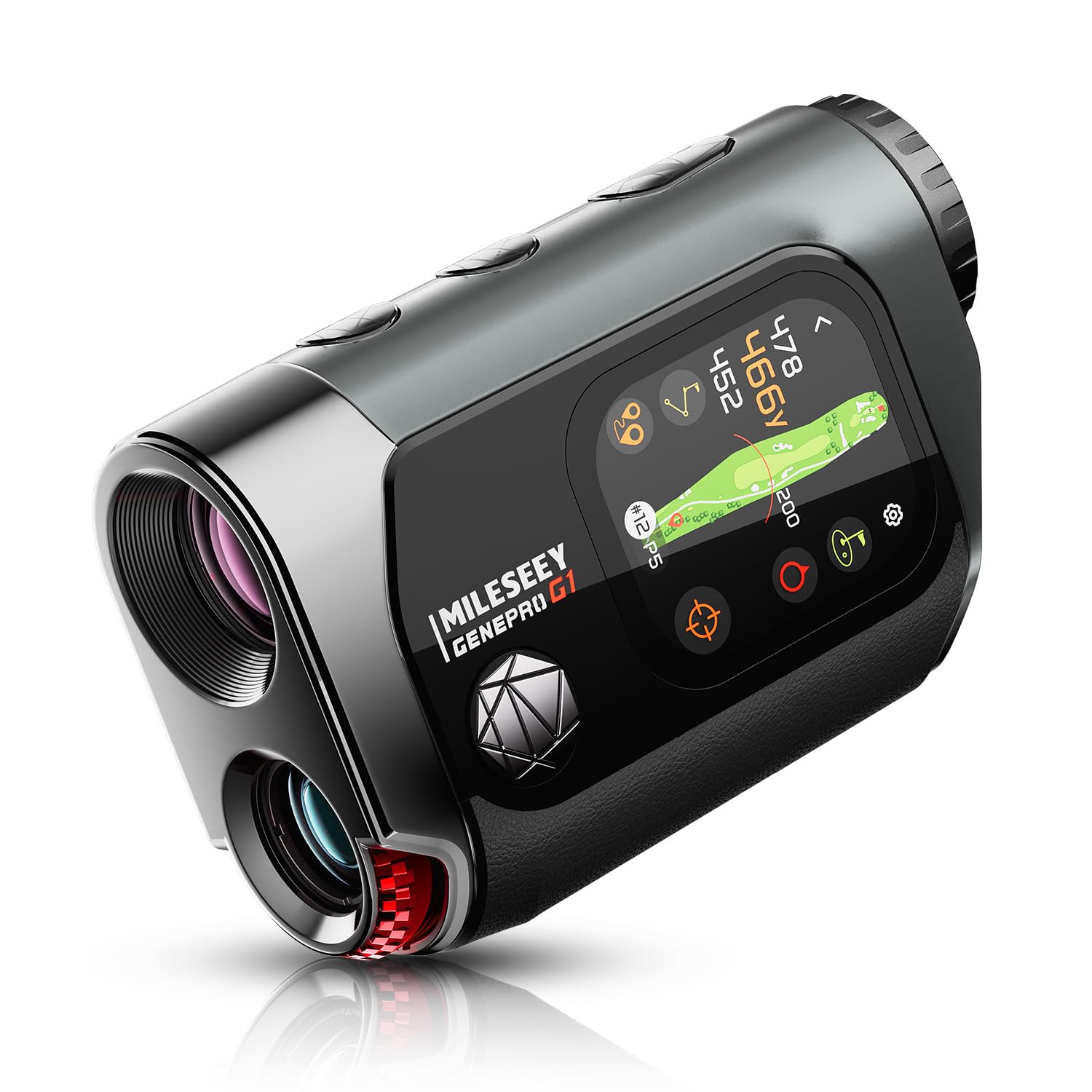
The Mileseey GenePro G1 is what I'm calling the Kitchen Sink Rangefinder, because it has just about everything you could want.
Use code BREAKINGEIGHTY to save 10%.
Which Bushnell Should You Actually Buy?
Here’s how I’d sort it out, given everything above:
If you want the smallest, most affordable Bushnell and don’t care about extra features, get the A1-Slope. Just know the Voice Caddie TL1 is a very real alternative at a similar price with a better display. Or if you really want something compact, consider the Voice Caddie Laser Fit.
If you just want the best all-around Bushnell rangefinder and don’t have a strong reason to go bigger or smaller, get the Tour V7 Shift. This is my default recommendation inside the Bushnell lineup for most golfers.
If you don’t already own a GPS device and you want laser and GPS yardages in one piece of hardware with zero app setup, get the Tour Hybrid.
And if budget genuinely isn’t a factor and you own (or plan to own) a Foresight or Bushnell launch monitor, get the Pro X3+ Link. It’s still the best of the best.
Is a Bushnell Golf Rangefinder Still the Best Option for You?
Here’s my honest, no-agenda take, since I don’t take sponsorships and Bushnell doesn’t get a pass just for being Bushnell.
Bushnell is still the most reputable name in this category, and that reputation is earned. I’ve now tested essentially every rangefinder on the market, and I can count on one hand the number of times a Bushnell has actually disappointed me on build quality or reliability. Their optics are consistently excellent, their flag lock technology (Jolt and PinSeeker) is still among the best in the business, and if you buy one, you’re extremely unlikely to regret the purchase from a “does this thing work” standpoint.
But that’s a different question than “is this the best value for my money,” and a few years ago, that answer was a lot more clear-cut in Bushnell’s favor. It isn’t anymore.
Brands like Voice Caddie, Blue Tees, Precision Pro, and Mileseey have all caught up on hardware in ways that would’ve been unthinkable five years ago, and in several cases, they’re doing it for noticeably less money. The Voice Caddie TL1 outguns the A1-Slope on display quality for less. The Blue Tees Captain Pro gives you more raw features than the Tour V7 Shift for $90 less, even if it doesn’t quite match the flag lock confidence. The Mileseey GenePro G1 packs nearly flagship-level features into a $499 package.
That’s not a knock on Bushnell so much as it’s a sign of how good this entire category has gotten.
So here’s where I’ve landed: if you value the Bushnell name, their build quality, and their track record, and you’re willing to pay a bit of a premium for that peace of mind, you will not be disappointed with any of the four models above. That premium is real, but so is the trust it buys you.
But if you’re purely optimizing for features and dollars, it’s worth seriously considering one of the alternatives I mentioned above before you default to Bushnell just because it’s the name you already know. I don’t have a horse in this race either way. I just want you to end up with the rangefinder that’s actually right for you.
Still not sure which one fits your game? I put together a quick 30-second rangefinder quiz that’ll point you toward my best recommendation based on your budget and what you actually need out on the course.
You can also take a look at our up-to-date full list of the best golf rangefinders for every budget.
Recent Updates:
July 28th, 2026: Complete rewrite for 2026. All of the current 2026 Bushnell rangefinders covered. Update links and pricing. Updated comparisons to most relevant compeititve rangefinders.
May 1st, 2023: Original publish date
This page contains affiliate links. This means that if you click a link and buy one of the products on this page, we may receive a commission (at no extra cost to you!) This doesn’t affect our opinions or our reviews. Everything we do is to benefit you as the reader, so all of our reviews are as honest and unbiased as possible.
