

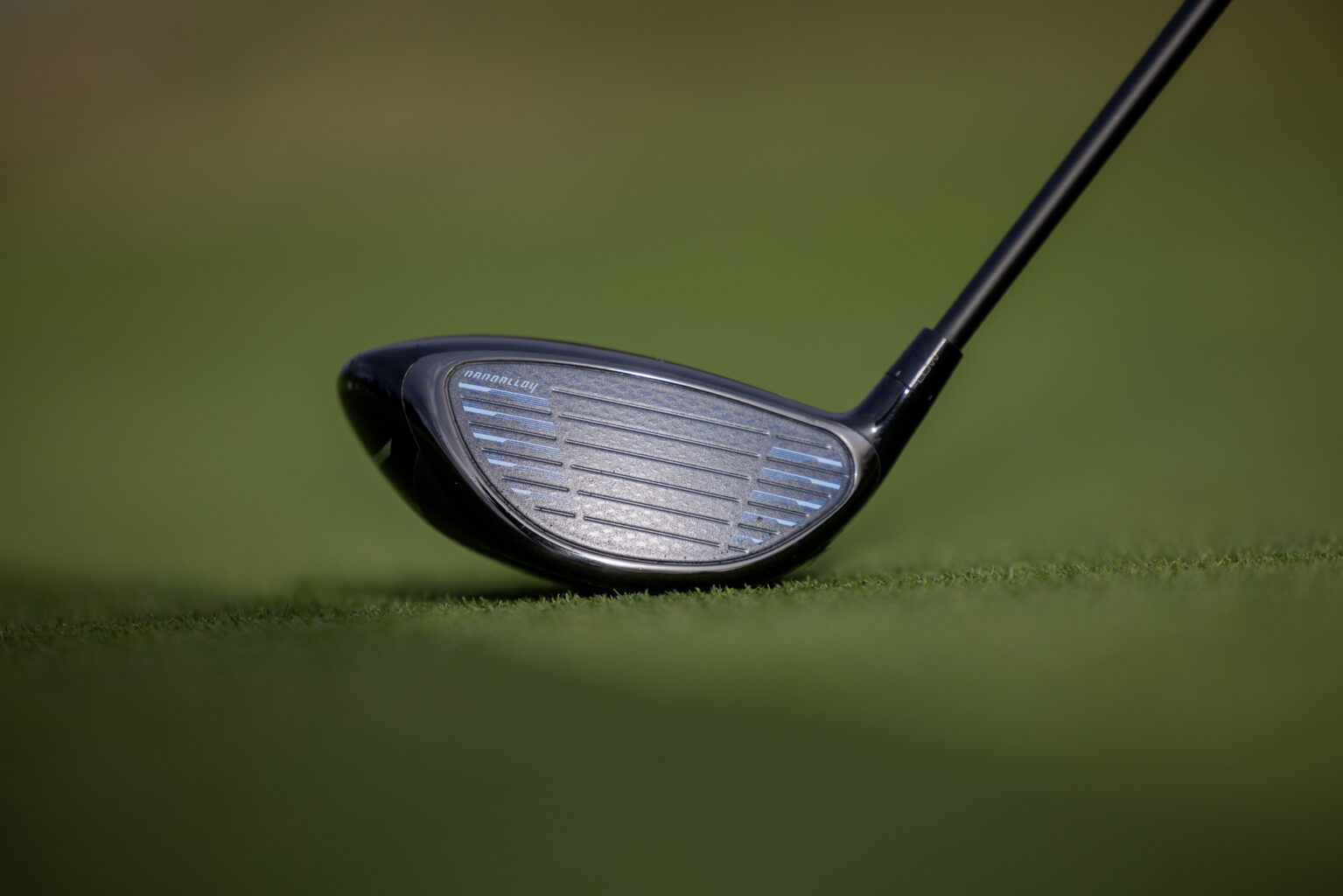
Mizuno just dropped something interesting.
The JPX ONE family of metalwoods represents what they’re calling a landmark moment—the culmination of every breakthrough since their first metalwood back in 1982. At the center of this launch are two driver models introducing genuinely innovative material science to the category.
The JPX ONE Driver and JPX ONE SELECT are the world’s first drivers to feature NANOALLOY™ face technology, developed in collaboration with materials specialists Toray. This represents a significant departure from traditional titanium-only construction.
And the technology promises to change how driver faces store and release energy at impact.
But what’s it like in person? Let’s just say it’s a far cry from the last Mizuno driver I reviewed.
First Impressions: Stunning Looks, Intriguing Performance
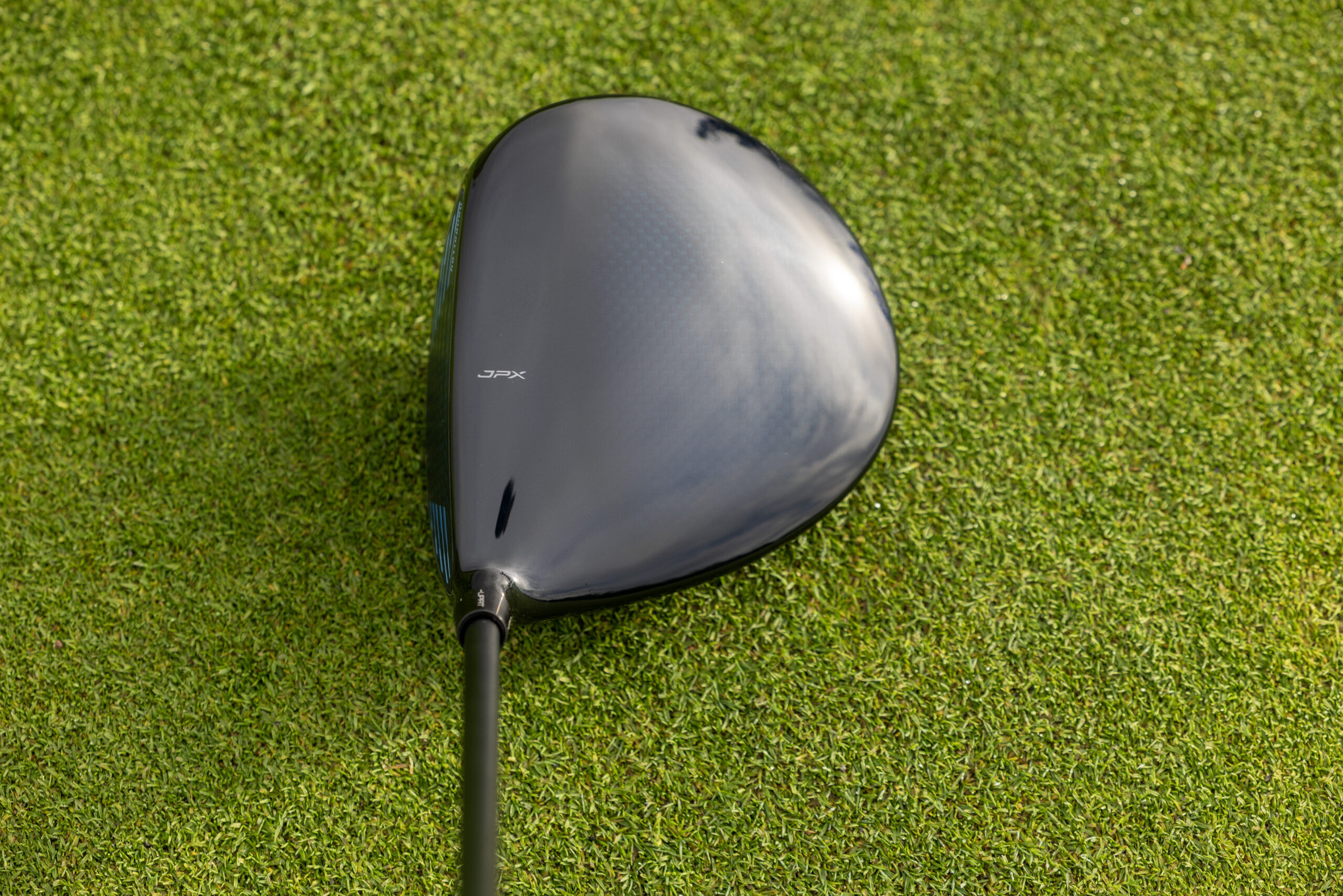
Let me start with this: the JPX ONE is legitimately one of the most beautiful drivers I’ve seen.
There’s a subtle blue carbon fiber pattern on the crown that catches the light perfectly. The face features a blue tint that feels reminiscent of the TaylorMade Qi10 driver. The aesthetics alone are worth talking about, as Mizuno absolutely nailed the visual design here.
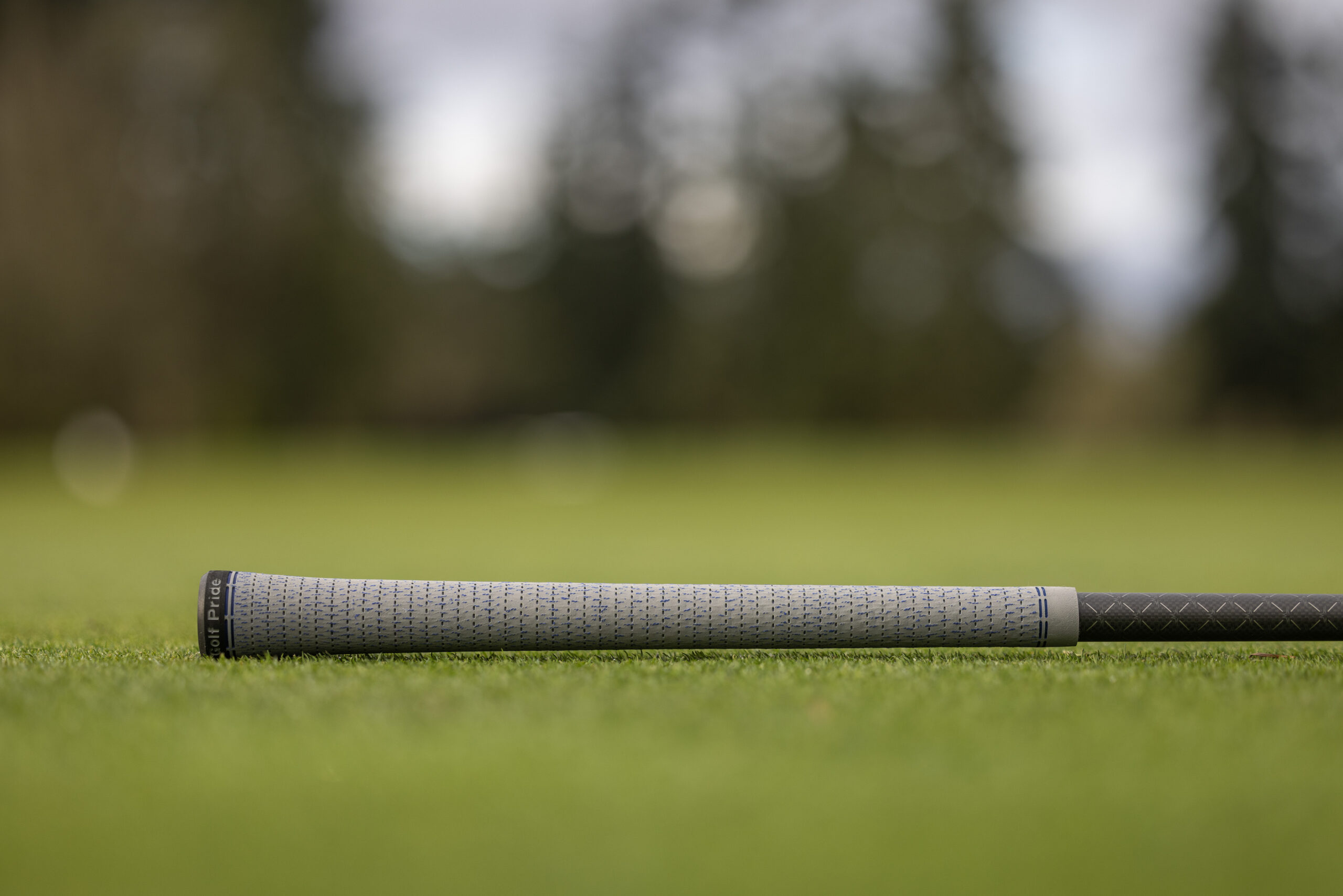
The stock Tour Velvet grip feels great in the hand too, adding to the overall premium feel of the club.
In my initial testing, I found the driver to be relatively forgiving with decent stability on off-center hits. However, I didn’t find it to provide quite as much distance as some other drivers I’ve tested, such as the Callaway Elyte.
The sound is also a little pingy and harsh for my taste, as opposed to drivers with a lower pitch and more muted acoustics.
Overall, however, I liked it and I’d like to spend more time with it to see how all of this innovative tech actually translates on the course. But in early testing, I didn’t find it to be quite as long as the Callaway or quite as forgiving as some 10K models like the Tour Edge Exotics E725 from last year.
That said, the tech story here is legitimately interesting.
The NANOALLOY™ Innovation
So what exactly is NANOALLOY?
It utilizes microscopic polymer dispersion to create a face that dynamically alters its elasticity under impact. The material was originally popular in collegiate women’s softball bats for its ability to increase ball velocity, and Mizuno’s engineers adapted it for golf.
According to David Llewellyn, Mizuno USA’s director of research and development, the material has unique properties that make it ideal for driver faces.
At rest, it’s a firm engineering plastic. But when stressed or impacted, it softens.
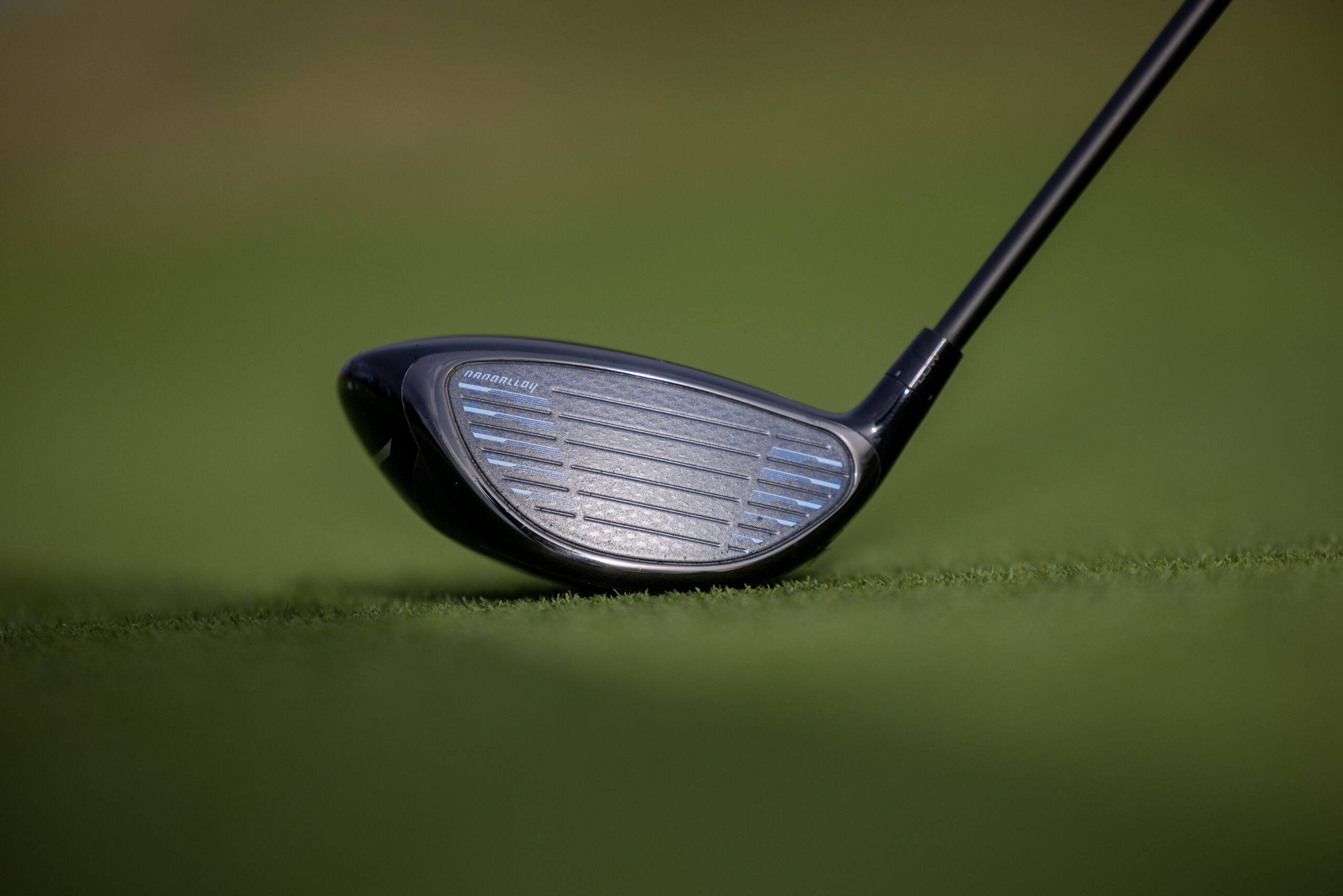
This non-linear behavior allows Mizuno to be more aggressive with multi-thickness face technology because of how it distributes stresses at impact.
The practical result? NANOALLOY allows the titanium face to get thinner, up to 10 percent thinner than previous models, while maintaining structural integrity.
The coating enables the face to deflect not only where the ball strikes but also in the surrounding area, storing more of the ball’s energy for increased potential speed. The thinnest parts of the titanium face measure just 1.8mm on the JPX ONE (1.9mm on the JPX ONE SELECT).
That’s thinner than the edge of a credit card.
Llewellyn also notes that the coating affects how the golf ball behaves: “The face is actually taking some of the deformation from the ball, so the ball is not compressing as much. Anytime you compress a ball, as it expands, there’s an energy loss.”
Expanded Sweet Spot
This breakthrough pairs with a newly engineered CORTECH Face that’s up to 0.35mm thinner than previous generations.
The result is an expansion of the CORAREA (high-speed rebound zone) by over 15% compared to the ST-MAX 230. Mizuno’s variable thickness pattern was specifically designed to work in concert with NANOALLOY to optimize how the expanded area of the face deflects.
In Mizuno’s robotic testing, the JPX ONE outperformed leading competitors for both ball speed and carry distance, producing faster, longer, and more consistent results from every impact location.
Two Distinct Models
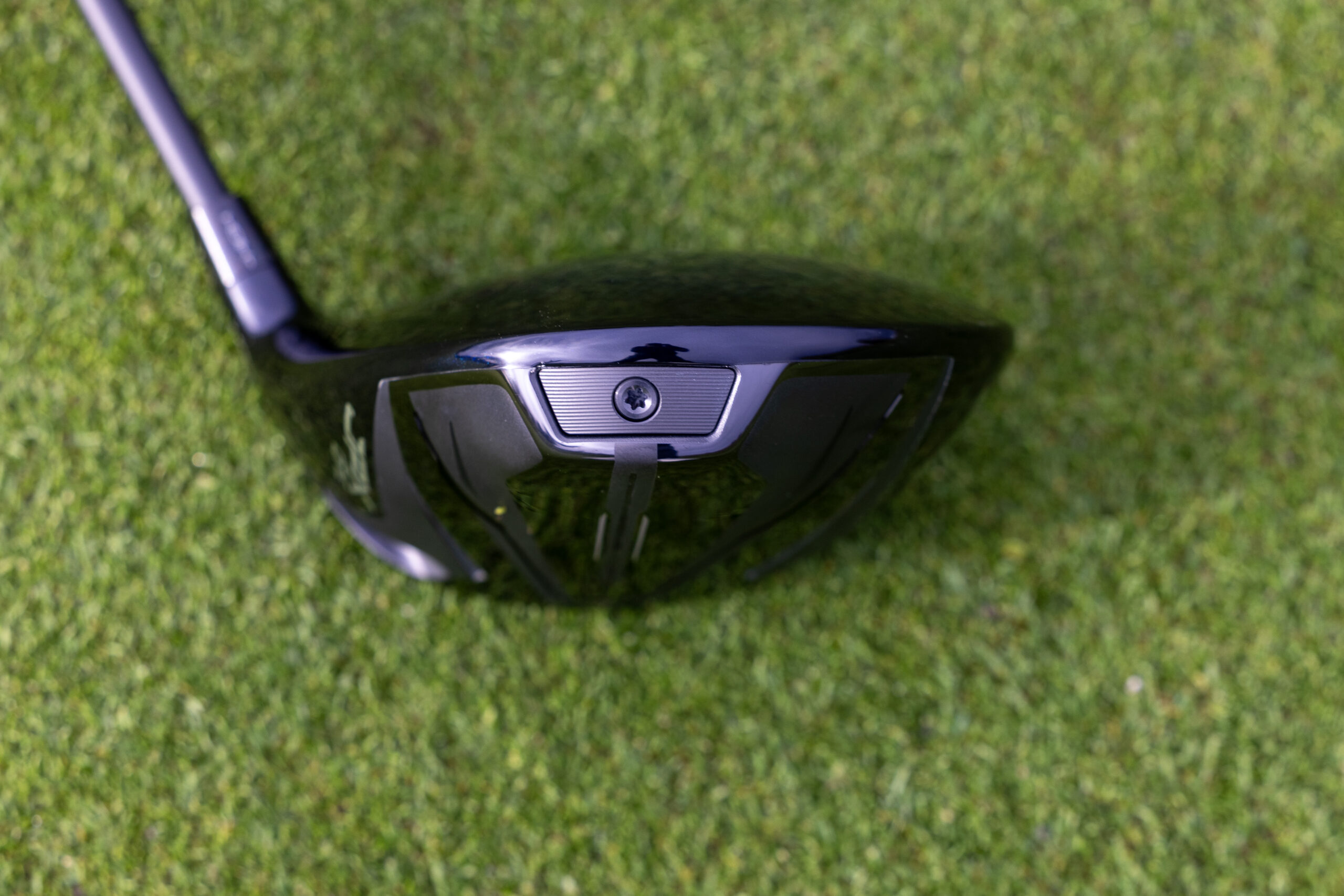
Mizuno is offering two versions of the JPX ONE driver.
JPX ONE: This is the more forgiving, game-improvement oriented model in the lineup. It features a slightly larger footprint for higher stability and a straighter ball flight, with a built-in draw bias that makes it easier for average players to square the face at impact.
For what it’s worth, I definitely noticed this draw bias while hitting. And, I must say, it was appreciated for a 10 handicap like me.
The larger footprint offers more stability on off-center hits and promotes a higher launch angle.
JPX ONE SELECT: Designed for faster-swinging ball-strikers, the SELECT offers a more compact, tour-preferred shape with a taller, deeper face. It delivers a neutral-to-fade bias and should be easier for players looking to work the ball and shape shots.
Both models include adjustable weighting in the rear perimeter of the sole to accommodate different swing weight preferences, including a lighter overall weight option. Both also feature Quick Switch hosel systems to fine-tune launch and spin.
Available Lofts:
- JPX ONE: 9°, 10.5°, 12° (with +/- 2° adjustability)
- JPX ONE SELECT: 9°, 10.5° (with +/- 2° adjustability)
Beyond the Face
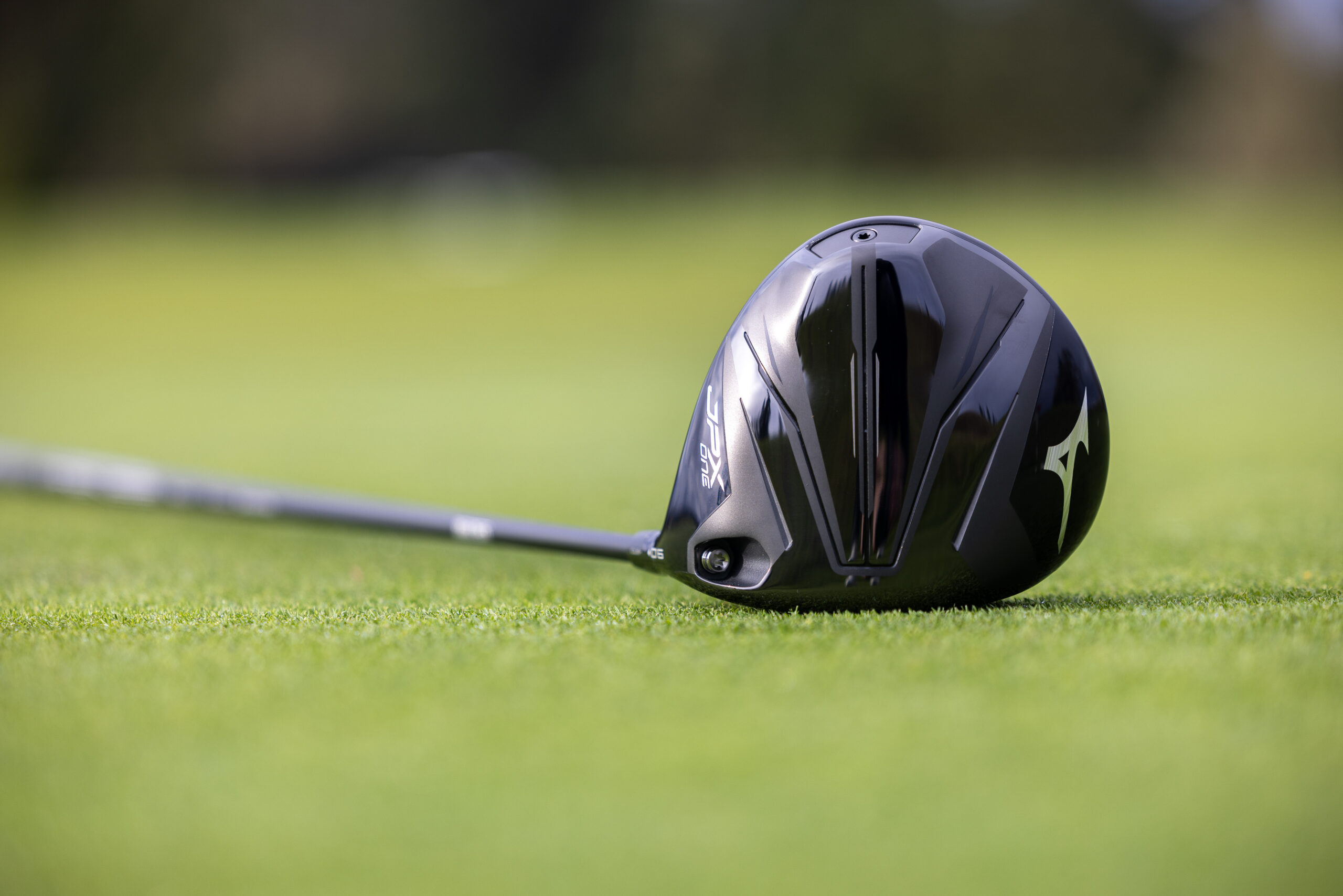
While NANOALLOY™ is the headline story, these drivers incorporate multiple material innovations.
A lightweight carbon composite crown lowers the center of gravity for higher launch with reduced spin. The body uses Titanium 8-1-1 alloy, known for its high strength and low density. The face insert itself is forged 6-4 titanium.
- Price: $600
- Pre-sale: January 12, 2026
- Retail Availability: January 22, 2026
JPX ONE Fairway Woods
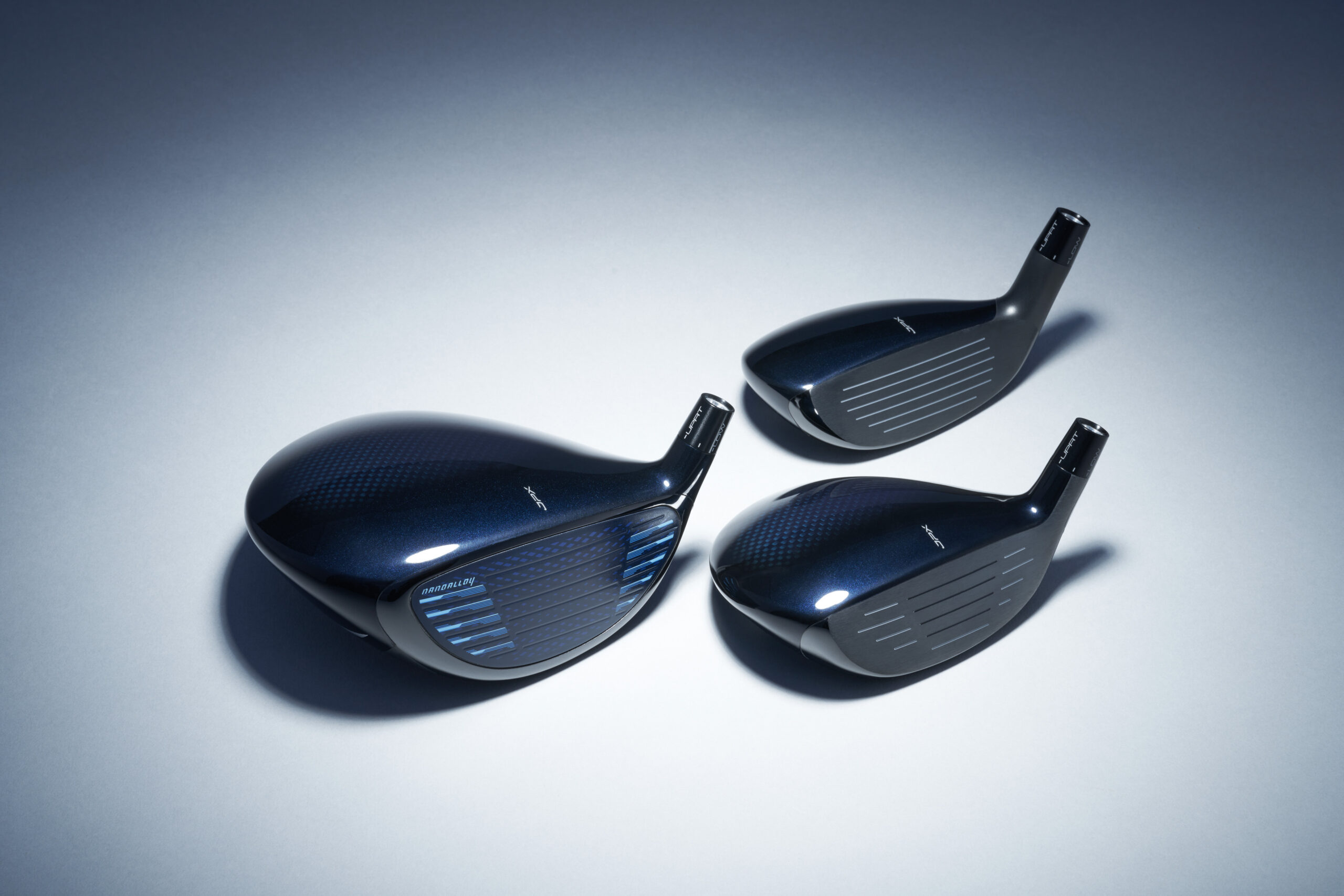
The innovation extends beyond the driver.
The JPX ONE Fairways introduce a re-engineered CORTECH Chamber that strategically varies the internal gap between the sole and chamber wall. This geometry increases face flexion toward the toe and heel, amplifying energy transfer across the hitting surface without compromising central performance.
Each head features a wrap-around composite crown that saves weight high in the structure, lowering the center of gravity for higher launch and reduced spin.
A multi-thickness MAS1C steel face ensures peak COR performance, while the all-new Speed Bevel sole refines turf interaction for cleaner strikes from various lies.
Available Lofts: 15°, 18°, 21°, 24°
JPX ONE Hybrids
Completing the family, the JPX ONE Hybrids apply the same design philosophy to a more compact, iron-replacement shape.
Their Waffle Crown structure enhances face stability, enabling engineers to reposition mass lower and deeper for optimal launch and spin control.
A uniform-thickness 1.8mm MAS1C face combines with the improved CORTECH Chamber and Speed Bevel sole design to produce exceptional speed through impact, even on strikes low on the face or from challenging turf conditions.
Available Lofts: 19°, 22°, 25°, 28°
Final Thoughts on the new JPX One Line of Metalwoods
From the Vanguard carbon-headed driver in 1982 to the MP-600 with movable weight technology in 2008, Mizuno has continually pushed the boundaries of metalwood design.
The JPX ONE range represents the next chapter, a family that unites materials science, speed engineering, and player-informed shaping in one cohesive system.
For a company best known for forged irons, the JPX ONE family signals Mizuno’s intent to compete at the highest level in the metalwood category with genuinely innovative technology rather than incremental improvements.
The NANOALLOY™ face technology is a legitimately novel approach that’s worth paying attention to, even if my early testing suggests it might not quite match the absolute longest drivers on the market.
But with looks this good and technology this interesting, the JPX ONE deserves serious consideration—and more time to fully understand how it performs across different conditions and swing types.
I’m looking forward to spending more time with these clubs and seeing how they hold up over an extended testing period, and I will do a more proper review once I’ve done that.
