

There are exclusive golf courses, and then there’s Canyata.
For most of its existence, this course hidden in the cornfields outside Marshall, Illinois, had no members. It wasn’t part of a resort, and it wasn’t a traditional private club where knowing the right person might eventually earn you an invitation.
It was essentially one man’s extraordinarily elaborate backyard golf course.
A handful of guests would be granted access each month. You’d reach out, hope for an invitation, and if you were fortunate enough to get one, chances are you’d be the only group on the entire property.
The pro shop operated more like an honor bar than a retail store. Take whatever merchandise you wanted, write it down, and they’d send you a bill later.
Depending on whom you ask, Canyata hosted less than 5,000 rounds during the first 20 years of its existence. For context, a busy public might do numbers like that in one month.
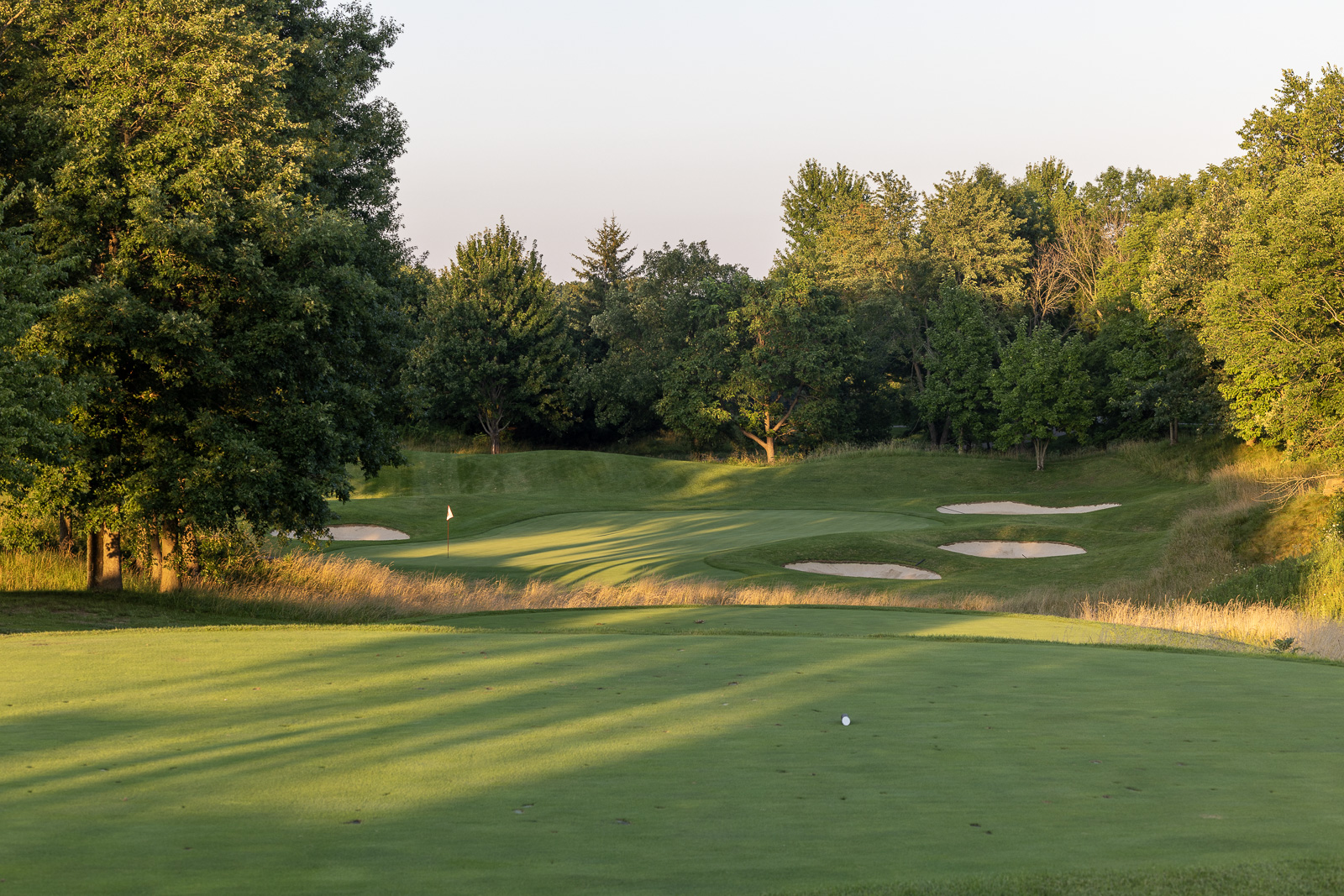
Despite being virtually unknown outside serious golf-course circles, Canyata has been ranked among Golf Digest’s America’s 100 Greatest Courses since 2009. It debuted all the way up at No. 42, has climbed as high as No. 37, and currently sits at No. 86 in the 2025–2026 ranking.
That combination made it arguably the most mysterious, least-known, and least-played Top 100 golf course in the country.
But at the end of 2024, everything began to change.
Escalante Golf acquired the property, Canyata became the official home club of Icon Golf, and for the first time, the course began operating as an actual membership club.
So, what is Canyata actually like?
Does the golf live up to the mystique?
And can it become a functioning club without losing everything that made it so unusual in the first place?
I spent three days at Canyata, played the course three times (and change), ate one of the best steaks I’ve had in years out of a food truck, and stopped between holes to go fishing.
The experience was unlike anything I’ve encountered in golf.
The History of Canyata
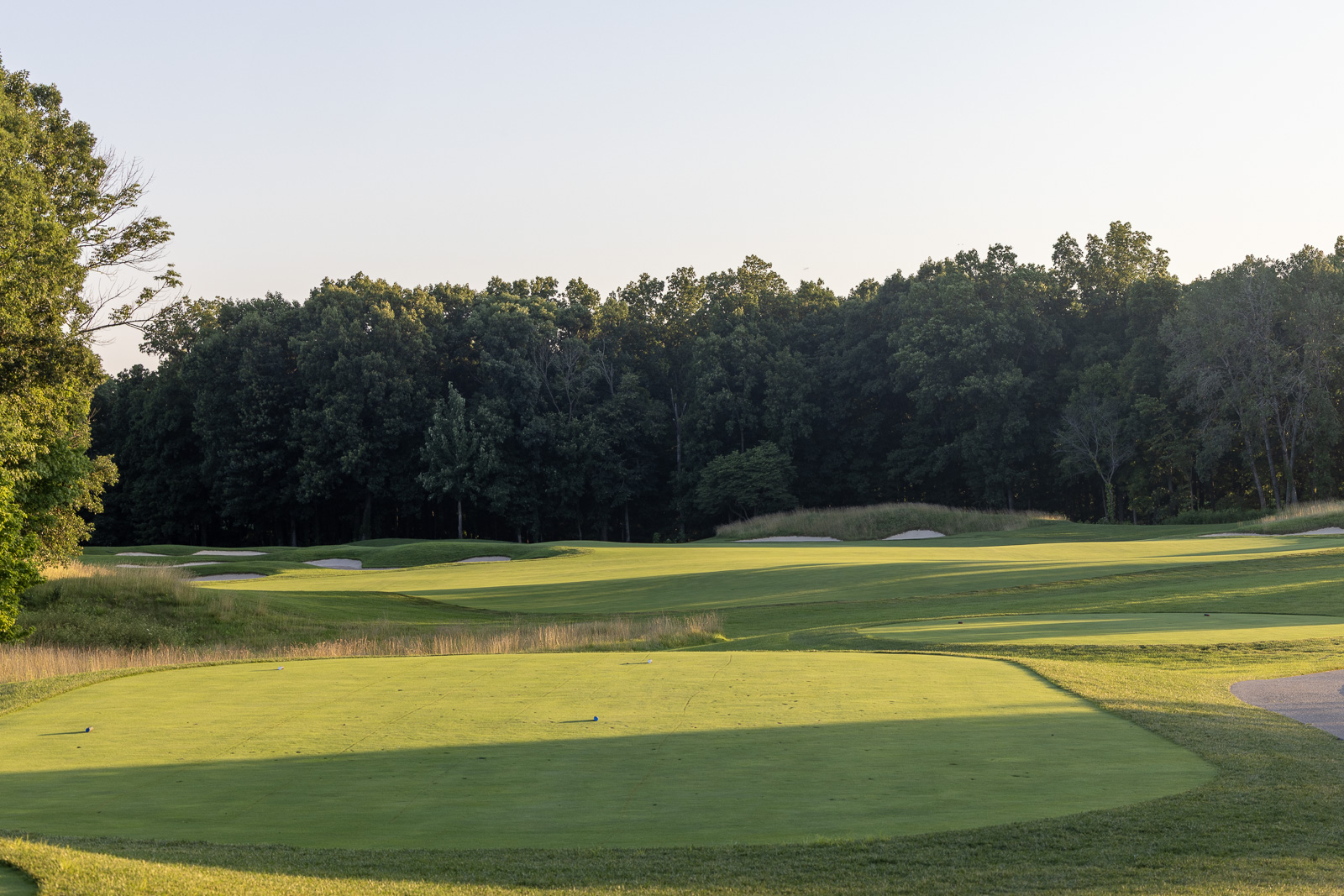
To understand Canyata, you first have to understand that it was never supposed to become one of the best golf courses in America.
The property belonged to Gerald “Jerry” Forsythe, a highly successful businessman with deep ties to eastern Illinois. Forsythe made his fortune through energy-related businesses and is also well known for his involvement in auto racing, including his ownership of teams and his role in the former Champ Car series.
Rather than developing the land into a residential community or conventional country club, Forsythe wanted a private retreat where his family and friends could relax and play golf.
The original plan was modest, at least by the standards of what Canyata eventually became.
Golf architect Bob Lohmann was initially brought in to create a small collection of holes. Michael Benkusky, then a senior project architect with Lohmann Golf Designs, became heavily involved and ultimately helped expand the vision first to nine holes and then to a complete 18-hole course. Canyata officially opened in 2004.
Exactly how many holes came first is surprisingly difficult to determine.
Some published accounts describe the original project as three holes: a par 3, par 4 and par 5. Benkusky’s own website refers to an initial four-hole course.
Even more amusingly, nobody seems completely certain which holes on the current course were the originals.
I was told that even Lohmann and Forsythe don’t definitively recall.
The most common version I heard is that Nos. 1, 7 and 9 formed the original three-hole loop. After those were completed, the rest of the front nine was built, followed by the back nine about a year later.
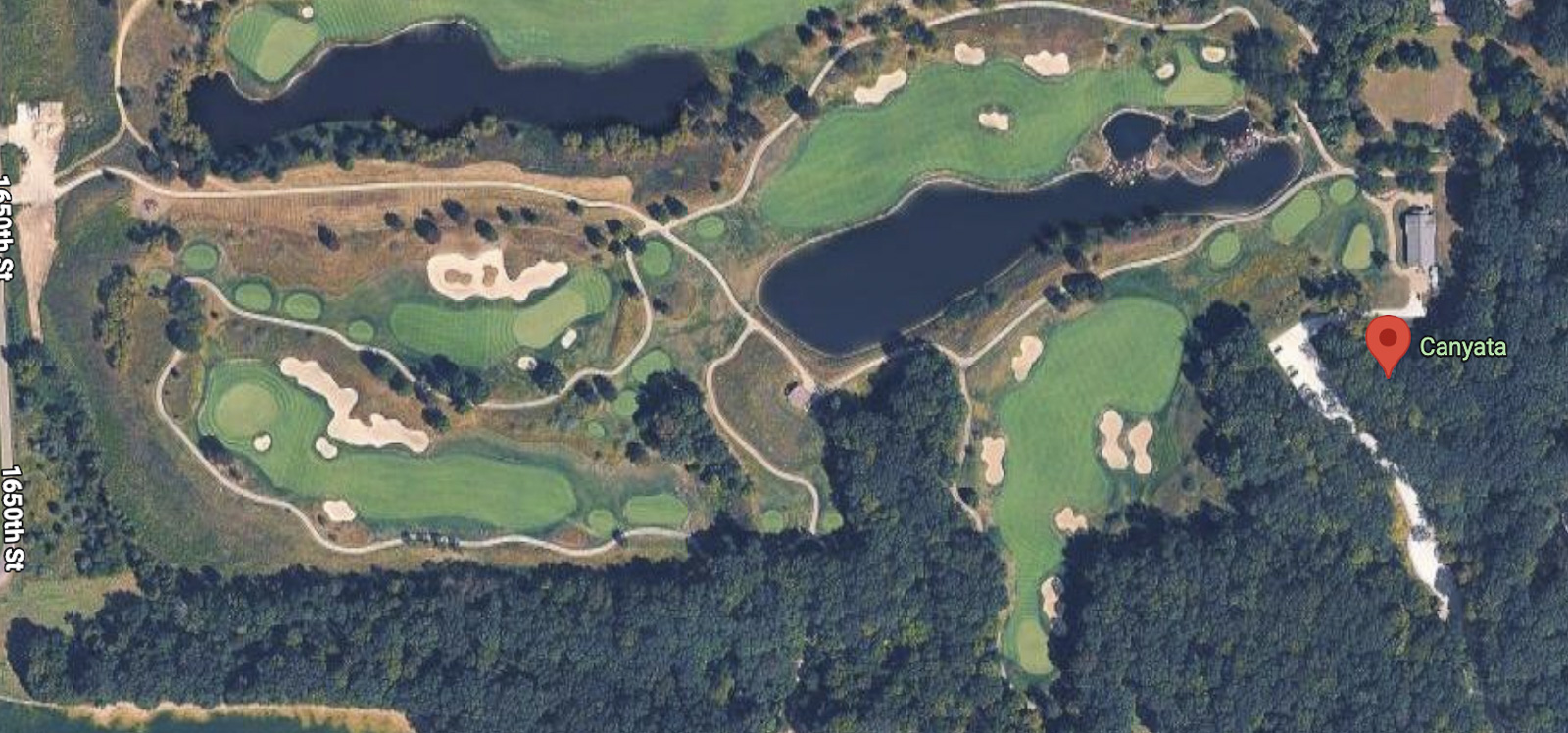
Looking at an aerial image, that routing does make some sense. Those holes form a reasonably natural loop, provided you’re using a golf cart, which is how Canyata was always intended to be played.
However the exact sequence unfolded, the project quickly became far more ambitious than a few recreational golf holes.
Approximately two million cubic yards of earth were reportedly moved to transform portions of relatively flat Illinois farmland into an enormous, rolling landscape of elevated tees, lakes, ravines, massive fairways and intricately shaped greens.
The result was not simply a nice private course.
It was a legitimate championship layout that almost immediately became nationally ranked, even though practically nobody had heard of it and fewer still had played it.
For roughly two decades, Canyata remained Forsythe’s private retreat. There were no conventional members, few invited groups, and only a handful of rounds each year. Golf Digest once quoted a panelist estimating that the course saw around 300 annual rounds, while other accounts suggest even fewer during certain periods.
Friends of mine who played Canyata during this era described an almost surreal experience.
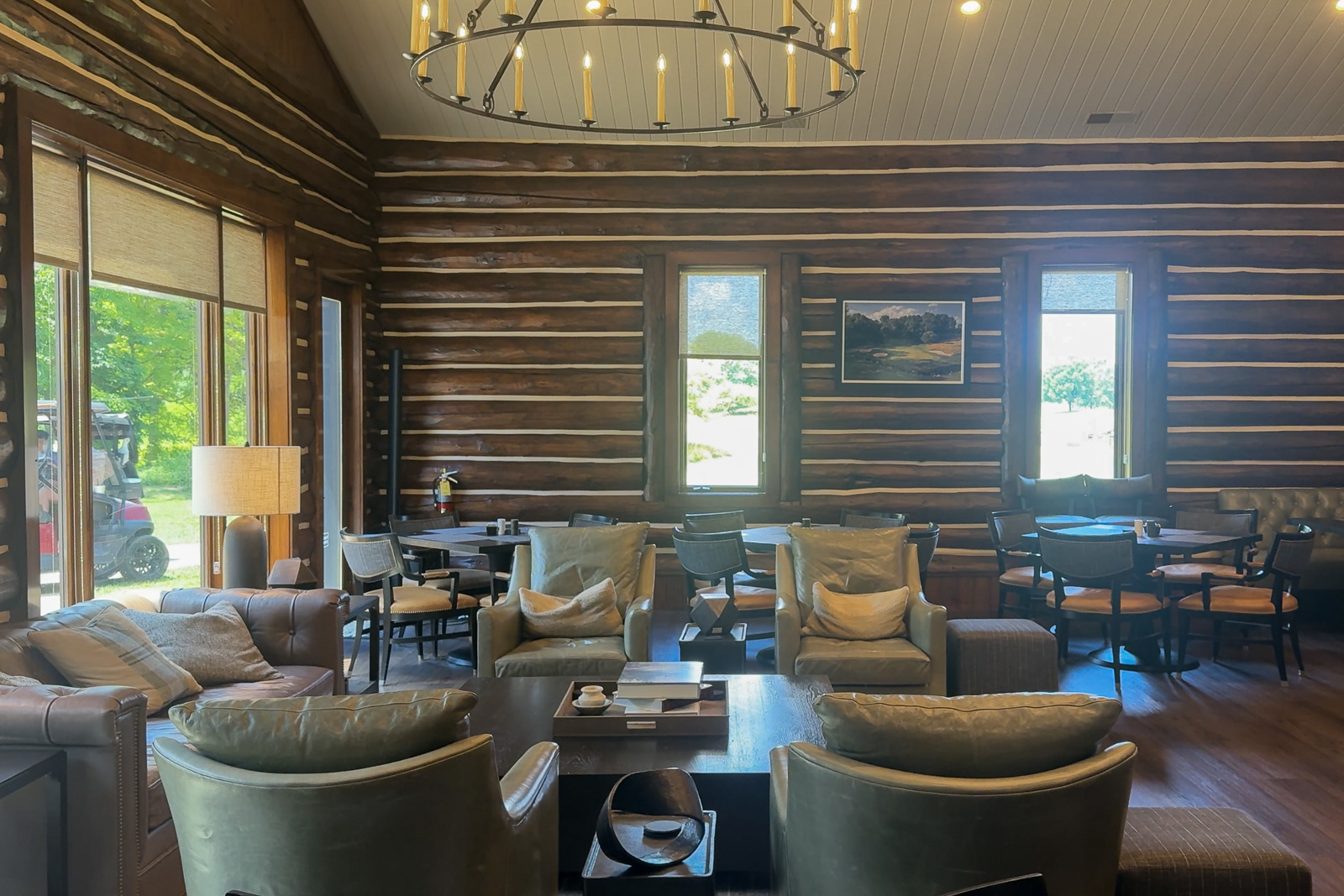
You would arrive and find no one else there. The makeshift “clubhouse” might feel practically unattended. You could take something from the pro shop, write down what you took, and receive an invoice later.
It wasn’t manufactured exclusivity.
The course simply wasn’t operating as a business in the conventional sense.
That changed when Escalante Golf purchased Canyata at the end of 2024.
The acquisition was announced publicly in March 2025, and the property became the official home of Icon Golf, Escalante’s high-end national golf membership. Icon members now receive access to eight private clubs around the country, including Canyata and my home club, Pumpkin Ridge.
Canyata is now a real club.
But as I quickly learned, it still doesn’t feel much like a normal one.
First Impressions of Canyata
One of the first things you learn is that it’s simply called Canyata (Can-Yay-Tuh).
Not Canyata Golf Club.
Not The Club at Canyata.
Just Canyata.
The name comes from a Native American word meaning “backwoods.”
That understated name is fitting because practically everything about arriving here feels like a departure from the usual golf experience.
Marshall, Illinois, is total Americana.
It’s a small Midwestern town surrounded by farms, fields and long stretches of two-lane road. It feels completely different from the coastal resorts, mountain communities and affluent suburbs where many of America’s famous clubs are located.
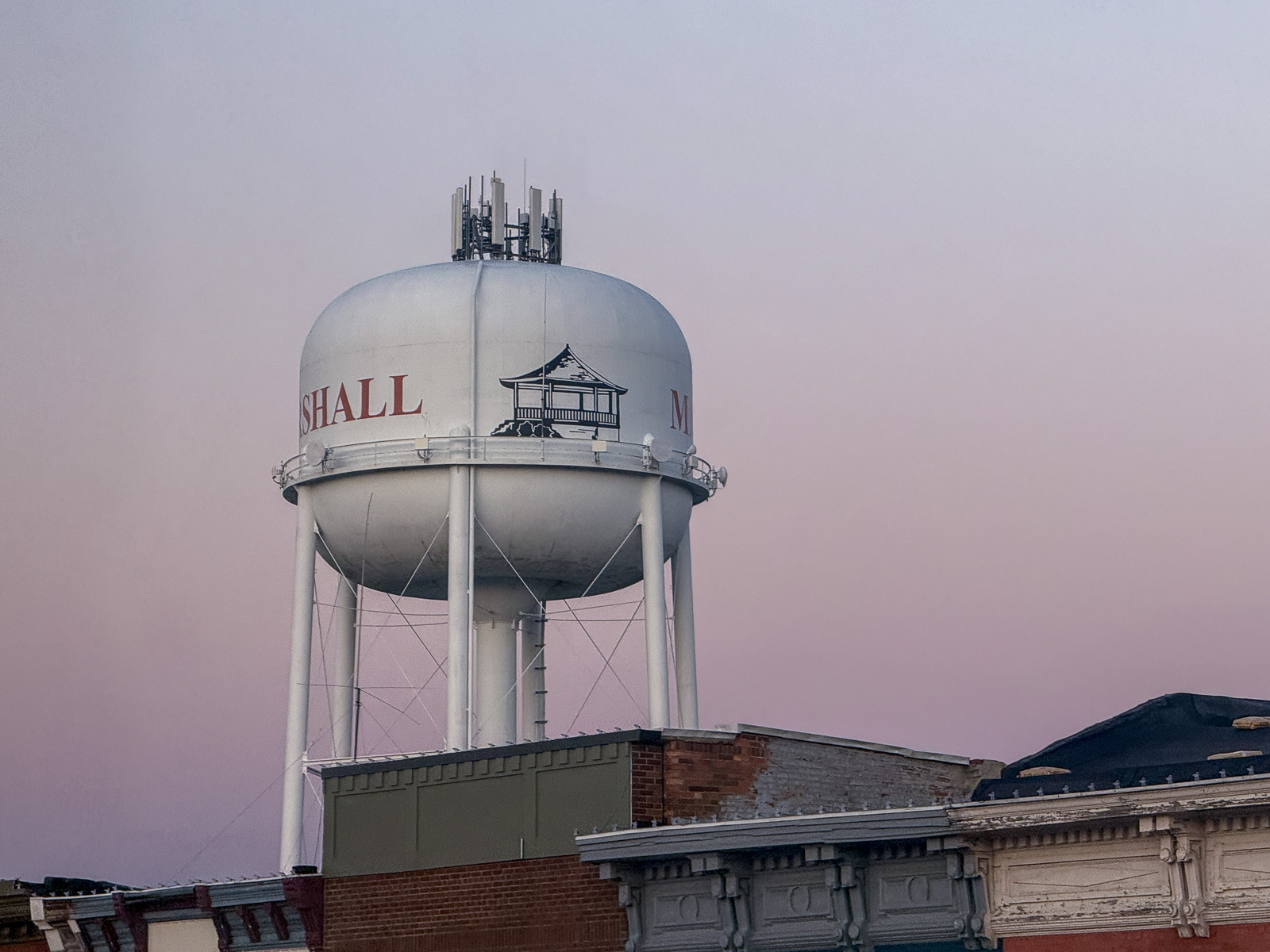
Forsythe’s presence seems to be everywhere.
You’ll see farms carrying his name, local landmarks tied to the family, and a wildly nondescript building between Marshall and Canyata that reportedly houses his extensive car collection.
Even finding the golf course feels appropriately mysterious.
Your GPS may send you the wrong way. The more reliable directions are essentially:
“Take the first left after you pass the giant American flag.”
Once you make that turn, you begin one of the most memorable arrivals in golf.
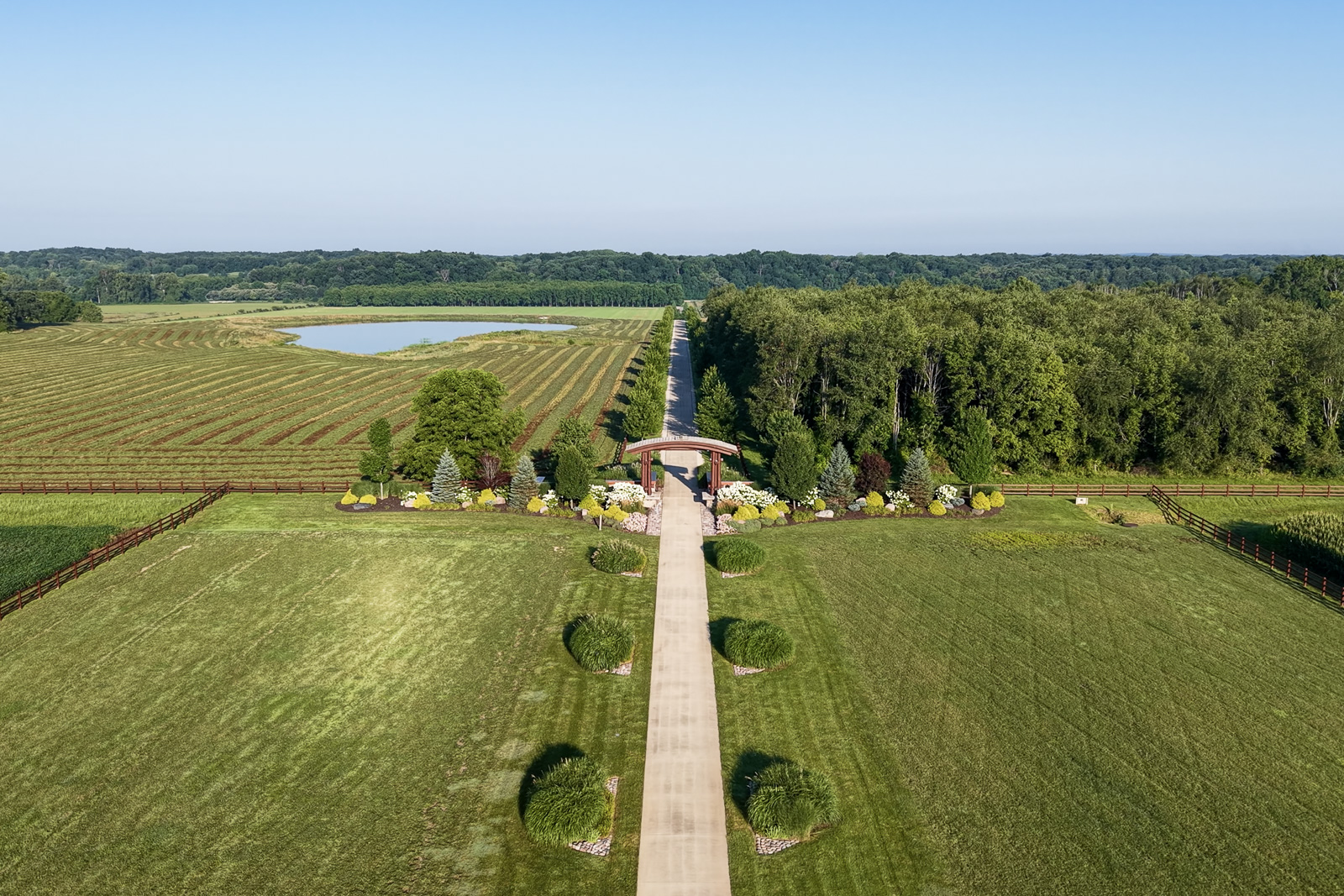
An immaculately manicured, tree-lined drive gradually carries you away from the cornfields and meadows. The surroundings become more wooded, and eventually the road drops toward a forested river.
Then the driveway goes directly through it.
Not over the river.
Through it.
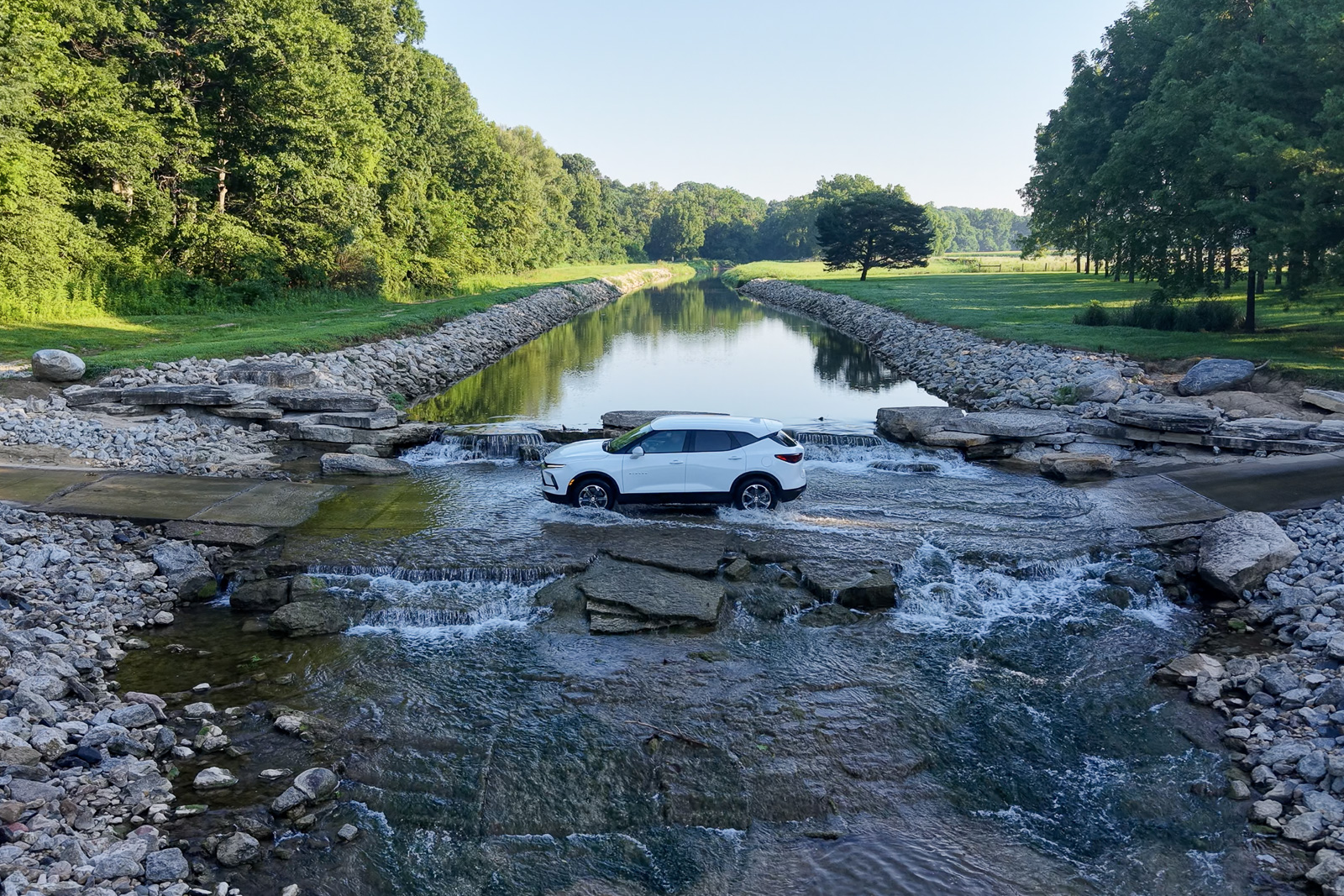
I’ve driven a golf cart through shallow water before, including the cart path near the sixth hole of the Fazio Course at Pronghorn.
But I’ve never seen the actual entrance road to a golf course run directly through a river.
On the other side is a small, elegant sign that simply reads:
Canyata.
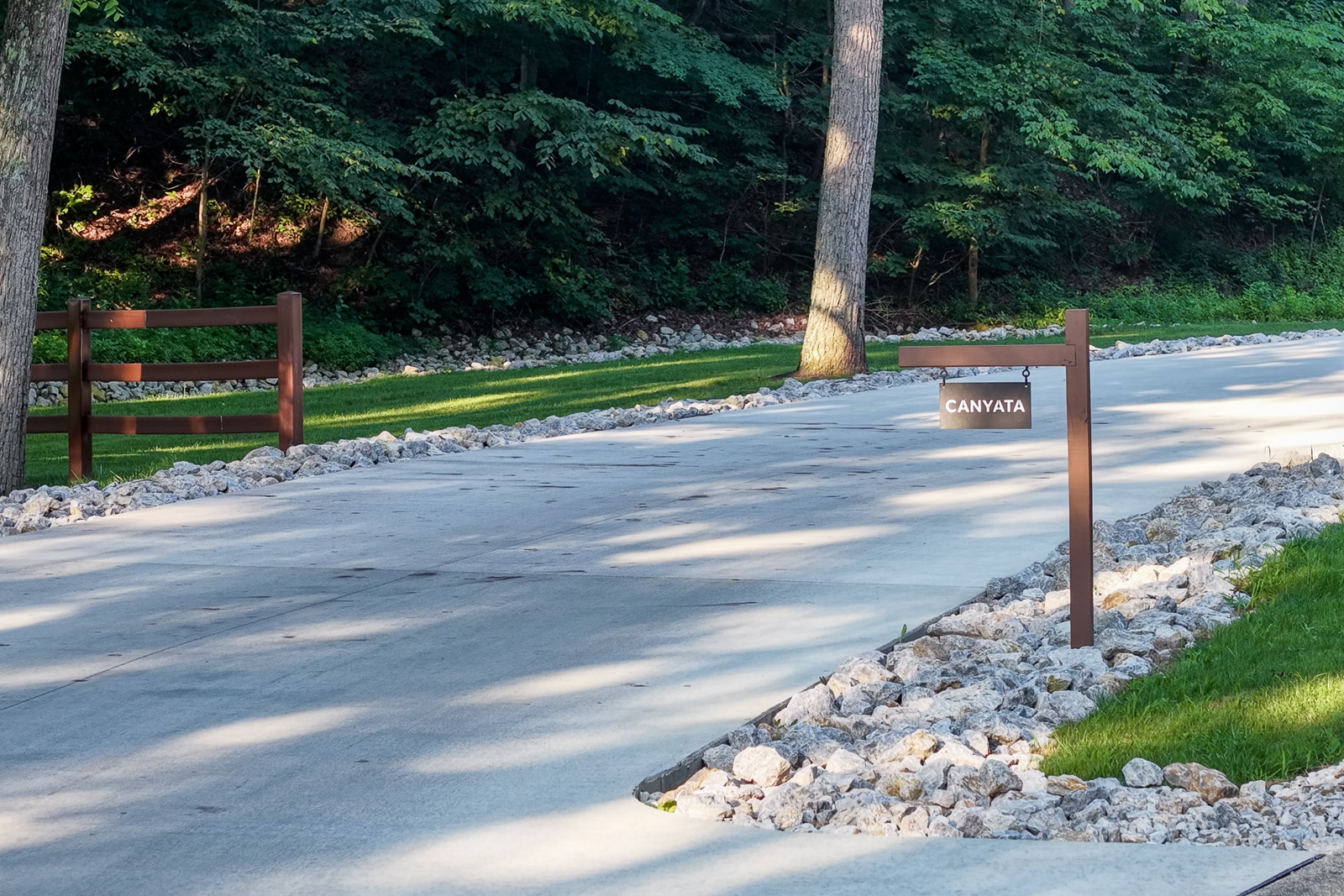
It’s immediately clear you’re entering somewhere special.
The road climbs through the trees and eventually reaches a surprisingly small parking lot. I’d be surprised if there were more than 25 spaces.
That would feel strange at almost any other highly ranked private club, but here it makes perfect sense.
Canyata was built as a private playground for one man, his family and his guests. It was never designed to accommodate a packed member-guest event or hundreds of golfers moving through the property each day.
Even under Icon Golf, the number of people on-site is limited to no more than 40 at any given time.
As you walk toward the clubhouse, there’s a black food truck parked outside.
More on that shortly.
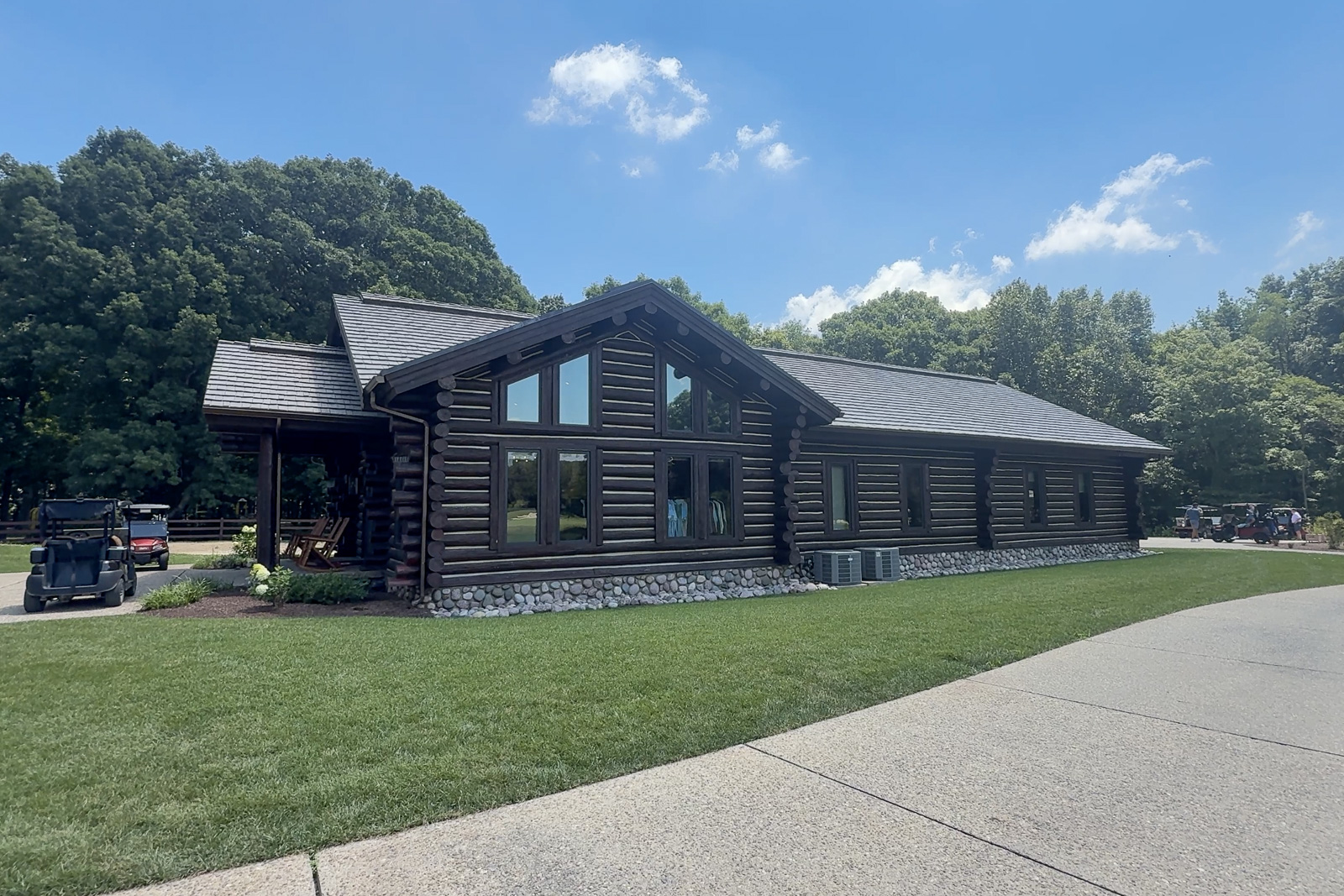
The clubhouse itself is modest and somewhat makeshift by Top 100 standards.
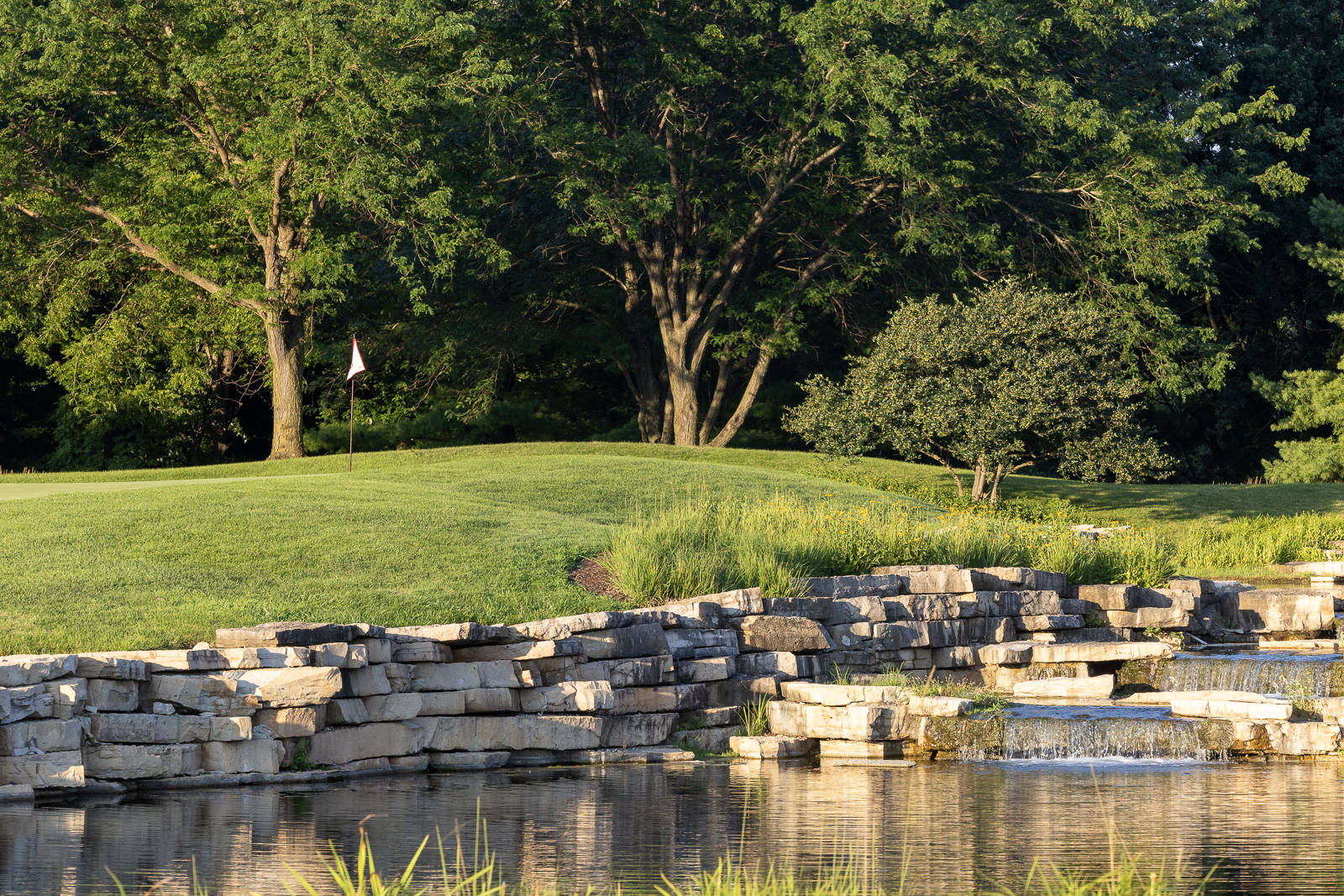
But just beyond it is one of the most impressive opening scenes I’ve encountered: a large pond and cascading waterfall framing the first tee.
What’s remarkable is that the waterfall was part of the property even during the course’s earliest, abbreviated iteration.
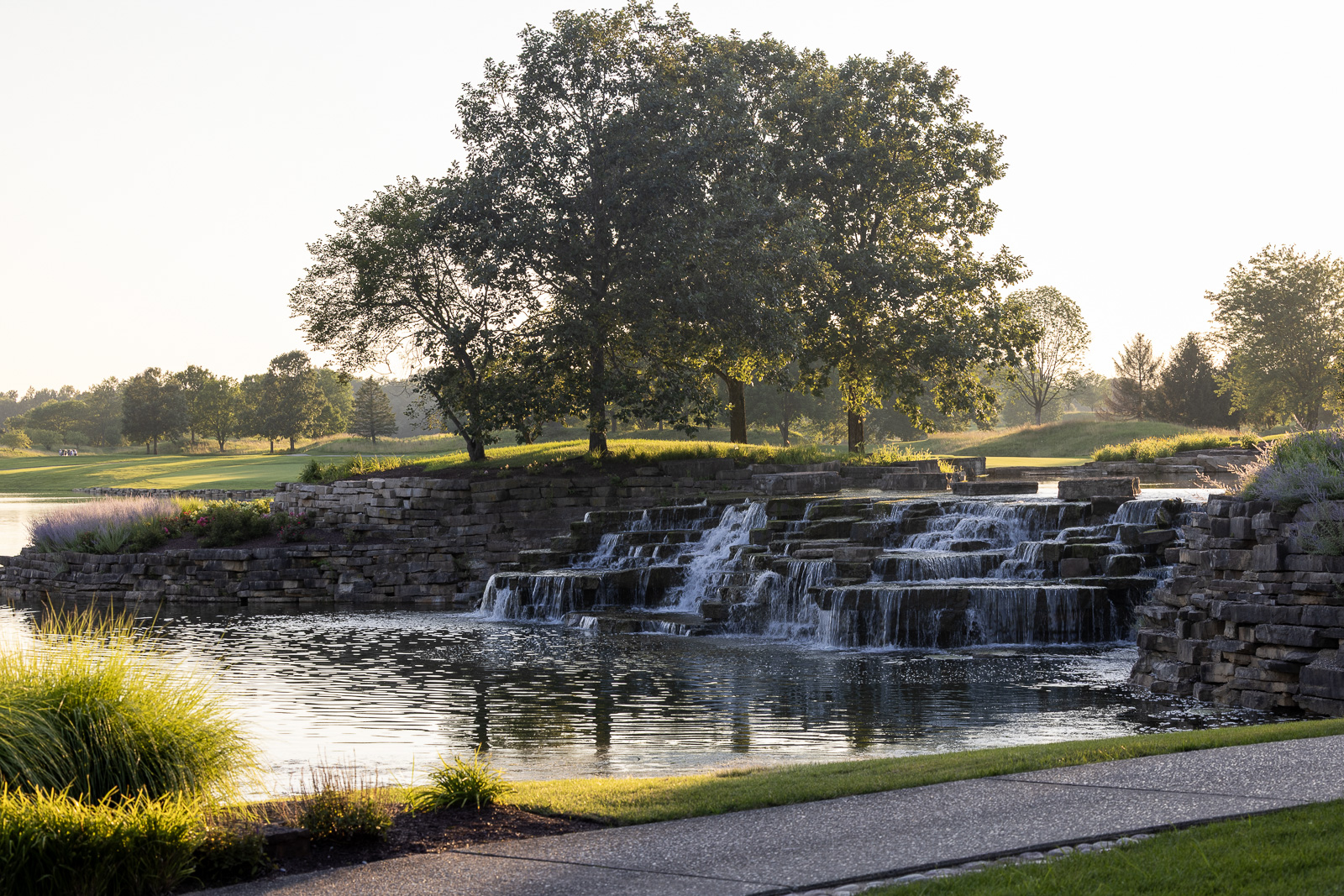
This wasn’t something added once Canyata became nationally recognized. The sense of theater was present from the beginning.
A Culture of Service
As visually impressive as the entrance was, one of my biggest surprises came from the people.
I was at Canyata for less than 48 hours total.
From the moment I arrived, everyone knew my name. By the time I left, that familiarity went both ways.
Some employees have been at the property since before Escalante took over, and there’s a genuine family dynamic among the staff. It never felt scripted, corporate, or overly formal.
People simply wanted to help.
The answer was always yes.
Need something from the clubhouse? They’ll take care of it.
Want to adjust your schedule? No problem.
Need drinks delivered out to wherever you are on the course? On it.
Feel like stopping between holes to go fishing? There are rods on the cart.
Despite being in the very early stages of Canyata’s transition into a functioning club, Escalante and Icon have already nailed one of the most important parts of any high-end experience:
They make you feel special.
At some clubs, luxury is communicated through scale, formality and visible expense.
At Canyata, it comes from attention, freedom and the sense that the entire property exists solely for you.
Canyata: The Golf Course
Canyata is a par-72 course that stretches to roughly 7,287 yards from the Farmall tees. Those tees have their own scorecard and, on several holes, their own distant “way back” teeing grounds. From there, the course carries a rating of approximately 76.2 and a slope of 146.
The Farmall name is another reminder of the property’s agricultural roots.
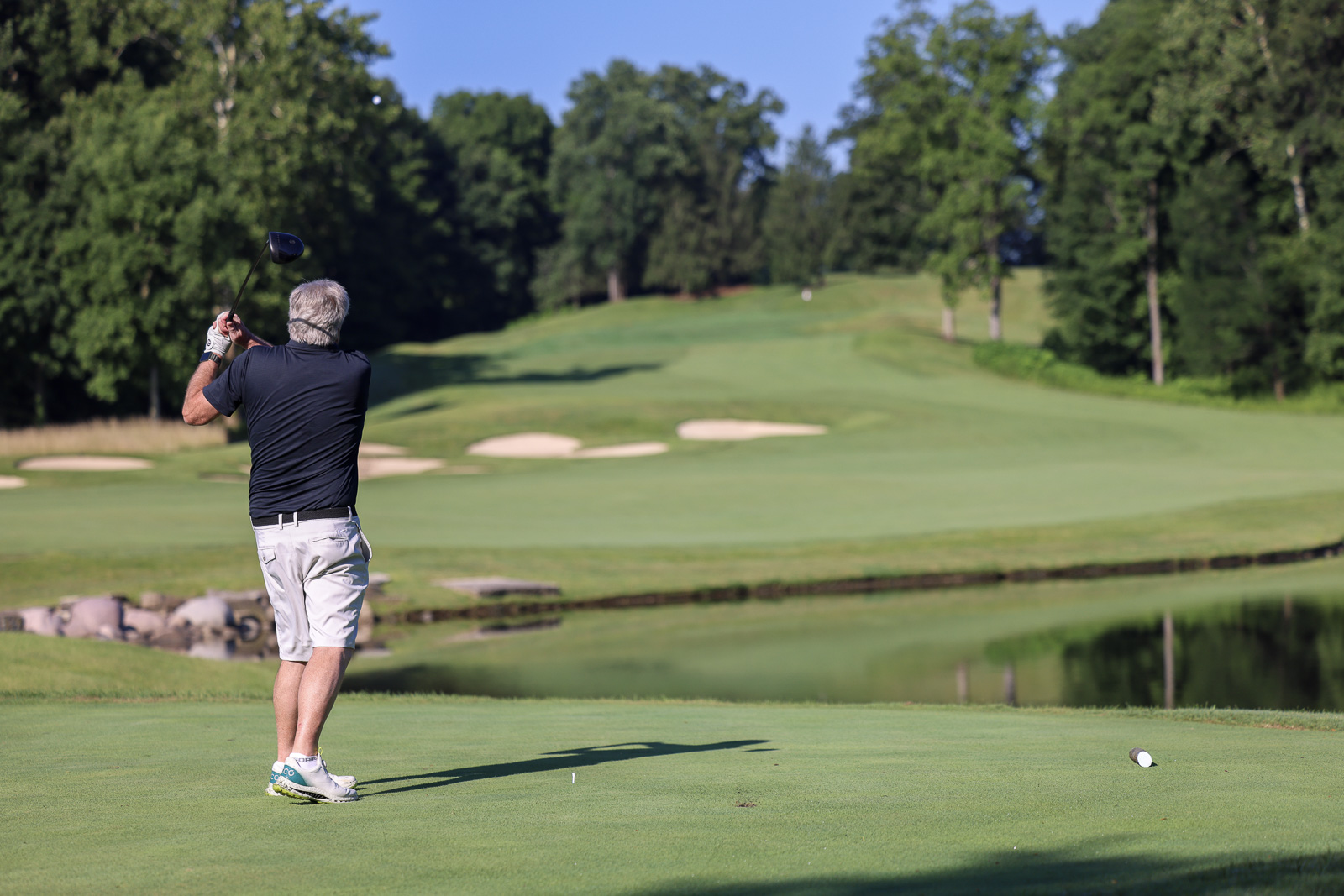
Benkusky is generally credited as Canyata’s primary designer, having led the project while working under Bob Lohmann at Lohmann Golf Designs. The course opened in 2004, and Benkusky has remained involved as a consultant on changes including additional bunkers, tees and grassing modifications.
What immediately struck me is how serious the golf is.
Considering that Canyata was essentially a glorified backyard course, it would have been easy to create something purely scenic, forgiving, and recreational.
That isn’t what happened.
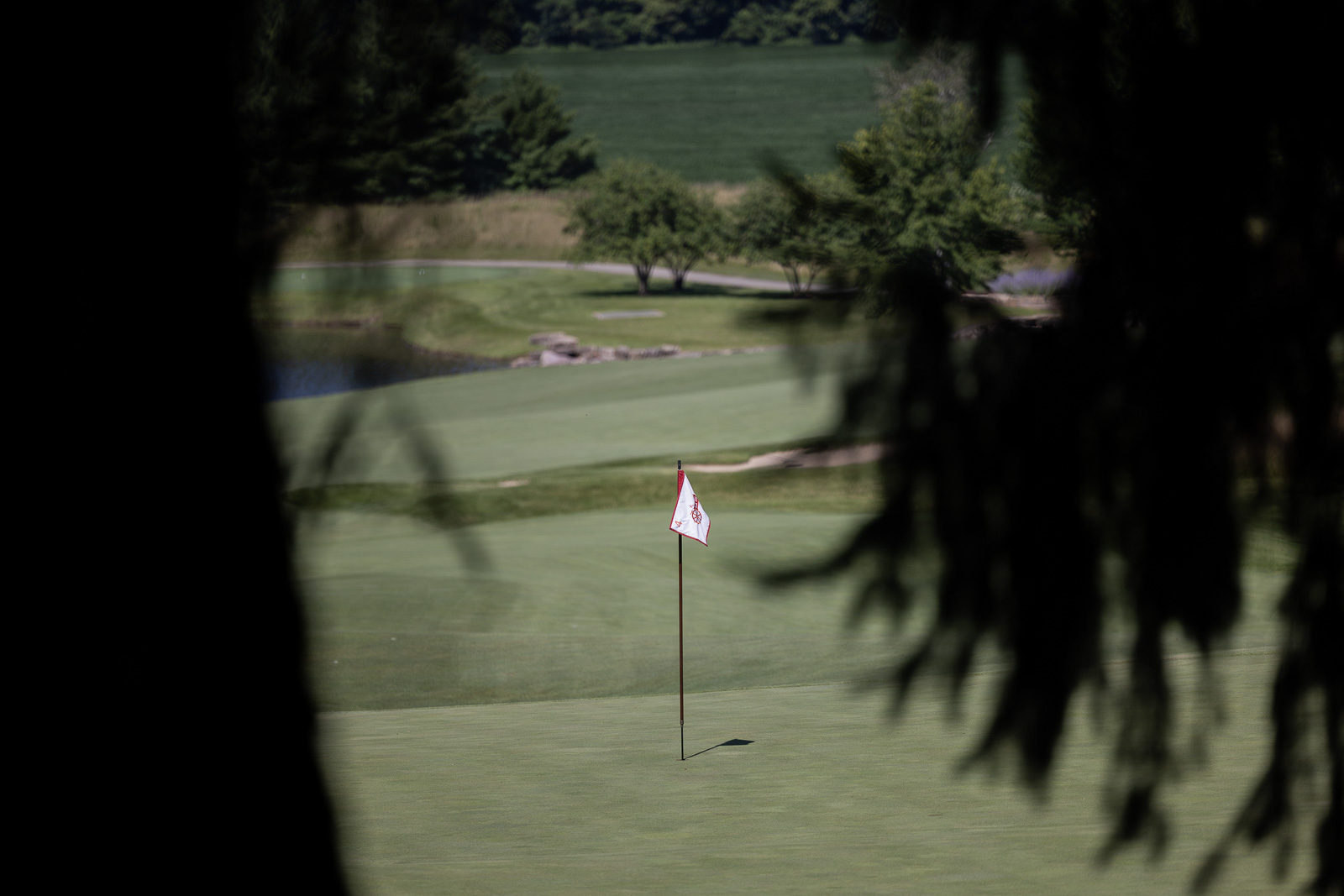
This is a true championship golf course.
It’s surprisingly playable, and the width means higher-handicap golfers can generally keep the ball moving. But Canyata will challenge good players through its angles, carefully positioned bunkers, complex greens, water hazards and repeated demands to make thoughtful decisions.
After playing it three times, my appreciation grew with each round.
The more you understand where the course wants you to hit the ball, the more interesting it becomes.
The Front Nine
The opening hole is one of my favorites.
The waterfall immediately adds to the sense of occasion, but the golf itself is every bit as memorable.
No. 1 is a shorter dogleg-left par 4 that can be played a number of different ways. Longer players can attempt to drive the green, but doing so doesn’t necessarily provide a huge advantage.
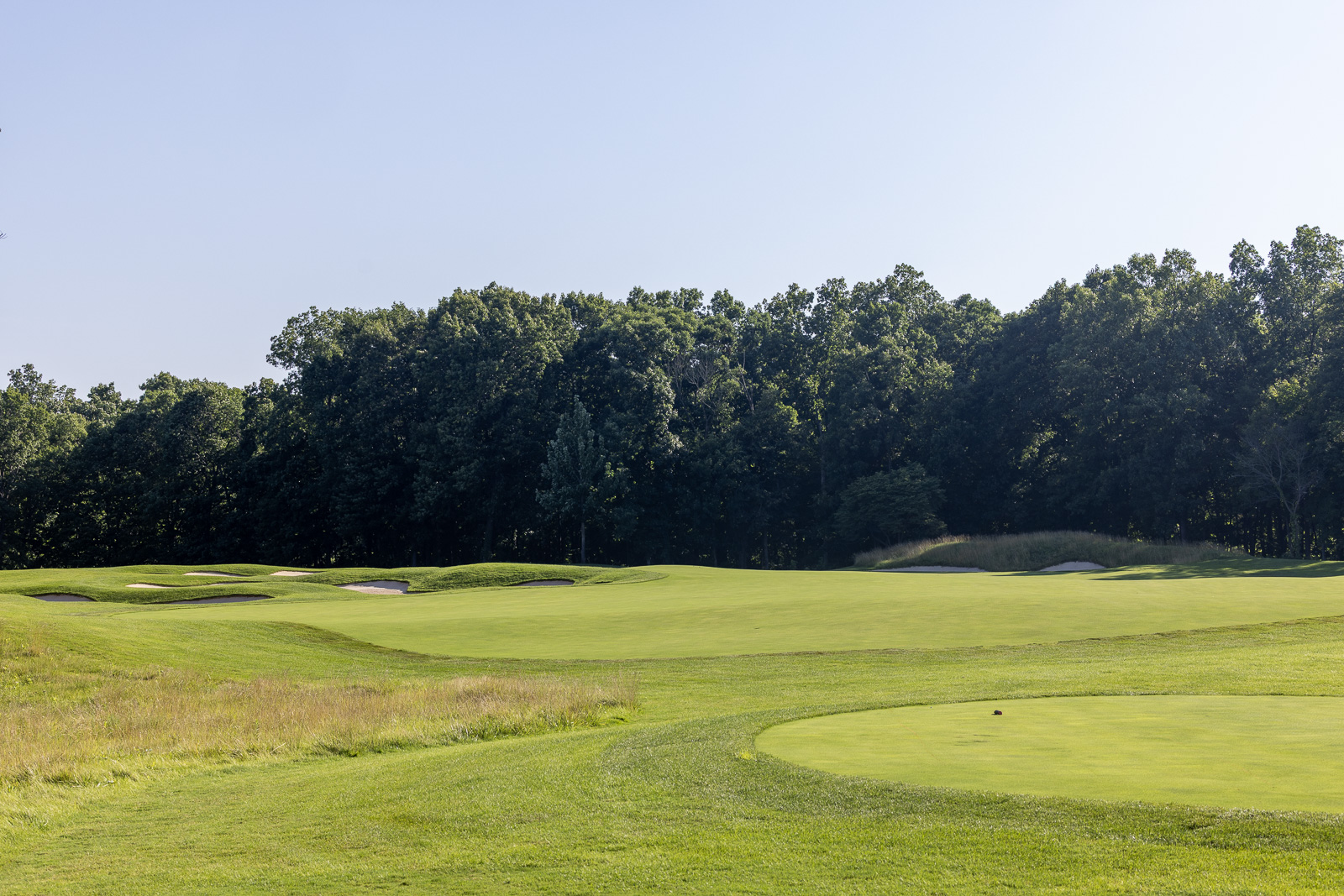
It has a Cape-style strategic quality. You can challenge as much of the bunkering on the inside left as you’re comfortable taking on, but an overly aggressive or overly long drive can run through the fairway and potentially out of bounds.
The safer option is a long iron or hybrid toward the right side. That leaves a medium-length approach but removes much of the immediate danger.
The biggest surprise is the green.
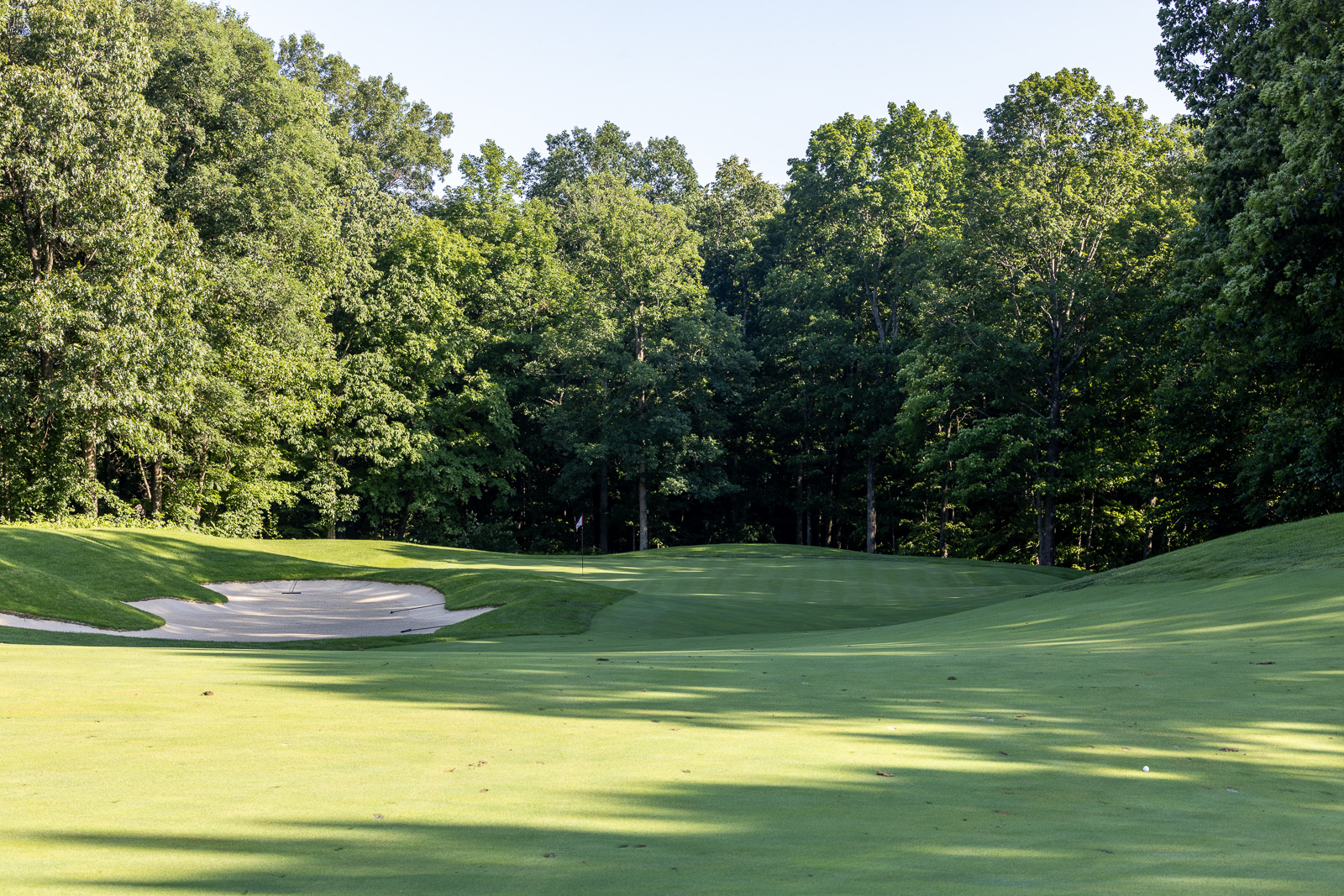
It’s wildly undulating, with multiple runoff areas that force you to think carefully about where you place your approach. Simply hitting the putting surface doesn’t guarantee an easy two-putt, or even an easy next shot.
That green foreshadows one of the defining features of the entire course.
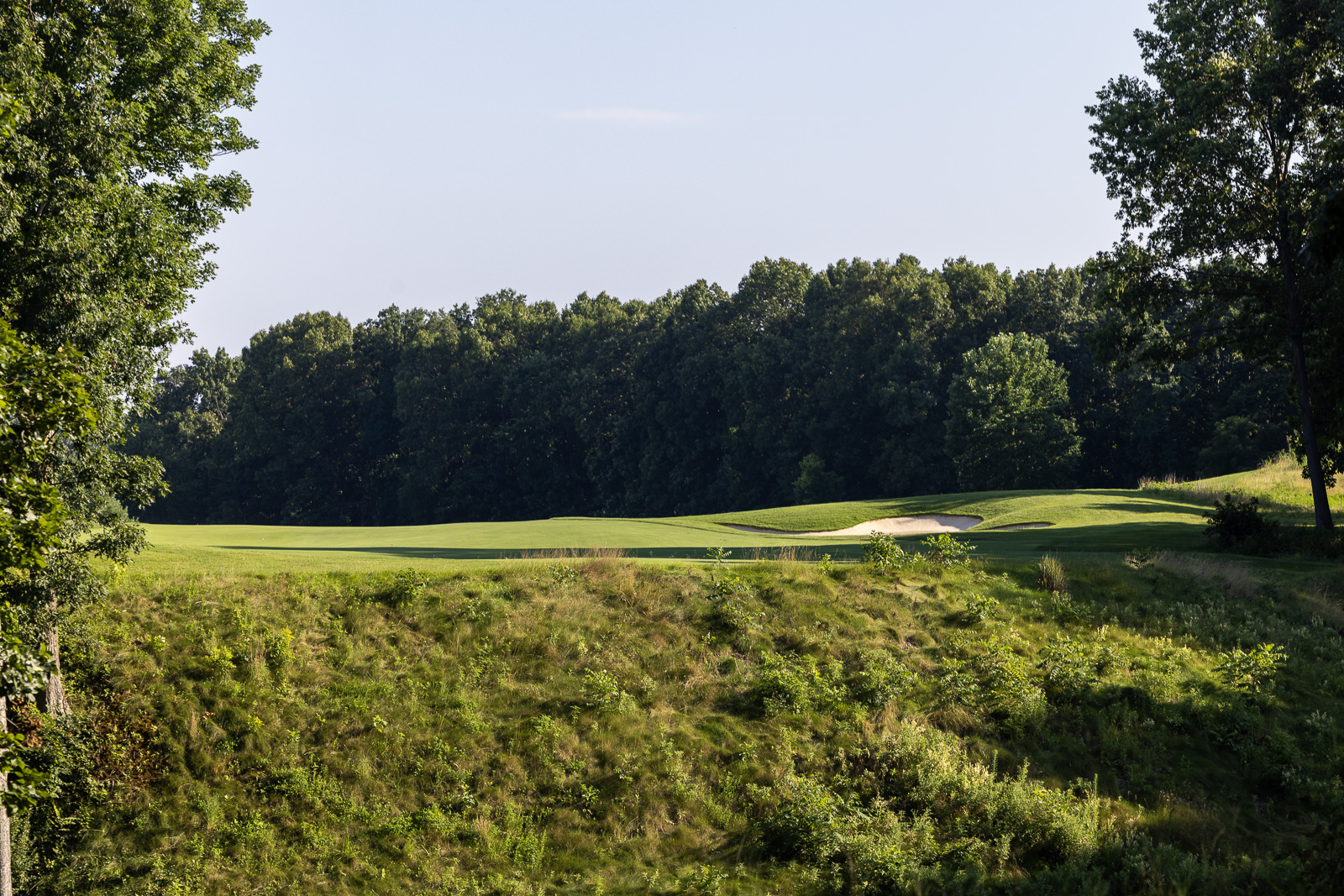
The second is a stout par 5 that requires thought on every shot. I wasn’t expecting a Biarritz-style green, and the additional subtle contours within it make the hole even more interesting.
Then you reach Nos. 3 and 4.
Many people will identify these as Canyata’s signature holes, and they are certainly among the most dramatic.
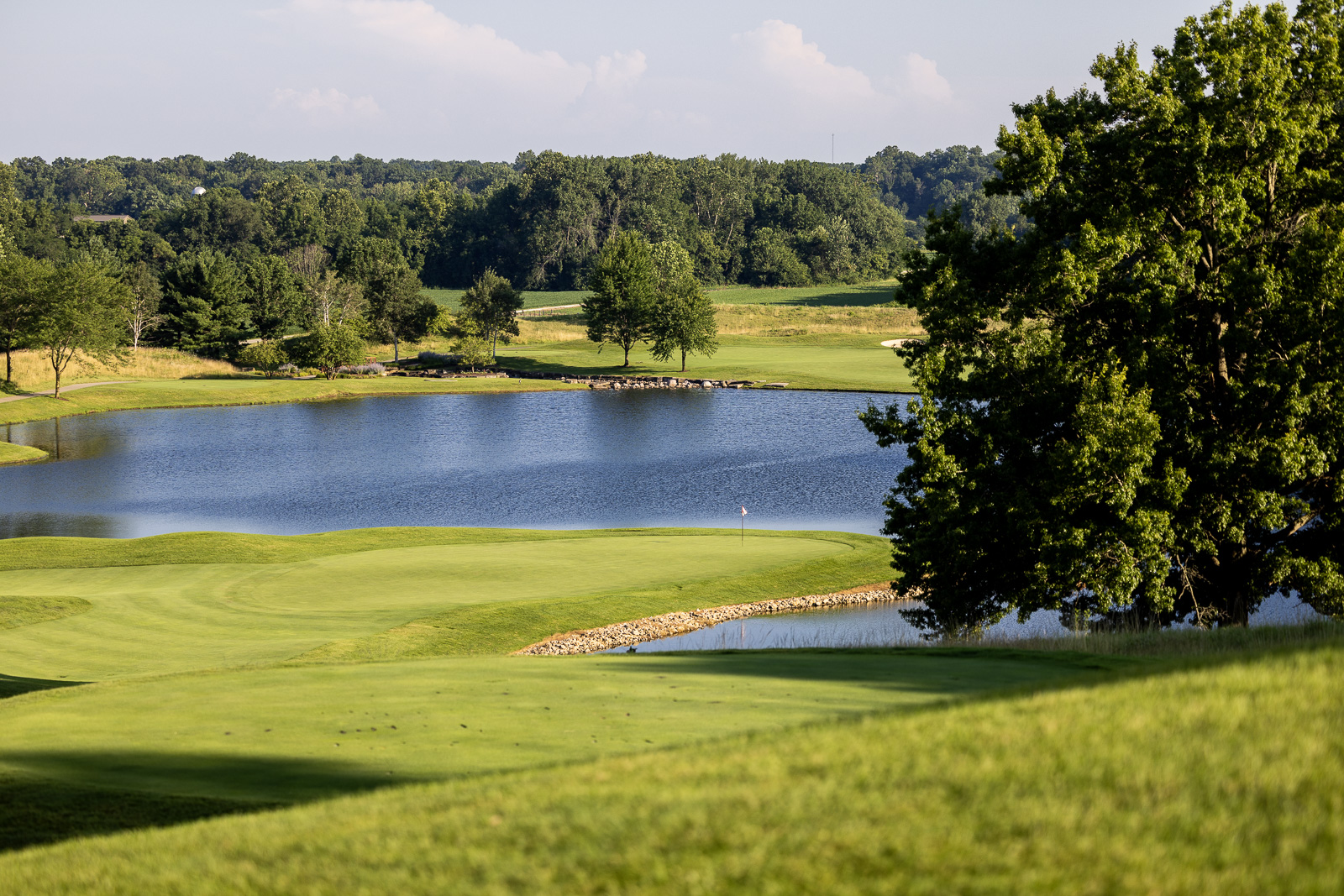
The third is a downhill par 3 playing toward a green surrounded by water on most sides. Visually, it’s one of the clearest examples of the scale and extravagance involved in building this place.
The fourth is an uphill par 4 that I’d argue is the hardest hole at Canyata, but also one of the most fun.
The teeing grounds are located at dramatically different angles around the lake. Cross bunkers influence how much water you’re willing to challenge, meaning the hole can play very differently depending on which tees you select.
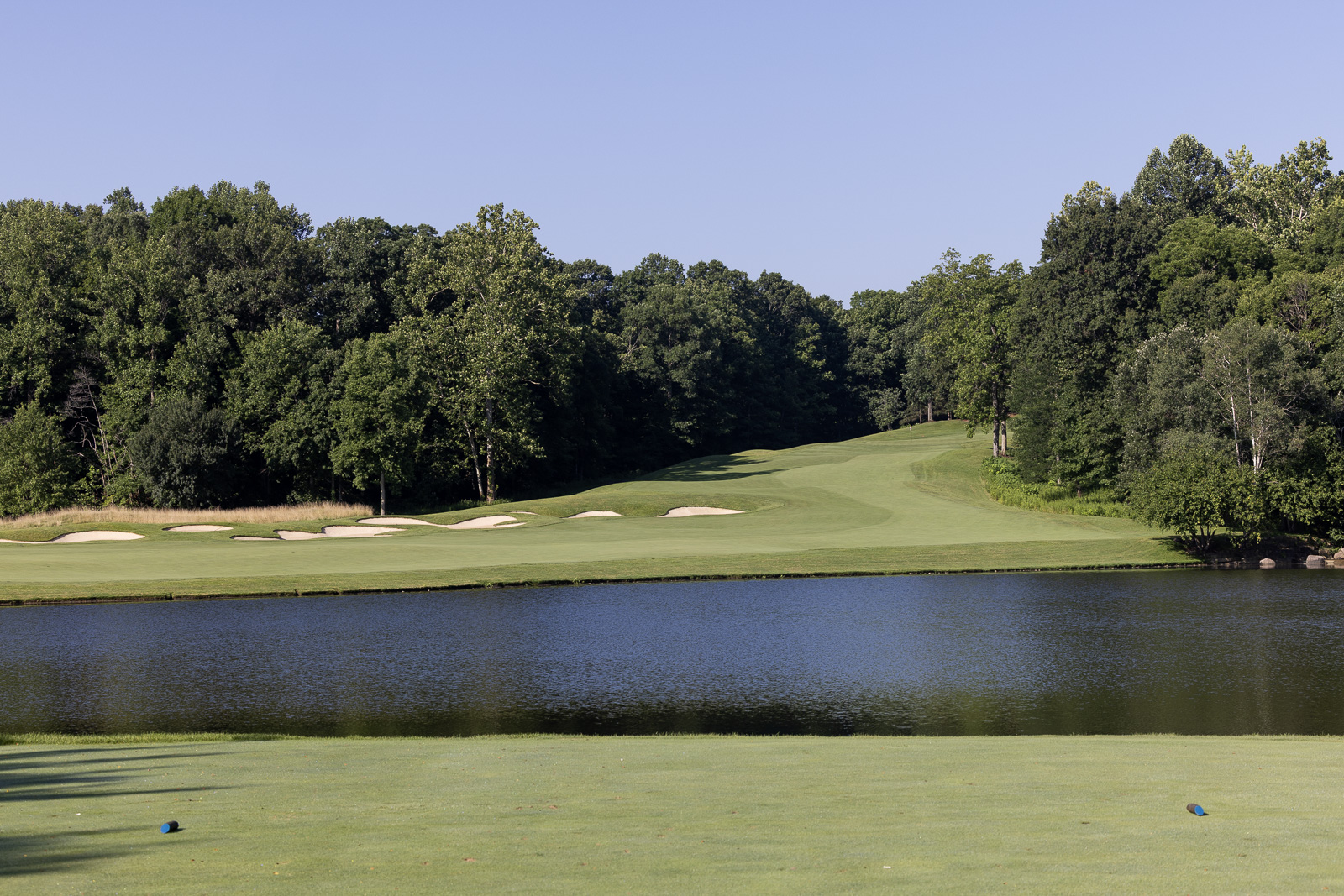
From the longest positions, it’s an absolute brute. The Farmall scorecard lists it at 485 yards.
No. 5 is a mid-length par 4 where a well-struck drive can receive significant forward roll. The green features a subtle false front and is defended by a creek, so getting the approach distance correct is critical.
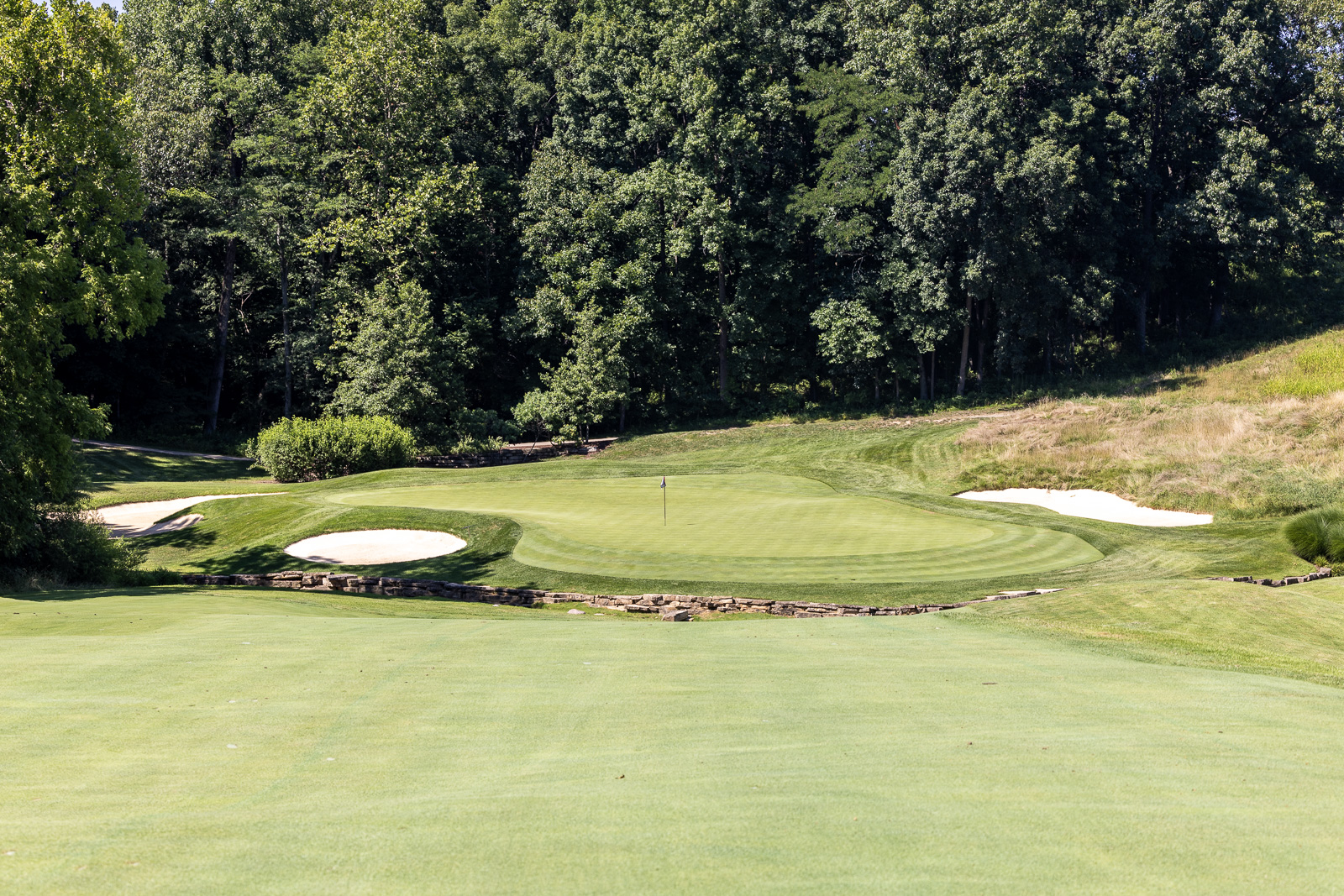
The sixth is a solid par 5 with more thoughtful bunkering and another interesting green complex.
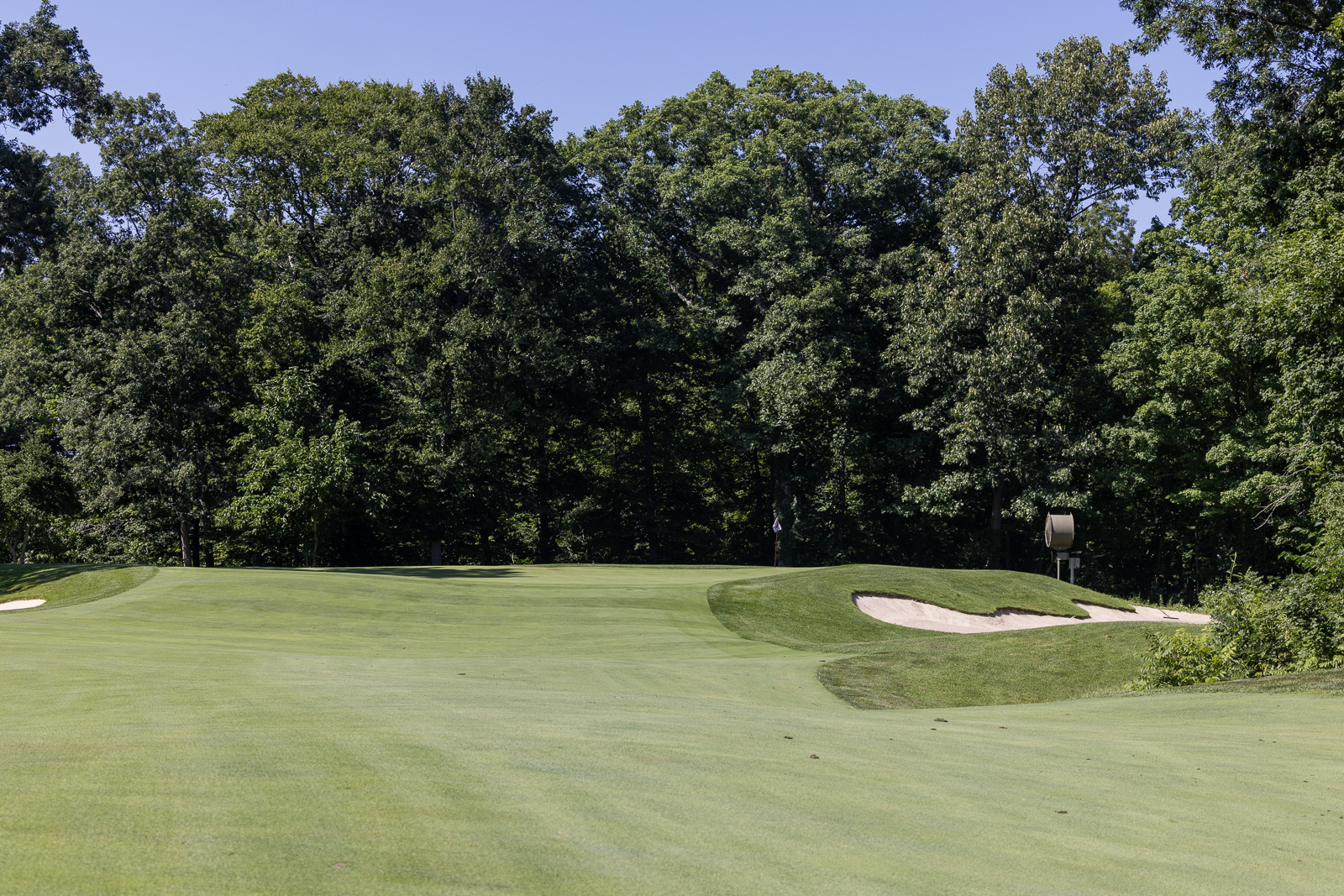
Then comes No. 7, one of my favorite holes on the course.
It’s the second of four potentially driveable par 4s at Canyata.
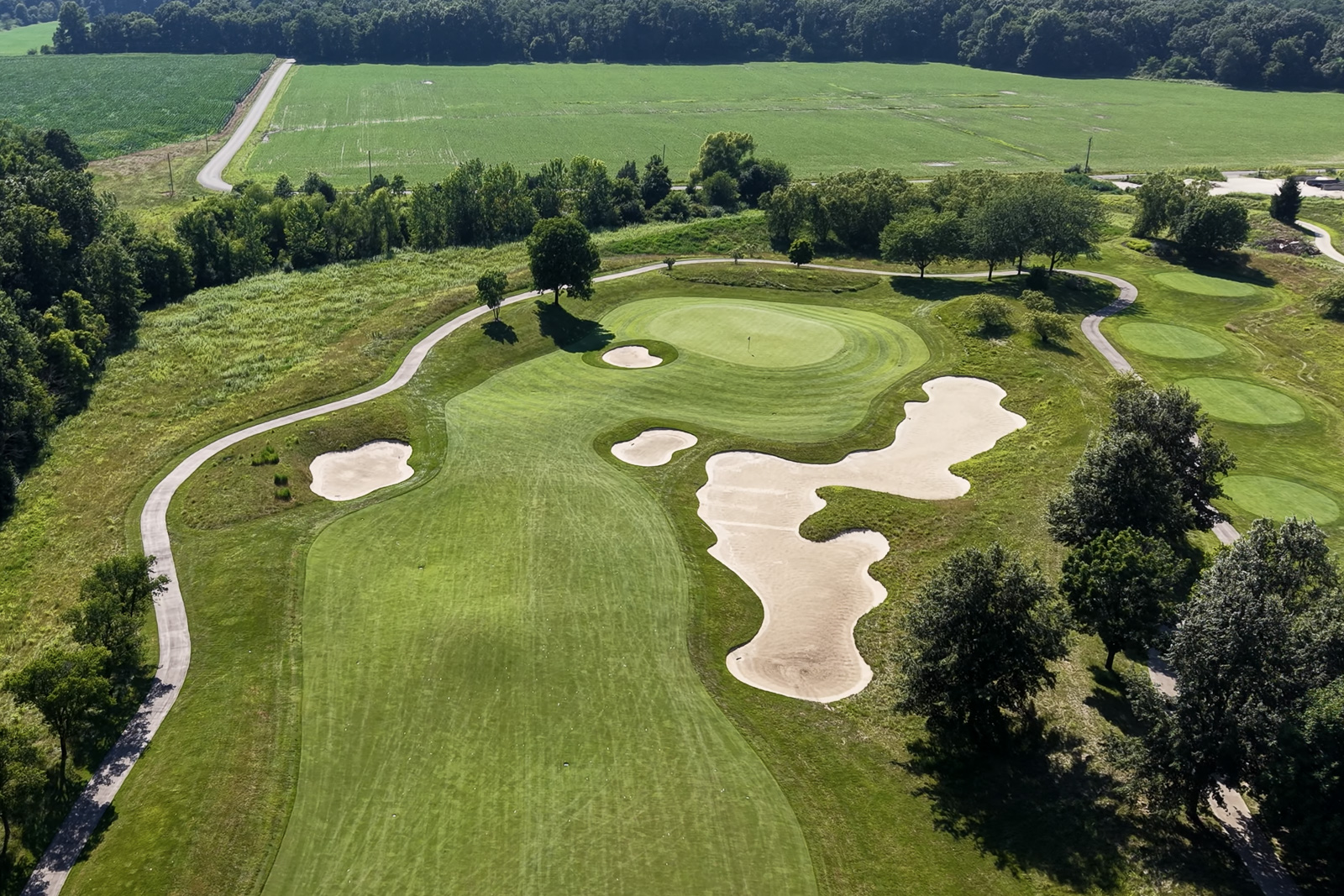
A bunker about 30 yards short of the green is perfectly positioned to collect aggressive drives that don’t quite get there. The entire green is surrounded by runoff areas, making even a shot that finishes close to the putting surface potentially difficult.
Runoff areas appear frequently throughout Canyata, and I think they’re one of the course’s better features.
For strong players, a tight or uneven lie around the green can be more difficult than a standard bunker shot.
For higher-handicap golfers who struggle from the sand, however, the absence of a bunker can make the recovery feel more attainable.
It creates difficulty without making the course unnecessarily punishing.
The eighth is a sneaky-good par 3. The farther left the pin is positioned, the more the large bunker influences the shot.
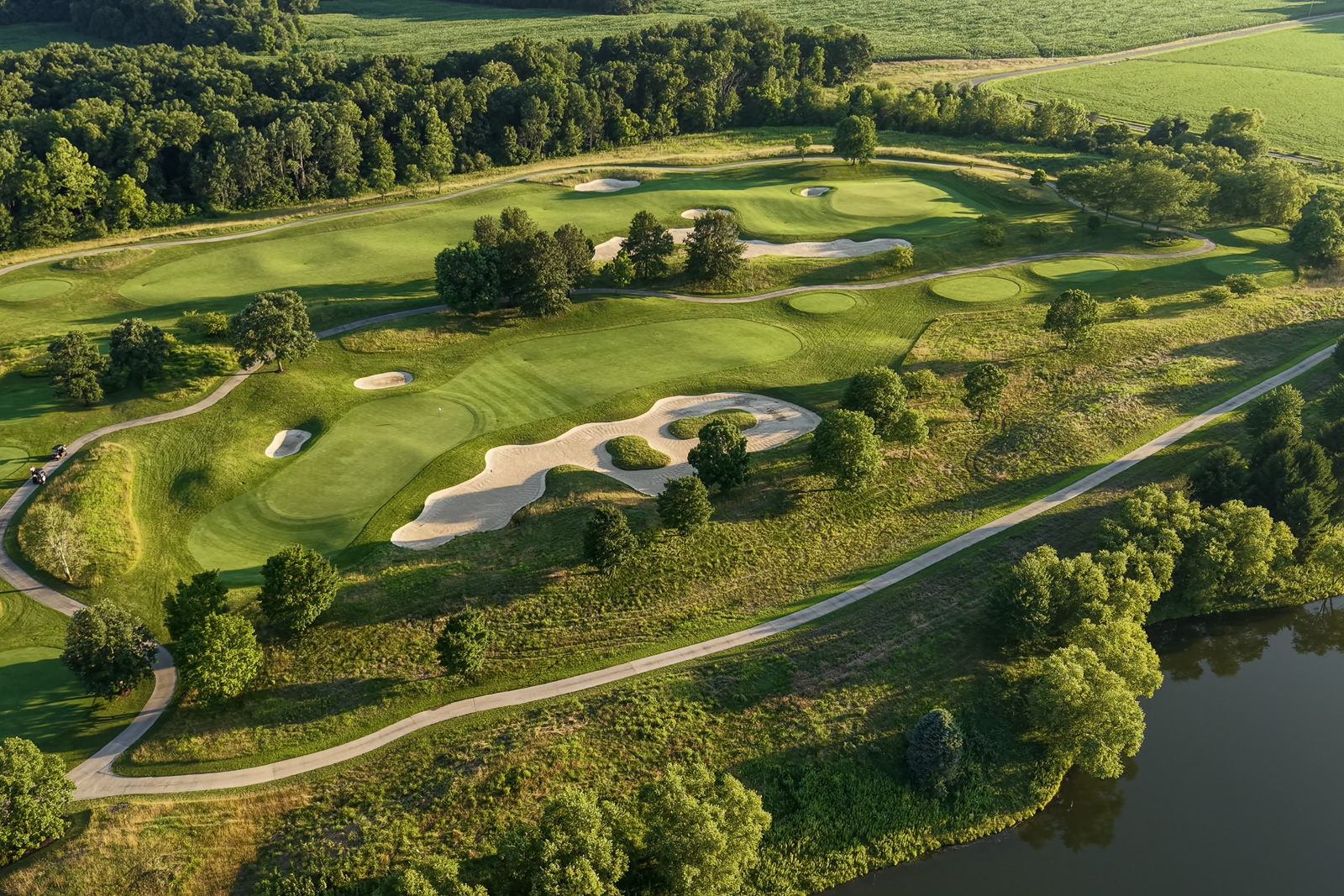
The ninth is a top-three hole on the property for me.
It’s visually impressive, but the strategy is what makes it memorable. A centerline bunker forces you to be extremely deliberate about where you place your drive.
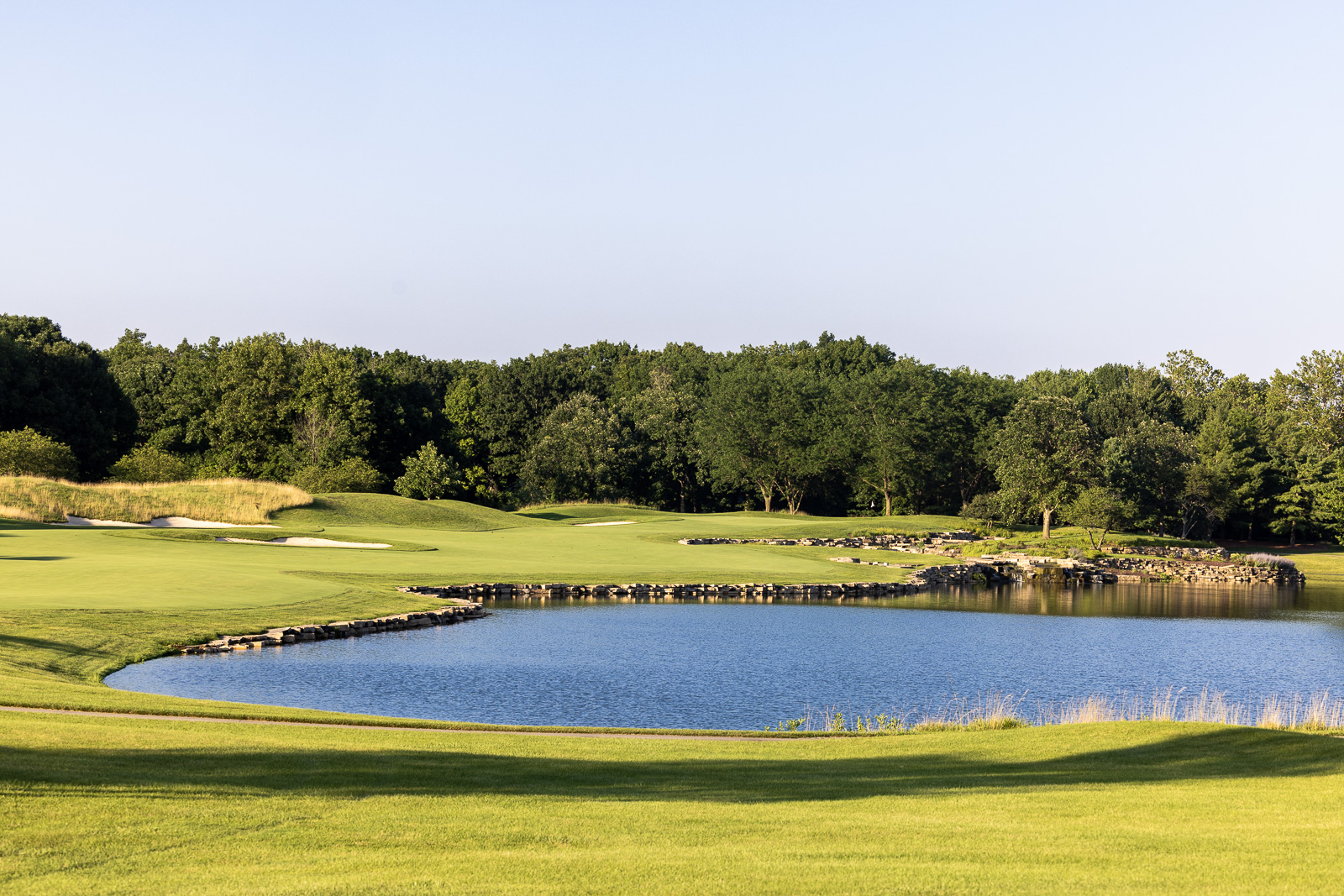
It’s the kind of hole that initially looks wide and inviting, but the ideal side of the fairway changes based on the pin and the angle you want for your approach.
By the time you finish the front nine, the central theme of Canyata is clear:
The course continually gives you room, but it rarely lets you switch off your brain.
The Back Nine
The back nine begins with a strong par 5.
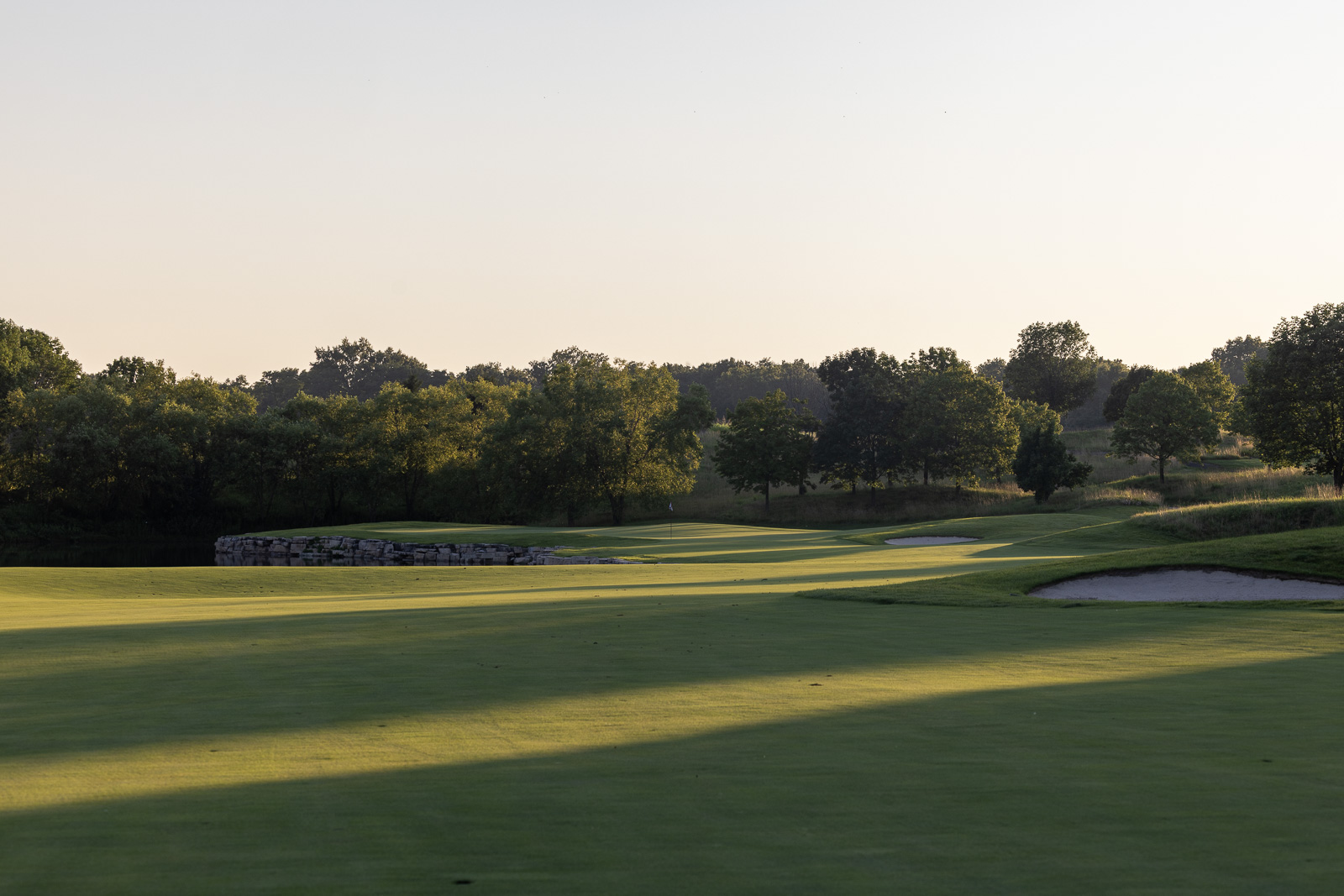
After playing Canyata three times, this was one of the holes that helped me appreciate how often the course asks a genuine question.
Off the tee, the bunkering encourages you to take on more than may be comfortable. On the second shot, a lake extending along the left side creates another decision for players attempting to reach the green in two.
The eleventh is a challenging par 4 where taking on the left bunker from the tee provides the best angle into the green.
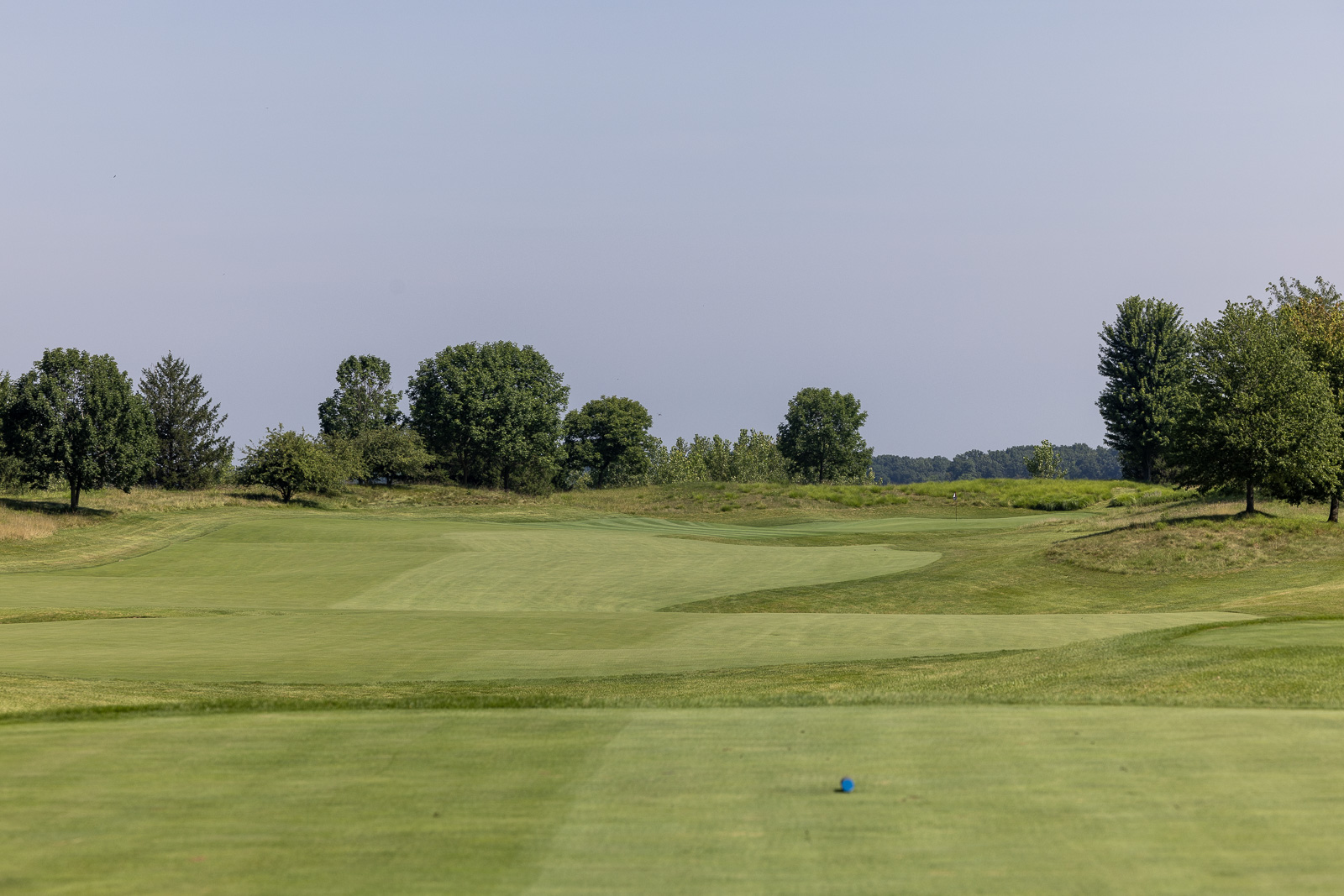
Again, the course gives you space, but the safest route isn’t necessarily the best route for scoring.
No. 12 is an excellent par 3 playing slightly downhill across a ravine. From the Farmall tees it stretches to 247 yards, making it one of the most demanding one-shot holes on the course (but let’s be honest, I’m certainly not playing it from back there).
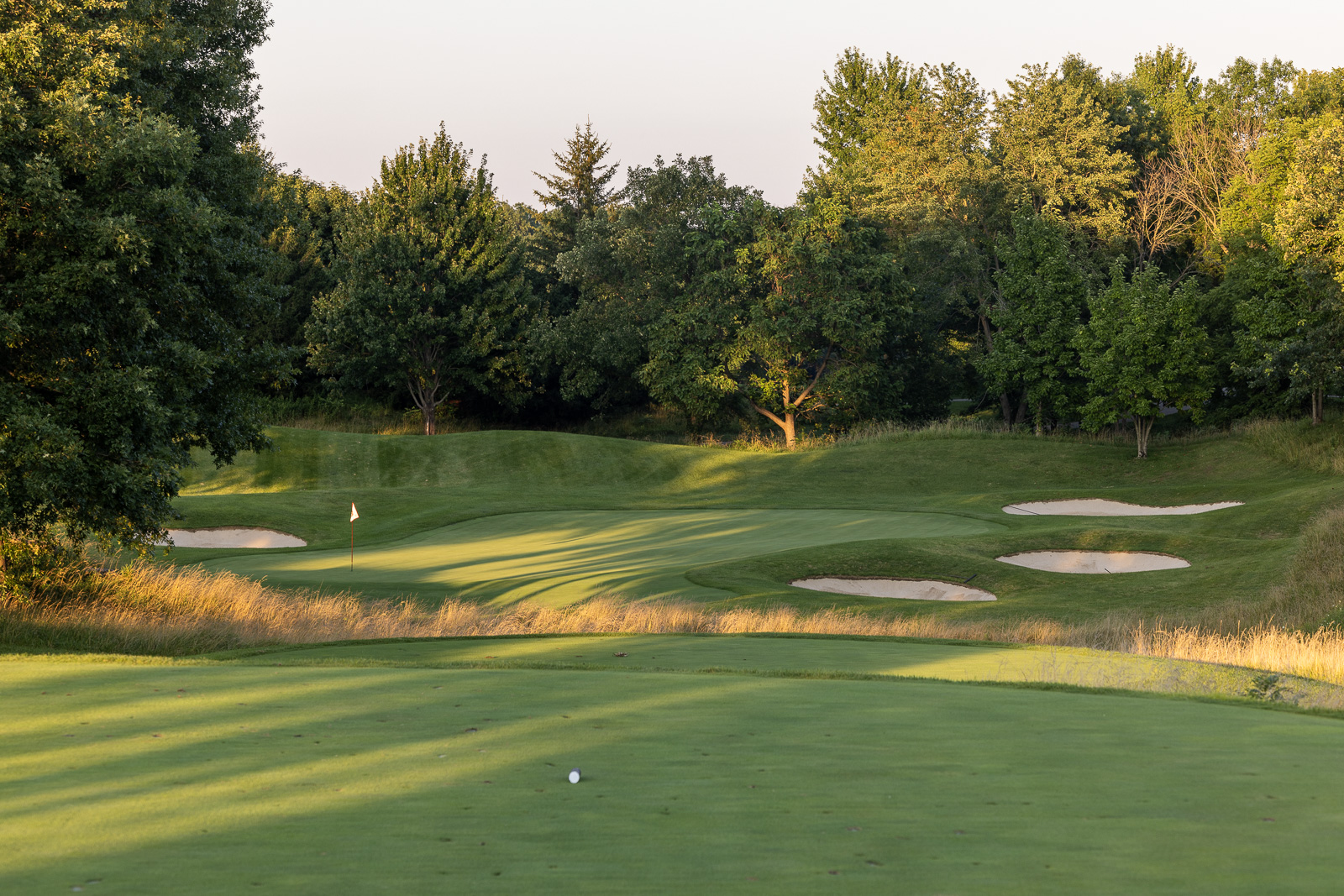
No. 13 is another excellent driveable par 4.
A wide bunker crosses most of the fairway roughly three-quarters of the way to the green. Find it from the tee, and you’re left with an awkward 40-yard bunker shot rather than the straightforward pitch (or putt) you were hoping to create.
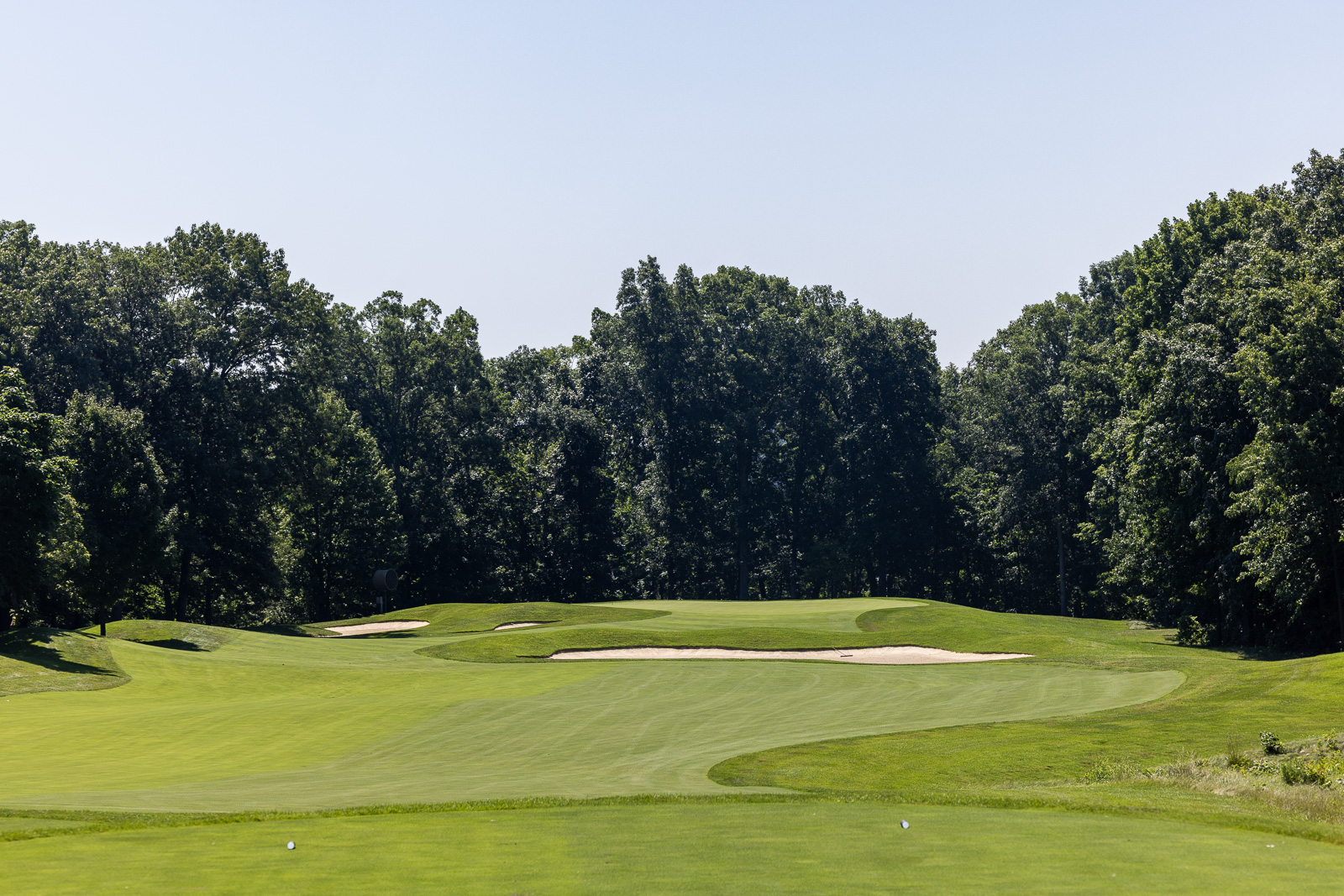
The 14th is one of the best holes at Canyata.
Water runs along the left, asking you to decide exactly how much you want to challenge from the tee. The more water you take on, the better and less intimidating your angle becomes for the approach.
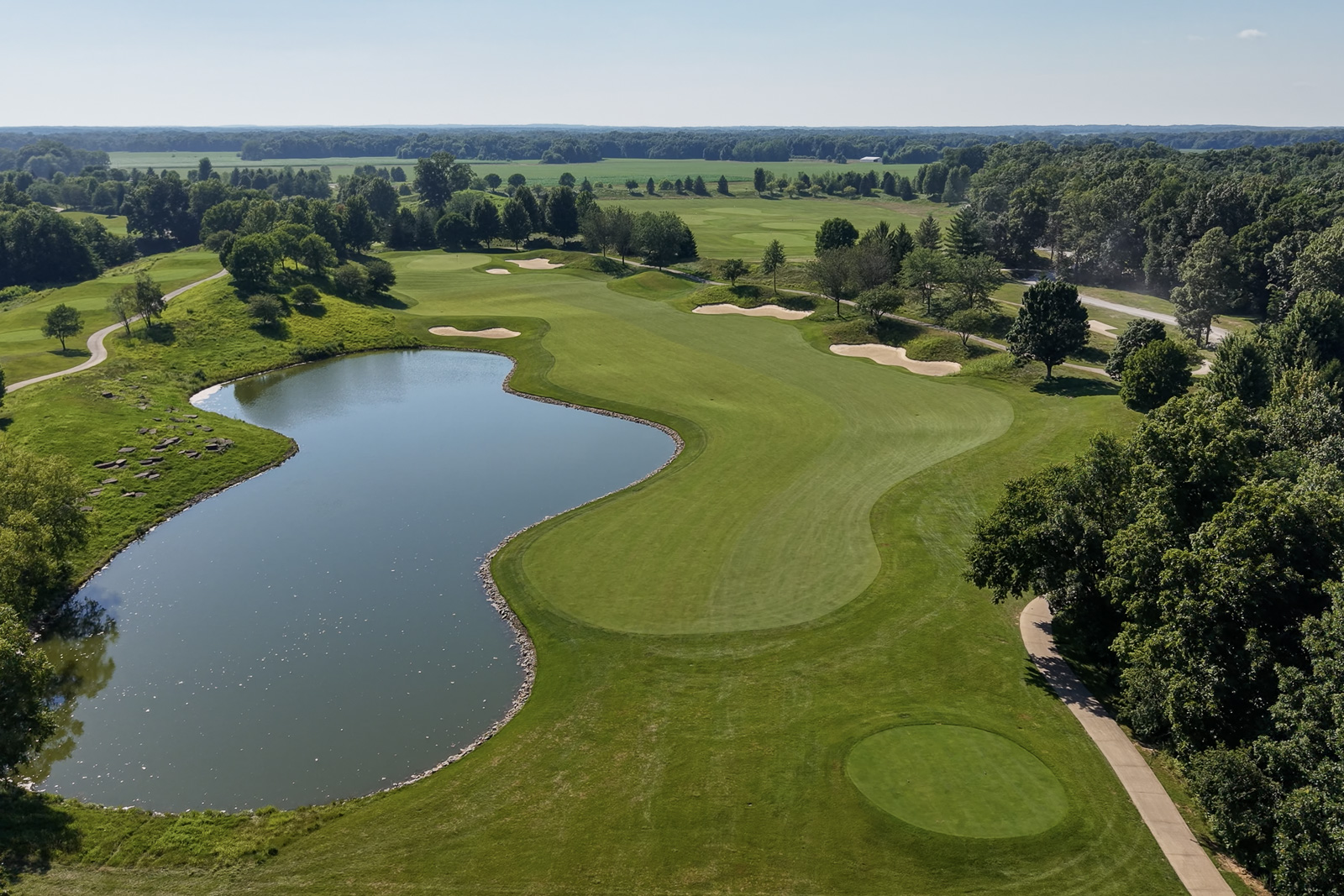
It’s a simple strategic idea executed really well.
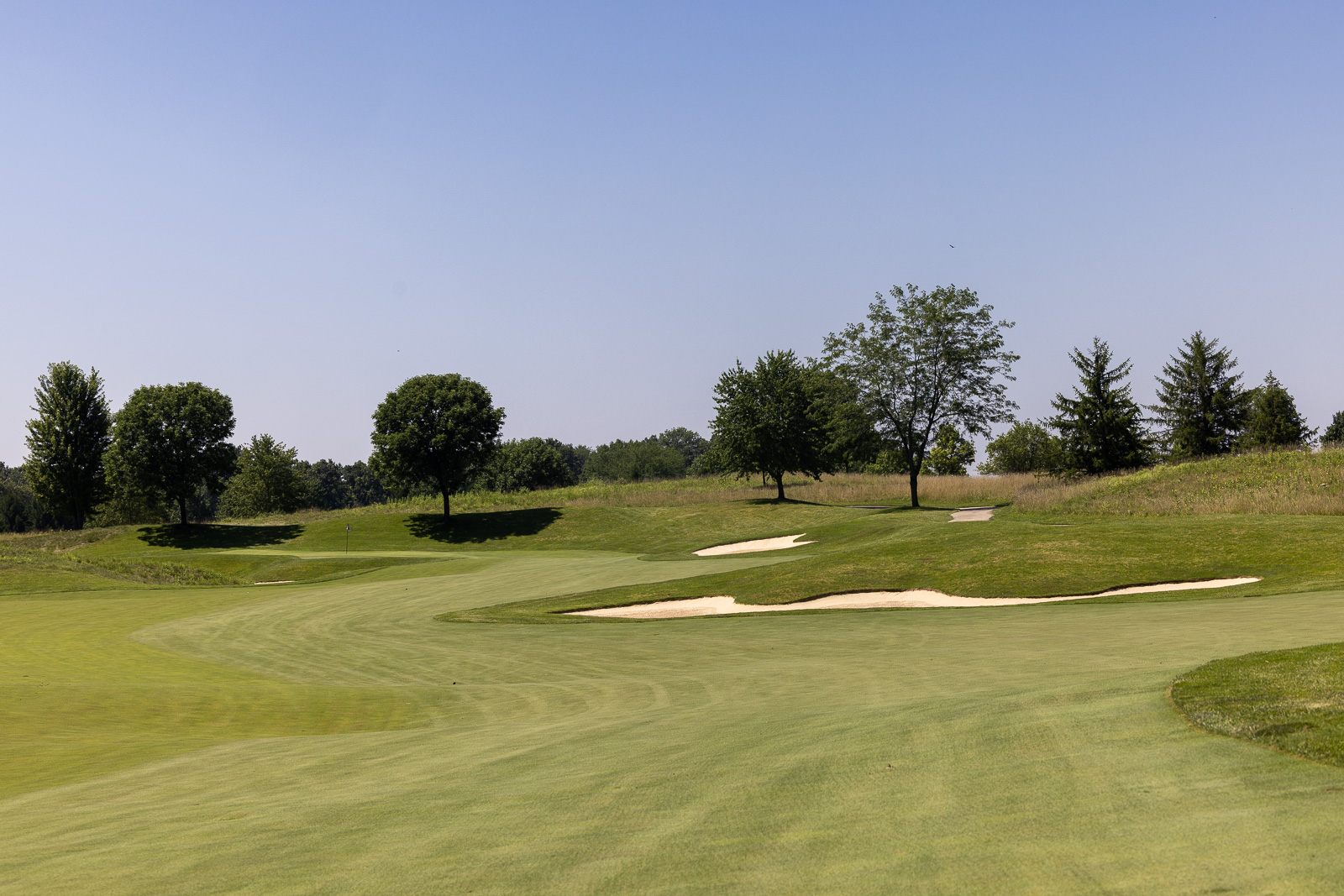
The par-5 15th is the longest par 5 on the course, and once again, the bunkering ensures you have to think about every shot.
Then comes No. 16, which might be the most controversial hole at Canyata.
It’s the final short par 4, with a large tree directly influencing the route toward the green. Beneath it is a ravine waiting to collect aggressive drives that don’t quite carry.
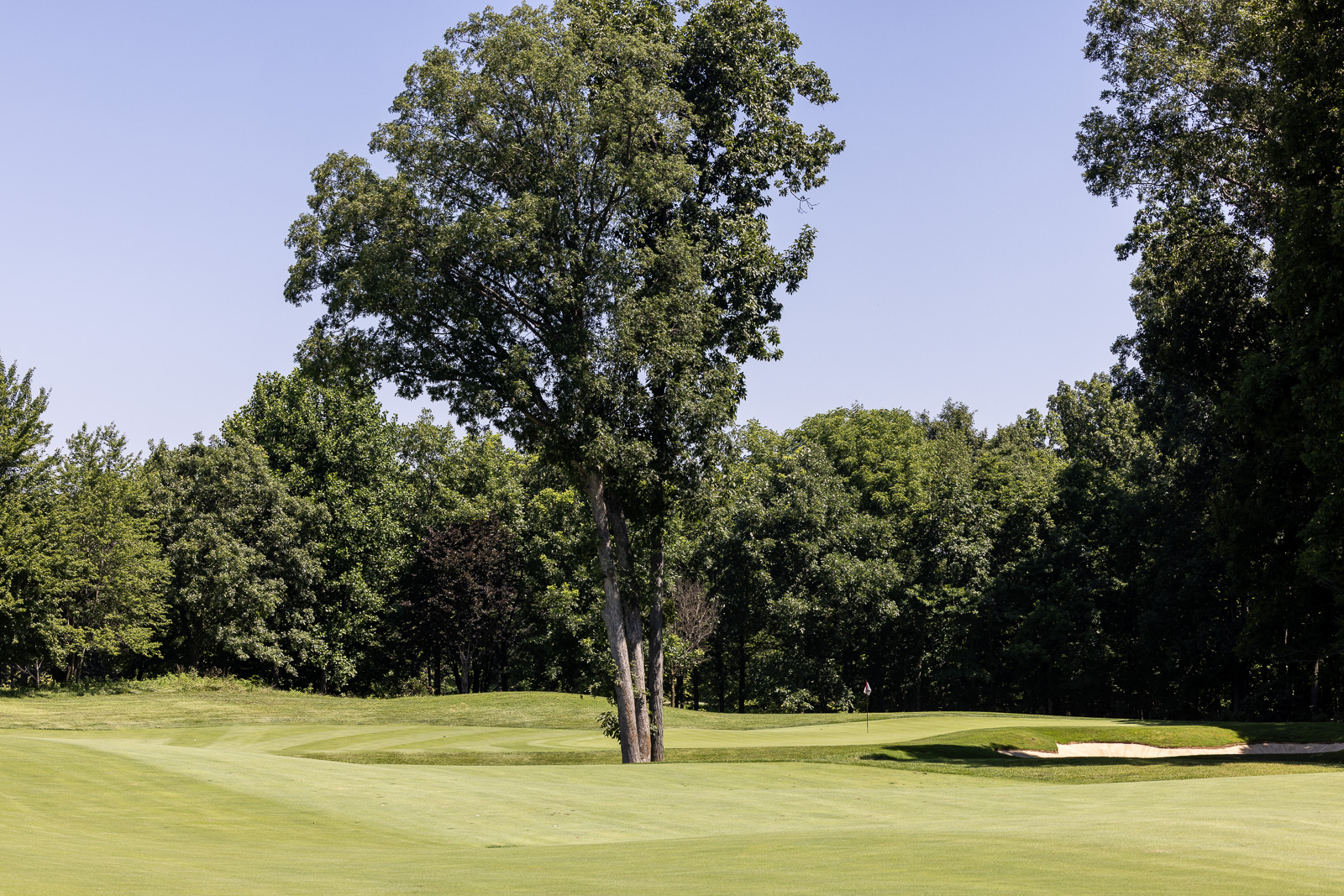
A drive left of the tree can leave a relatively simple pitch from a favorable angle.
A conservative layup, however, will an exacting approach threaded between the tree and the forest while also carrying the ravine and a front bunker.
I’ve heard people call it their favorite hole at Canyata.
I’ve heard others call it their least favorite.
Personally, I’m a fan.
It’s strange, memorable, and demands commitment. At the same time, I can understand why someone might see the tree as overly influential or even gimmicky.
Regardless of your opinion, it’s a hole you’re going to remember.
The 17th is the final par 3, and its character changes considerably based on the pin location.
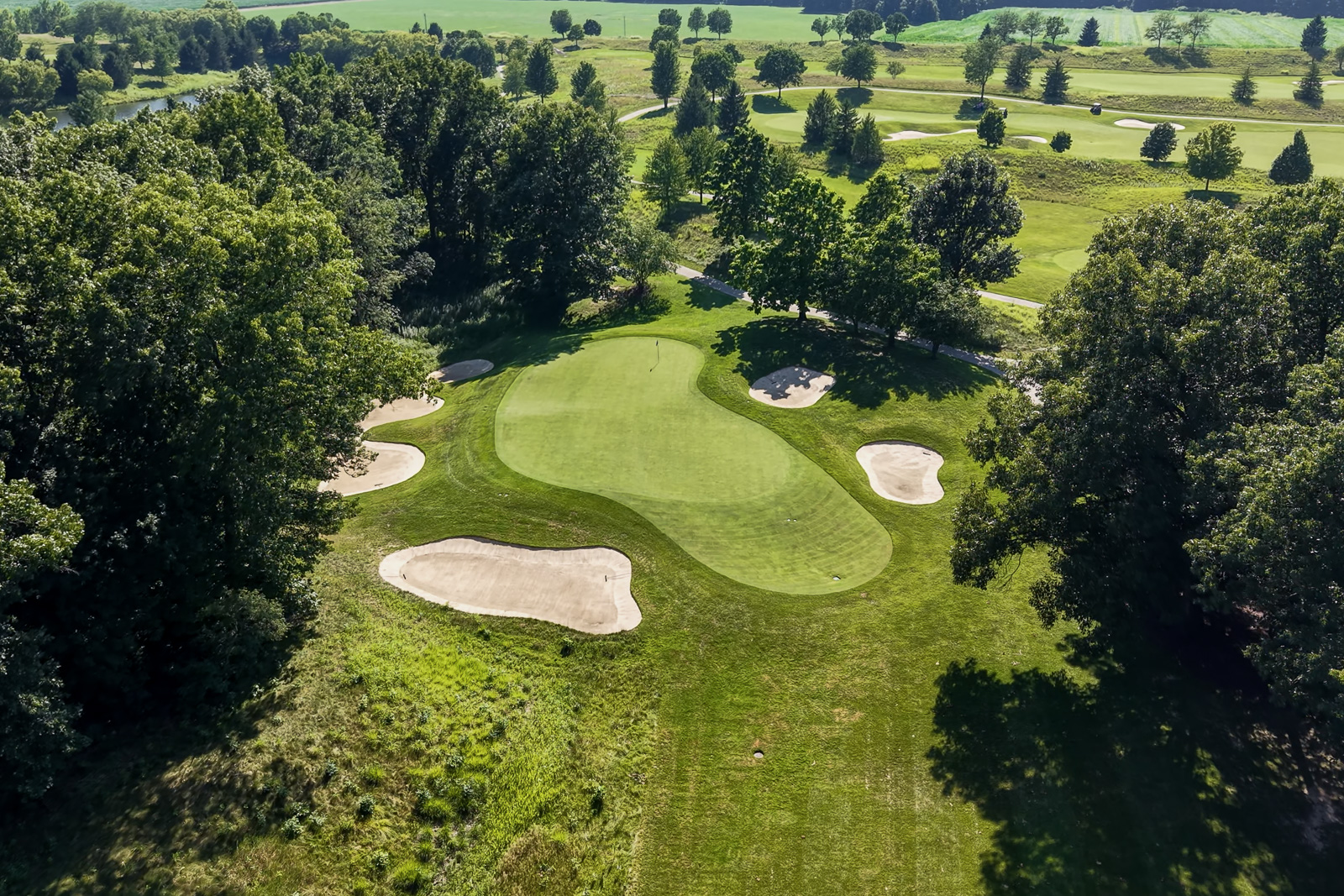
The finishing hole is a stout par 4 requiring two exacting shots. A deep ravine separates the fairway from the green, creating a dramatic final approach and ensuring the course doesn’t let you coast to the clubhouse.
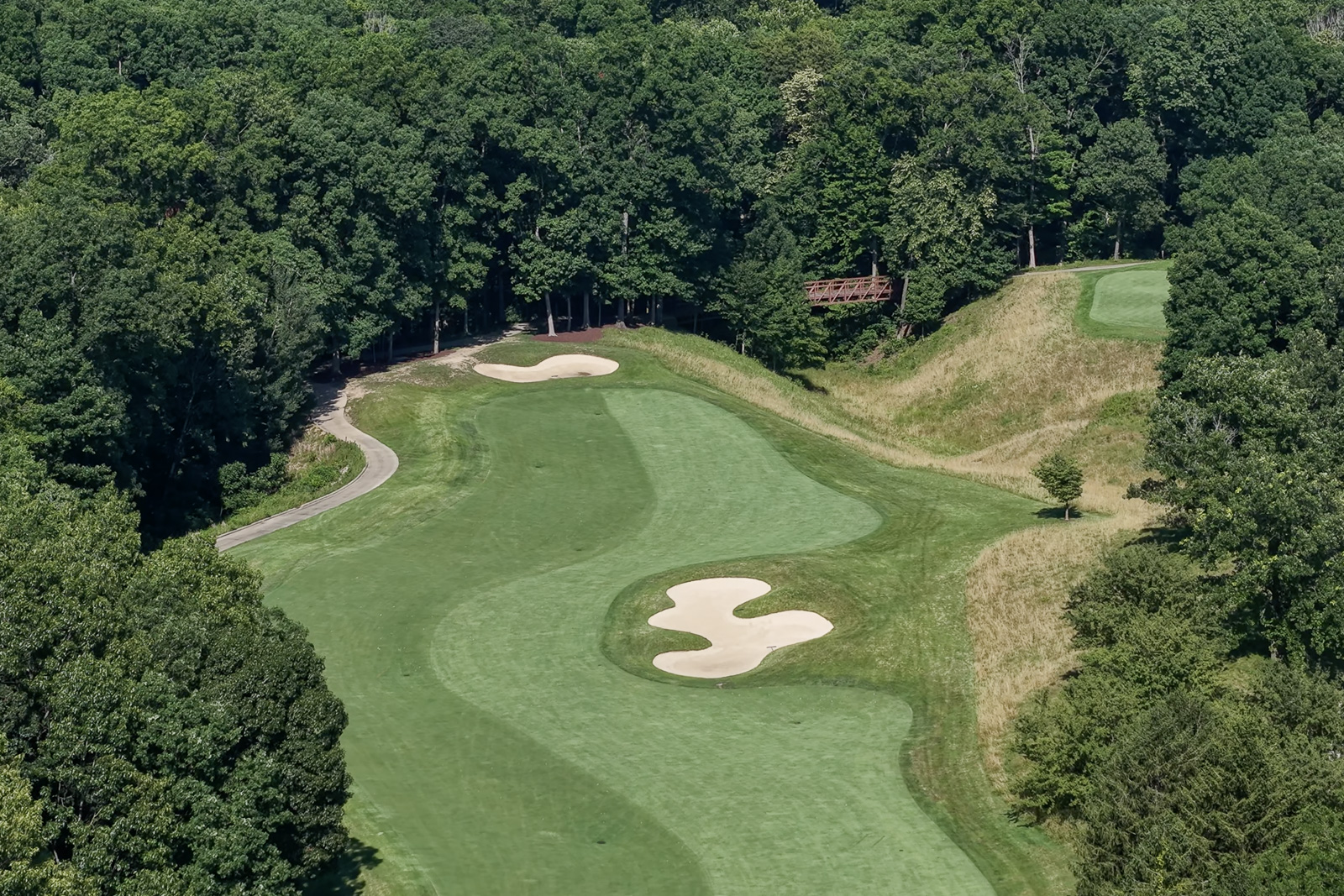
Canyata may have begun as a personal playground, but nothing about the finishing stretch feels casual.
A Couple Other Surprising Touches
The more time you spend at Canyata, the more you realize that its unusual origin influences nearly every aspect of the experience.
It doesn’t always have the traditional amenities you’d expect at a nationally ranked private club.
Instead, it frequently replaces them with something more unexpected and memorable.
The Food at Canyata
Because Canyata wasn’t built as a membership-based golf club, it’s missing a few things that would normally be considered essential.
Most notably, there isn’t a traditional clubhouse with a full commercial kitchen (yet).
An existing building was renovated to include a bar, small dining area, and pro shop, but there was no practical way to build a conventional kitchen into the space.
Enter the food truck.
Parked directly outside is a black truck where Chef Gus works his magic.
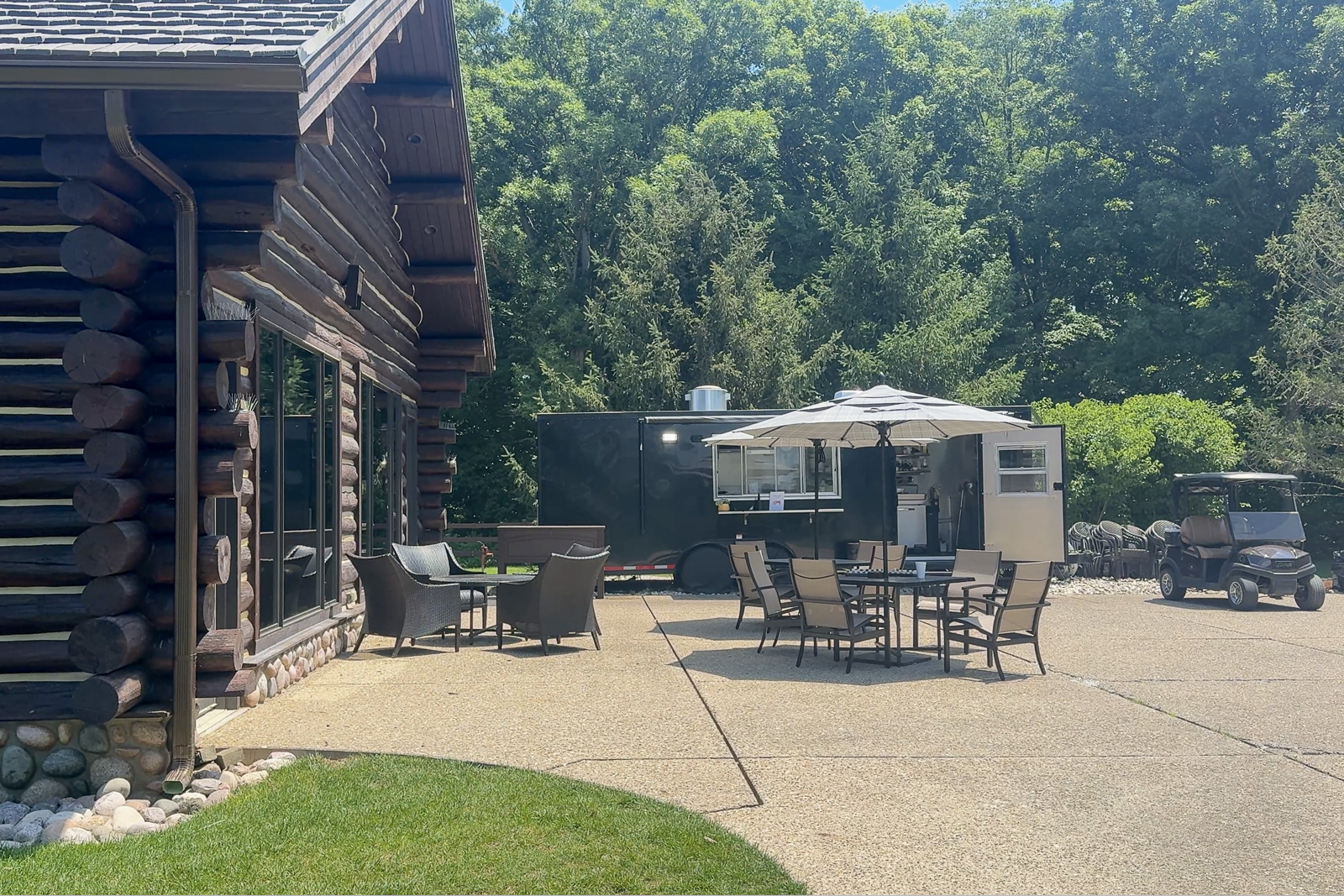
I wasn’t expecting much.
Breakfast, lunch, and the occasional dinner are served family-style inside the clubhouse, with everything delivered directly from the truck.
The first evening I was there, I was told I was lucky because they were preparing dinner for the only other group on the property.
I assumed that meant burgers, brats, or hot dogs.
I was not expecting one of the best tomahawk steaks I’ve ever eaten.
Based on appearances alone, you’d never expect the food at Canyata to be anything special.
But it is.
Every meal I had was fantastic, even when it was something as casual as breakfast tacos.
Much like the rest of the property, the setup is unconventional, understated, and far better than you expect it to be.
And Did I Mention the Fishing?
The other major surprise was attached to every golf cart:
Two fishing rods.
There are numerous lakes throughout the property, and because Canyata sees so little play, stopping to fish between holes is part of the culture.
Members may play a few holes, pull over beside a lake, cast for a while, and then continue their round.
The staff will even provide a tackle box if you want to take it more seriously.
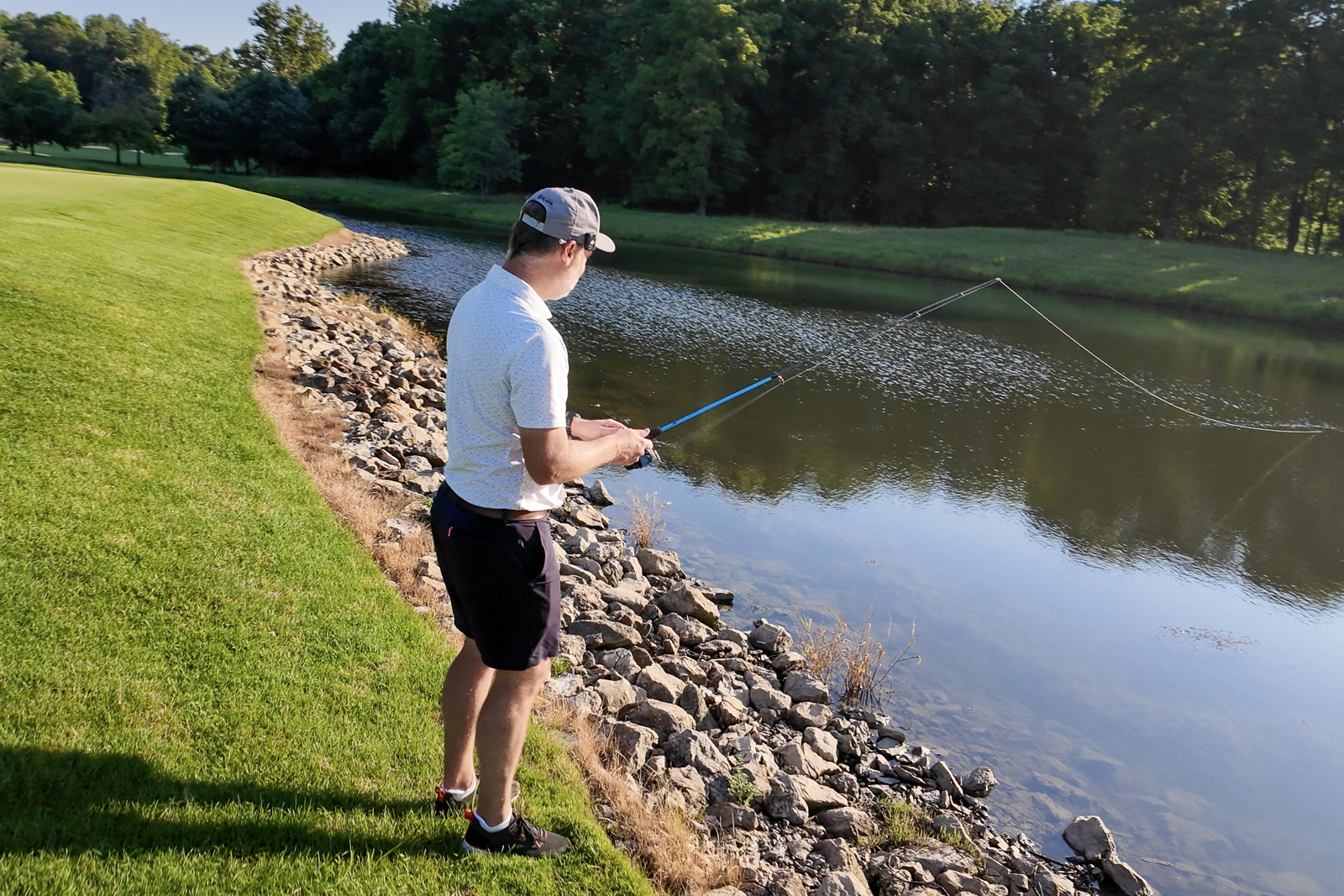
I didn’t expect to do much fishing during the trip. But every time I passed a promising stretch of water, I found myself wanting to throw in a line just to see what might happen.
I set a goal of catching at least one fish before I left.
You’ll have to watch the upcoming video to see if I succeeded or not 🙂
This is genuinely one of the most unusual and enjoyable touches I’ve encountered at any golf club.
It also reinforces what makes Canyata different.
You’re not being pushed through a rigid tee sheet.
You’re not worried about the group behind you.
You can play golf, stop for lunch, fish between holes or linger wherever you feel like it.
For a couple of days, the property really does feel like your own private playground.
The Future of Canyata
Now that Canyata is a proper club, many things are going to change.
But, hopefully, many of the most important things will remain exactly the same.
Canyata is now the official home club of Icon Golf, Escalante’s high-end national membership. One membership provides access to eight clubs and counting around the country.
Canyata itself is also undergoing significant development.
Nine cabins are being constructed near the driving range. Each is expected to include four king suites, finally giving visiting members and guests the ability to stay directly on the property.
The current best options are to stay at an Airbnb in Marshall 10 minutes away (the Archer Lofts are fantastic), or most members stay at the Terre Haute Casino Resort about 35 minutes away.
A lighted putting green is also planned, allowing guests to continue playing well into the evening.
Eventually, the development is expected to include a new bar and restaurant near the cabins.
Those additions will turn Canyata into a more complete golf destination and solve some obvious limitations created by its history as a private family retreat.
But the more Canyata grows, the more important it becomes to protect the atmosphere that made it special.
Icon has committed to keeping rounds extremely limited, allowing no more than 40 guests on the property at any given time.
The intention is to preserve the freedom and informality of the original experience.
Play when you want.
Fish when you want.
Eat when you want.
Take your time.
Feel, at least temporarily, like the entire golf course belongs to you.
After spending a couple of days there, that’s exactly the experience I had.
Canyata isn’t the most polished golf destination I’ve visited, at least not yet.
There isn’t currently a grand clubhouse, expansive locker room, luxury lodging, or even a shower on property. Some of those traditional amenities will come with time.
But those things aren’t ultimately what make the place memorable.
What makes Canyata special is the combination of serious golf and total freedom.
It’s walking onto a Top 100 course without seeing another group.
It’s driving directly through a river to reach the first tee.
It’s eating an incredible tomahawk steak prepared in a food truck.
It’s carrying fishing rods on the golf cart and deciding whether you’d rather hit your next tee shot or cast into the lake.
It’s a championship course that somehow still feels personal, informal and slightly eccentric.
For most of its first 20 years, almost nobody had the opportunity to experience it.
The new Canyata will inevitably be busier than the old one. But if Icon can follow through on its plans without losing the quiet, relaxed, and deeply personal nature of the property, the next version of Canyata may be even better.
More complete.
More comfortable.
Slightly more accessible.
But still unlike anywhere else in golf.
Recent Updates:
August 11th, 2026: Added a video showcasing my time at Canyata.
