

There are two things I know about almost every single golfer who is relatively new to the game:
1) They lose a lot of golf balls.
2) Even when they don’t lose them, they don’t really notice or care about the so-called performance enhancements a premium golf ball is advertised to provide.
What a new golfer most likely cares about is some economy. Golf is an expensive sport, and it’s only getting worse.
Not to mention, it’s hard as hell.
Put those things together and new golfers are oftentimes paying a lot simply to also suffer a lot.
If that’s you, why would you want to spend any more than necessary to find a golf ball that’s not very expensive but that isn’t the complete bottom of the barrel? Ideally, you want something affordable, but that still provides some benefit.
That’s what this list is. These are the best golf balls that are appropriate for beginners, affordable, and will also help with the primary issues most newer golfers have.
I picked five golf balls that each solve a different problem beginning golfers face. Three of them we’ve reviewed in depth, and I’ll include links to those full breakdowns. The other two haven’t yet had a full review but they’re golf balls I’m familiar with and think they belong here.
If you’re new to golf, these are the five golf balls I’d recommend you consider playing.
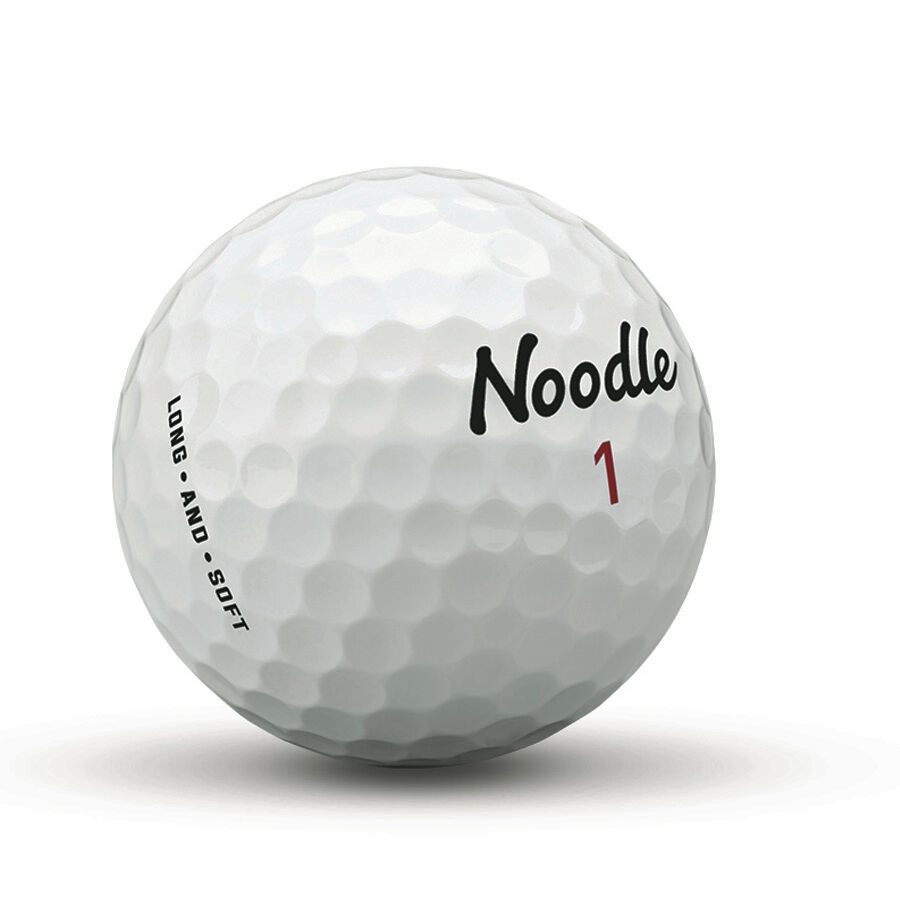
Best Overall Golf Ball for Beginners: TaylorMade Noodle Long and Soft
I’ve been recommending this golf ball for close to a decade now. And not just to beginners. I recommend them to anyone who wants a surprisingly nice and high-performing ball at a super affordable price.
To me, these are the best cheap golf balls you can buy.
The Noodle uses a two-piece build with a very soft 34-compression core, so you don’t need a fast swing to get the most out of it.

Where this ball does fall short is typically going to be around the greens. Chips and short pitches don’t get the spin or control you’d get from a pricier ball.
But if you’re new to the game, you can wait until you hone your shot-making techniques before you worry too much about how much a ball spins.
This has also become my backup ball. If I’m three balls down through two holes and there’s no sign of things getting better, out come the Noodles.
And actually, these golf balls can get things back on track. Regardless, you’re not paying much to find out.
At under $20 for 15 balls, it’s the easiest recommendation on this list.
To really hammer this point home, when I was too cheap to pay for the insanely inflated resort pricing, I bought a sleeve of Noodles to play TPC Sawgrass. And I went par, par on 17 and 18. So how bad could they be?!
Check out our complete Noodle review.
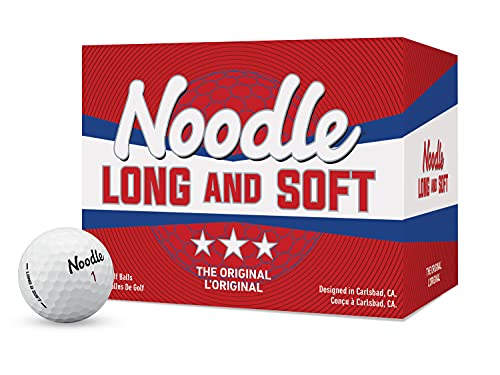
I was surprised by how good these balls were. Now, it's all relative, they're no Tour-level ball. But at this price, for the average golfer who isn't a single-digit handicap, these will serve you just fine.
Straightest AND Easiest-to-See Golf Ball for Beginners: Volvik Vivid Soft

Here we’ve got a two-for-one.
Not only is the Volvik Vivid Soft a really good match for moderate swing speeds and a straighter ball flight, but it’s also incredibly easy to see.
That means you’re less likely to hit it offline. And when you do, it’s a lot easier to find and hit again.
When we tested a big chunk of Volvik’s lineup, the Vivid Soft was one of the friendliest balls we hit off the tee. It flew straight, carried plenty long, and clearly trimmed side spin. For a golfer still fighting a slice, that’s a big deal.
Then there’s the color.

The bright green matte version was the easiest ball to track of any we’ve tried all year. You’d think a green ball on green grass would disappear. It doesn’t. It stands out in the air, and it stays visible in the rough.
It’s a three-piece ball with a soft ionomer cover and a 70-compression rating, which makes it a good match for moderate swing speeds.
The trade-off shows up around the greens. The Vivid Soft rolls out more than a premium ball, so plan on landing your chips a little shorter and letting them run.
The matte cover also picks up dirt easily, so plan to clean them after each hole.
Pricewise, you’re looking at $34.99 a dozen, but code BREAKINGEIGHTY gets you a free dozen after you buy three dozen.
Read more about the Vivid Soft in our complete Volvik golf ball review.
Matte-finish, three-piece ionomer built for visibility and easy speed. Flies straight and is plenty long. The bright green is the easiest ball to track I've played this year.
Use code BREAKINGEIGHTY to buy 3 dozen, get 1 free!
Best Golf Ball for Getting the Ball in the Air: Callaway Supersoft
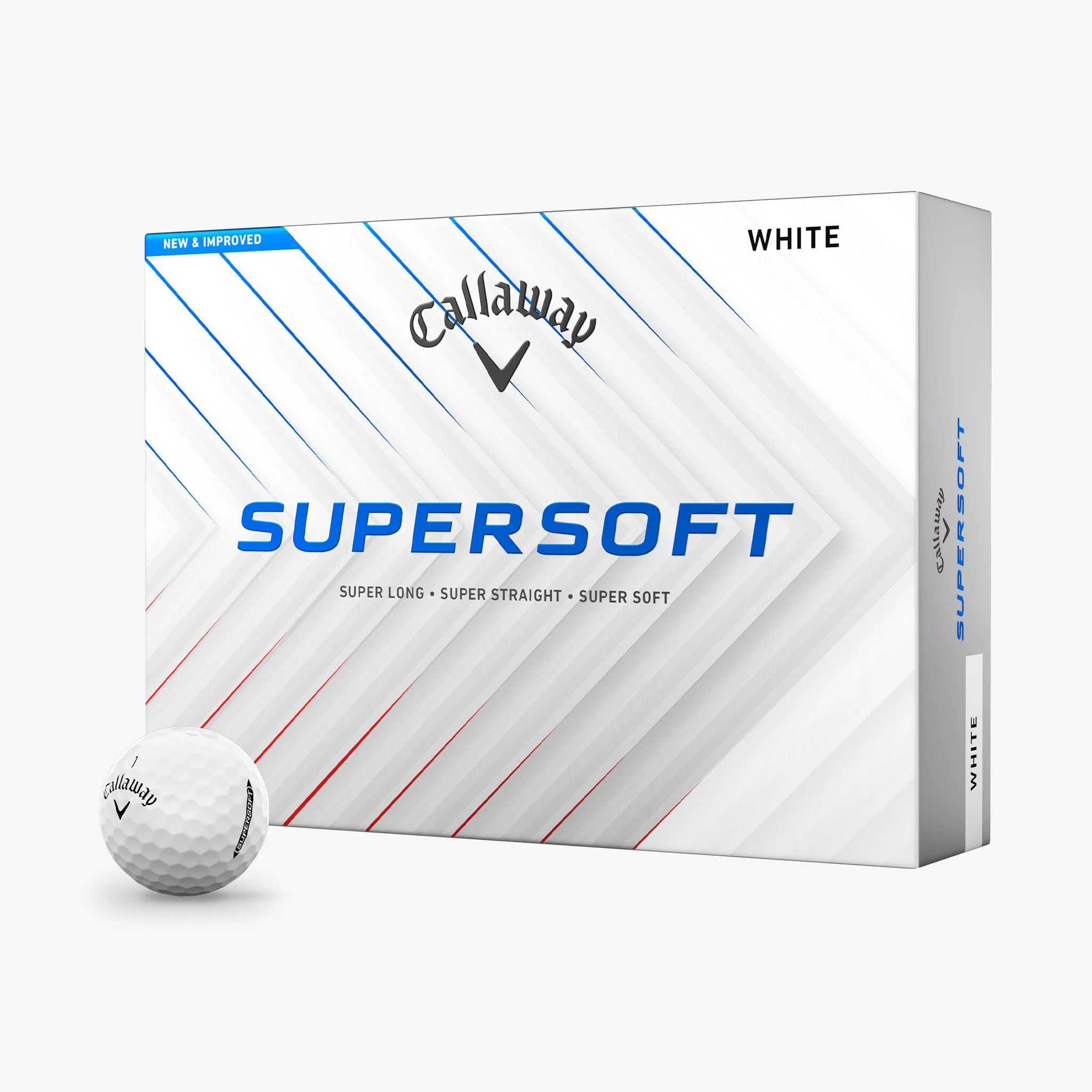
Callaway named this one well. It’s soft. Really soft.
But the feel isn’t why it’s on this list. It’s because of what it does for a new golfer’s ball flight.
The Supersoft is a low-compression ball built to help slower swings get the ball up and moving. In our testing, it flew a little higher than a Pro V1 with a 7-iron. Off the tee, our wilder drives were noticeably tamer thanks to less side spin.

Callaway updated the Supersoft last year with a new core and cover, and it now comes in a handful of different color options.
Like most of the golf balls on this list, the sacrifice is around the greens. It’s the same story as with the above balls. Not as spinny on approach shots or as grippy on pitches and chips.
But what you get is a ball that’s easier to launch and potentially less wild, which I think is a very fair trade for a beginner golfer.
You can pick these up starting at $26.99 a dozen.
Learn more about this sneaky-good option in our full review.
Looking for an incredible soft ball that's super forgiving? Look no further than the Callaway Supersoft. It's one of the best-selling balls in golf for a reason.
Longest Golf Ball for Beginners: Titleist Velocity
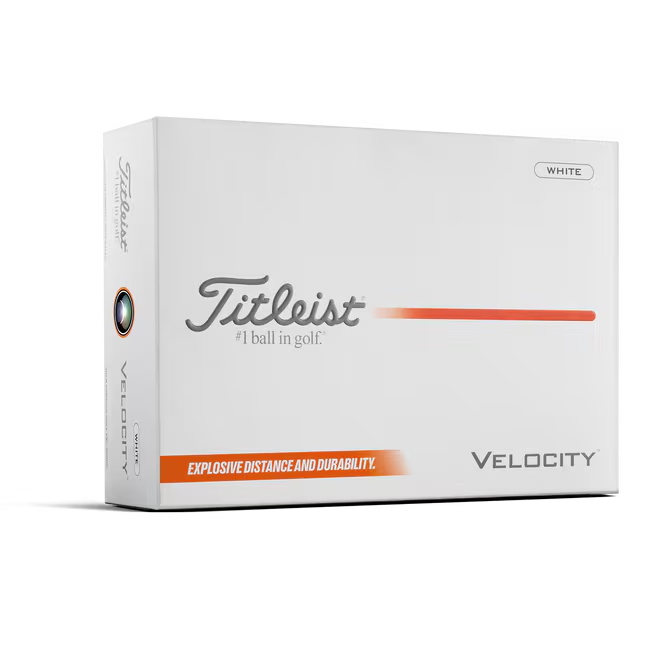
If distance is what you’re chasing, I point people to the Velocity.
This one’s kind of like the Noodle in that I’ve been recommending it for a long time, but I just don’t see any reason to change.
Among the golfers I play with, especially the older guys trying to get a few yards back, this is the consensus favorite.
Titleist redesigned it for 2026 with a softer core and a faster cover to cut spin on long shots. There’s also a new dimple pattern for a more piercing flight.
Another nice thing about these golf balls is they’re super durable. That definitely comes in handy if you’re bouncing them off cart paths or if you’re just hoping to save some money and get a nice run going with the same ball.
I haven’t published a full standalone review of the Velocity, but for as much as I see it in play and for as regularly as I recommend it, I probably should.
The price here is 30 bucks a dozen.
Not a single-digit golfer, and looking to hit bombs? The Titleist Velocity is one of the best distance balls we've reviewed.
Best Premium Golf Ball for Beginners: Titleist Tour Soft
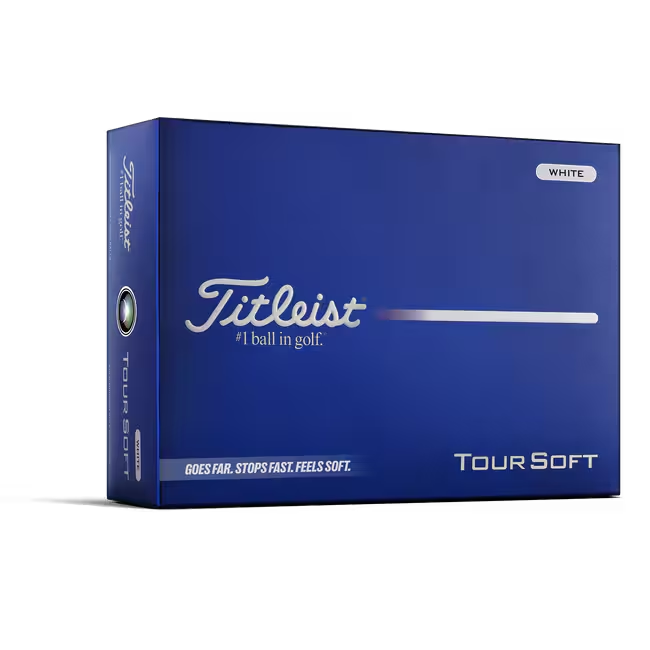
At some point, you’ll hit a nice little chip that runs 15 feet past the hole, and you’ll start wondering whether it’s you or the ball.
When you get there, the Tour Soft is where I’d start.
Titleist built it for golfers who want both distance and stopping power, with a softer feel.
And at $40 a dozen, it’s a step up without jumping into Pro V1 money.
The difference from something like the Velocity comes down to the short game. By Titleist’s comparison, the Tour Soft launches a little higher off the tee, feels softer, and spins more around the green.
Is it worth the price for a beginner? Probably not when you’re still in the stage of losing a bunch of balls every time you play. But as you get a little bit better and as your misses start to get a little less wild, this is a really nice middle ground between beginner and advanced.

Eventually, as you gain more experience and start to see improvement, you're going to lose fewer golf balls and start to appreciate some of the characteristics of a better-constructed ball. When you're there but not quite ready to spend Pro V1 money, I really like the Titleist Tour Soft.
What Actually Matters in a Beginner Golf Ball
You could read a bunch of golf ball reviews and probably come out of it completely confused. For a beginner, it really comes down to a few things.
Lower spin keeps you in play. Most new golfers fight a slice or a hook. The more a ball spins, the more it moves sideways. That’s why most beginner balls are built to maximize distance and cut spin.
Lower compression helps slower swings. A low-compression ball is easier to squeeze at impact, which helps slower swing speeds get more distance. Tour balls with higher compression are built for faster swings and better feel, and most beginners won’t get much out of them yet.
No reason to exceed your budget. You’re going to lose balls. That’s just part of golf. Spending $58 a dozen on balls you’ll lose in a couple of rounds doesn’t make sense. Especially when those balls are likely to hurt a beginner’s game, rather than help it.
Every ball on this list costs $40 a dozen or less, and the Noodle works out to about $1.27 a ball.
One more thing: Once you find a ball that you like, stick with it for a while. Playing the same ball round after round helps you learn how far it flies and how much it rolls out.
And if none of these feel right for you? Then take a look at our full list of the best golf balls on the market.
This page contains affiliate links. This means that if you click a link and buy one of the products on this page, we may receive a commission (at no extra cost to you!) This doesn’t affect our opinions or our reviews. Everything we do is to benefit you as the reader, so all of our reviews are as honest and unbiased as possible.
