

I don’t swing it the fastest. I admitted as much in my Performance Golf 357 review, and nothing’s really changed since then.
So you’d think a speed trainer would be right up my alley. And in theory, it is.
But speed training has always come with a catch that I think most golfers see right away. If your swing has a flaw, swinging it faster doesn’t necessarily fix your biggest problems. In fact, it may just send the ball that much farther offline.
I know golfers who swear by The Stack and HackMotion 4, so you’re basically solving both issues at once.
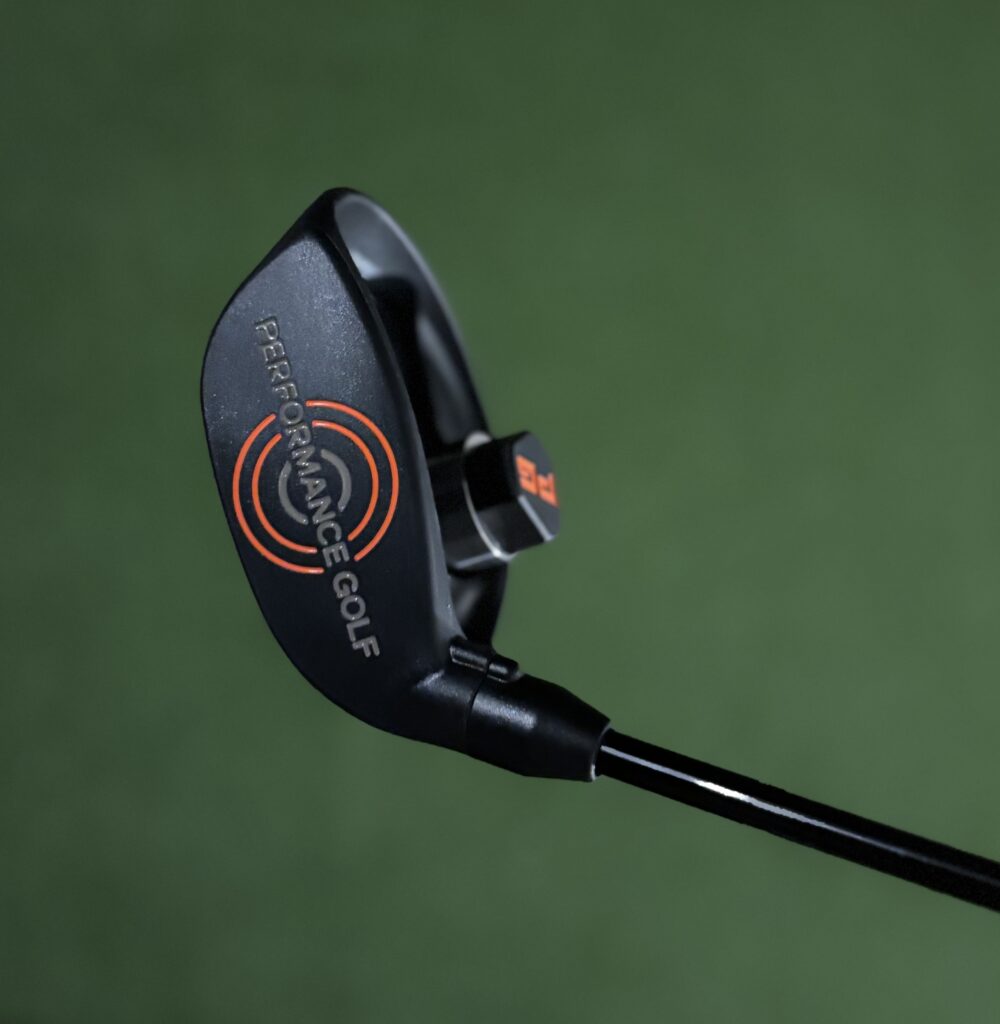
But that’s exactly what SpeedTrac is trying to do in one product. Instead of a weight on the end of a stick, Performance Golf puts the weight inside a real clubhead that’s about the size of a mini driver.
You’ve got three positions for the weight, each one designed to address a different clubface-at-impact problem. So if you slice, you put the weight in the heel. If you hook, in the toe.
And I’ve got to say, it’s a really smart idea.
I haven’t yet put the SpeedTrac through a full multi-week program. But I’ve swung it for a few sessions and tested the various weight combinations and positions. I’ve watched the training videos. And I’ve spent time thinking through how it compares to the Stack.
So I can’t tell you for certain how many miles per hour it’s going to add to your swing. But I can tell you how it’s built, how it feels, what you get for your money, and who I see it as a fit for.
And honestly, the speed part isn’t really much of a debate anyway. It’s a proven concept that if you swing something heavier and lighter than your driver often enough, you get faster. I have zero doubts about that part working.
So let’s get into what makes this thing different than competing options and whether I think it’s actually any good.
A speed trainer with a real clubhead instead of a weighted stick. Four head weights and a moveable heel, center, toe position gives you 12 setups, so you can train face control while you build speed.
First Impressions: It Looks Like an Actual Golf Club
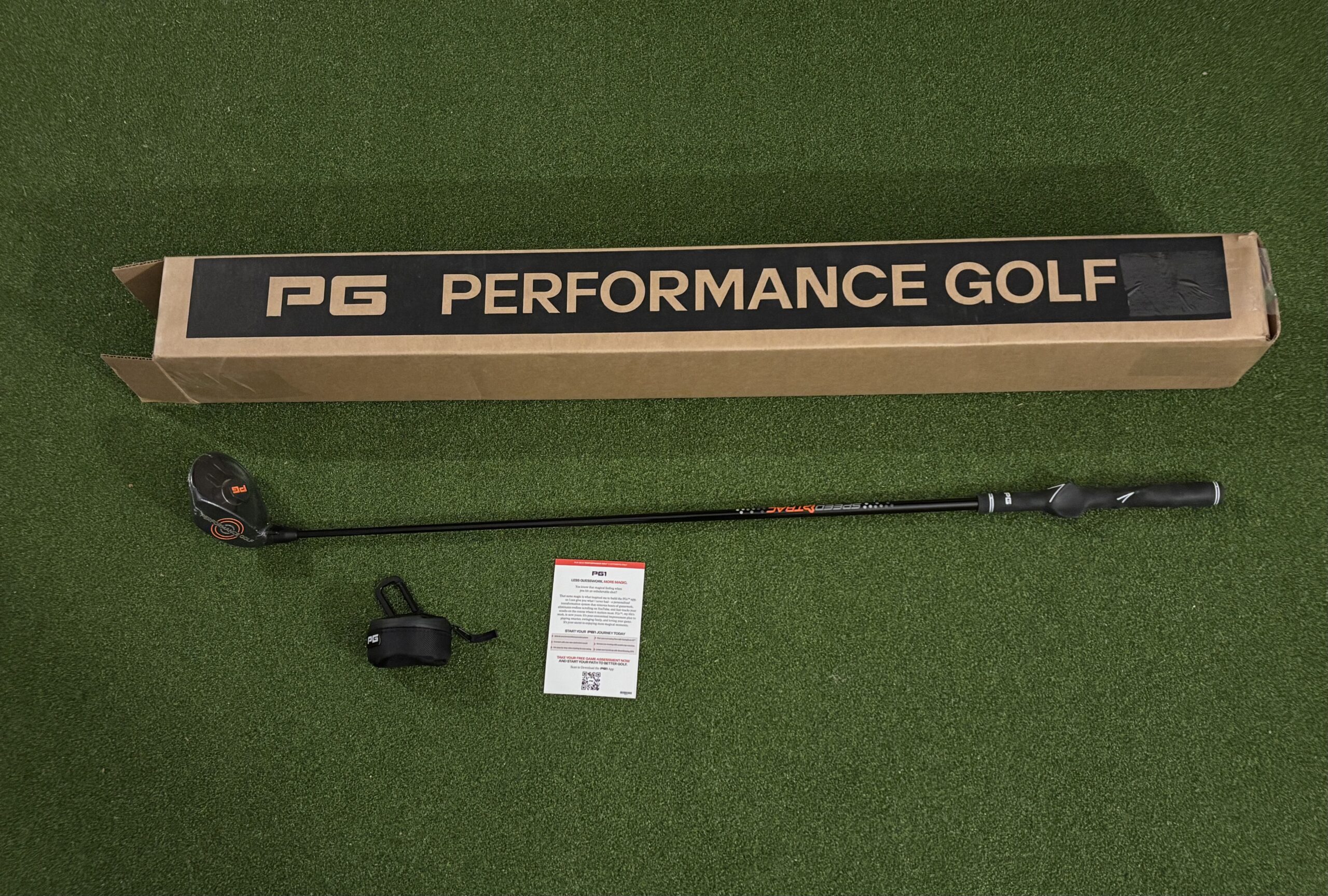
The speed trainers I’m accustomed to are a shaft with weight on the end.
That includes the Stack, which I’ve used. It’s shorter than the SpeedTrac, and it has no head shape at all. So while it undeniably builds clubhead speed, and it has some advantages the SpeedTrac can’t match (more on that later), it doesn’t look or feel much like the club you’re actually trying to swing faster.
The SpeedTrac does, and that’s the first significant thing I noticed.
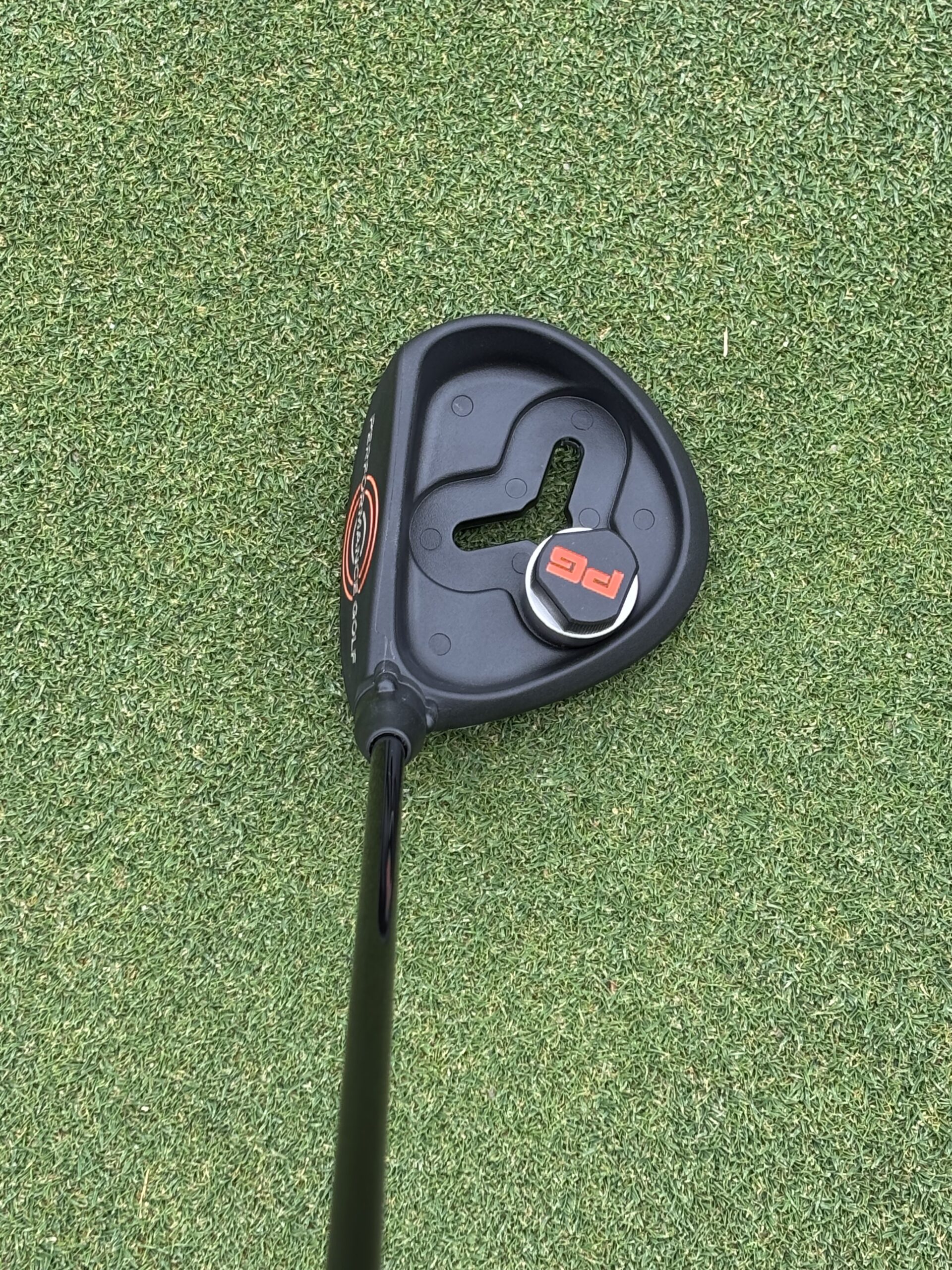
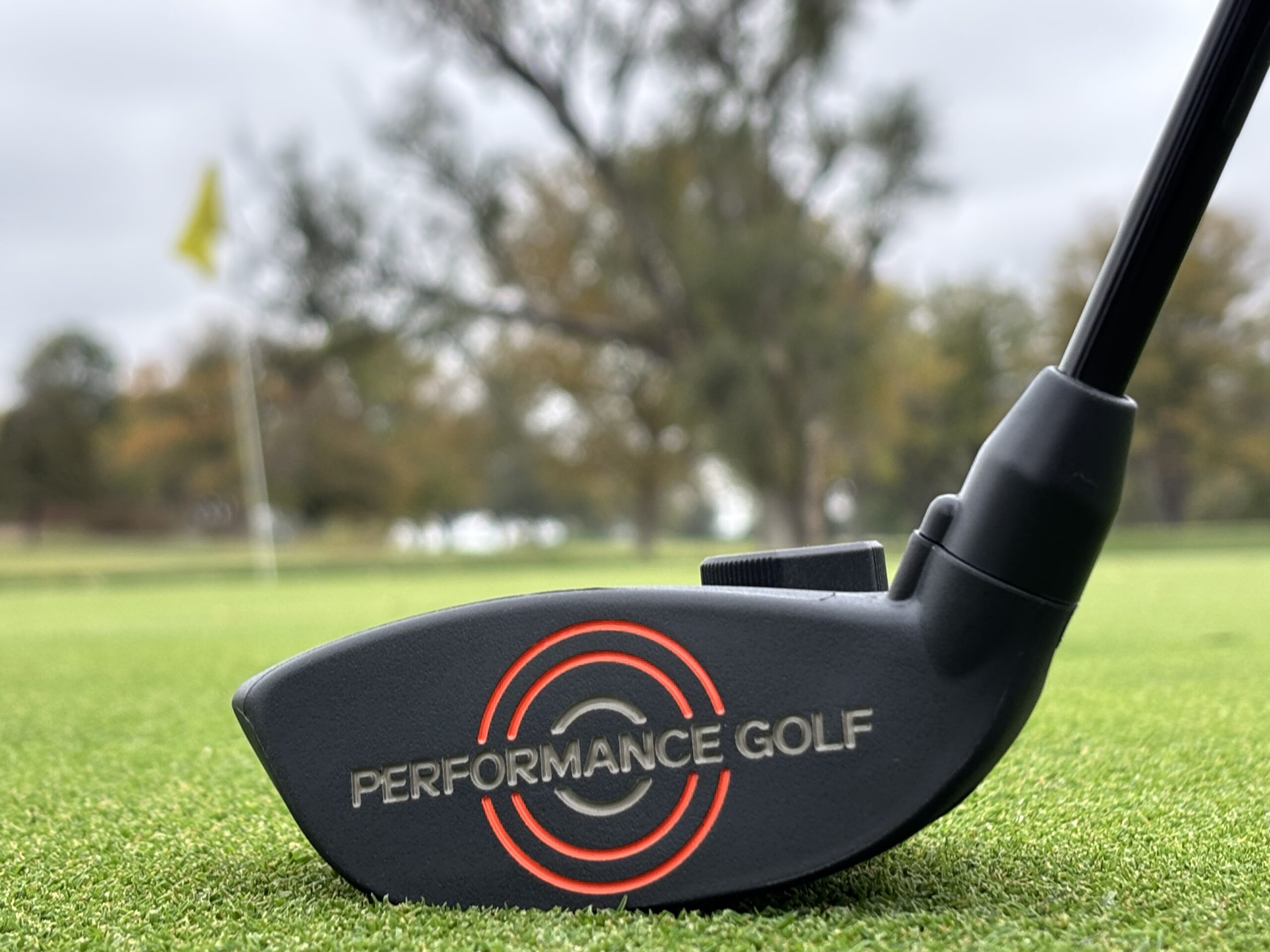
It’s 43 inches long, and the head is a mini-driver shape with an open crown. So when you set it down, you’re looking at an actual clubface, even though you don’t hit balls with this speed trainer.
The point here is that this product is designed to train clubface awareness and positioning while it trains swing speed.
That comes down to where the weight sits.
A weighted stick balances like a baseball bat, with its weight in line with the shaft. A real driver’s center of gravity sits behind and away from the shaft, which is why the face wants to rotate open and closed during your swing. So the SpeedTrac is built to behave like a driver.
I’ll get into the different weight positioning and combinations and what that’s supposed to accomplish as we go.
I’ll also talk about the grip. That’s an additional benefit. This thing is actually built to help you train a correct grip while you’re working on the other stuff.
So there’s a lot to cover.
My first reaction was that I really liked the concept. If I’m going to spend time making max-effort swings, I’d rather do it with something that has the length and weight distribution of an actual golf club.
Adjustable Weight Combinations
The SpeedTrac gives you four head weights in one club. That’s actually pretty handy in itself. The SuperSpeed, by comparison, has you swinging three separate sticks.
Here’s how Performance Golf breaks them down:
- Overspeed (160g): about 18% lighter than an average driver
- Real-Feel (195g): about the same as an average driver
- Overload (230g): about 18% heavier
- Overload (255g): about 31% heavier
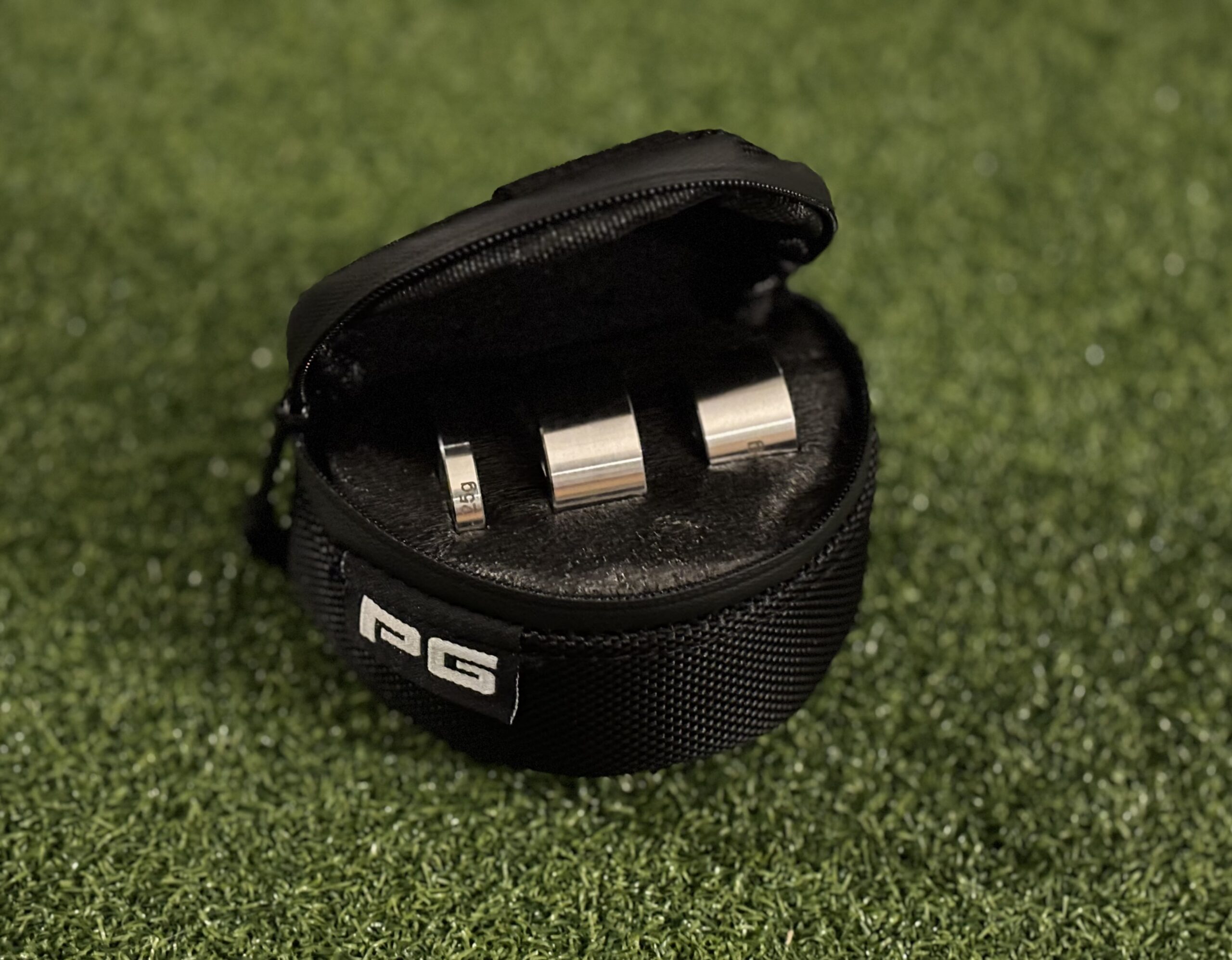
Changing weights is simple, though not quite as smooth as with the Stack. There are a couple more small pieces to thread, and a couple more to fumble. But totally simple all the same.
The weight rides on what Performance Golf calls a Y-Trac, and you can position it in the heel, the center, or the toe. So you’ve got three positions and four weights for 12 different configurations.
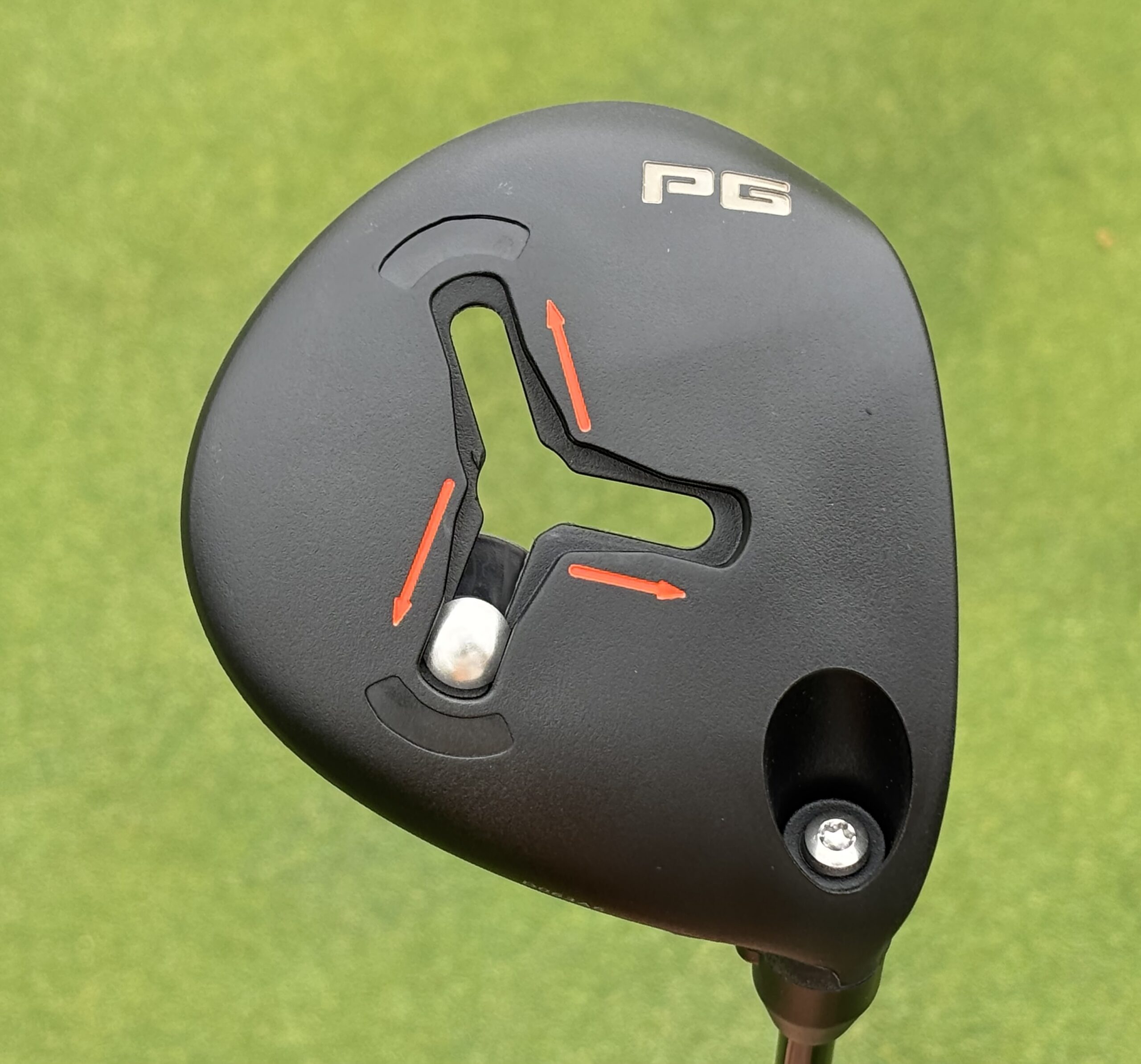
Performance Golf’s theory is that weight in the heel helps the toe release through impact, so a slicer learns what a square face feels like at speed.
Weight in the toe keeps someone who hooks from flipping the face closed too early.
And the center position is for straight speed training with a realistic clubhead feel.
This was where I found the whole SpeedTrac experience really interesting. Moving the weight around and paying attention to how each position promoted a different feel was pretty revealing, I gotta say. You definitely notice the difference. And I could quickly see that being legitimately beneficial over time.
You Also Get Grip Training
The SpeedTrac has a molded training grip, and it’s one of my favorite things about it. It’s also unique compared to other speed trainers. It feels like Performance Golf just decided to throw in another concept of theirs with this product. And let’s face it, this is a company with a bunch of different training aids that some skeptics have called marketing gimmicks.
Anyway, the SpeedTrac grip puts your hands in the correct position and keeps them there, rep after rep, no matter which weight you’re swinging. So, again, the theory to me seems solid. You don’t have to think about it. You wrap your hands around it in the way it wants you to, and every swing reinforces a good habit.
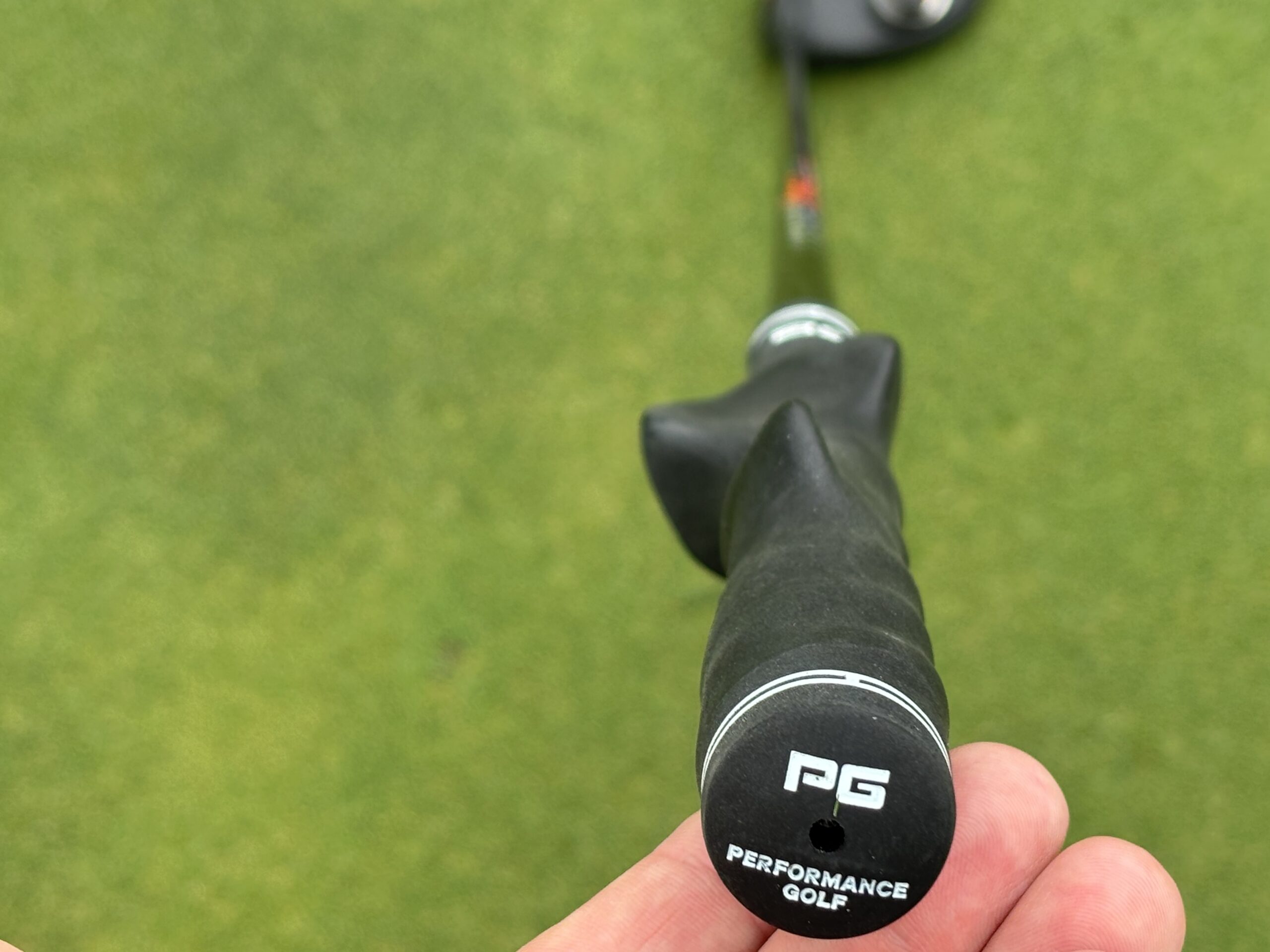
So on top of the speed work and the face work, I’m getting grip training too. I think that’s a pretty cool bonus. Though I could see some people, especially those with exaggerated or unconventional grips, wishing this thing just had a standard grip.
I think too that this molded design helps you feel the clubface at impact better. At least that’s what I’m experiencing. Again, hopefully it’s training me over time.
Still, it’s not like you’re hitting real golf balls. And we all know the performance difference between practice swings and the reality of hitting an actual shot. There’s always going to be that skepticism about what’s transferable between training and the actual course.
The Training System Is Useful but Limited
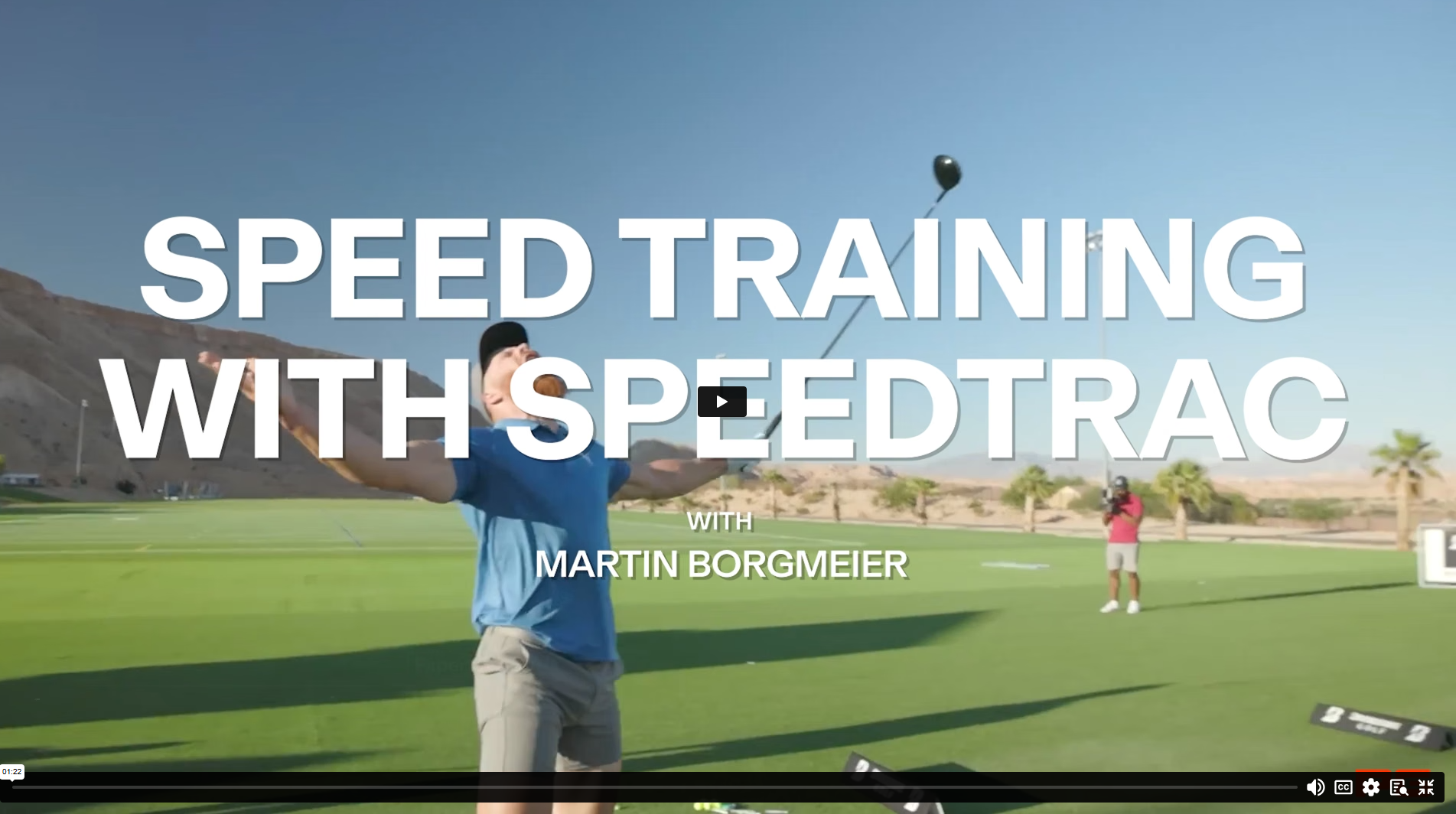
The SpeedTrac comes with the 10-Swing SpeedTrac Training System from World Long Drive champion Martin Borgmeier. I accessed it through Performance Golf’s PG1 app.
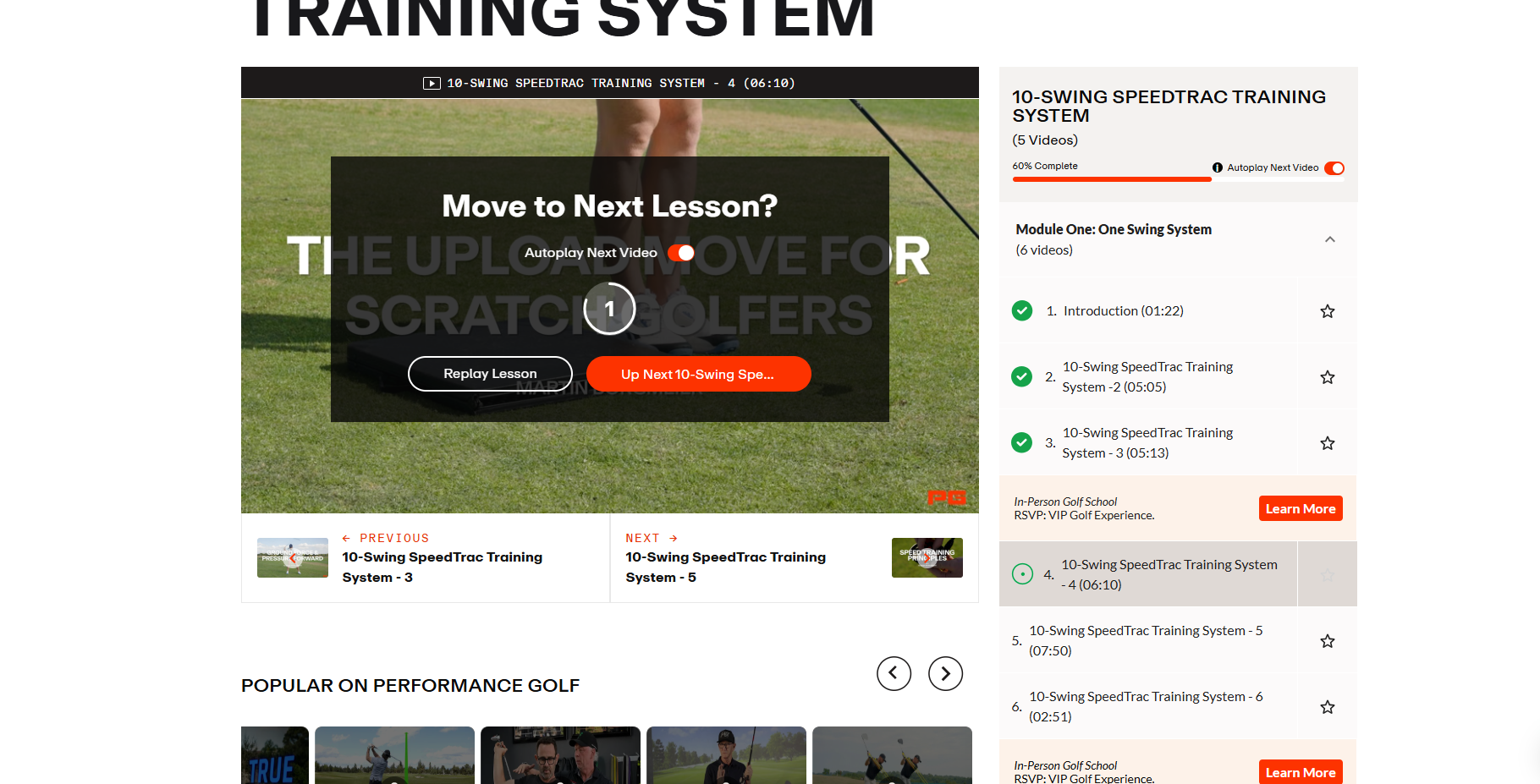
It’s a series of 10 videos, and it’s useful. The first video shows you how to load the weights and what position to use. Then they walk you through a set of speed exercises with the SpeedTrac.
The sessions are short too. Performance Golf calls for about five minutes a day, three to four days a week. So that’s a pretty easy commitment to keep.
But that’s about the extent of it. Once you’ve watched the videos, you’re kind of on your own. There’s no custom program or saved data or anything tracking your progress over time. There are additional swing speed drills and concepts that you can pay to unlock, but the core of this product pretty much revolves around you building a routine on your own and sticking to it.
The good news is you’re not required to pay anything more to use what you bought. The SpeedTrac and its 10-video program are yours.
If you want more instruction, Performance Golf’s PG1 subscription after a free 7-day trial is $29 a month or $199 a year. Full disclosure: I did not test the additional paid features. (But keep an eye out for regular sales, that can bring it down to $99/year or $399 for lifetime access).
I could see paying the extra if you’re really going to commit to gaining speed. The problem is that I don’t think those additional paid features give you speed training specific to the SpeedTrac. I’m almost more inclined to just cycle through the things that are included in the 10 videos and call it good. At least to begin with.
The Stack Is a More Complete System, but SpeedTrac Has Unique Advantages
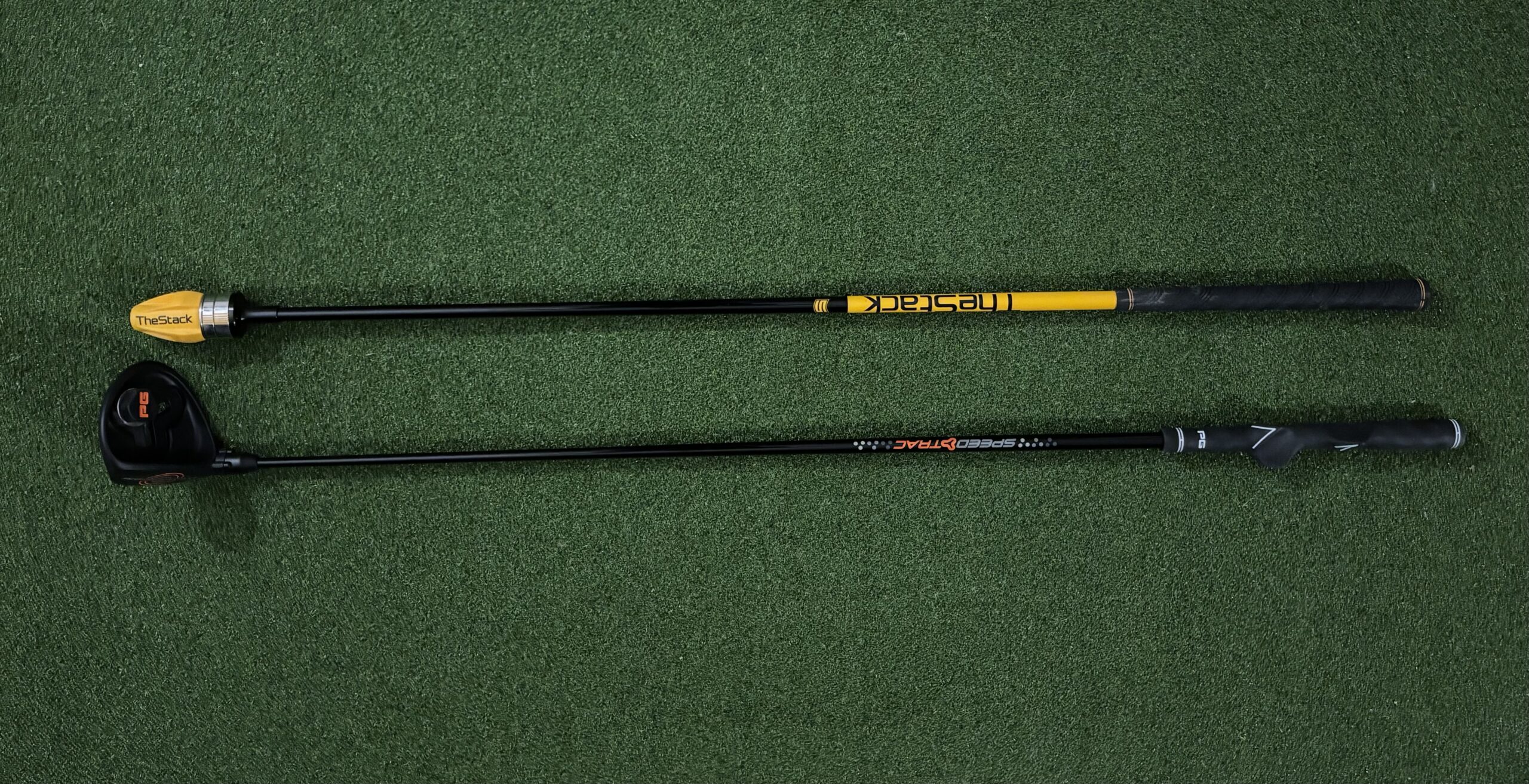
As I mentioned earlier, the Stack has some advantages the SpeedTrac can’t match.
The Stack is a full-blown system. Its app runs you through a baseline, then builds a multi-week program around how you produce speed. Every session is guided, starting with a warm-up video. It logs your numbers and shows your progress over time. It even converts your swing speed into your potential driver distance, which I find really motivating. And if you start skipping sessions, it sends you notifications to get you back on track.
All of that runs on your clubhead speed numbers. Stack sells its own radar, or you can use a compatible launch monitor (like a Mevo Gen 2), or even enter numbers manually.
The SpeedTrac doesn’t have a launch monitor-included package. You can absolutely use it with a launch monitor that measures clubhead speed without a golf ball, which most radar devices do, including something inexpensive like the Shot Scope LM1.
But the point is that the Stack kind of holds your hand. It’s a whole system you just follow along with.
The SpeedTrac feels much more like a self-guided journey. You can record results on your own and build out your own program. But there’s much less of an oversight component to this.
That said, you’re not getting those Stack extras without paying a subscription, so there’s that. Still, they’re available for people who are serious about investing in a real program. And I see that as an overall advantage that the Stack enjoys over the SpeedTrac.
But the SpeedTrac brings things to the table that the Stack doesn’t.
The biggest is the clubhead. The Stack is a shorter-than-driver-length stick with weights threaded onto the end. The SpeedTrac has a real clubface and weight you can move from heel to toe, so you’re training face awareness along with speed. No weighted stick can do that.
Then there’s the molded grip. Again, not something that you get with the Stack. Also, though, maybe you’d rather a normal golf grip than the training grip on the SpeedTrac.
The Stack is $299 for the hardware, which includes a year of its Premium membership. After that, Premium runs $129 a year, or $99 a year for the speed-only membership. The bundle with Stack’s own radar is $499. But you can use the Stack discount code BREAKINGEIGHTY to save 10% off those prices.
The SpeedTrac lists for $299 and is currently selling for $179. It’s a one-time purchase, with its 10-video program included and no subscription required.
To be fair, you can swing either of these things on their own without paying for the app. But the Stack advantages I listed are tied to that ongoing membership.
So, Should You Buy the SpeedTrac?
If you’re already sold on speed training, I think the SpeedTrac is a compelling option, and the price makes it an easy one to try.
Here’s my thinking. We all understand that more speed means more distance. But center strikes create ball speed too. And a square face is what sends the ball where you meant to send it. A trainer that lets you work on speed and face control at the same time is aiming at the gains that actually help you shoot lower scores.
I’ve got to say, I think that’s a pretty brilliant idea.
At $179, with a 365-day demo period and money-back guarantee, there’s not necessarily a huge risk for finding out whether it works for you.
Also, I didn’t mention it earlier, but it does come in right- and left-handed versions.
I’d recommend the SpeedTrac if you want a speed trainer that looks and swings like a real club, if you fight a slice or hook and want a way to train against it, and if you’re self-motivated enough to build your own routine.
I’d skip it if you want a structured plan, reminders, and stored data to keep you on track, or if you’ve got an unconventional grip that the molded grip on the SpeedTrac is going to fight you on.
I think the SpeedTrac is a really cool piece of equipment, and it has the potential to be effective. It just comes down to having a plan and sticking to it. With this one, a lot of that falls on you.
A speed trainer with a real clubhead instead of a weighted stick. Four head weights and a moveable heel, center, toe position gives you 12 setups, so you can train face control while you build speed.
A smarter way to swing faster, if you'll stick with it on your own.
The SpeedTrac puts the weight inside a real clubhead, so you can train face awareness while you build speed, and the molded grip adds grip training on top. It's a one-time purchase with no subscription required. Just know the plan, the tracking, and the accountability are all on you.
The Good
- A real clubhead and moveable weight let you train face control along with speed
- Twelve weight configurations and a molded training grip in one club
- One-time price with its training videos included and no subscription required
The Bad
- No custom program, saved data, or progress tracking
- No way to confirm where the face was at impact
- The molded grip may fight golfers with uncoventional grips
-
Presentation
-
Performance
-
Features and Quality
-
Price
-
Personal Affinity
