

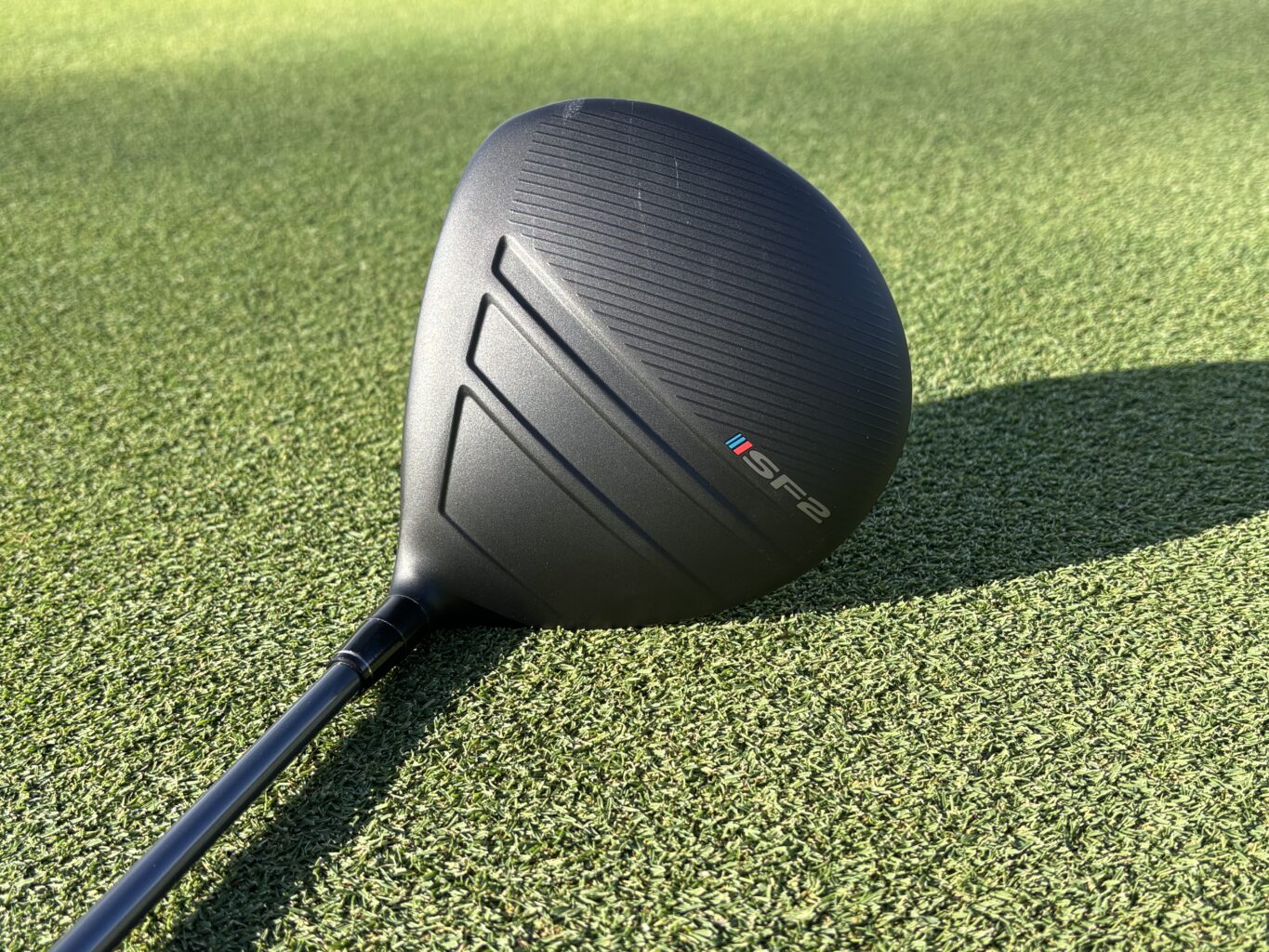
I play a draw. On a bad day, a hook.
So I knew going in that I wasn’t exactly the golfer Performance Golf had in mind when it built a driver to kill the slice.
And make no mistake, that’s what the SF2 is built to do. Kill the slice.
But this being Performance Golf, the claims don’t stop there. They’re calling it the “World’s Longest Slice-Fix Driver.” The promise is that it fixes your slice and adds 20-plus yards. Without changing your swing.
That’s a lot of promise.
If you’ve seen any of Performance Golf’s marketing, you know that’s pretty typical. Big claims. Big energy. It’s definitely got some late-night infomercial vibes to it.
But I’ve learned not to judge this company by its marketing. The 357 knocked my 5-wood right out of my bag. And I came away from the SpeedTrac thinking it was a pretty brilliant idea. So the SF2 was going to get a fair shake from me.
What I found is that the slice-fix part is legit. I could feel that immediately.
The distance part? That’s a different story. At least for my swing.
Let me explain.
Everything’s Designed to Go Left
Basically, Performance Golf thought of every possible thing to fight a slice, and they tried to put it into this one driver.
Now, true to form, a lot of what they are calling “SliceFix SpeedTech” is total marketing b.s., but there are also some hard facts here that help you understand what they’re trying to accomplish.
They’ve got seven features going on with the SF2 driver head:
- Draw-Calibrated Face Angle. The face is built 3 degrees closed. Not adjustable to 3 degrees. Permanently set that way.
- Counter-Slice Weighting. A heavy keel sits deep in the heel to help the face close through impact.
- AeroSquare Crown Channels. Angled channels on the crown that Performance Golf says turn airflow into a face-closing force.
- Speed Geometry Toe Slot. A slot in the toe meant to cut drag and help the toe come around.
- Draw Spin Face Bulge. The face is flatter on the heel side and rounder toward the toe, aimed at taking cut spin off heel strikes.
- Fast Face Construction. A thin forged titanium face built for ball speed.
- 445cc Speed Geometry Head. A lower, sleeker, more clamshell-shaped head than the previous model, the SF1.
From what I can tell, the closed face and the heel weight are doing most of the work here. The rest of the features seem smaller, but again, Chris McGinley, who leads design at Performance Golf, has said that the idea was to stack every feature they could think of and let it all add up.
McGinley spent more than two decades designing clubs at Titleist. So regardless of what you might think of their advertising, there is real engineering behind their products.
And the RS1 putter that he designed legitimately felt fresh in a world of zero-torque marketing.
That said, some of this is stuff I can’t measure.
What I can say is that it is very difficult to miss a shot to the right with this driver (though not impossible, trust me). And it is very difficult to not hit the ball very high with this driver.
Those were my immediate first impressions. I’ll get a bit deeper into my findings as we go.
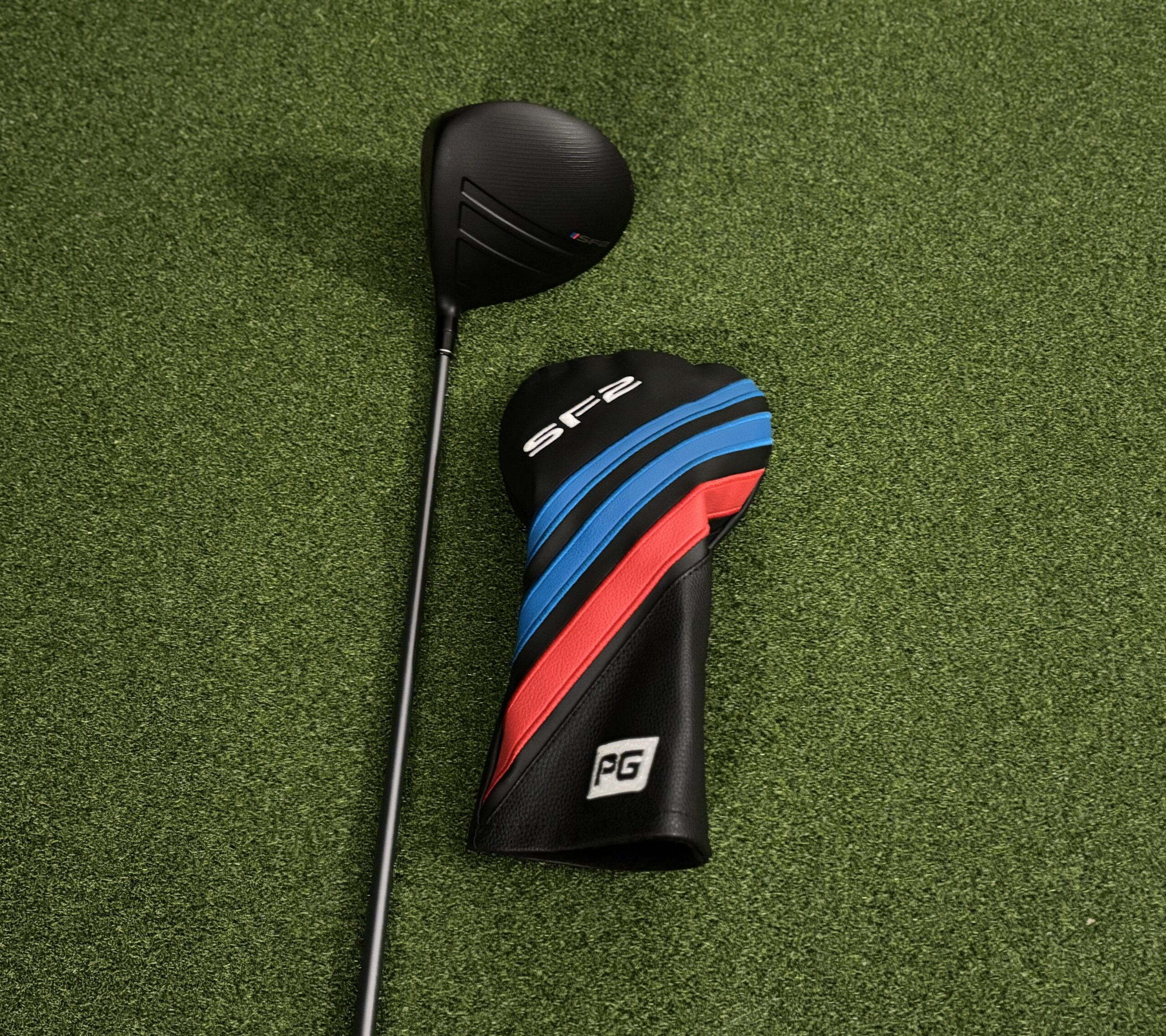
A forged titanium driver built 3 degrees closed to fight the slice. It moved my miss left and took the fear out of OB-right tee shots, but it flew too high and rolled too little for my swing.
What Changed From the SF1
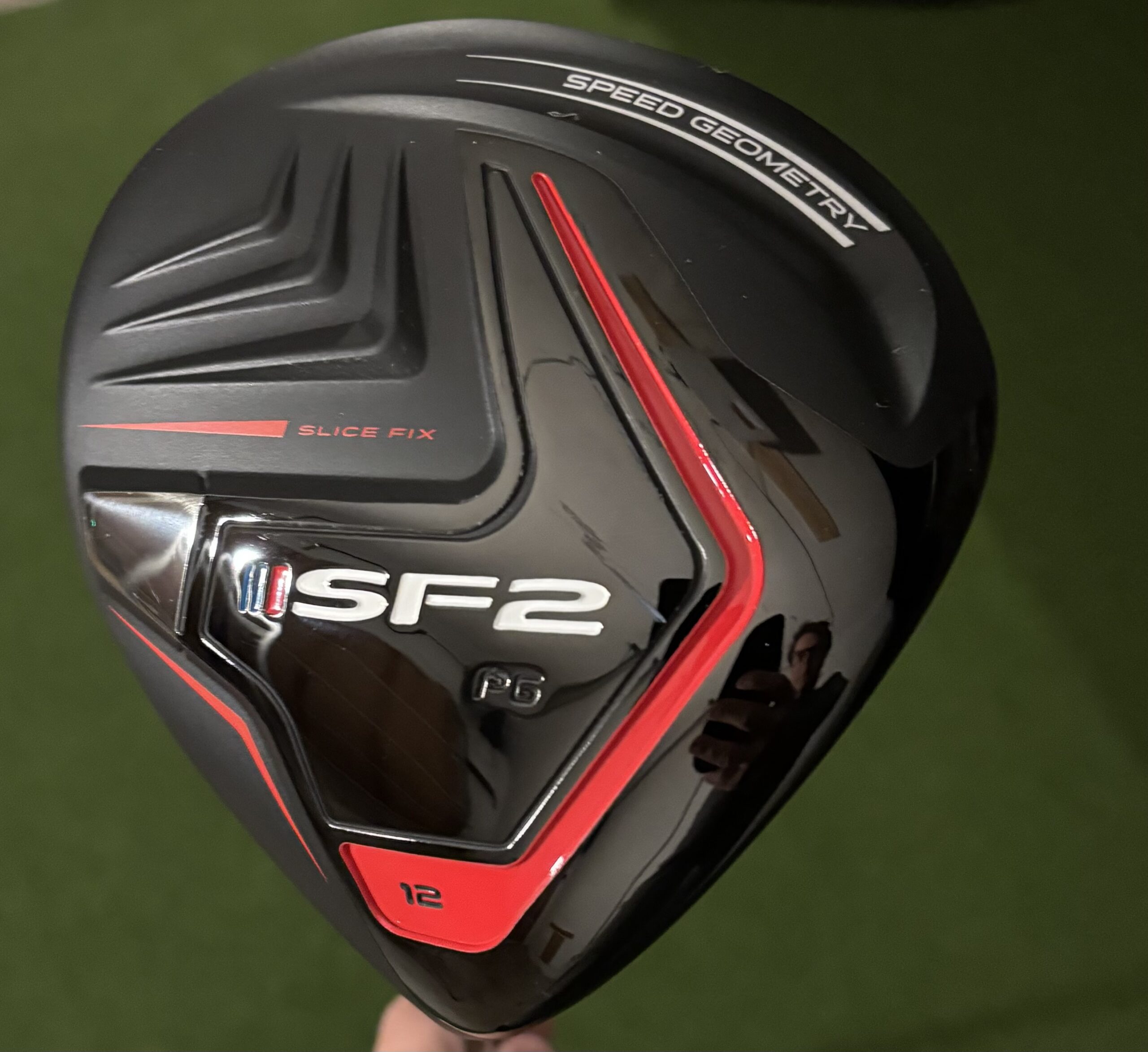
The SF2 is Performance Golf’s second take on an anti-slice driver. I never hit the SF1, but from what I can tell, it had a reputation for delivering on the slice fix but coming up short on distance.
Performance Golf says that the new SF2 is as much as 20 yards longer than the SF1.
The big fix is the material. The SF1 was built with aluminum. The SF2 has an all-titanium, three-piece head. Titanium is stronger, so the walls and face can be thinner. In theory, that frees up weight to push into the heel and lets the face flex more for ball speed.
They also made the heel weight heavier, cut the crown channels deeper, and lowered the profile of the head.
As near as I can tell, those are the differences.
So the whole idea was basically to keep all of the anti-slice stuff that was working for the SF1 but add distance by way of superior construction. Again, as best as I can tell.
Getting Hands-On With the Performance Golf SF2
I fully expected a face that’s 3 degrees closed to look really unnerving at address. As someone who generally hits the ball left, I don’t like the idea of a closed face to start with.
But, actually, even though the face is closed, it looks square when you set it down behind the ball.
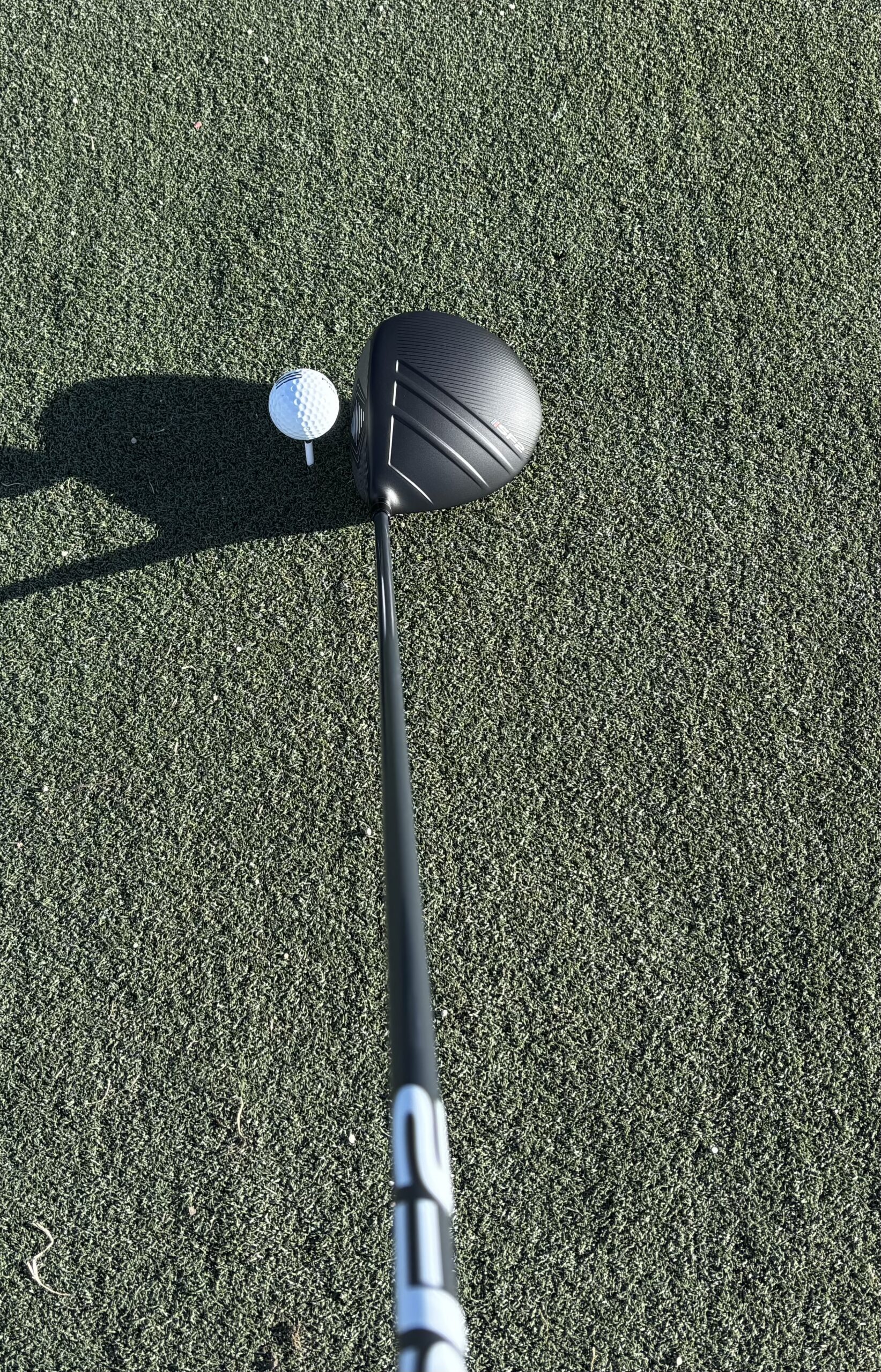
There’s no goofy offset look. Or anything that looks at all unnatural at setup. If I hadn’t read that the face was 3 degrees closed, I would not have known.
It’s also just an easy club to stand over. The head looks big and full. That low, wide shape gives you a lot of club to look at, and it kind of makes you feel like you can’t miss.
I think that matters a lot. If you’re struggling with a slice, I promise you that confidence on the tee box isn’t very high. This SF2 head promotes confidence, to my eyes. So I see that as a plus.
Another thing I noticed right away was the sound. This driver has more of that thwack sound that I much prefer to a tinny or ringy metallic sound. I actually much prefer the sound of this SF2 driver to the 357 hybrid fairway wood from Performance Golf that I tested.
So, What About Those Extra 20 Yards?
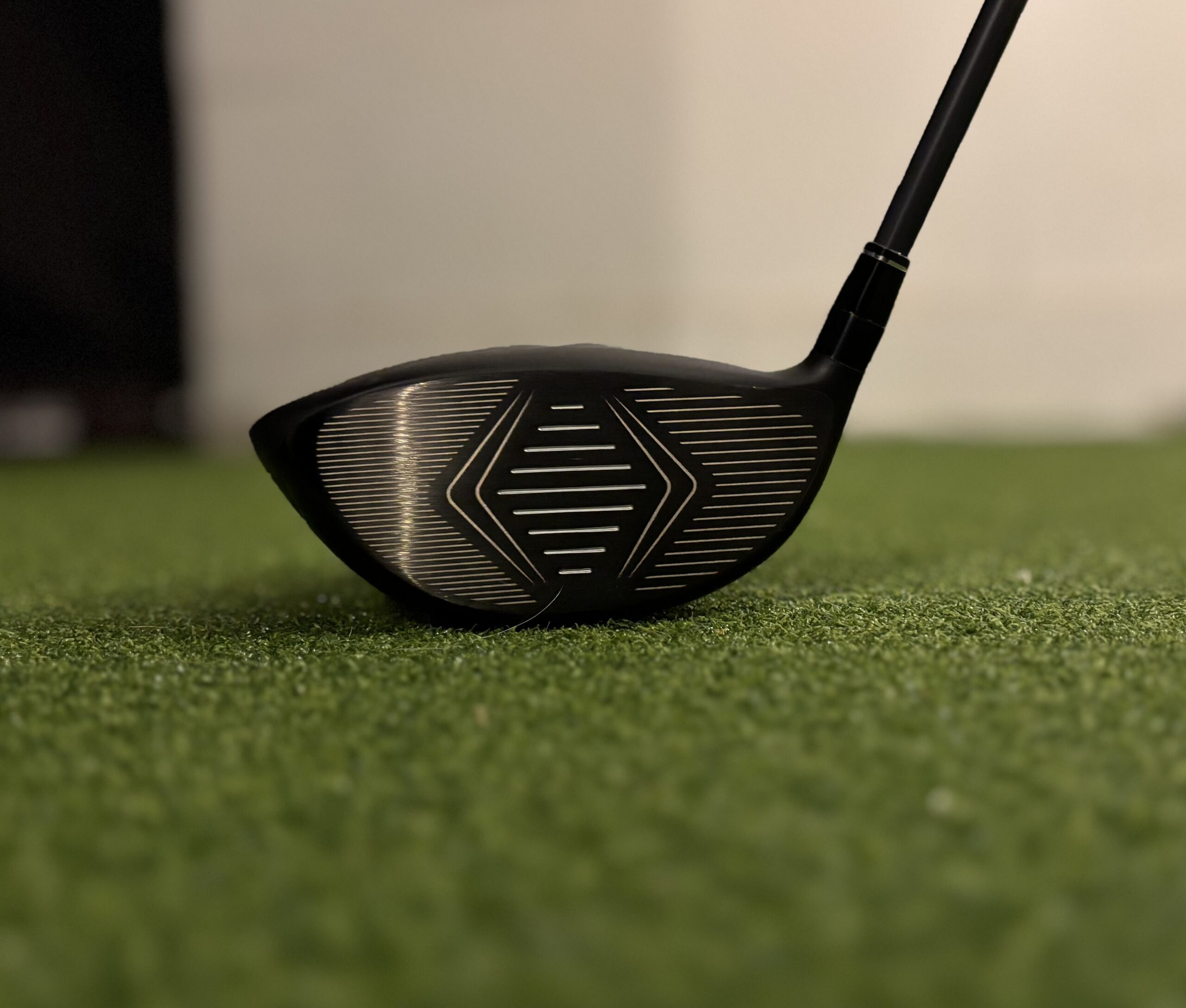
I mentioned earlier that there’s no question that this club promoted a left-traveling, high ball flight. That proved true repeatedly throughout my testing, and I’ll talk more about that ball flight in just a minute.
But as for the distance claim that Performance Golf is so boldly making, well… I’m not seeing it that way.
First of all, let’s be real. No driver just magically adds 20 yards for everybody who swings it. So the whole marketing to begin with, is basically ridiculous.
But still, here’s how the numbers compare to my normal Titleist driver. The SF2:
- Launched about 7.5 degrees higher
- Peaked about 60 percent higher
- Spun about 20 percent more
- Came off the face about 7 percent slower
- Carried about 3 percent shorter
- And rolled out about half as much
So it’s interesting. Carry-wise, the SF2 was pretty much right there. But total-distance-wise, it was 9 percent shorter because it just didn’t roll out the same.
Admittedly, the total distance from the Mevo Gen 2 launch monitor I was using is calculated, but I think these are very reasonable likelihoods.
That’s what all that launch and spin gets you. The ball climbs, comes down steep, and stops. For me, the distance didn’t really disappear in the air. It was on the ground where I lost everything.
I also saw a little less club speed with the SF2. So whatever it is about this head and/or the stiff shaft combination I tested with, I couldn’t swing this driver my fastest.
The Towering Ball Flight Can Be Pretty Awesome
So the SF2 has 15 degrees of loft, but the effective loft is 12 degrees because of the closed-face design. Still, as someone who plays a 10.5-degree driver, the loft here was foreign to me.
That said, when I hit it in the right launch window, I hit some of the most fun drives I can remember. Towering shots that just hung up there forever. I seriously was admiring some of my drives.
And as I mentioned, my best-struck drives were in fact carrying nearly as far as what I’d hope for. It just didn’t roll out the same way.
The problem, though, is that for as cool as some of those towering drives were, what I also saw a lot was what looked like a ballooning shot that would just kind of go nowhere when it hit into the wind.
I think the deal here is that if you’ve got a big slice, yeah, you’re probably going to gain some significant distance here by way of a straighter ball flight. You’re not going to lose all of that lateral distance that the ball is traveling.
But if you don’t have a big slice, personally, I think you’re going to lose distance overall with the SF2.
That said, having a club in your bag that all but eliminates the right side of the golf course is pretty sweet.
How the Performance Golf SF2 Makes the Right Side a Non-Issue
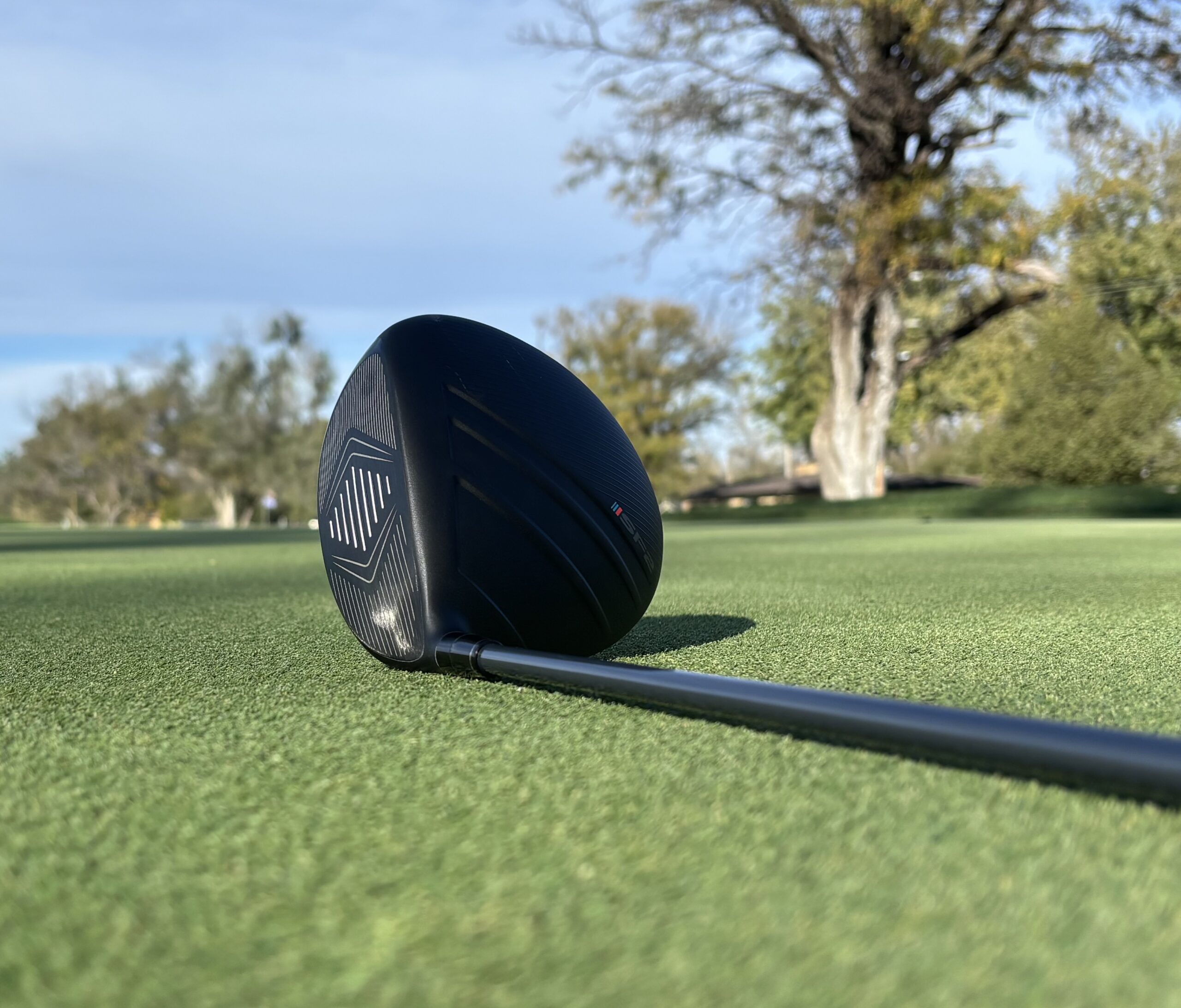
For me, the SF2 moved my whole pattern left. Most of my drives finished center or left of center. When I missed, it was usually high and way left.
Could I miss it right? Yeah, on a truly awful swing, I could, and I did. But that was pretty rare. Most everything was either middle or left.
Here’s where it hit home for me that something like this could be a pretty sweet weapon in the right situations. The first two holes at my home course both have out of bounds down the right. And it’s not way out there, either. If you put a big slice on one and get more than about 15 yards offline, you’re in danger of losing a ball and screwing up a round before it even gets going. It happens all the time.
With the SF2, I could stand on those first two tee boxes with zero fear of missing right. And on those two holes, right is the only thing there is to be afraid of.
So I think having a driver that just eliminates the fear of one side of the golf course could be huge. Something to think about depending on the tee shots you typically face. That actually would be worth a few yards.
Do I Consider the SF2 a Legitimate Quality Driver?
I think that Performance Golf’s marketing unquestionably rubs some golfers the wrong way.
They make huge claims. There’s a lot of hype. And if you’re turned off by that late-night-TV-style pitch, you probably are going to dismiss this brand as a gimmick.
I get that.
But I’m also convinced that these guys know what they’re doing. You can’t watch some of their material and listen to some of the conversations with McGinley and not believe that there’s legitimate club design and engineering going on here.
The company obviously decided to pair that engineering with an aggressive sales strategy. That’s their brand. Good on them. I’m just saying that I think it’d be foolish to write this brand off as hype. There’s some actual innovation happening here.
I’ll also say that their 365-day money-back guarantee takes some pressure off. You get 365 days from your purchase date to start a return. You’re not going to find many club manufacturers offering that.
As far as the price goes, the SF2 retails for $399. But Performance Golf runs sales pretty much constantly, and you’ll usually find it for a lot less. As of this writing, you can pick one up for $249.
And that’s obviously where things get really interesting. Not every golfer should spend $600-plus on today’s new big-name drivers. I mean, it’s gotten pretty crazy.
So if slicing is your issue, all of a sudden something like this for around $250 starts to look like something worth investigating.
So, Should You Buy the Performance Golf SF2 Driver?
For me personally, the answer is no. It flies too high for my swing, and it costs me distance I’m not willing to give up.
But that’s me. And golf is obviously about as far from one-size-fits-all as it gets.
That same loft that balloons on my swing is exactly what makes this driver easier to launch and easier to control for a lot of golfers. I can absolutely see it being the right driver for plenty of people.
If you fight a real slice, I think the SF2 is worth a try. Especially if you have a hard time getting the driver up in the air. If that’s you, you may well pick up distance with the SF2. Not because the SF2 is adding speed, but because you’ll stop losing so much yardage sideways.
Another thing I’d say is, don’t let the senior-heavy marketing throw you off if you’re not a senior. Last I checked, you don’t have to be a senior to have a wicked slice. That malady plagues golfers of all ages.
And, sure, there are some things, like the higher loft, that are specced out here to help seniors. But again, there’s no age requirement for this club to help your game.
If you already hit it pretty straight or you play a draw, I’d probably skip the SF2 and look at something else.
Or if you’re on the fence, I say give it a shot. That’s what the 365-day window is for. Take advantage of the opportunity to take it out on your course and decide for yourself.
A forged titanium driver built 3 degrees closed to fight the slice. It moved my miss left and took the fear out of OB-right tee shots, but it flew too high and rolled too little for my swing.
It took the right side out of play. But it also took a few yards off my drives.
The SF2 is built for the slicer, and it commits to that golfer all the way. It moved my whole dispersion pattern left and let me stand on OB-right tee boxes without a worry. But for a guy who doesn't slice, the extra loft and spin sent my drives too high and cost me distance on the ground. If you slice, it's worth a shot.
The Good
- Takes the right side out of play
- Looks square and inspires confidence at address
- Gets the ball up in the air easily
- A 365-day trial window to test it
The Bad
- Balloons on shots into the wind
- Cost me rollout distance
- No adjustability to dial back the correction
-
Presentation
-
Performance
-
Features and Quality
-
Price
-
Personal Affinity
