

I’ve honestly been a little hard on Bushnell rangefinders lately.
Not because they’ve made any bad products. They definitely haven’t. All of their rangefinders, including the options from the past couple of years, have been very solid. But the problem for Bushnell is that there has been no shortage of really good alternatives from other brands at lower prices.
The Bushnell Pro X3 is genuinely one of the best rangefinders ever made. But at $600, I just can’t recommend it to most golfers.
And the Tour V6 Shift, despite being a really good device, was constantly getting outpaced by competitors charging significantly less money.
So when Bushnell announced the Tour V7 Shift at $399, I was paying attention. Because if they got this right and delivered a package that did more than other similarly priced rangefinders in 2026, it had a real chance to change that conversation.
So, did they get it right? Read on.
Bushnell Tour V7 Shift First Impressions
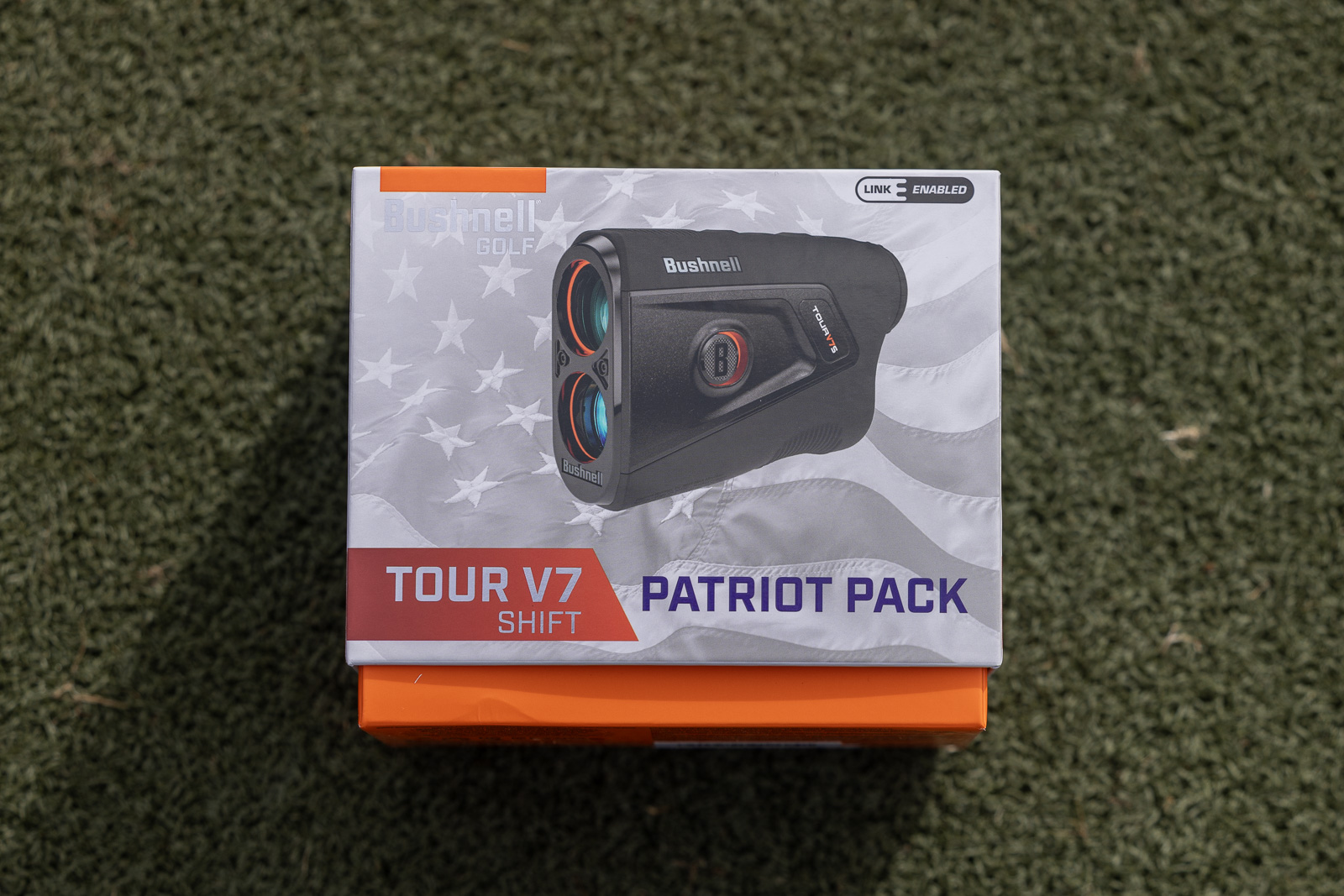
I have the Tour V7 Shift Patriot Pack Edition, so along with the device itself, you get a carrying case, a Bushnell Folds of Honor divot tool and ball marker, a microfiber cloth, and the usual paperwork. Nothing unexpected or surprising. Standard Bushnell presentation.
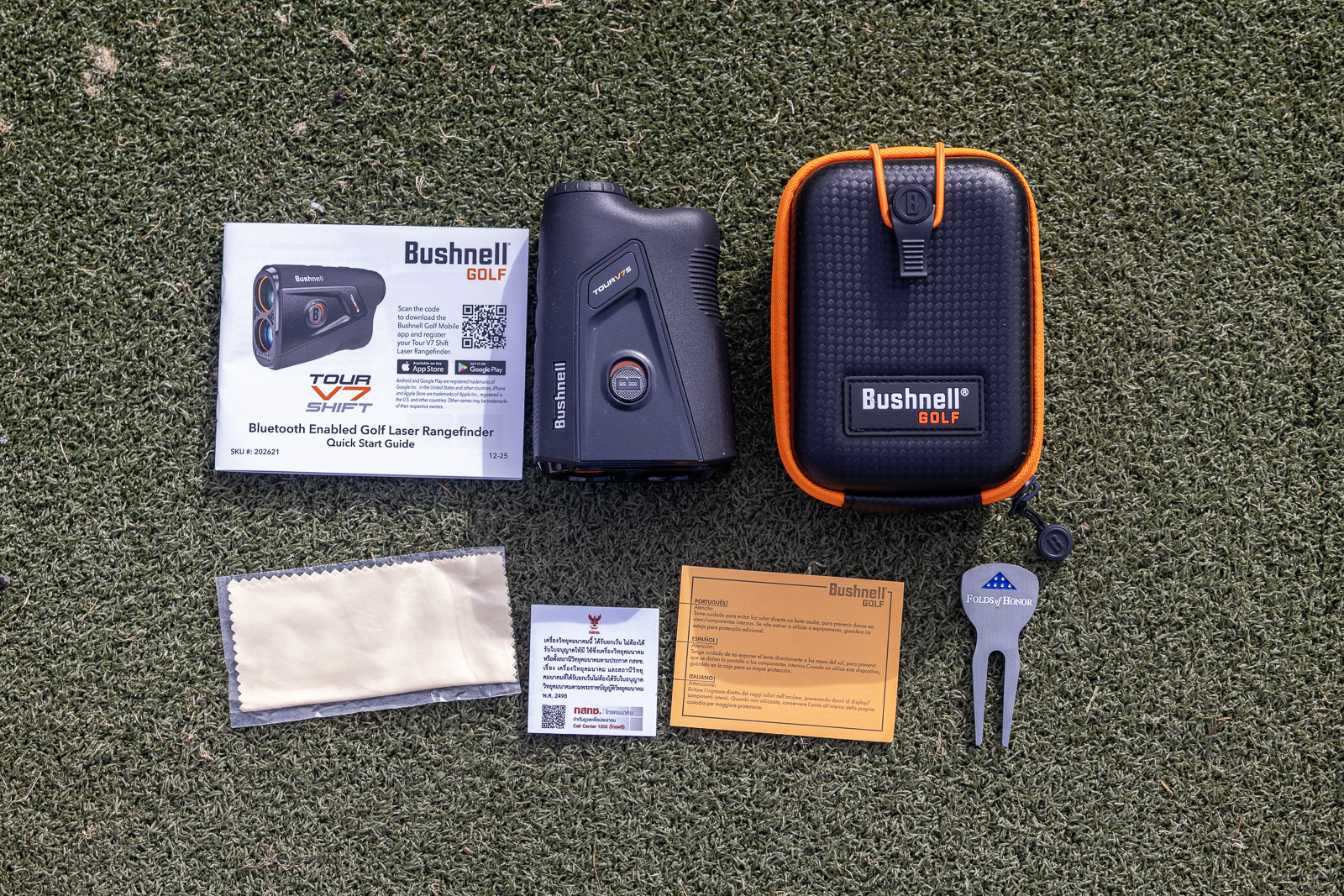
The device itself, though, is where things get interesting.
First, the size. I think Bushnell got this one just right.
The Pro X3 is a little over the top to me. Slightly too big for me, and bigger than I think most golfers actually want or need in a rangefinder.
The V7 Shift corrects that. It feels like the right size. It’s comfortable in the hand and easy to take in and out of the case or a bag pocket. It’s not something you’re going to fumble around with when you need a quick yardage. So that’s a definite improvement, to me, over the Pro X3.
Build quality-wise, the V7 is a step below the X3, which is expected, given the price difference. But it still feels solid. There’s nice texturing on the top and bottom that gives you a confident grip, and the overall construction feels representative of what you’d expect at this price point.
This Tour V7 Shift model uses a traditional CR2 replaceable battery rather than USB-C charging. I know some people want USB-C, but I honestly prefer the standard battery. For me, it’s just simpler than having to remember to occasionally charge.
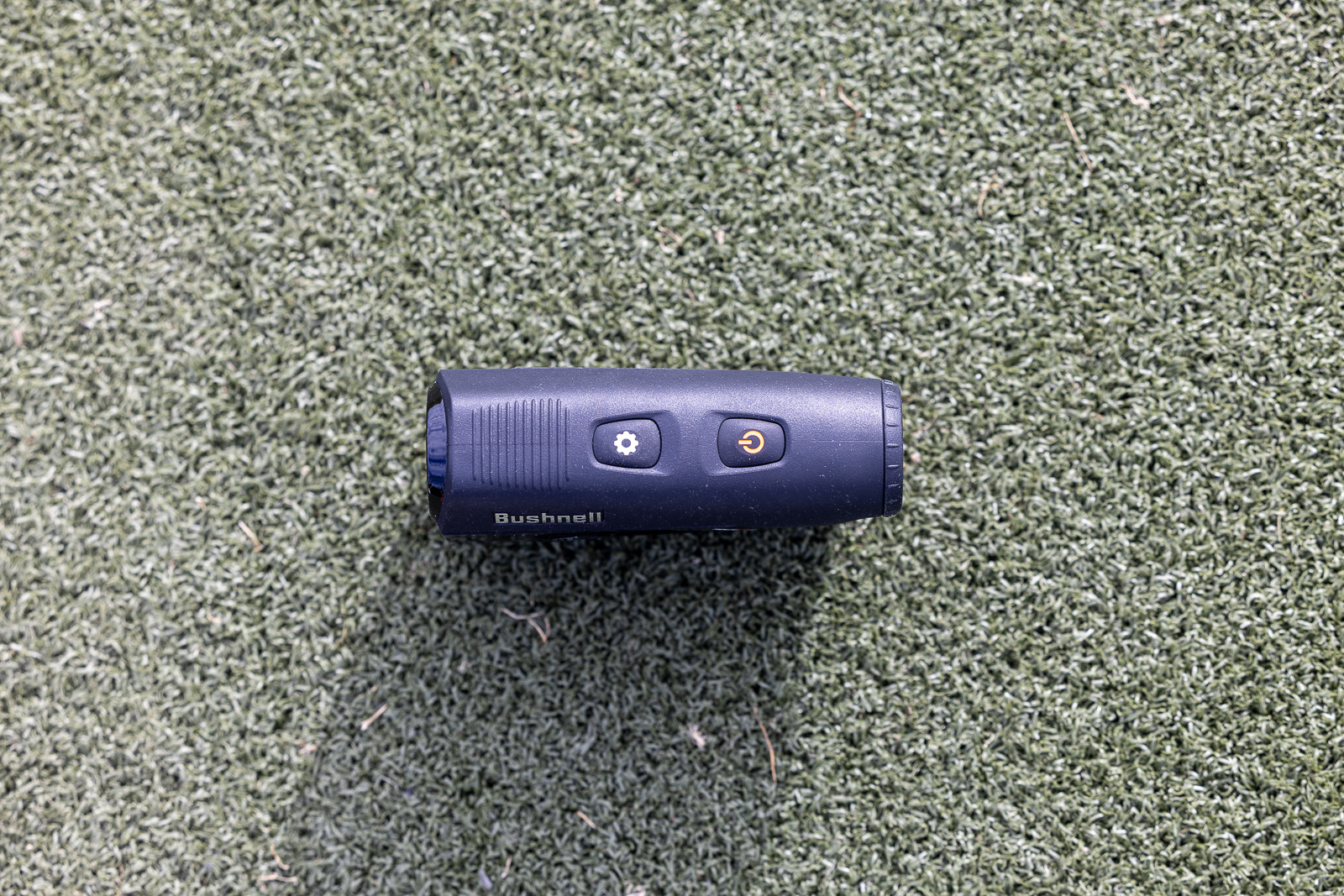
As for functionality, this is a two-button rangefinder. Both buttons on the top. One is for power and ranging your distance, and the other is for settings. I found navigation to be completely straightforward. Nothing unexpected.
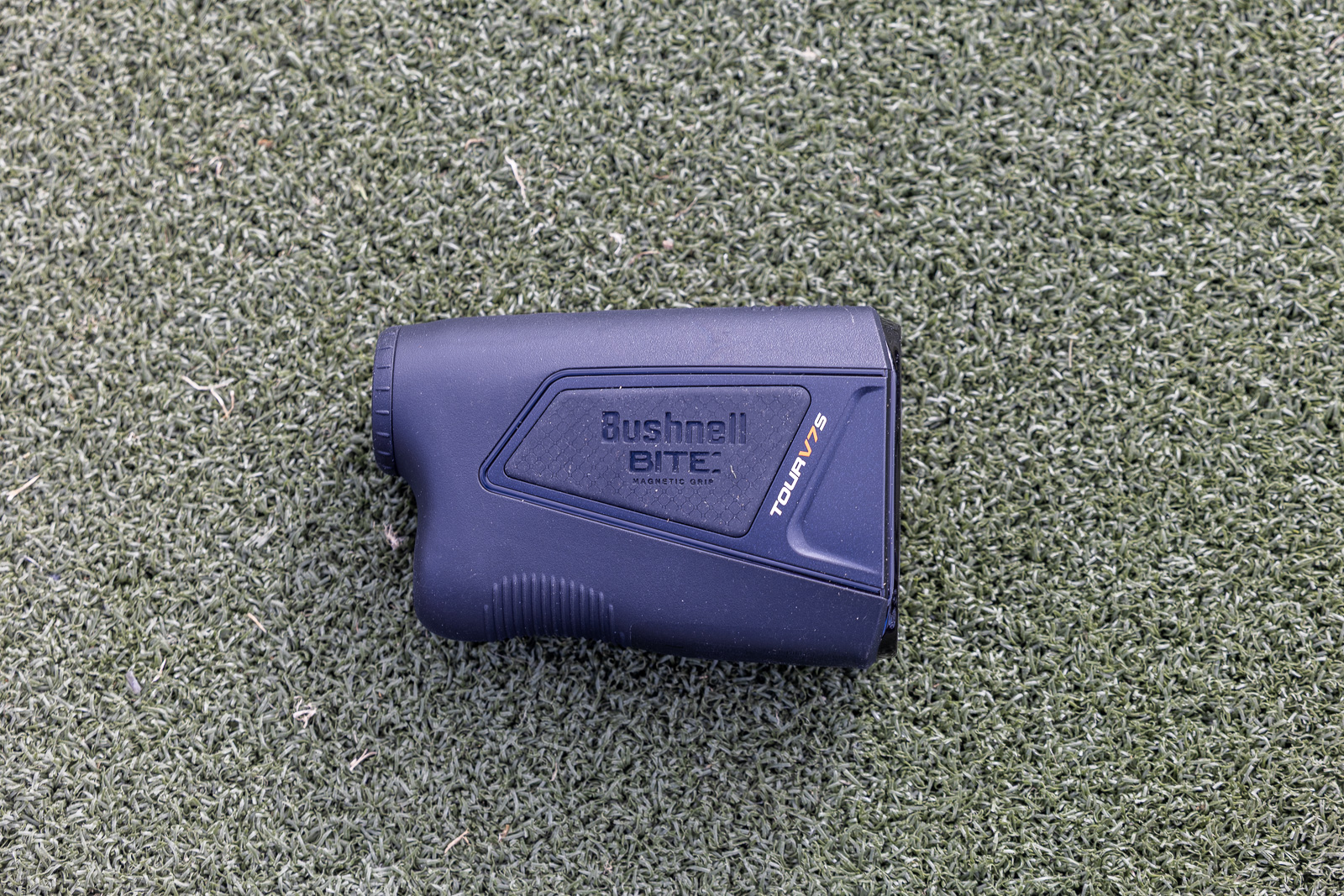
And then, of course, you’ve got the classic Bushnell Bite magnet on the side for cart attachment.
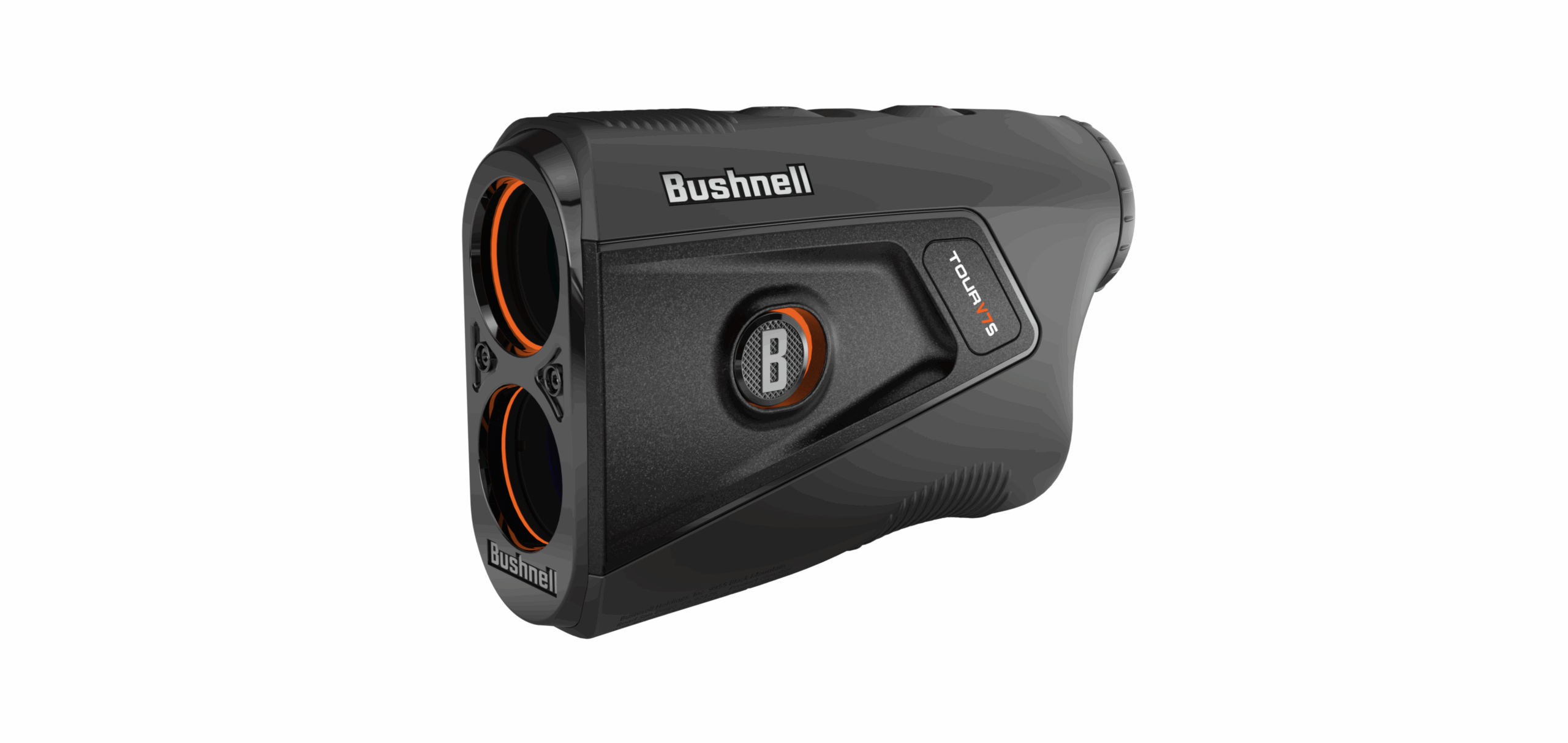
The V7 is Bushnell's first dual color OLED display on a rangefinder. This also has Link-Enabled technology, and is $200 less than the flagship X3. This makes it the most appealing Bushnell model for a lot of people.
Use code BREAKING10 to save 10%.
The Display Is a Big Upgrade
This is where I think the V7 Shift really separates itself from the V6 Shift, and actually every Bushnell rangefinder that’s come before it.
For the first time in a Bushnell rangefinder, you’re getting a dual-color OLED display in the viewfinder. When slope is enabled, your actual distance appears in red. Directly below it, the slope-adjusted distance shows up in green. I actually really love this feature.
The V6 had black optics. No dual color.
The Pro X3 lets you toggle between red and black, which was a nice feature, but still, it’s one color at a time.
Dual color, with red and green simultaneously, is something we’ve seen with the Voice Caddie TL1, Nikon Coolshot Stabilized series, and the new Blue Tees Captain Pro – but never in a Bushnell. And the red and green in this V7 display looks really crisp and clean.
Related: Tour V7 Shift vs. Captain Pro
Combined with 6x magnification and glass that looks sharp and clear, this is comfortably the best display I’ve seen in the Tour series. Honestly, it’s one of the better displays I’ve seen in any rangefinder at this price point.
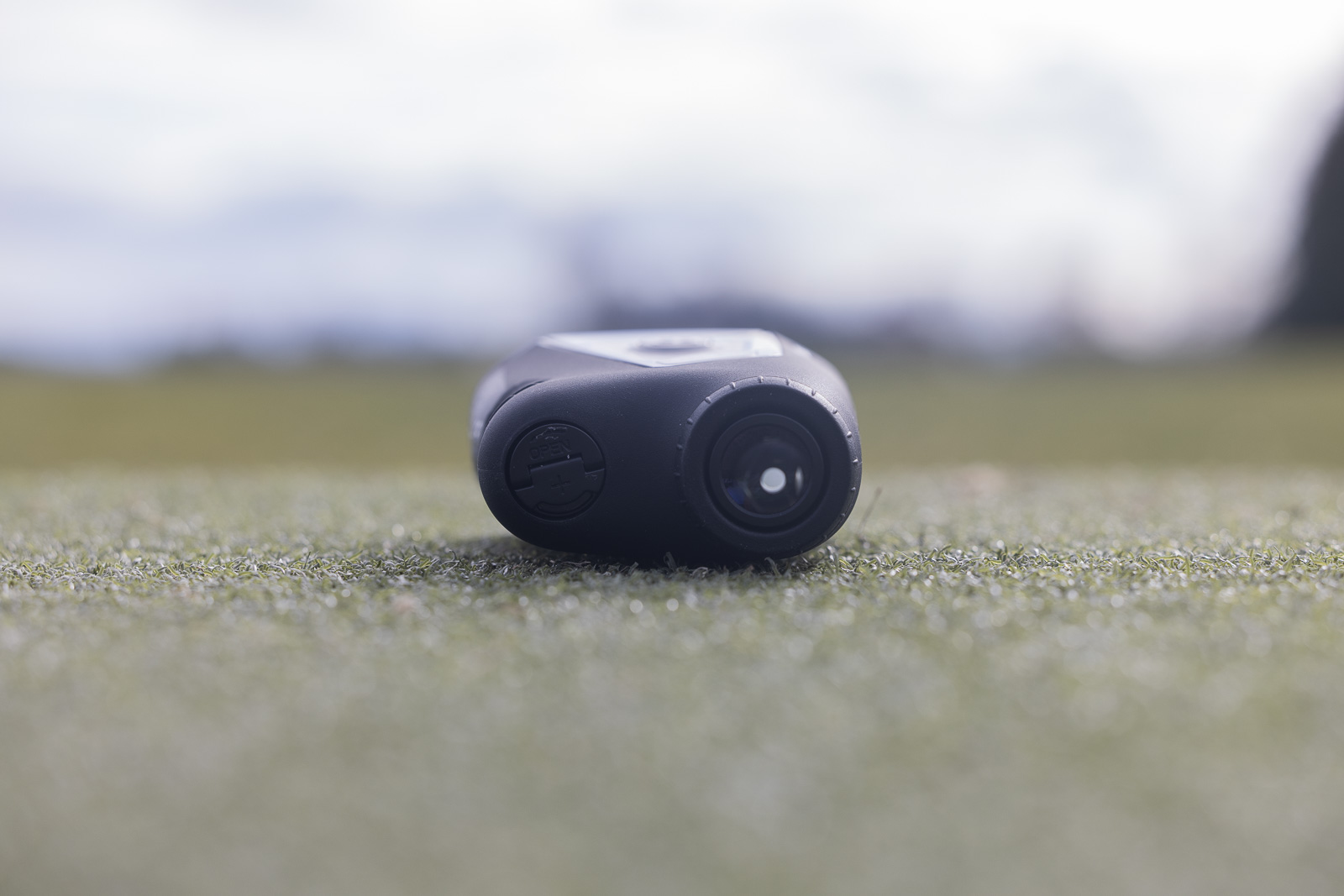
One small nitpick is with what’s called eye relief.
If you’ve never heard that term, it’s basically how easy or hard it is to get your eye lined up properly with the viewfinder. I had an issue with that on the Bushnell Tour Hybrid I reviewed a few months ago. The V7 Shift is better than that, but it does feel slightly worse than other Bushnell’s I’ve used. You probably won’t notice that, but if you’ve used a lot of rangefinders, you might.
Related: Here’s our full Bushnell rangefinder comparison of current models.
Flag Lock and Accuracy
Absolutely no issues here.
The flag acquisition is fast, and the Jolt vibration (Bushnell’s haptic feedback when it locks onto the flag) is accurate in a way that a lot of cheaper rangefinders simply aren’t.
On a lot of budget options, the device will vibrate every time you range anything. So it can be hard to tell sometimes whether you’re picking up the flag or a tree or a hill or whatever.
The V7 Shift only vibrates when it’s actually locked onto the flag. That might sound like a small distinction, but I actually think it’s one of the most important things a rangefinder can do well. And the Tour V7 Shift gets it right.
You’re also getting a visual red ring around the viewfinder as an additional lock-in indicator. That’s another feature that trickled down from the Pro X3 series, and it’s another good one. Combined with the Jolt, you’re never guessing whether you’re on the flag.
I think this is one of the biggest reasons to get this device. I recently review the Blue Tees Captain Pro, which has more smart features, 7x optics, and costs around $100 less. But the vibration and flag lock on that device, isn’t quite as reliable as it is on the V7.
Link-Enabled Technology Is Definitely Cool, But…
Link-Enabled Technology is Bushnell’s and Foresight’s development that allows you to connect a rangefinder to your launch monitor data via a couple of apps. It means you can get club recommendations based off your launch monitor bag mapping sessions.
And before now, Link-Enabled only worked with the Pro X3, which, as I said, is $600.
So, the fact that the Bushnell Tour V7 Shift now includes that capability at the $400 price point is super cool.
I went ahead and did a bag mapping session with my Bushnell Launch Pro and the new Foresight iPad app to get a feel for what getting into Link-Enabled Technology would entail.
First of all, the new Foresight app is excellent. I really like it.
That said, I did run into an initial hiccup that was quite frustrating. After I’d gone through a full bag-mapping session of about 50 shots, the app failed to sync my session. All those shots just gone and unrecorded. Really frustrating.
However, after updating the app and starting fresh, everything worked properly. I don’t think this will be a widespread issue, but it is something I ran into, so I wanted to bring it up.
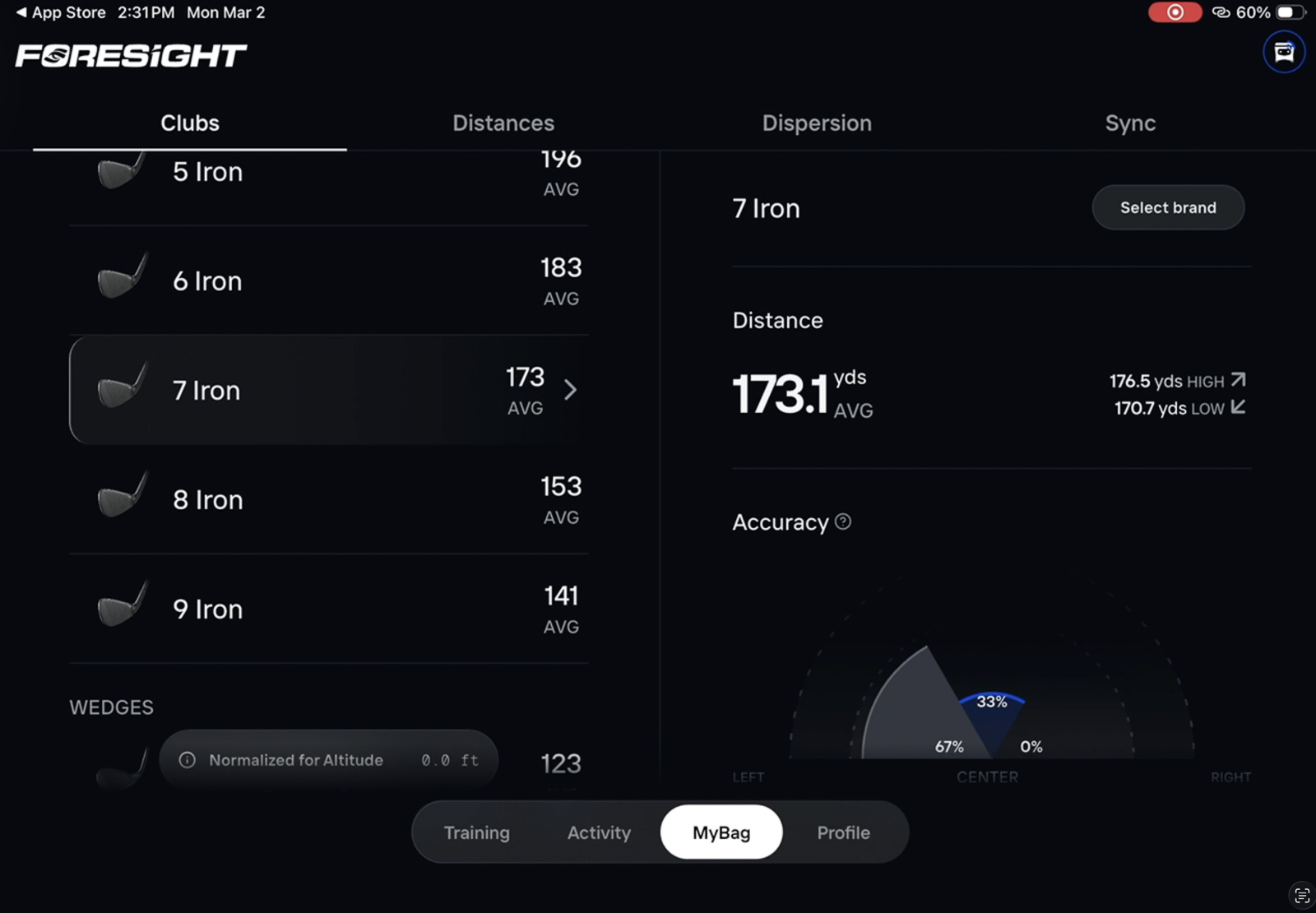
So, with your Bushnell or Foresight launch monitor, you hit a handful of balls with each club, build out your distance and dispersion profile, and then the rangefinder uses that data to suggest clubs while you’re playing.
But what really surprised me is that the app doesn’t just give you club recommendations. It shows you a full dispersion chart for multiple clubs based on your bag mapping data. So if you’re 140 yards out, you’re seeing the dispersion of your 7-iron, 8-iron, and your 9-iron all at once so you can make your decision based on real data. I haven’t seen another app present that information quite that way, and it’s legitimately impressive.
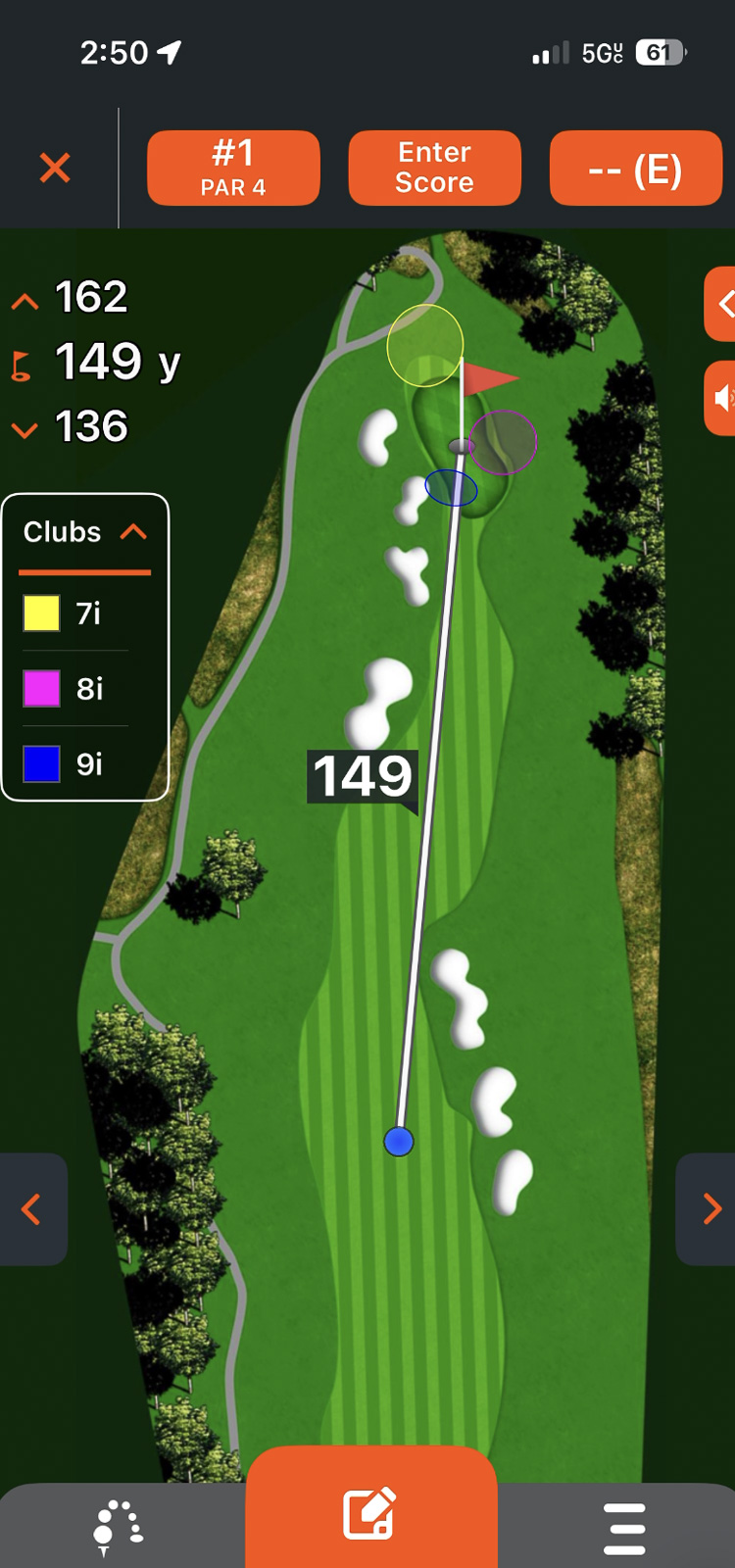
Even if you don’t want to use the app, the V7 Shift will display two club recommendations directly in the viewfinder based on your stock yardages.
That said, there are some gaps worth acknowledging. The more expensive Pro X3 factors in environmental data like wind, elevation, and humidity when making its recommendations. So does the Arccos Smart Laser and FlightScope i4. The V7 Shift doesn’t have any of that.
For the connected features to be truly useful, that environmental layer feels like the missing piece. Right now, Arccos and the Pro X3 are still the most accurate when it comes to full-picture recommendations.
Another thing I’d love to see in a future firmware update is when you shoot the flag, now that it’s connected to the app, it would be great if the app displayed the actual flag distance rather than the center of the green and then updated that number as you walked down the fairway. The Garmin Z30 does this really well. The V7 Shift doesn’t do it yet, but maybe someday.
But, seriously, the fact that you can now get this connected Link-Enabled feature using the $400 Bushnell V7 Shift is really cool. Do I think it’s a feature that’s as important as the marketing might lead you to believe? Not necessarily. But now that it’s more affordable, it’s a lot more interesting.
Should You Buy the Bushnell Tour V7 Shift?
Honestly, yeah, I think so.
This is my favorite Bushnell rangefinder to date.
The display is spectacular. The accuracy and flag lock are rock solid. The size is exactly what a rangefinder should be. And you’re getting connected features that used to require spending $600.
The honest comparison is the Voice Caddie TL1, which you can pick up for around $280 and delivers a very similar core experience. If you’re purely chasing value, the TL1 is a great pick.
The Blue Tees Captain Pro is an even better value, and gets my pick for “Best Value” Rangefinder on the market right now. But the app isn’t as reliable as the Bushnell app, and the flaglock isn’t either. That said, it’s worth a look if you want a great device and to save a little bit of money.
But with the V7 Shift, you’re getting the Bushnell name, the Link technology, and the kind of customer service and brand support that could matter if anything ever went sideways with your purchase. Whether that’s worth an extra $80 is kind of up to you.
But if you’ve been doing your research and you’re already leaning toward the V7 Shift, I’d say go for it. It really does feel like a baby Pro X3 and a huge leap over the outgoing V6 Shift.
Related: Here’s a direct comparison between the new Bushnell V7 Shift and the outgoing V6 Shift.
If you do decide to pull the trigger, use the Bushnell Golf code BREAKING10 to save 10%, bringing it down to $360. I do earn a commission, but as always, everything here is about helping you find the right gear for your game. To that end, if you’ve got questions, please let me know in the comments. I’ll give you my best recommendation based on what you’re actually looking for.
The V7 is Bushnell's first dual color OLED display on a rangefinder. This also has Link-Enabled technology, and is $200 less than the flagship X3. This makes it the most appealing Bushnell model for a lot of people.
Use code BREAKING10 to save 10%.
This page contains affiliate links. This means that if you click a link and buy one of the products on this page, we may receive a commission (at no extra cost to you!) This doesn’t affect our opinions or our reviews. Everything we do is to benefit you as the reader, so all of our reviews are as honest and unbiased as possible.
Recent Updates:
July 29th, 2026: Added link to comparison of all current Bushnell rangefinders, and a link with a direct comparison of the V7 to the Blue Tees Captain Pro.
June 17th, 2026: Added link to new comparison post between new V7 model and outgoing V6 model.
May 4th, 2026: Complete update. Changed the pre-launch press release, do a dedicated hands on review of the Tour V7 Shift.
The features you wanted from Bushnell's flagship, at a price that makes a lot more sense.
The best display I've seen in a Tour series Bushnell, rock-solid performance, and connected features that used to cost $600. The V7 Shift is a meaningful upgrade over the V6 Shift and the most well-rounded Bushnell rangefinder I've tested.
The Good
- Dual-color OLED display (red/green) is a first for Bushnell and looks spectacular
- Fast, accurate flag lock with reliable Jolt vibration and visual flag lock confirmation
- Right sized - not too big or small
- Link-enabled technology trickled down from the Pro X3
The Bad
- Eye relief takes a moment to find the sweet spot
- No environmental data in club recommendations
- Connected features still trail Arccos and the Pro X3 for full-picture accuracy
- Still a lot of very good, less expensive competition, that may win on value
-
Presentation
-
Performance
-
Price
-
Personal Affinity
