

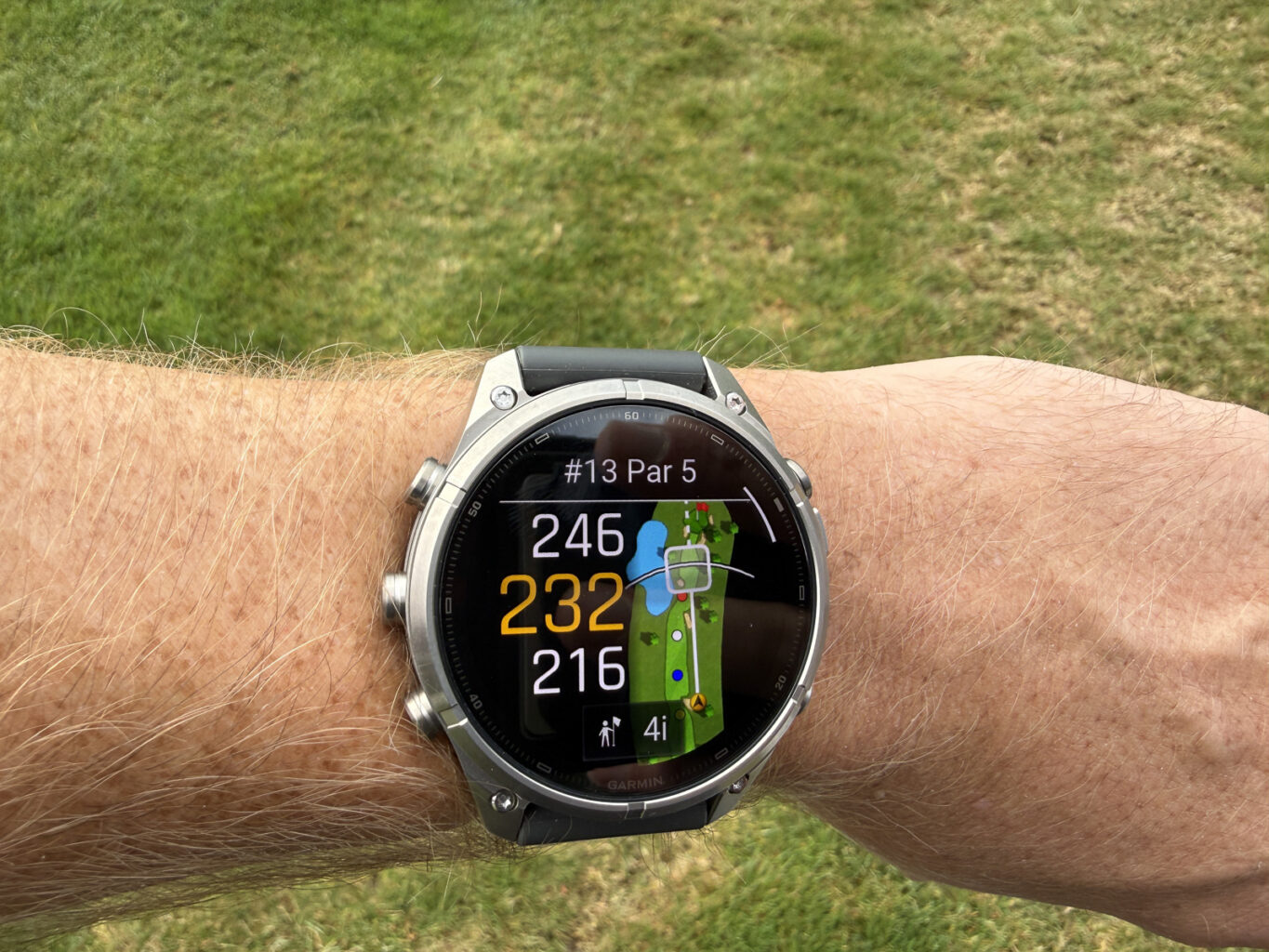
I’ve worn a Garmin Fenix 8 nearly every day for the past two years.
It’s been on my wrist for almost every round of golf I’ve played during that time. It’s tracked my runs, hikes, workouts, sleep, and all the other random things Garmin watches are capable of tracking.
So naturally, when there’s a major update to a product I use basically all day, every day, I get pretty excited.
Enter the Garmin Fenix 9.
I’ve now spent the last week wearing the Fenix 9 Pro, and this review is going to look at the watch primarily from a golf perspective.
I’ll leave it to DC Rainmaker to do the super in-depth breakdown of everything this watch can do, because it’s honestly insane how much is packed into it.
But from a golf perspective, things are actually quite a bit simpler.
If you’re reading this, I’ll assume you’re in the market for a high-end Garmin golf watch. So I’m going to compare the Fenix 9 and 9 Pro with the Fenix 8 and the Approach S70, Garmin’s current flagship golf-first watch outside of the much more expensive MARQ line.
And here’s the short version:
The Fenix 9 Pro is among the best-looking and nicest all-around smartwatches Garmin has ever made. It’s also an excellent golf watch. But if you already own a Fenix 8, there’s almost nothing new here from a golf perspective.
The Exact Fenix 9 Pro I’m Reviewing
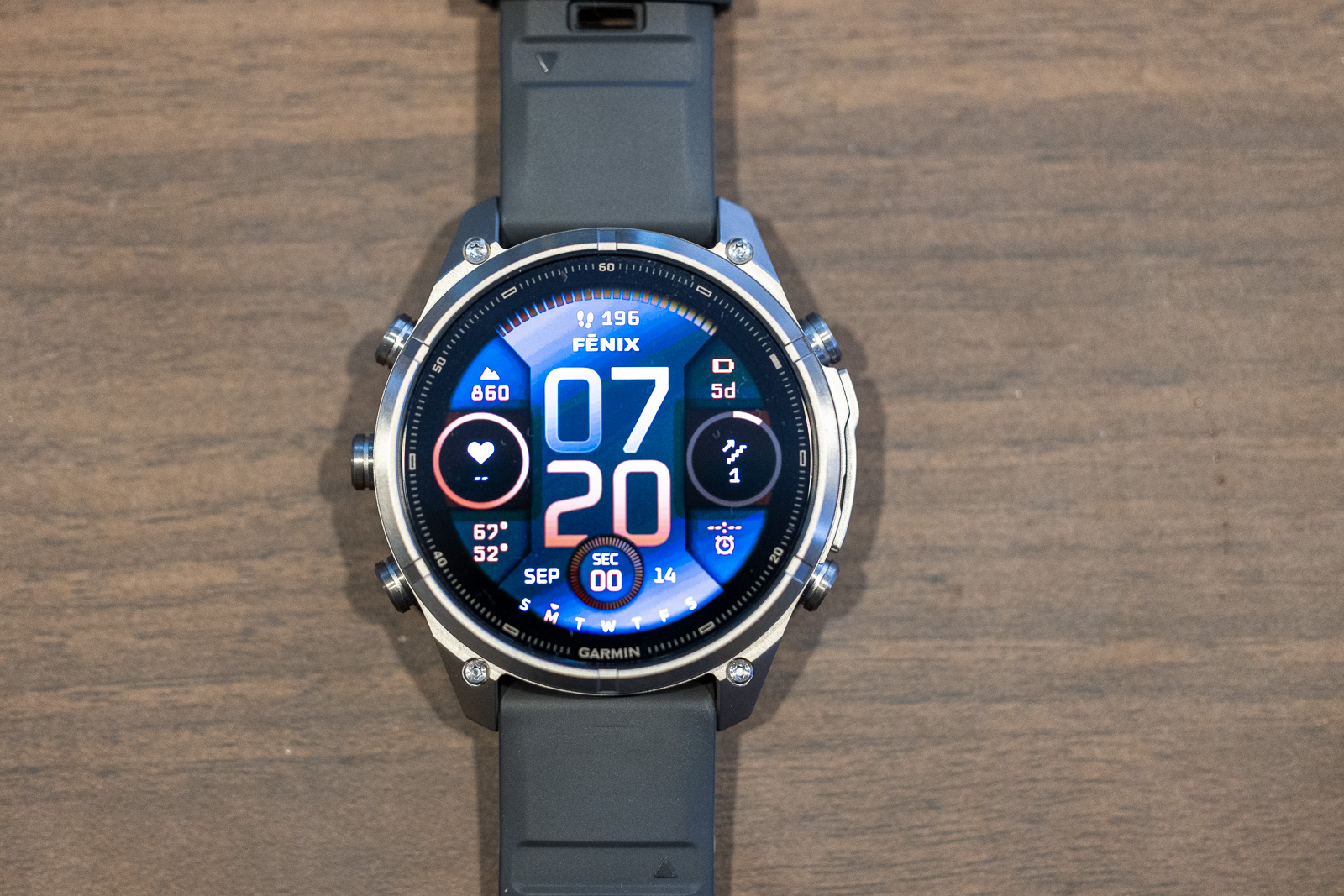
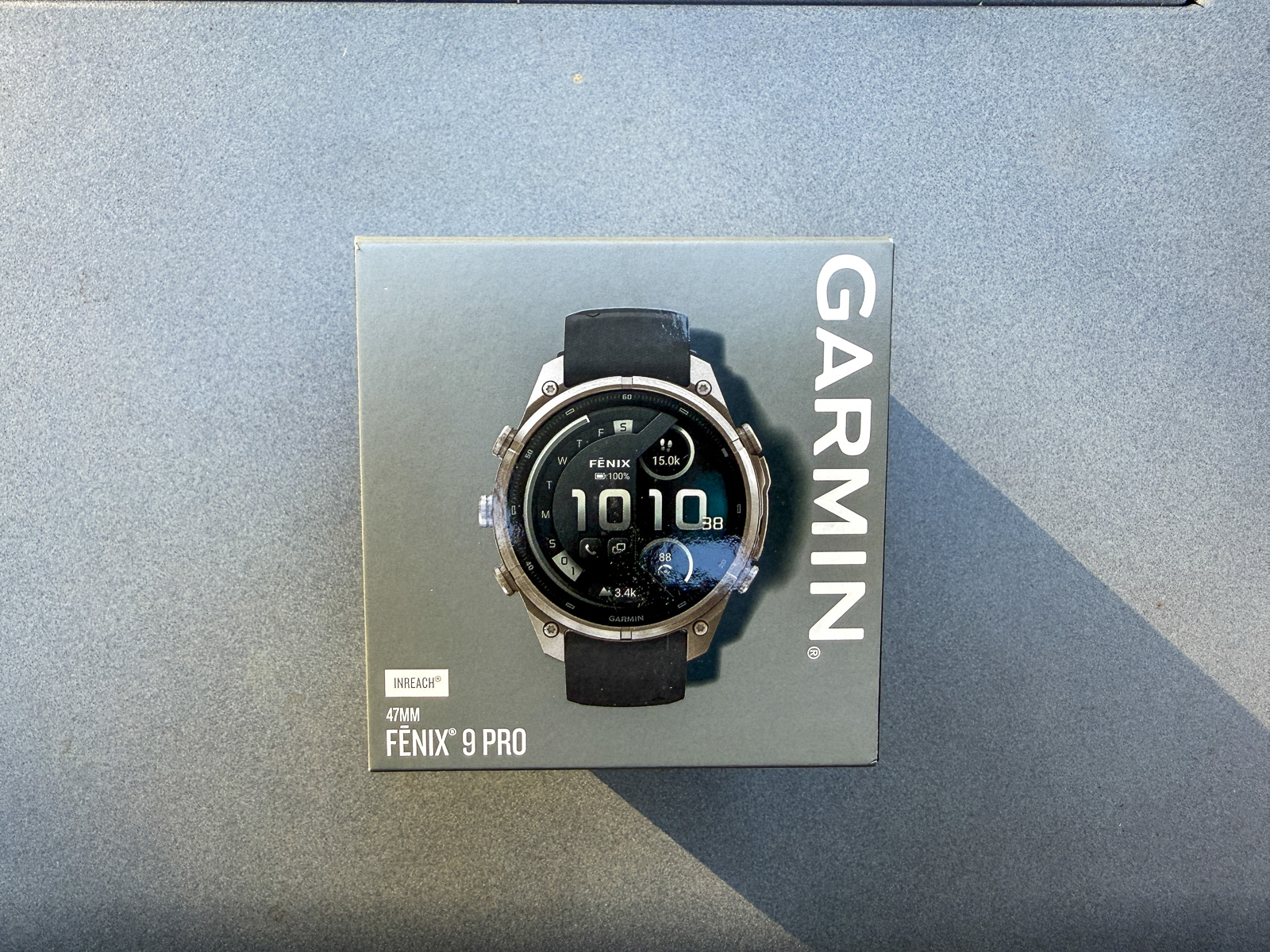
Garmin has a dizzying number of configurations within the Fenix 9 lineup.
The model I’m reviewing is the Fenix 9 Pro inReach, 47mm AMOLED in titanium with a graphite and black silicone band. It retails for $1,199.99.
This is worth clarifying because the differences between the standard Fenix 9, Fenix 9 Pro, and Fenix 9 Pro inReach can get confusing.
The standard Fenix 9 starts at $999.99. Moving to the Fenix 9 Pro adds a full titanium case and starts at $1,099.99. Adding inReach satellite and LTE connectivity takes the 47mm version I have to $1,199.99, before any optional inReach subscription.
All of those are objectively expensive watches.
So the real question isn’t whether the Fenix 9 Pro is good. It is.
It’s whether the improvements are meaningful enough to justify that price over Garmin’s already-excellent alternatives.
First Impressions of the Garmin Fenix 9 Pro
Out of the box, it was immediately clear that this is the best-looking smartwatch I’ve ever tested. (I have yet to review a MARQ series or Tag Heuer Connected watch).
I’ve been wearing a standard Fenix 8 in black, and my new Fenix 9 Pro in natural titanium looks so good.
It looks and feels more high-end. More refined. Maybe even a little bit luxurious, for lack of a better word.
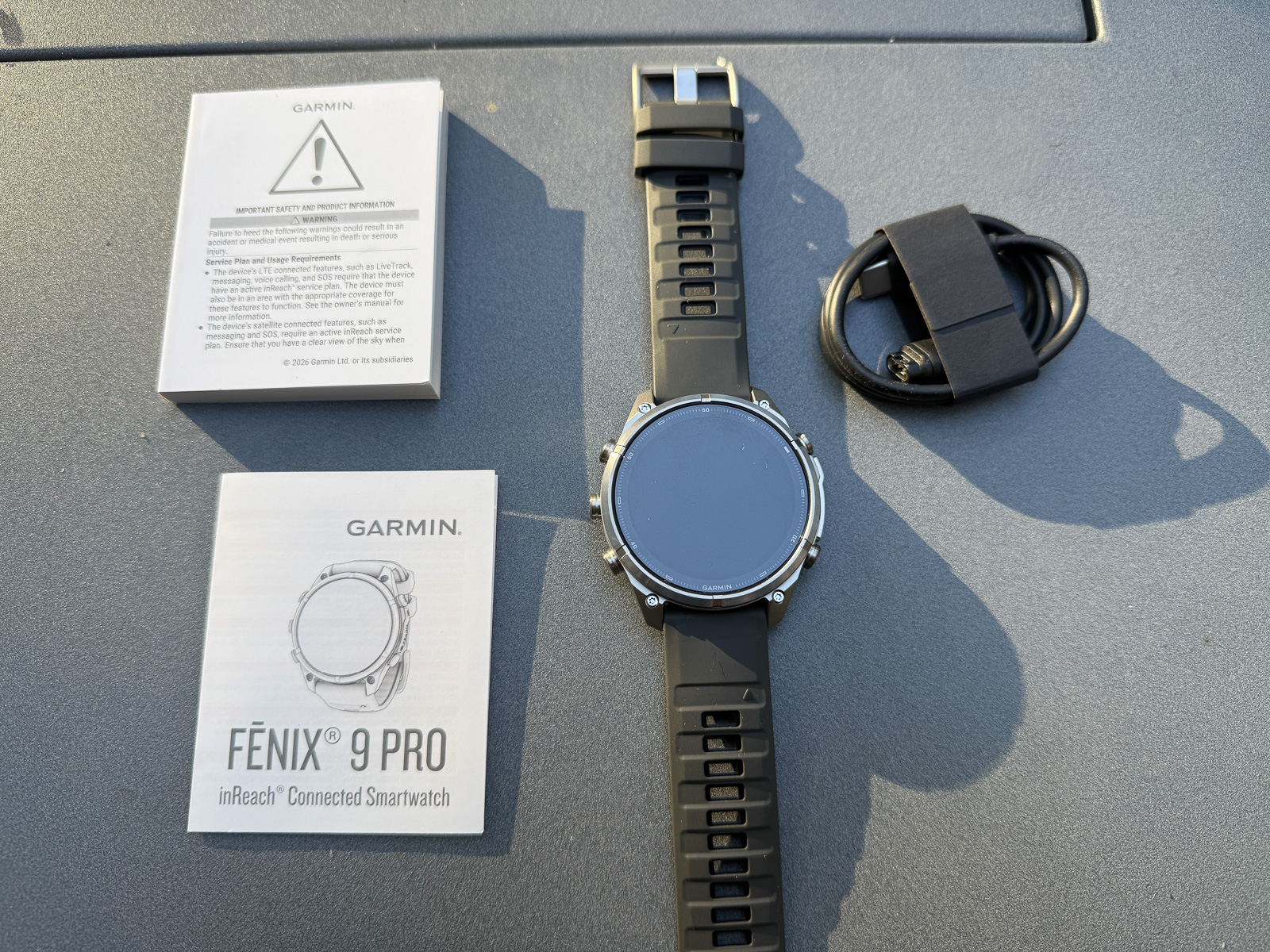
This is still a big, rugged fitness watch. Nobody is going to mistake it for a mechanical dress watch.
But the full titanium case makes it feel like a more premium product than my old Fenix 8 does.
The other thing you’ll notice immediately is the display.
The AMOLED Fenix 9 models can reach 3,000 nits, and when you put the Fenix 9 Pro next to my Fenix 8 with the brightness turned up on both, the difference is obvious.
The Fenix 9 Pro looks noticeably brighter and crisper.
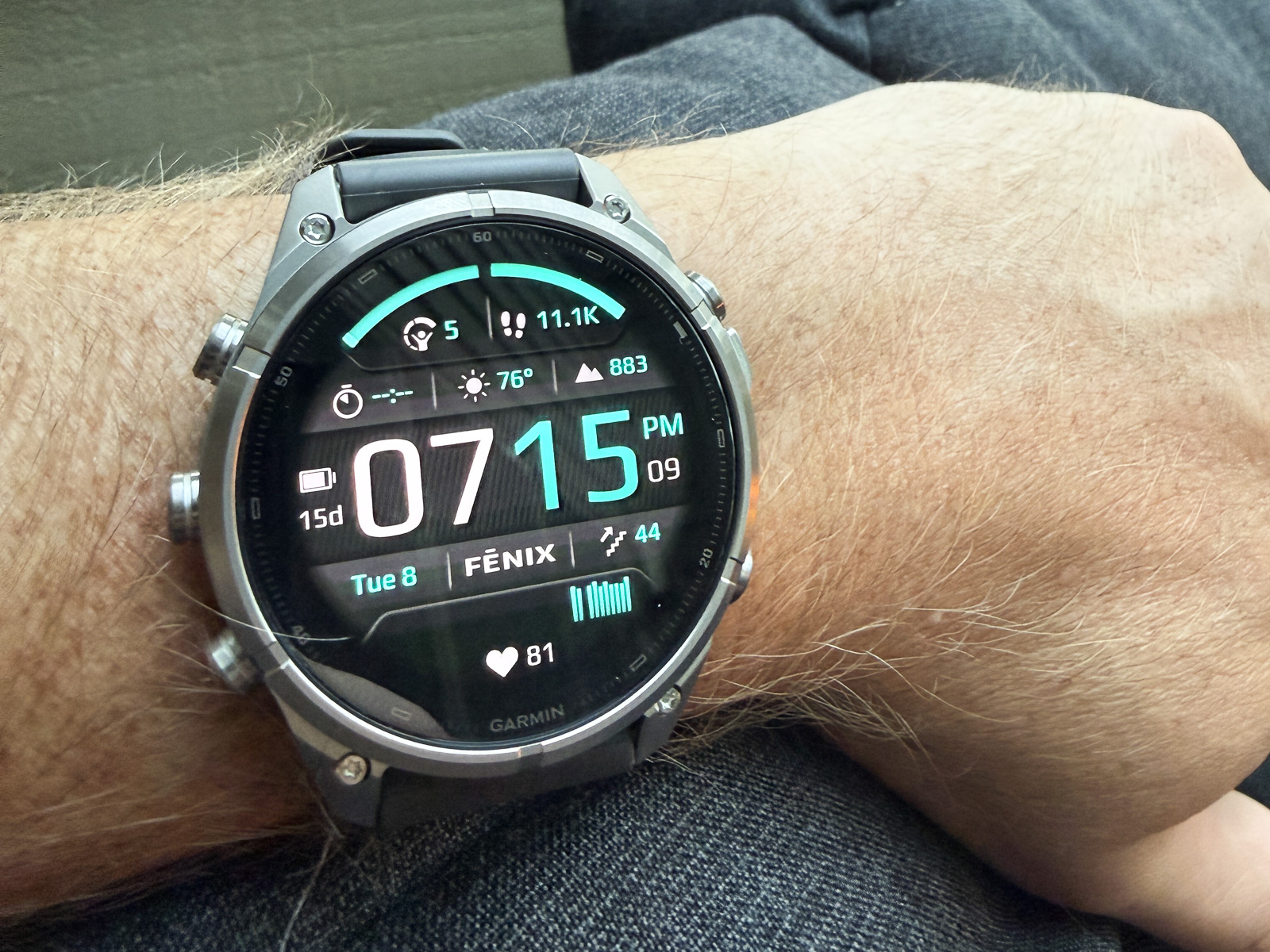
The Garmin Venu X1 has had the most impressive display of any Garmin watch I’ve tested, but much of that comes down to its square design and massive 2-inch screen.
The 1.4-inch display on my 47mm Fenix 9 Pro is smaller, but the brightness and sharpness are a clear step up from the Fenix 8.
I notice it more than I expected to, even when I’m just casually looking down to check the time.
Between the titanium case and the improved display, this watch simply looks better than my old one.
One important clarification: The standard AMOLED Fenix 9 also gets the new 3,000-nit display. So the screen is a reason to consider the Fenix 9 generation over the Fenix 8, but it isn’t the main reason to upgrade specifically from the Fenix 9 to the 9 Pro.
That extra $100 is primarily paying for the Pro’s full titanium construction and more premium feel.
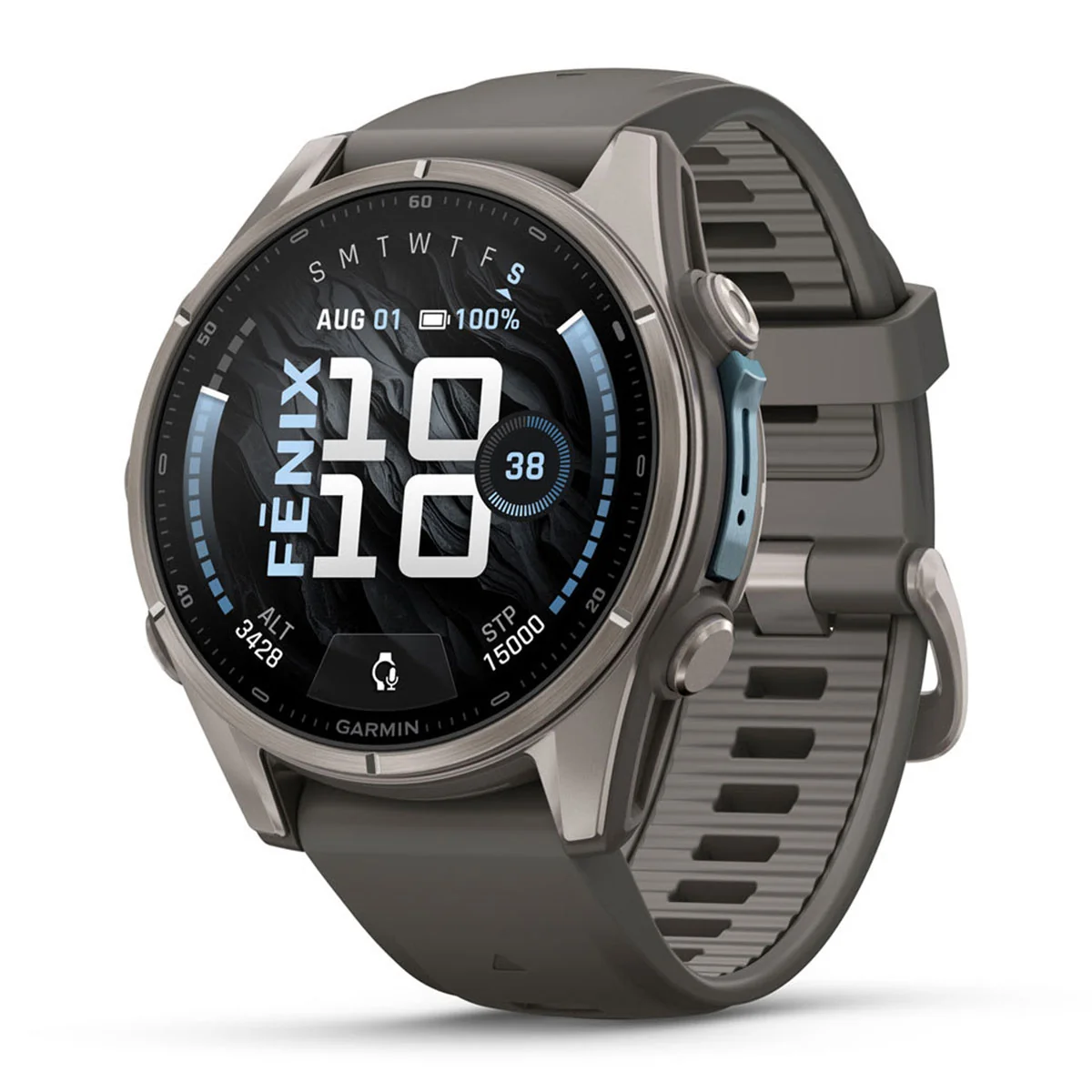
The Fenix 9 is the latest version of Garmin's full-featured flagship Fenix series. It has nearly all the golf capabilities of Garmin's dedicated Approach series golf watches, and a whole lot more.
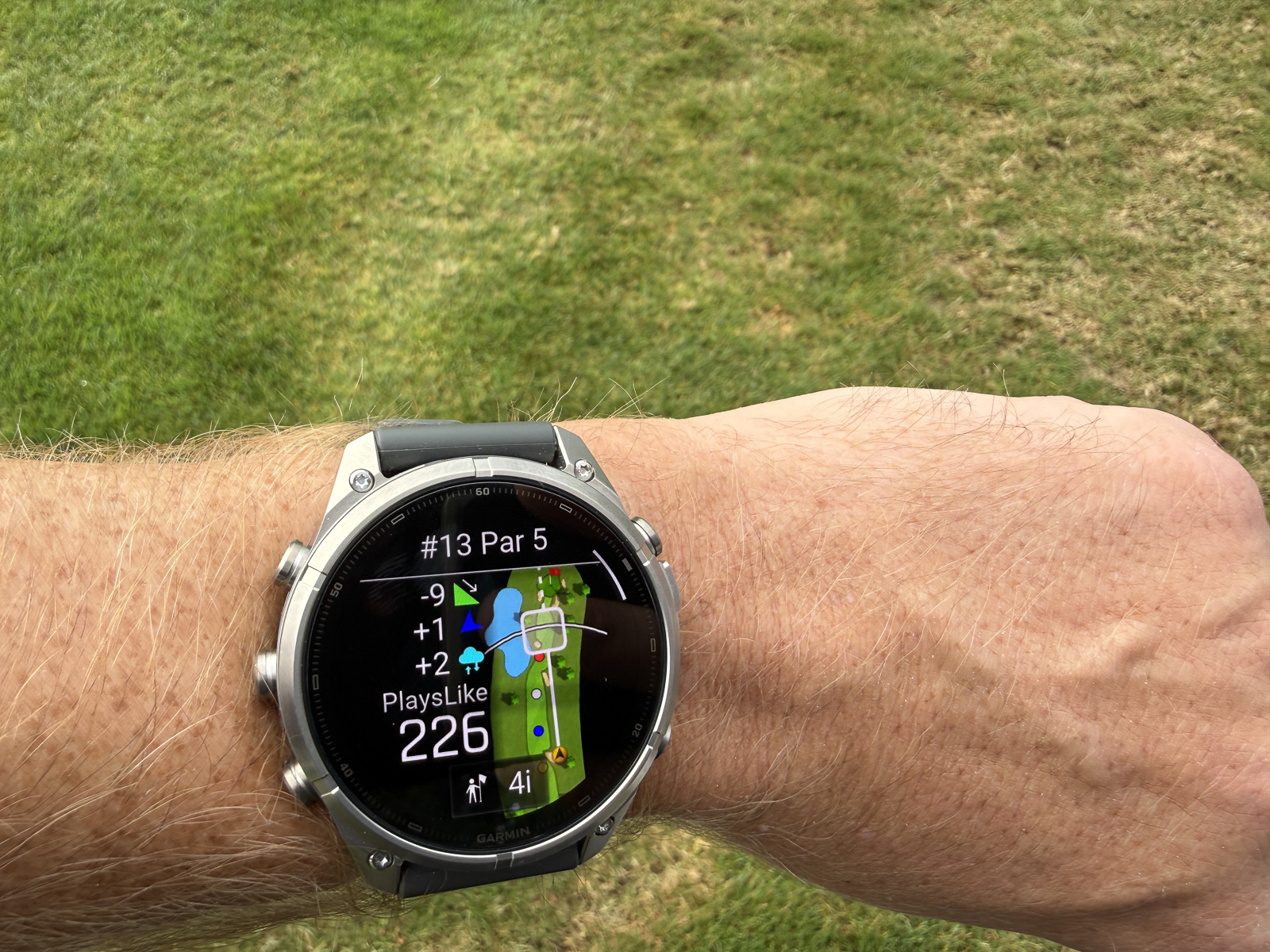
Using the Fenix 9 Pro on the Golf Course
Let’s make this part easy: using the Fenix 9 Pro for golf feels nearly identical to using the Fenix 8.
There are no major new golf features to speak of.
Honestly, the overall jump from the Fenix 8 to the Fenix 9 feels less dramatic than the jump from the Epix Pro Gen 2 to the Fenix 8 a couple of years ago.
You still get Garmin’s entire premium golf suite:
- More than 43,000 preloaded courses
- Full-color CourseView maps
- Front, middle, and back distances
- Touch targeting to any point on the hole
- Enhanced PlaysLike distances that account for elevation and environmental conditions
- Wind speed and direction when connected to the Garmin Golf app
- Hazard, dogleg and layup distances
- Green View with manual pin placement
- PinPointer
- Automatic shot tracking
- Digital scoring and stat tracking
- Virtual Caddie club recommendations
- CT1 and CT10 club-tracking compatibility
- Green contour maps with a Garmin Golf membership
Everything that made the Fenix 8 my favorite golf watch I’ve ever used remains here.
It’s easy to start a round. GPS locks on quickly. Distances have felt completely accurate. Garmin continues to be best in class at recognizing which hole you’re playing and prompting you to enter your score as you walk to the next tee (assuming you have scoring turned on).
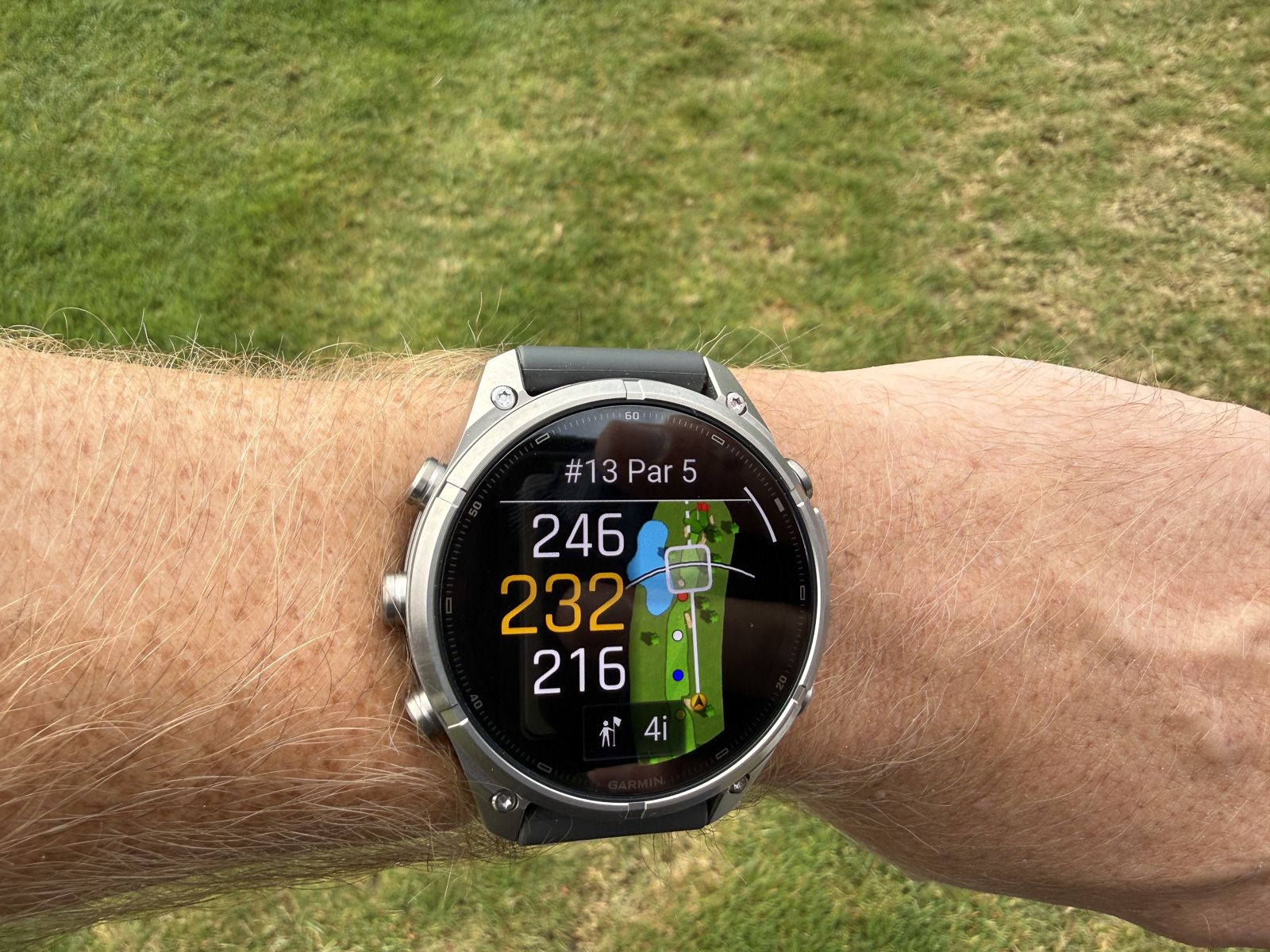
That sounds like a small detail, but I’ve noticed cheaper GPS units and watches can struggle with this at times.
Garmin’s menus and prompts generally appear when you want them to, and the watch mostly stays out of your way when you don’t.
It’s also extremely easy to pair it with one of Garmin’s rangefinders, such as the Approach Z30 or newer Approach Z10.
Shoot the flag with the rangefinder, and the watch can place that exact pin location onto the green map. If you’re already invested in Garmin’s golf ecosystem, this is still one of its best tricks.
And if you pay for a Garmin Golf membership ($99/year), the green contour maps look even better on the sharper, brighter display.
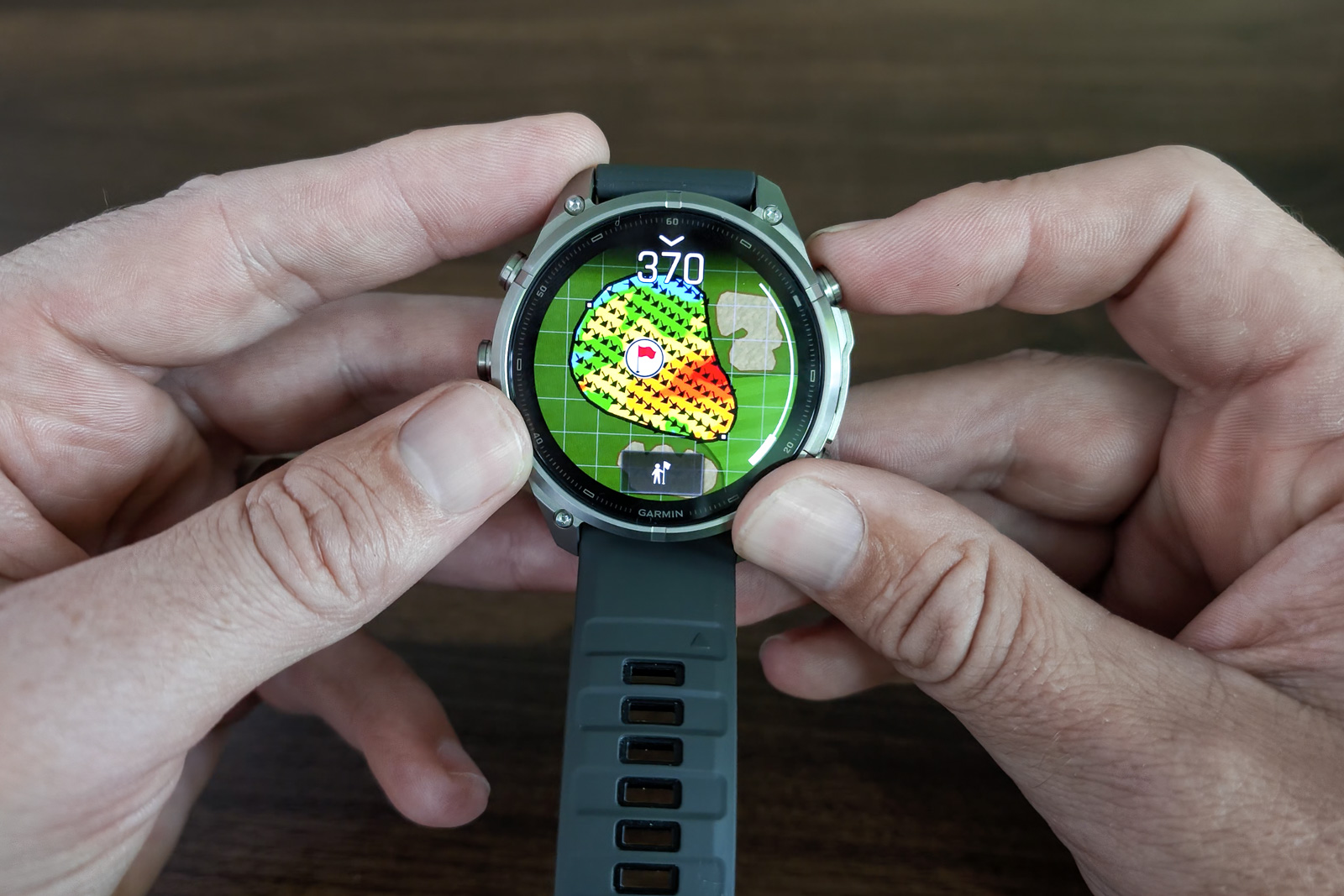
But again, none of this represents a meaningful new capability over the Fenix 8.
The golf experience is excellent. It just isn’t substantially different.
The Two Golf Differences I Have Noticed
There are two changes I’ve noticed between the Fenix 8 and Fenix 9.
Neither is enough to justify upgrading on its own, but both make the experience slightly better.
Simpler Satellite Settings
The first is buried in the golf settings menu under “Satellites.”
The Fenix 8 gave you five different satellite options, including more granular choices around multi-band GPS.
On the Fenix 9 Pro, Garmin has simplified those choices into three much easier-to-understand options:
- Extended Battery: Good accuracy with better battery life
- Normal: A balance between accuracy and battery life
- Max Accuracy: The best accuracy while using more battery
For most people, this is the better approach.
I’ve left mine on Normal, and as is typically the case with Garmin GPS devices, the yardages have felt spot-on.
People who love manually controlling every GPS setting may miss the additional options. Everyone else will probably appreciate not having to think about it.
But the reality is? This isn’t a setting I’ve ever even considered changing until I was actively looking for differences between these two watches.
Faster Maps
The second improvement comes from the faster map engine and the 50% increase in RAM over the Fenix 8.
Garmin says map panning can be up to 30% faster, and there is a noticeable difference on the golf course.
You see it most when opening the full-hole overview, zooming in on targets, or moving around the map. Screens load a little more quickly, and the overall experience feels a little smoother.
It’s a welcome quality-of-life improvement, but really isn’t that dramatic of a difference.
If you use a Fenix 8 today and feel like its golf maps are unbearably slow, then sure, you’ll appreciate the improvement. But I don’t think this alone should push anyone into spending $1,000 or more on a new watch.
Fenix 9 Pro vs. Fenix 8 for Golf
From a pure golf perspective, this is easy:
If you already own a Fenix 8 or Fenix 8 Pro, you do not need to upgrade.
The premium golf features are essentially the same. The interface is extremely similar. Accuracy is excellent on both. Scoring, shot tracking, PlaysLike distances, Virtual Caddie, and accessory integration all work the same way.
The Fenix 9 Pro gives you a nicer case, a brighter display, and slightly quicker maps.
Those improvements are more noticeable than I expected, and they make the watch feel more polished. But my golf experience and day-to-day usability are still almost identical between the two generations.
Owners of the Fenix 8 Pro have even less reason to move, since they already have inReach connectivity available.
But the decision is more interesting if you’re buying today and choosing between a discounted Fenix 8 and a new Fenix 9.
As I write this, my exact Fenix 8, the 47mm sapphire version, is selling for $849, down from its original $1,099 price.
That means a standard Fenix 9 is only $150 more. A non-inReach Fenix 9 Pro is $250 more.
No, $250 isn’t nothing, especially when the underlying golf experience is so similar.
But if I were buying one of these watches today and planning to wear it for the next 3 to 5 years or more, I’d personally buy the Fenix 9 Pro.
The titanium construction and improved display make it feel like much more of an upgrade than I expected. The faster map performance isn’t a huge deal on its own, but it’s noticeable enough to improve the experience on the course.
And with the 50% increase in RAM and storage capabilities, it makes it more likely that the Fenix 9 might get new features in the future, which the 8 may not.
And the reality is that if you can comfortably afford $849 for a smartwatch, there’s a good chance you can afford the additional $250 to get the newest, nicest version.
That doesn’t make the Fenix 8 a bad buy. Far from it.
In fact, if the price falls another $100 or $200, the Fenix 8 may quickly become the best value in Garmin’s premium lineup.
But at the current prices, I’d be inclined to spend a little more and get the 9 Pro.
Fenix 9 Pro vs. Approach S70
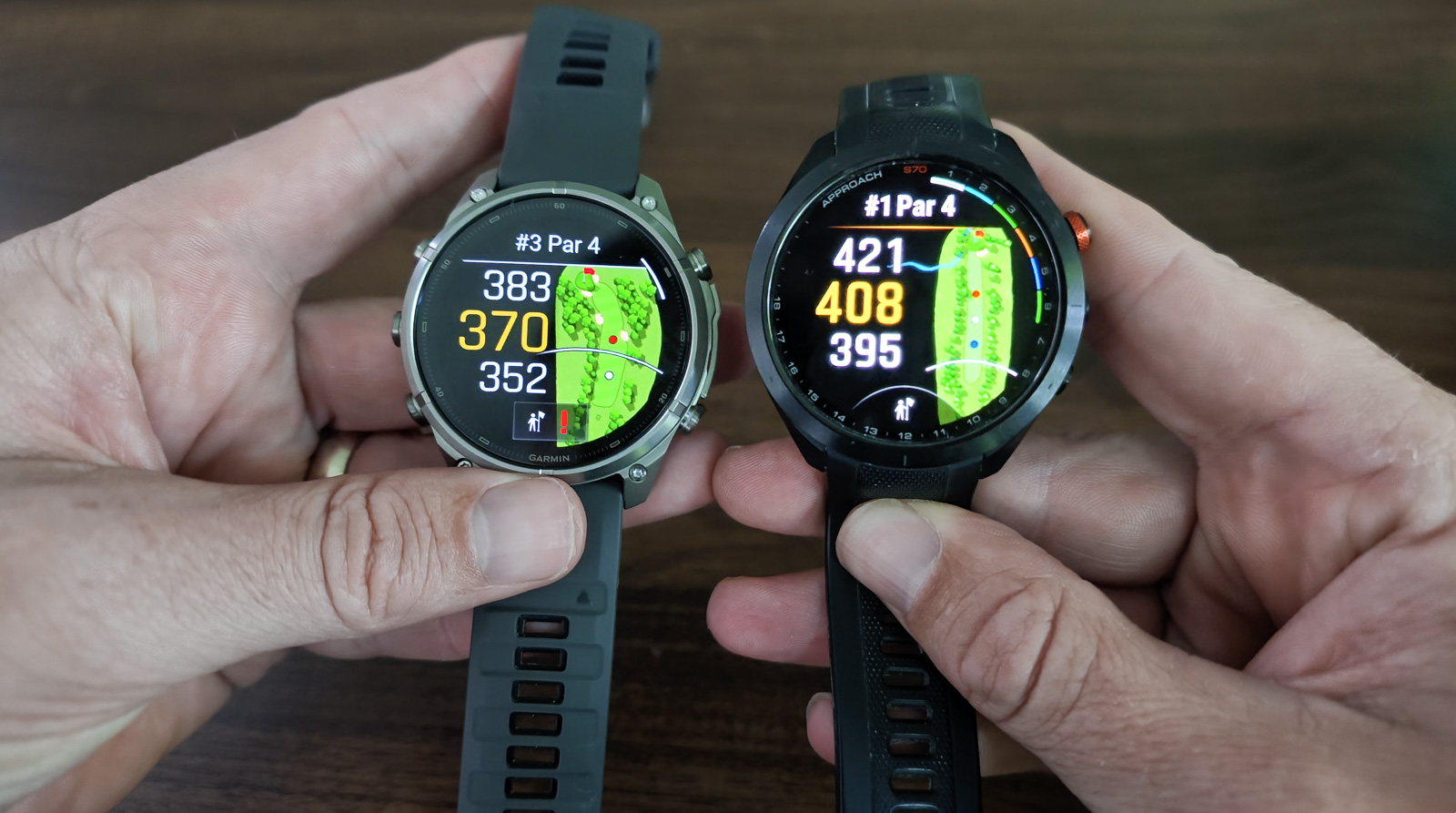
The choice between the Fenix 9 Pro and the Approach S70 is a little bit more clear-cut.
It primarily comes down to two questions.
1. What’s Your Budget?
The 47mm Approach S70 is $699, while the Fenix 9 and 9 Pro models start around $1,000 and go up from there.
My exact Fenix 9 Pro inReach costs $1,199.99.
That’s a $500 difference from the S70.
If price is a major consideration, the S70 is the clear winner. You’re getting all of the same important golf functionality for significantly less money.
Also, considering the S70 has been out for a few years now, we’ve seen a handful of sales each year dropping it down to as low as $549.
2. Is This Primarily a Golf Watch or an Everyday Watch?
If you’re looking for a watch mainly to use on the golf course, but you still want Garmin’s full premium golf feature set, get the S70.
The Fenix series is total overkill for that person.
But if you’re serious about health and fitness, participate in a variety of sports and outdoor activities, and want best-in-class tracking for all of it, the Fenix can be worth the extra money.
The S70 has an impressive collection of health and fitness tools. But the Fenix line takes all of that much further with a massive collection of activity profiles, more advanced training metrics, full mapping and navigation, greater durability, and a host of outdoor features.
The Fenix is the watch I want for golf and running and hiking and skiing and workouts and travel.
The S70 is the better choice when golf is the primary function.
The Small Golf Advantages of the S70
Golf functionality is nearly identical, but the S70 still has a few golf-specific advantages.
The first is the 18-hole bezel.
Numbers one through 18 are printed around the watch face, and as you play, small color indicators show how you scored on each hole relative to par.
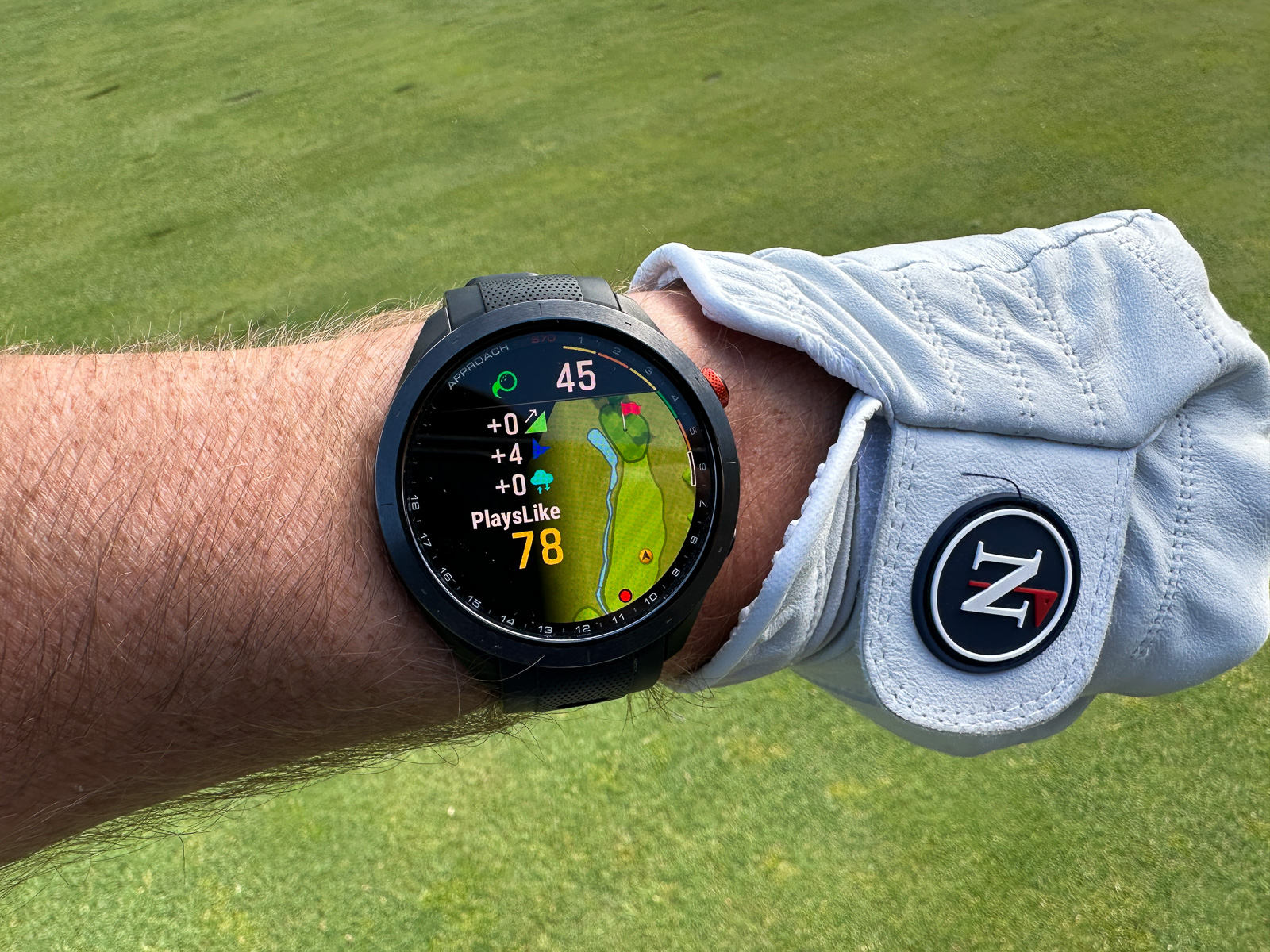
It’s a clever way to see the trend of your round at a glance, and it’s probably the S70 feature I miss most when using a Fenix.
The S70 also has a slightly more elegant golf interface in a few places.
For instance, when recording whether you missed a fairway left or right, the S70 uses cleaner visual indicators. The Fenix gives you the same functionality, but the presentation isn’t quite as polished or golf-specific.
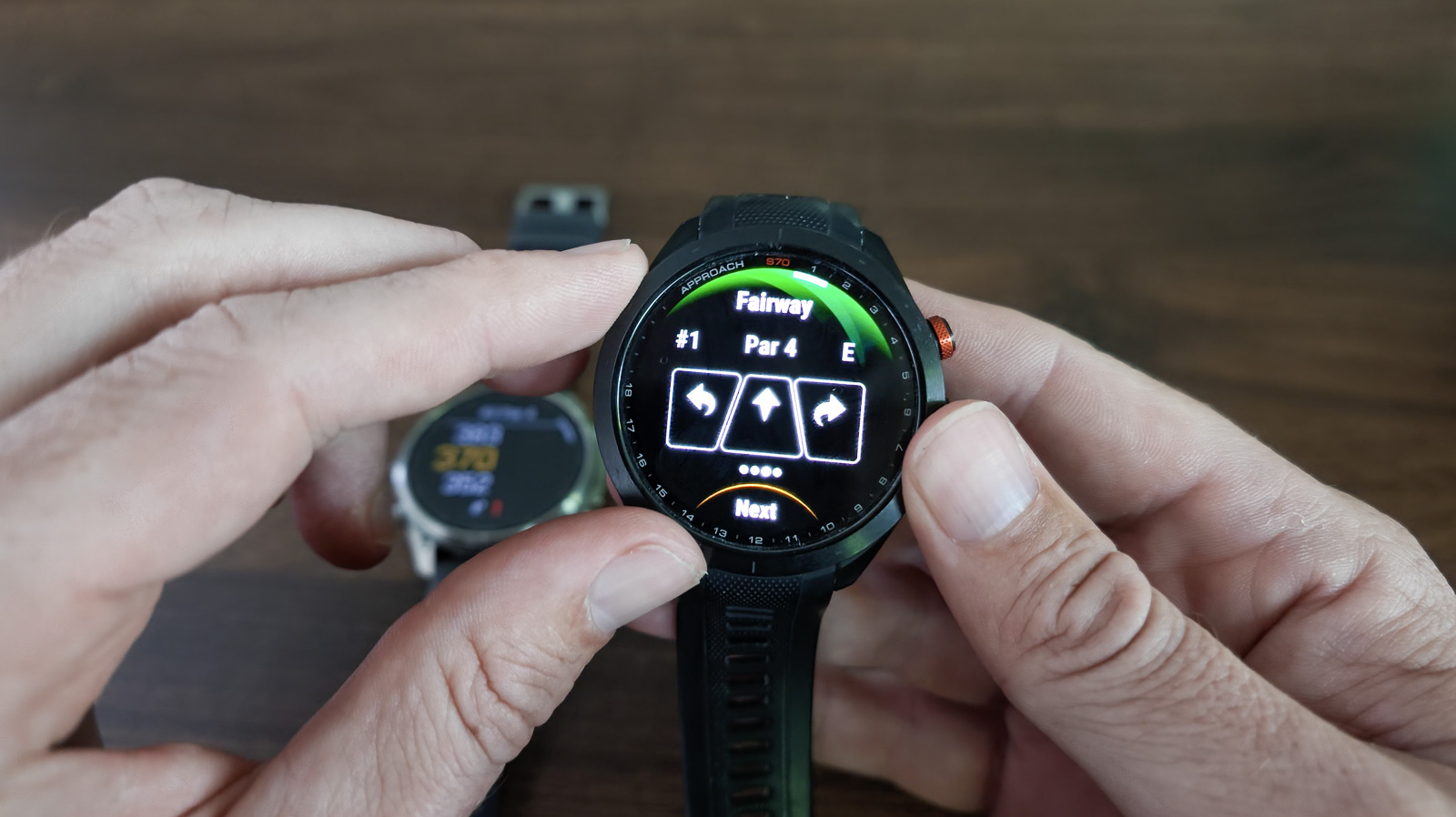
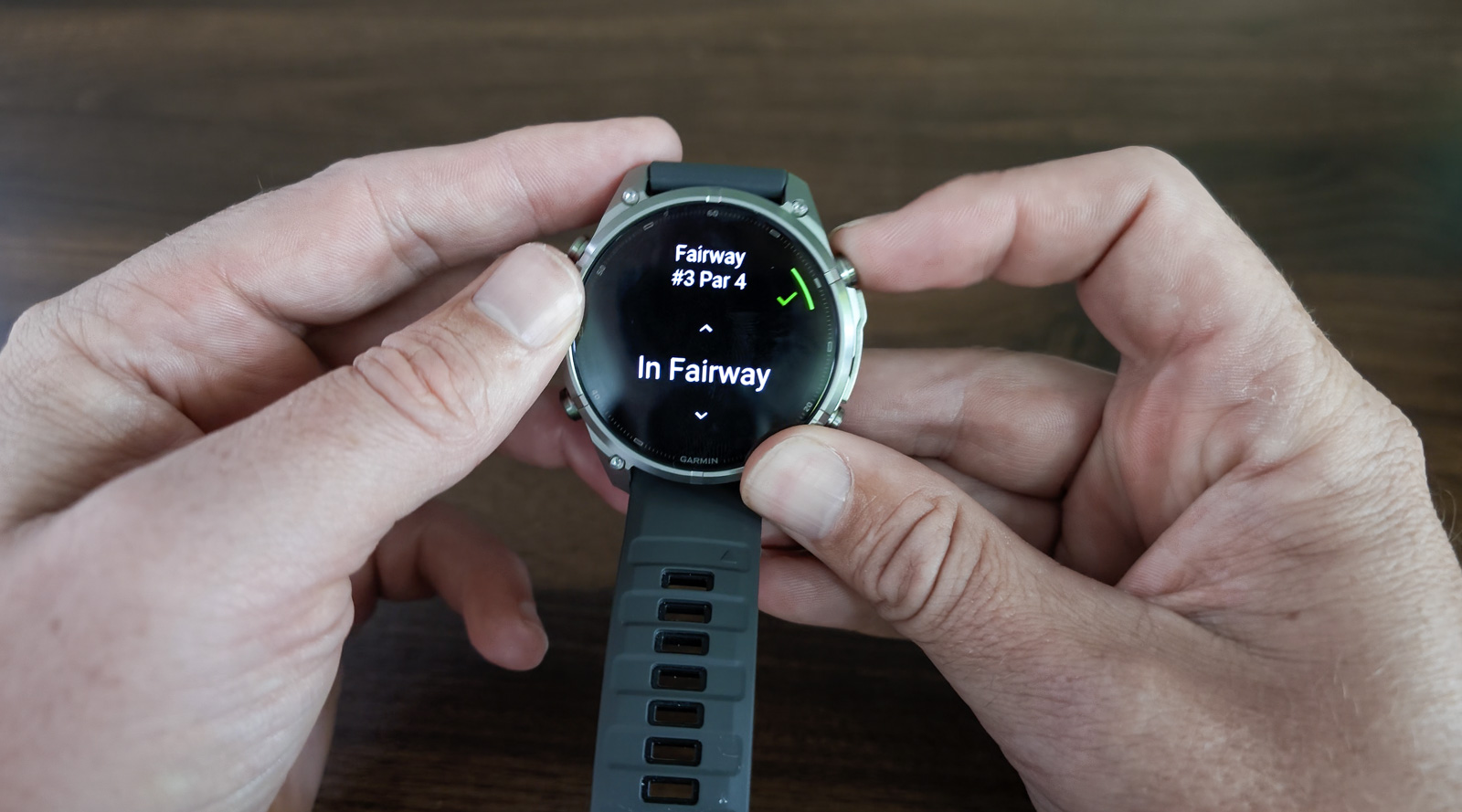
Finally, the controls are different.
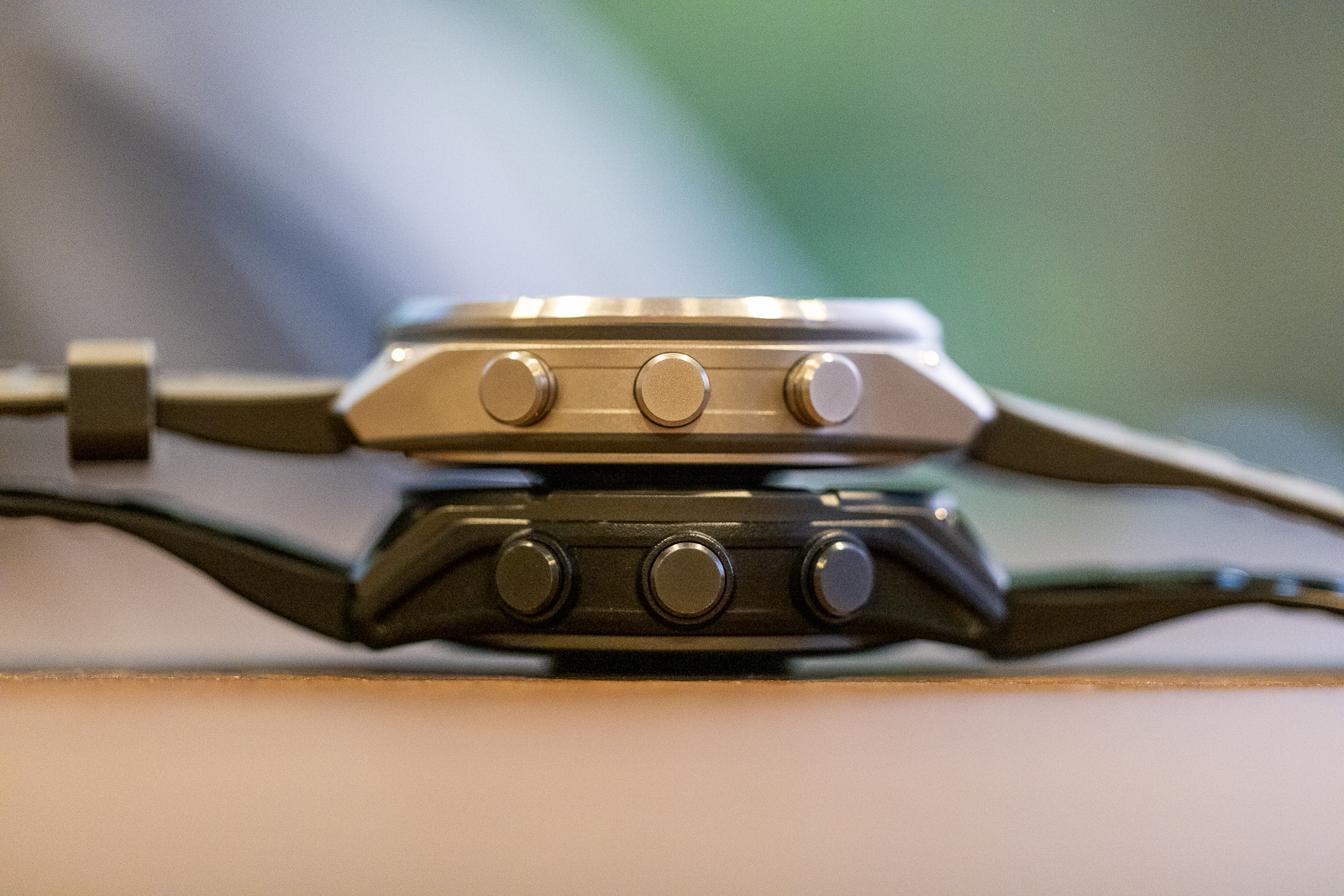
The S70 uses a three-button layout and relies more heavily on its touchscreen. The Fenix uses five buttons and gives you more control without touching the display.
Personally, I prefer the five-button Fenix setup. Touchscreens can become cumbersome when it’s raining, when your hands are sweaty, or when you’re wearing a golf glove.
The S70 is also lighter and feels less substantial on the wrist, which many golfers will prefer during a swing. Its integrated bracelet looks sleek, although the Fenix can lay flat on a table and makes swapping QuickFit bands simple.
These are all relatively minor distinctions.
The important golf features like maps, PlaysLike, Virtual Caddie, shot tracking, scoring, green contours, and rangefinder integration are available on both.
A Few Everyday Fenix 9 Pro Features I Love
This isn’t intended to be a comprehensive fitness or smartwatch review, but there are a few everyday features worth mentioning because they help justify choosing the Fenix over the S70.
The Display
I keep coming back to the display because it has made a bigger difference than I expected.
The improvement is obvious next to the Fenix 8, but I also notice it throughout the day when I’m checking the time, looking at a notification or glancing at health data.
It’s bright, sharp, and excellent in direct sunlight.
The Titanium Case
The natural titanium version looks fantastic.
It still looks rugged, but it feels more refined and versatile than my black Fenix 8. This is the first Fenix I’ve owned that genuinely feels a little bit luxurious.
If you wear your watch all day and in a variety of settings, that improved design is meaningful.
The Flashlight
The flashlight seems gimmicky until you use it.
Then it becomes one of those features you never want to give up.
If you wear your watch to track sleep, having a bright flashlight permanently attached to your wrist is unbelievably useful in the middle of the night. I use it far more often than I ever expected.
The Fenix 9 Pro also adds a green-light mode alongside white and red options, although the basic flashlight functionality I love isn’t new to this generation.
inReach Is Useful, but Most Golfers Don’t Need It
My model includes inReach satellite and LTE connectivity.
That can be a legitimately valuable safety tool if you frequently hike, run, ski, or adventure in places where cell service is unreliable. It lets you access messaging, location sharing, and emergency SOS features without relying entirely on your phone, although an active plan is required for most of those capabilities.
But most golfers don’t need it.
The inReach hardware adds a little thickness and weight, and it adds another $100 to the price. My version doesn’t wear noticeably differently from my standard Fenix 8, but unless you have a real use case for off-grid communication, save the money.
One Garmin Ecosystem Feature I Still Want
Garmin has done an excellent job connecting many of its golf products.
The watches work with CT1 and CT10 sensors. The Z10 and Z30 rangefinders can push pin locations directly to the watch. Round and shot data live together inside the Garmin Golf app.
So I’m surprised we still don’t have meaningful watch integration with Garmin’s launch monitors.
I’d love to see Approach R10 and R50 users receive shot data directly on their watch during practice sessions.
Especially the R10 since it doesn’t have a built-in screen.
Being able to glance at carry distance, club speed, or another chosen metric without walking back to a phone, tablet, or launch monitor screen would make the Garmin ecosystem feel even more complete.
It seems like an obvious next step, and I hope we see it in a future update.
One Thing I’m Disappointed By
My single biggest frustration or disappointment with this watch (or any other Garmin watch I’ve tested) comes down to heart rate issues with the watch.
About half the time I start a run or workout on my watch, there’s a severe lag in getting accurate heart rate data.
This has the same heart rate sensor as the Fenix 8, so I didn’t expect anything different, and after my first run – I can confirm it’s still an issue.
What happens is for the first 3 to 10 minutes, it doesn’t track heart rate accurately. Like, not even close.
Take this run yesterday. It had me around 100bpm until over 9 minutes into my run. I should have been 150-170 for much of that.
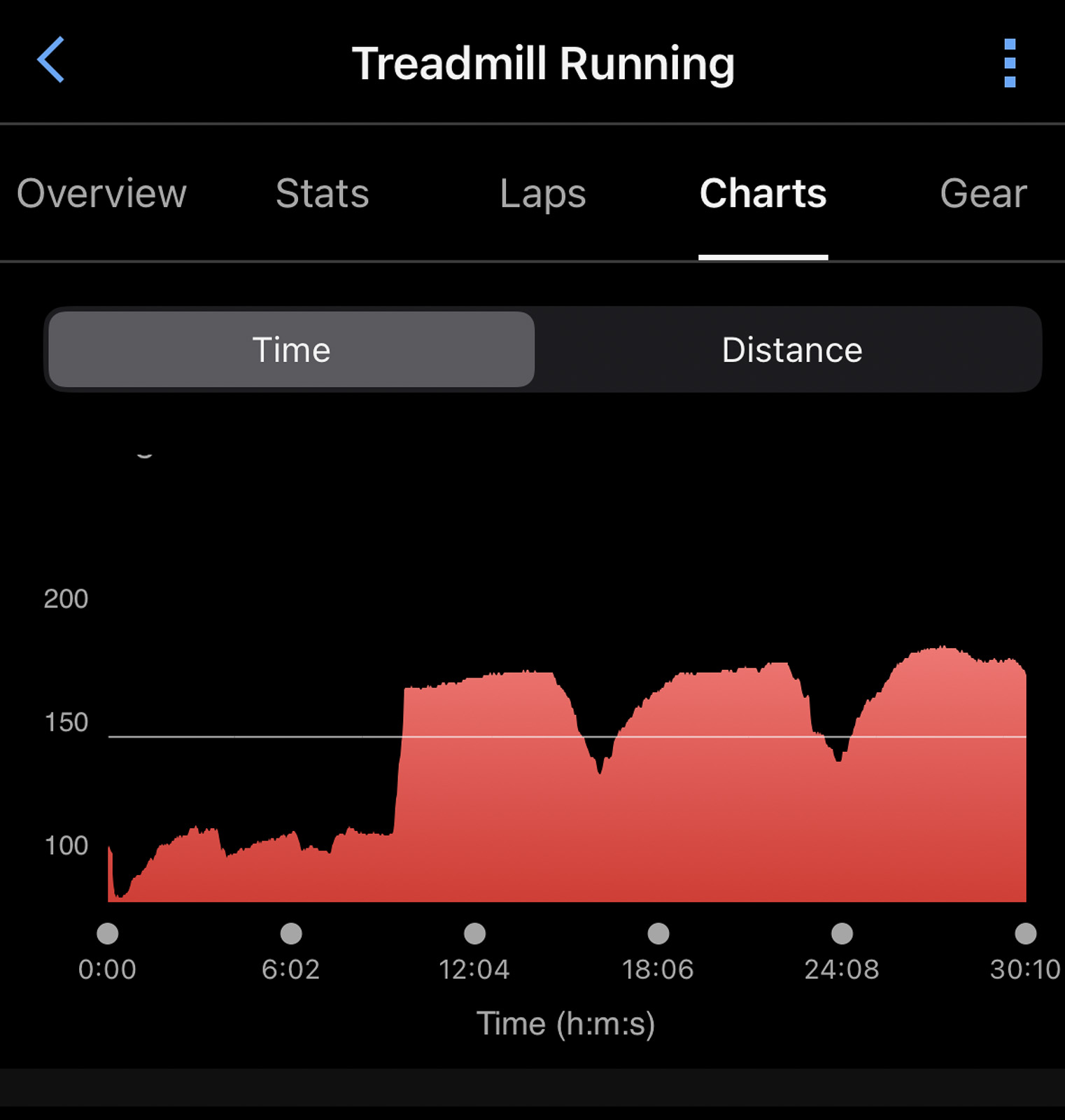
And then all of a sudden, there’s a steep spike, and it is extremely accurate from that point on. Dropping when I slow down, and right back up when I speed up.
But, let’s say I’m doing a fast mile sprint, and I want accurate data. Often, I’ll never get accurate heart rate data for runs like that.
I know some of this comes down to wrist technology, but I can’t figure out why this issue continues to be so egregious across all Garmin watches I’ve tested.
I realize this has little to do with golf, but I wanted to mention it as it’s been the biggest issue I’ve had with the watch.
What About the Garmin MARQ Golfer?
The MARQ Golfer Gen 2 remains Garmin’s true luxury golf watch.
It combines high-end materials and a more traditional luxury-watch aesthetic with Garmin’s premium golf functionality. It also costs considerably more than either the S70 or the Fenix 9 Pro.
At this point, the MARQ Golfer Gen 2 is nearly four years old. Now that Garmin has introduced a full titanium Fenix case and substantially brighter displays, I wouldn’t be surprised to see a refreshed MARQ Golfer that incorporates some of this newer hardware.
As a watch (and golf) nerd, this is a watch I’m personally very interested in. But considering the massive premium over the Fenix or S70 for technology that’s now 4 years old – there really isn’t any reason to buy it. Especially now that the Fenix 9 Pro feels more elevated with the new titanium case.
That said, I’m hoping we’ll see a MARQ Golfer Gen 3 sometime soon.
Who Should Buy the Garmin Fenix 9 Pro?
Here’s how I’d break it down.
Buy the Fenix 9 Pro if:
- You want Garmin’s nicest all-around golf, fitness, and adventure watch.
- You plan to wear it all day rather than only during rounds.
- You’re coming from an older Fenix, Epix, or another smartwatch.
- You care about the titanium construction, premium feel, and brighter display.
- You’re comfortable spending more now for a watch you’ll likely keep for years.
Buy the standard Fenix 9 if:
- You want the faster maps and brighter 3,000-nit screen.
- You don’t care as much about the Pro’s full titanium construction.
- You’d rather save $100 while keeping the same core golf experience.
Buy the Fenix 8 if:
- You find a meaningful discount.
- You want essentially the same premium golf and fitness functionality as you get on Fenix 9
- The new display, titanium case, and faster maps aren’t worth a $150-250 premium
Buy the Approach S70 if:
- Golf is your primary reason for buying the watch.
- You want Garmin’s best golf-first interface.
- You prefer something lighter on your wrist.
- You don’t need all of the Fenix’s advanced multisport, navigation, and adventure tools.
Keep your current watch if:
- You already own a Fenix 8 or Fenix 8 Pro and are considering upgrading solely for golf.
Final Thoughts on the Garmin Fenix 9 Pro
I’m still a superfan of the Garmin ecosystem.
No other company has done as good a job of combining golf, health, fitness, and outdoor features in one place. And no other watch I’ve tested offers this exact mix of premium golf functionality and all-day capability.
I was hoping for more dramatic golf upgrades between the Fenix 8 and Fenix 9.
We didn’t get them.
From an on-course perspective, these watches are extremely similar. If you already own an 8 or 8 Pro, there’s no compelling reason to upgrade.
But that doesn’t mean I’m disappointed with the Fenix 9 Pro.
The brighter display, faster maps, and titanium construction add up to a product that feels more premium than the spec sheet suggests. I expected the experience to feel almost completely interchangeable with my Fenix 8. Instead, I find myself appreciating the new screen and design every time I look down at my wrist.
Is that worth $1,099 or $1,199?
For most people, probably not.
For someone like me who wears a Fenix all day, every day for golf, fitness, sleep, and everything in between?
I’m extremely happy with it.
The Fenix 9 Pro will almost certainly be my daily driver for a long time to come.
This page contains affiliate links. This means that if you click a link and buy one of the products on this page, we may receive a commission (at no extra cost to you!) This doesn’t affect our opinions or our reviews. Everything we do is to benefit you as the reader, so all of our reviews are as honest and unbiased as possible.
A wonderful golf and fitness watch, despite not being that much different than the outgoing Fenix 8.
I was kind of expecting to see more new features that differentiated the Fenix 9 and Fenix 9 Pro over the outgoing Fenix 8. But despite no new golf features to speak of, the titanium case and upgraded screen of made a bigger impact than I expected them to. If you have an 8 or an 8 Pro, there isn't a ton of reason to upgrade to the new model. But if you're debating between buying an 8, 9, or 9 Pro? I think it's worth a little extra money to go with the latest model.
The Good
- New Titanium case on the Fenix 9 Pro looks fantastic
- Screen is a noticeable improvement over Fenix 8
- Essentially every feature you could want in a GPS golf watch
- Nice integration with Garmin Rangefinder and CT10 sensors
The Bad
- Changes from the Fenix 8 are minimal, with no major upgrades to golf experience
- Expensive
- Still waiting for launch monitor integration
- Occasional heart rate issues still an issue
-
Presentation
-
Performance
-
Quality/Features
-
Price
-
Personal Affinity
