

Don’t get me wrong—it’s always great to reconnect with people, catch up with brands I love, and get a first look at what the golf industry thinks we all need next.
But here’s the thing: walking the floor this year, I kept asking myself the same question: “Are we solving real problems, or just creating flashy solutions for issues that don’t actually exist?”
Technology has given us superpowers. AI can do damn near anything these days. But just because we can build it doesn’t always mean we should.
That’s my hot take, anyway. Feel free to roast me in the comments.
Now, with that mini-rant out of the way—I did see some genuinely cool stuff. Products that actually made me think, “Yeah, I want to test that” or “That could legitimately help my game.”
This also felt like the busiest and biggest show I’ve experienced in 10 years of going.
So here are the 16 products that stood out to me at the 2026 PGA Show. The ones I’m actually excited to get my hands on, put through the wringer, and report back on.
Shot Scope LM1
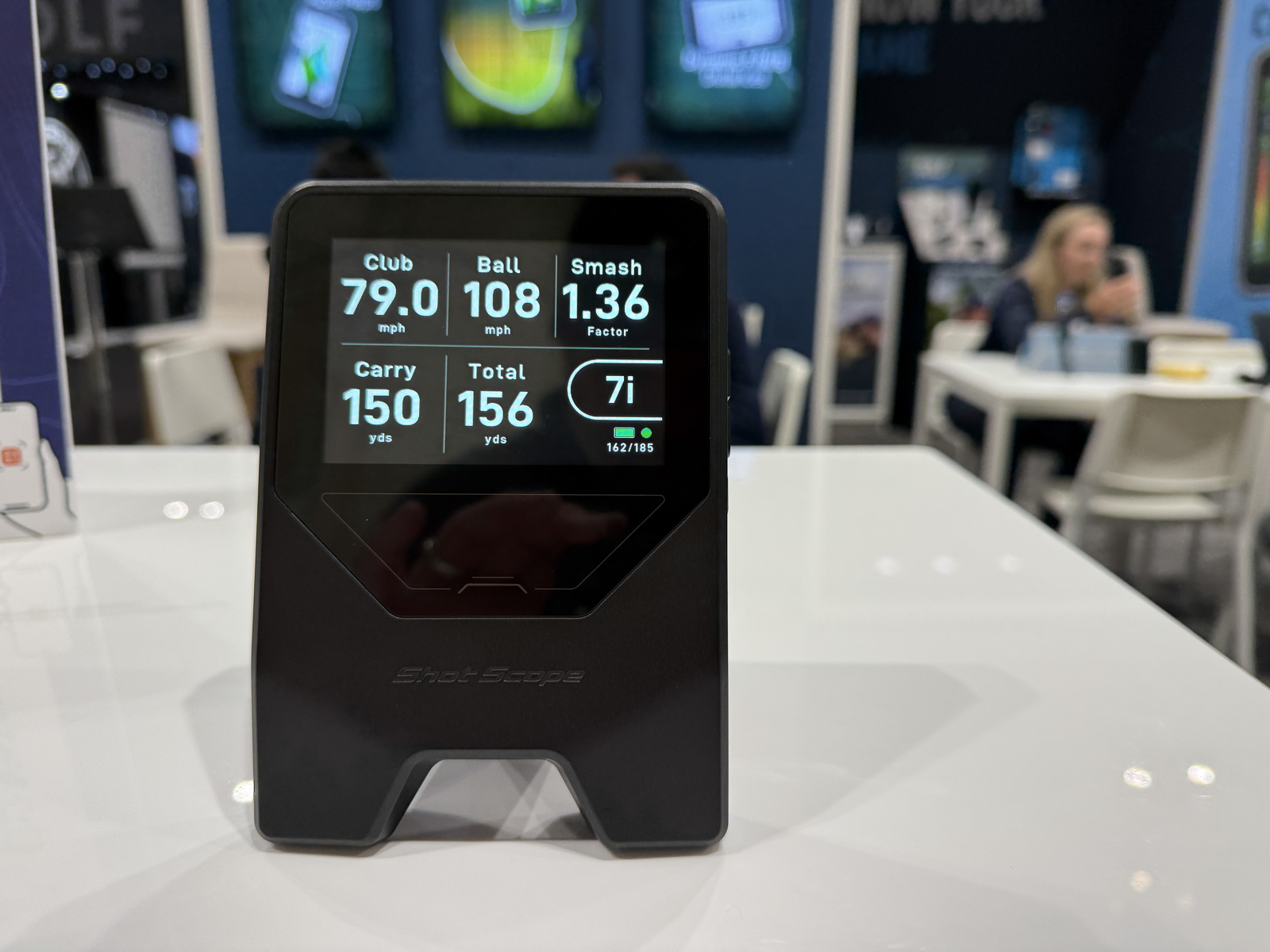
This might be the product I heard the most buzz about on the show floor—and for good reason. Shot Scope, a brand that’s built its reputation on delivering solid performance without the premium price tag, just dropped its first launch monitor. And they’re coming in hot at $200.
Let me put that in perspective: this might be the cheapest launch monitor on the market. But here’s what I love—they’re not trying to do too much. They’re sticking to the essentials: accurate yardages and the core metrics that actually matter to the average golfer. No bells and whistles. No gimmicks. Just making range sessions and practice more engaging without emptying your wallet.
It works indoors or outdoors, but it’s not pretending to be a full sim setup. It knows what it is, and it does that one thing well (in theory). If the accuracy holds up in testing (and I have no reason to think it won’t based on Shot Scope’s track record), this thing is going to fly off the shelves. This is accessibility done right.
Blue Tees Rainmaker R1
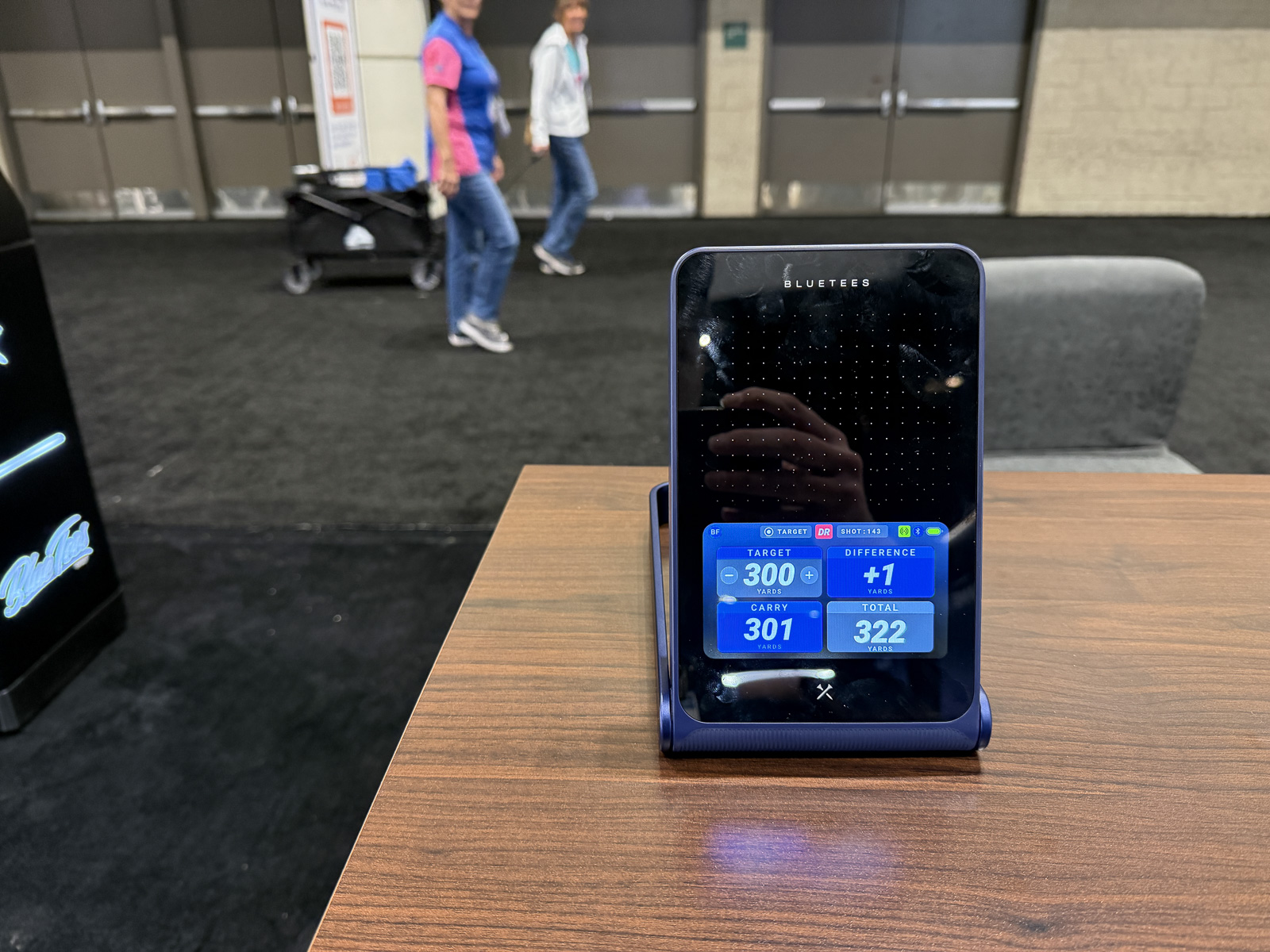
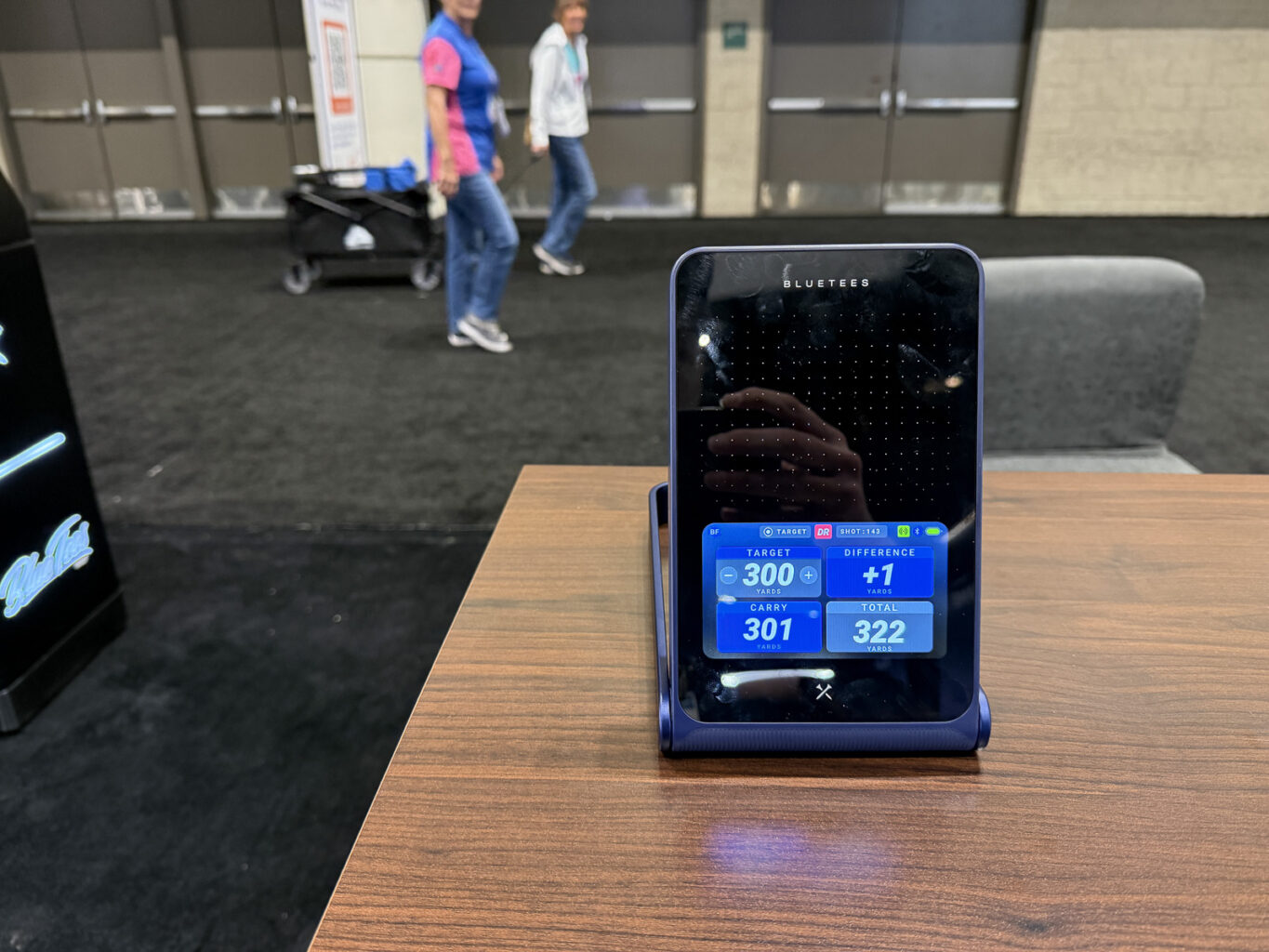
Blue Tees is taking a slightly different approach with its entry into the launch monitor game. At $599, the Rainmaker R1 sits in that competitive mid-tier space, going head-to-head with the Garmin R10, Rapsodo MLM2Pro, and Voice Caddie SC4 Pro.
What stood out to me? The built-in screen looks sharp, it tracks a solid range of metrics, and yes—it’ll have sim capabilities for those rainy days or winter months. But honestly, what impressed me most was what I saw from the app. Blue Tees has clearly put work into the user experience, and it shows. Everything integrates seamlessly within their ecosystem, which has quietly become one of the most robust in golf tech.
I’ve been watching Blue Tees evolve over the past few years, and they’re not messing around anymore. They’re building a legitimate ecosystem of connected products, and the Rainmaker R1 feels like a cornerstone piece. Can’t wait to put this through its paces.
Blue Tees Captain Pro
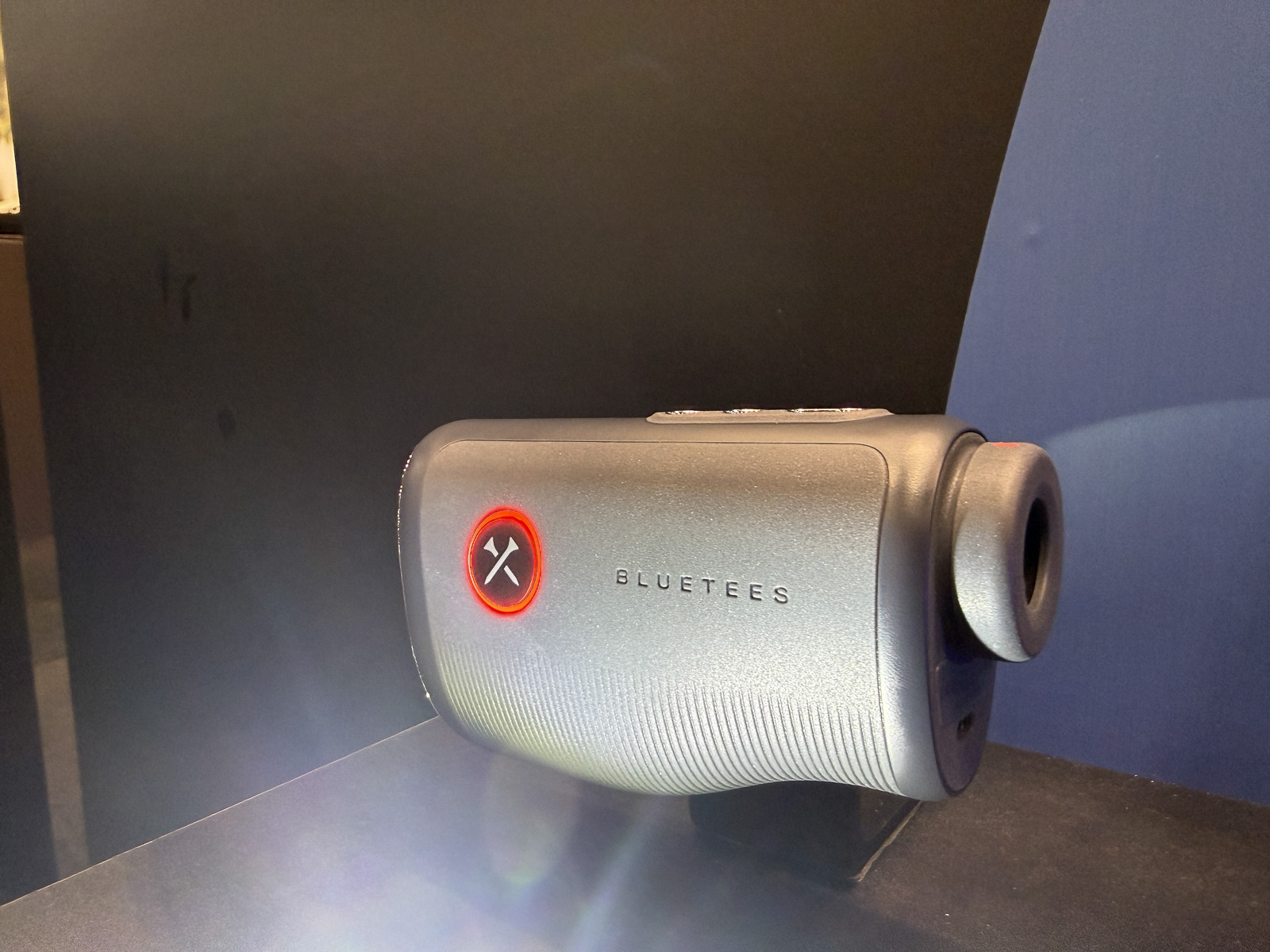
The Captain Pro is Blue Tees’ latest rangefinder, and it’s jumping into the “smart recommendation” game. It’ll pull data from the app and their new launch monitor to give you club recommendations right on the device while you’re out on the course.
Now, I’ll be honest—this falls squarely into that category I mentioned earlier: do we really need this? We’ve seen FlightScope do it. Bushnell’s doing it. And now Blue Tees. It feels like everyone’s racing to solve a problem that might not actually exist for most golfers. But hey, I’m willing to be proven wrong.
That said, in my quick hands-on test, the display and optics looked excellent. If you’re someone who wants all the data and decision-making help you can get, this could be a solid option. And speaking of Blue Tees upgrades—the Player+ Speaker, which has been my go-to golf speaker, just got a nice refresh. Looking forward to testing that as well.
Mileseey GeneSonic Pro
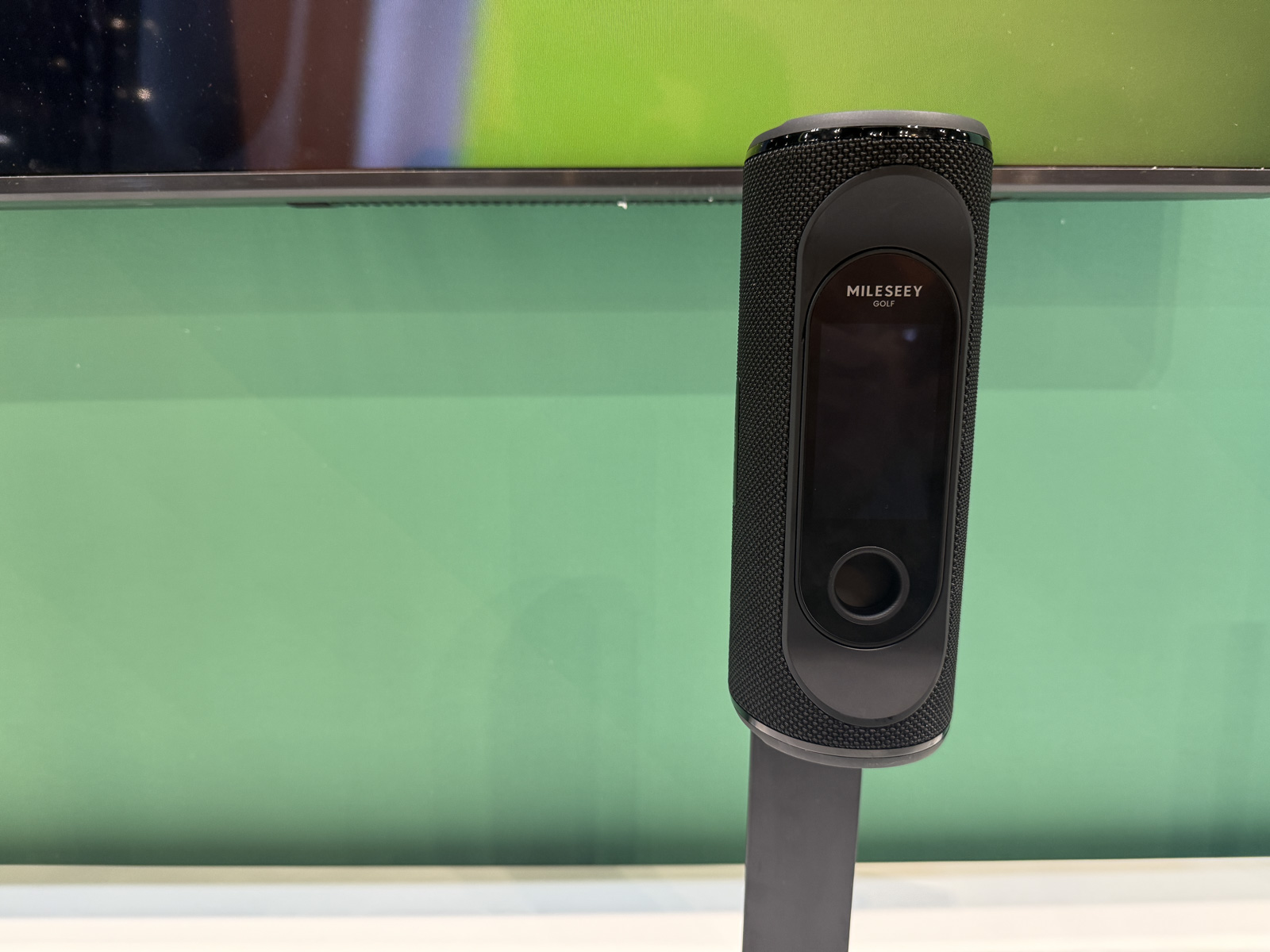
Speaking of Bluetooth speakers, the Mileseey GeneSonic Pro is doing something genuinely useful. It’s a golf speaker with GPS built directly into the unit—meaning you don’t need to pair it with your phone for it to work. Even better? The GPS is a removable remote, which is just smart design.
I actually got to test this one extensively, and my full review is dropping soon. But I’ll give you the headline: I came away really impressed. Yes, it’s pricier than the Blue Tees Player+ or the Bushnell Wingman HD, but that built-in GPS and removable remote functionality make it a worthwhile upgrade for the right golfer.
If you’re someone who wants to streamline what you’re carrying and eliminate the “wait, where’s my phone?” scramble mid-round, this is worth a look.
Garmin G82
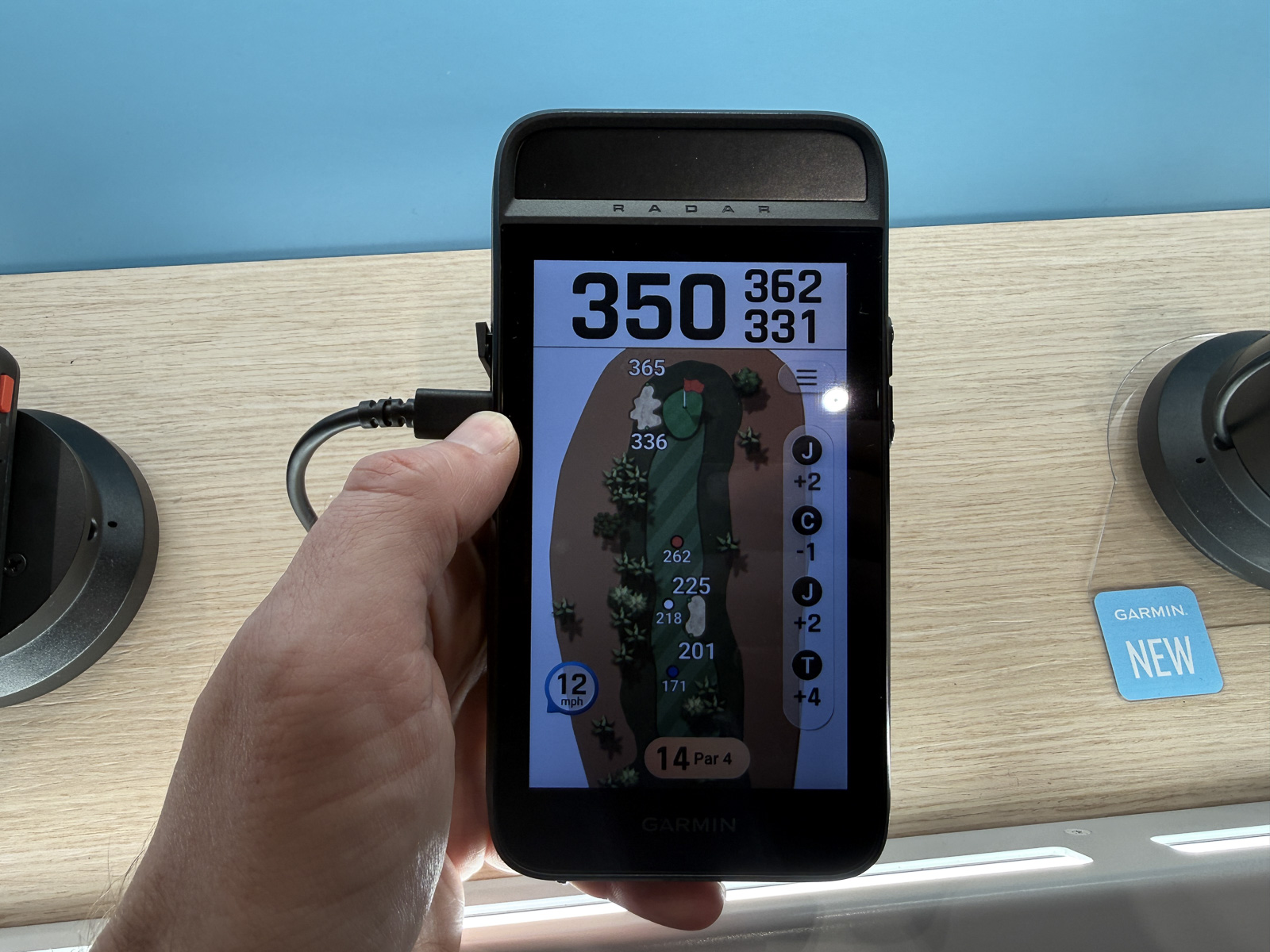
The Garmin G80 was one of those unicorn products—half launch monitor, half GPS device. Nothing else quite like it. But let’s be real: it’s been around for a while, and it was starting to show its age.
Enter the G82, and wow—this thing looks fantastic. We’re talking a high-quality 5-inch screen, basic launch metrics that actually matter, a swing tempo mode, and even putting analysis. At $599, it’s definitely a premium product, but for the right person? This could be a total game-changer.
Here’s the thing: people ask me all the time if there’s a launch monitor you could realistically use on the course. Most are too bulky, too slow, or just not practical. The G82 might be the closest thing to a feasible solution. It’s portable, it’s functional, and it doesn’t make you look ridiculous pulling it out on the tee box. If you’re a data nerd who wants insights both on and off the course, keep this one on your radar.
Garmin J1 GPS Watch
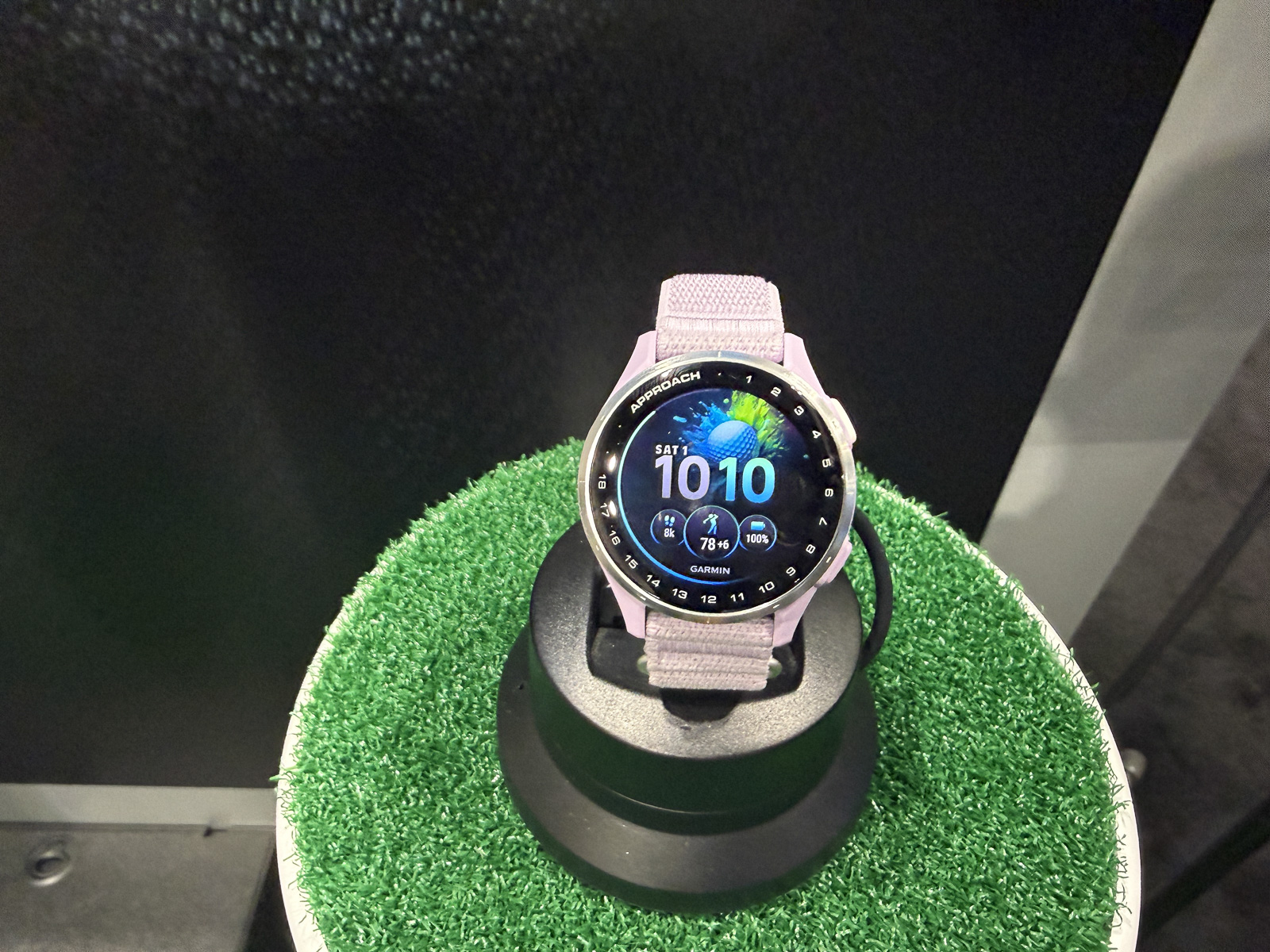
I’ll admit—I was really hoping to see a high end Marq III Golfer at the show. Instead, Garmin surprised us with something I didn’t see coming: a junior-focused GPS watch.
The J1 has some genuinely thoughtful features. Young golfers enter how far they typically hit their driver, and the watch uses GPS to guide them on where in the fairway to tee up based on their skill level and the hole layout. There’s built-in positive reinforcement to keep kids engaged, and—this is smart—a slow play timer to help them learn pace of play early.
It’s an interesting concept, and I love that Garmin is thinking about how to make the game more accessible and educational for the next generation. Curious to see how parents and junior programs adopt this, but the intent is spot-on.
Bushnell V7 Shift
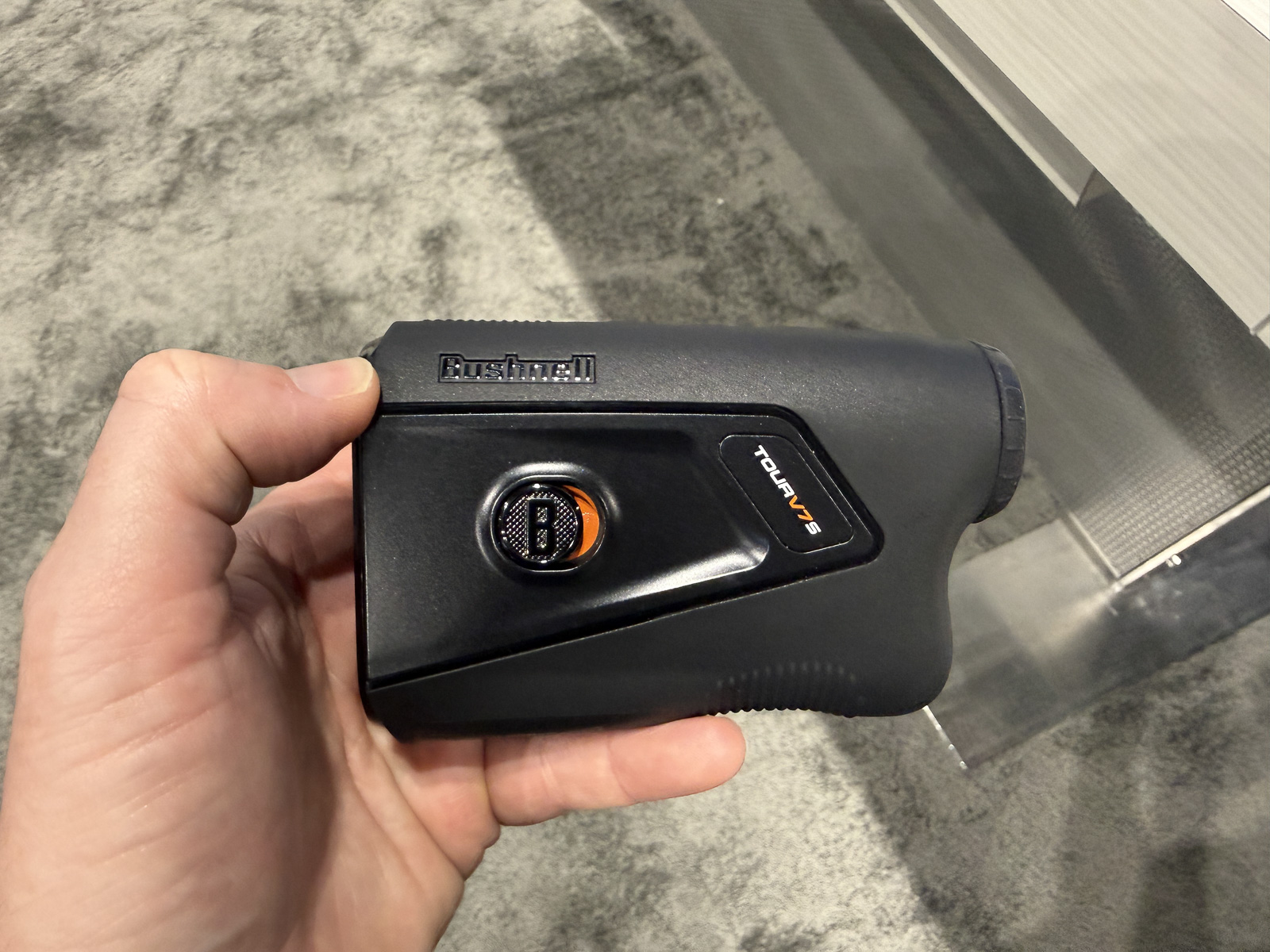
Bushnell’s V Series rangefinders have been the bread-and-butter mid-range option for years. Reliable, accurate, and straightforward. But the V7 Shift is the first one to really depart from the “just a rangefinder” formula.
It’s got Bushnell’s Link technology built in, meaning it can pull your club distances and give you recommendations based on what you’ve told it (or what it’s learned). It’s also the first Bushnell to feature a dual-color OLED display, and in person, it looks sharp—crisp, clear, and easy to read in any light.
Is it necessary? I’m still not convinced. But if you like having that extra layer of decision-making support and want it in a trusted, proven rangefinder brand, the V7 Shift delivers on paper. It’s Bushnell doing what they do best, just with a few smart upgrades for the modern game.
Here’s a full recap of the announcement.
Square Omni Launch Monitor
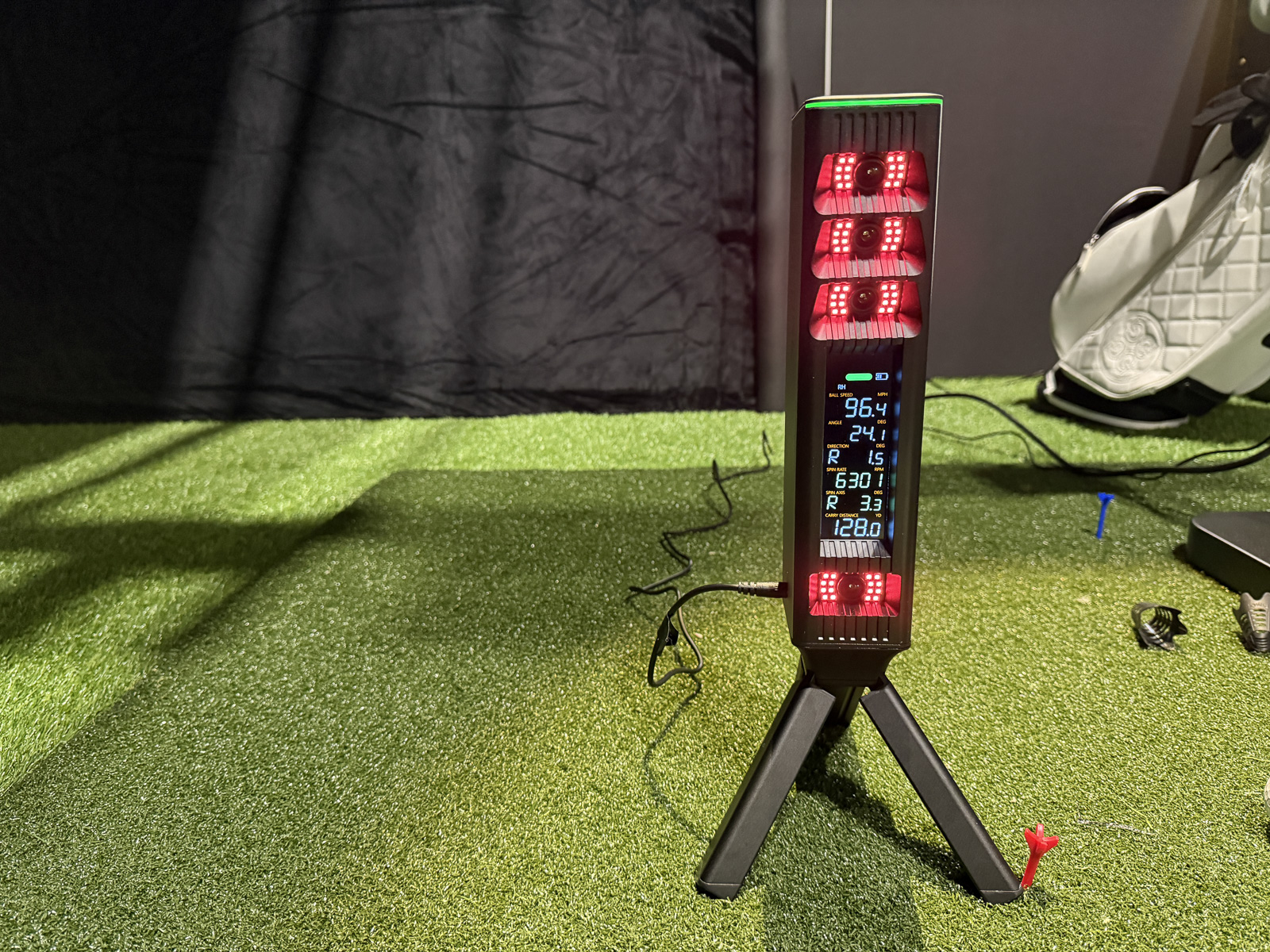
Square is back with a new launch monitor, and this time it’s got a built-in screen. Priced at $1,600, the Omni is positioned as a mid-tier option for golfers who want portability and functionality without going full premium.
I didn’t get to spend as much time with it as I would’ve liked, but from what I saw, it looks like a solid entry for someone wanting a capable indoor/outdoor unit without the $3K+ price tag. The screen integration is clean, and if Square’s track record with accuracy holds up, this could be a sleeper hit.
But at $1600, that’s starting to get into SkyTrak+ and Launch Pro territory – so I’m curious to see if its a significant leap over the original Square.
Rapsodo Overhead Launch Monitor
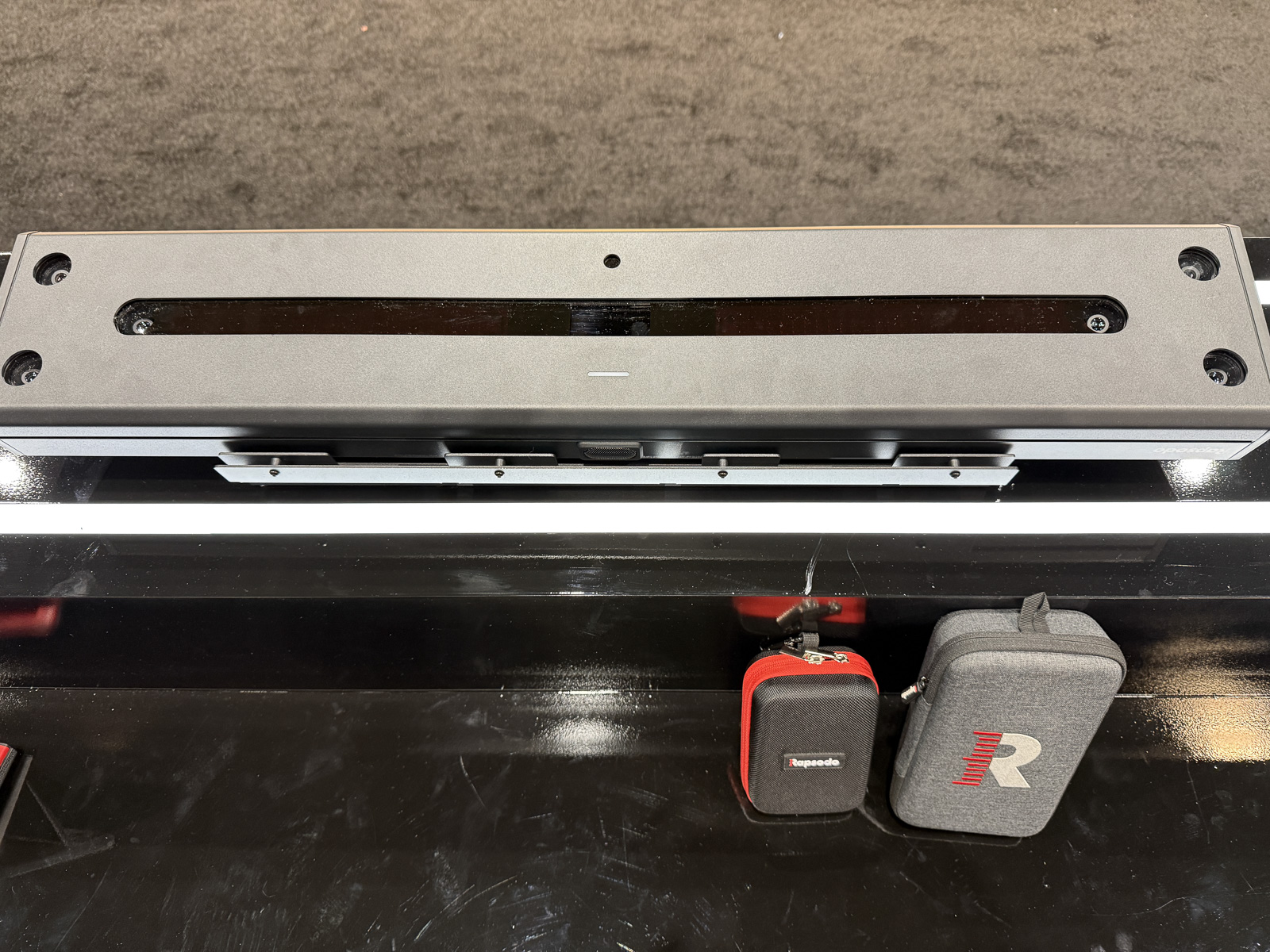
Rapsodo unveiled a new overhead, six-camera launch monitor at the show, and this is a big deal for the budget-conscious sim builder. Pricing came in somewhere between $5,000–$6,000, which—let’s be clear—is a fraction of what you’d pay for a comparable Trackman or Foresight setup.
The new PC software looks fantastic, with a clean interface and solid functionality. But here’s the kicker for existing Rapsodo users: there will be an option to use the new software with the MLM2Pro. That’s a smart move and shows Rapsodo is thinking about their ecosystem long-term.
If you’ve been wanting an overhead unit for your home sim but couldn’t justify the $15K+ price tags, this is worth serious consideration. Rapsodo continues to push the industry toward better value without sacrificing quality.
Uneekor AIMY Software
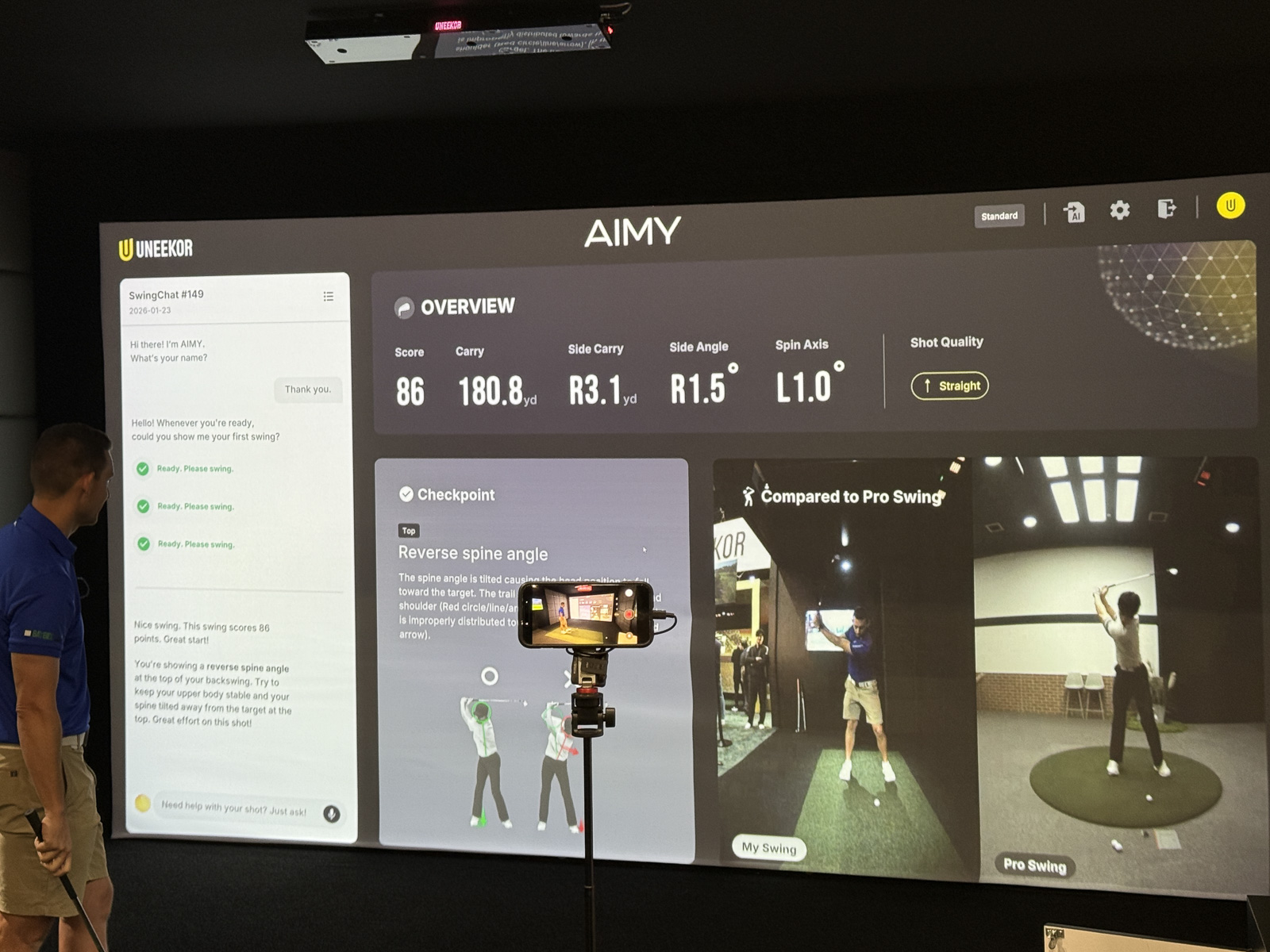
Uneekor is making some seriously impressive moves on the software side, and their new AI coach, AIMY, might be one of the best uses of AI I’ve seen in golf tech.
Here’s what stood out: AIMY will analyze your swing, make thoughtful recommendations, and deliver it all in a conversational, digestible way that doesn’t overwhelm you with data. Too many AI tools in golf throw everything at you at once. AIMY seems to understand that more isn’t always better—better is better.
The full release is still a little ways out, but what I saw at the show was pretty cool. This feels like one of the rare examples of a company leveraging AI in a way that’s actually useful rather than just slapping “AI-powered” on the box for marketing. Keep an eye on this one.
MGI E-Boost
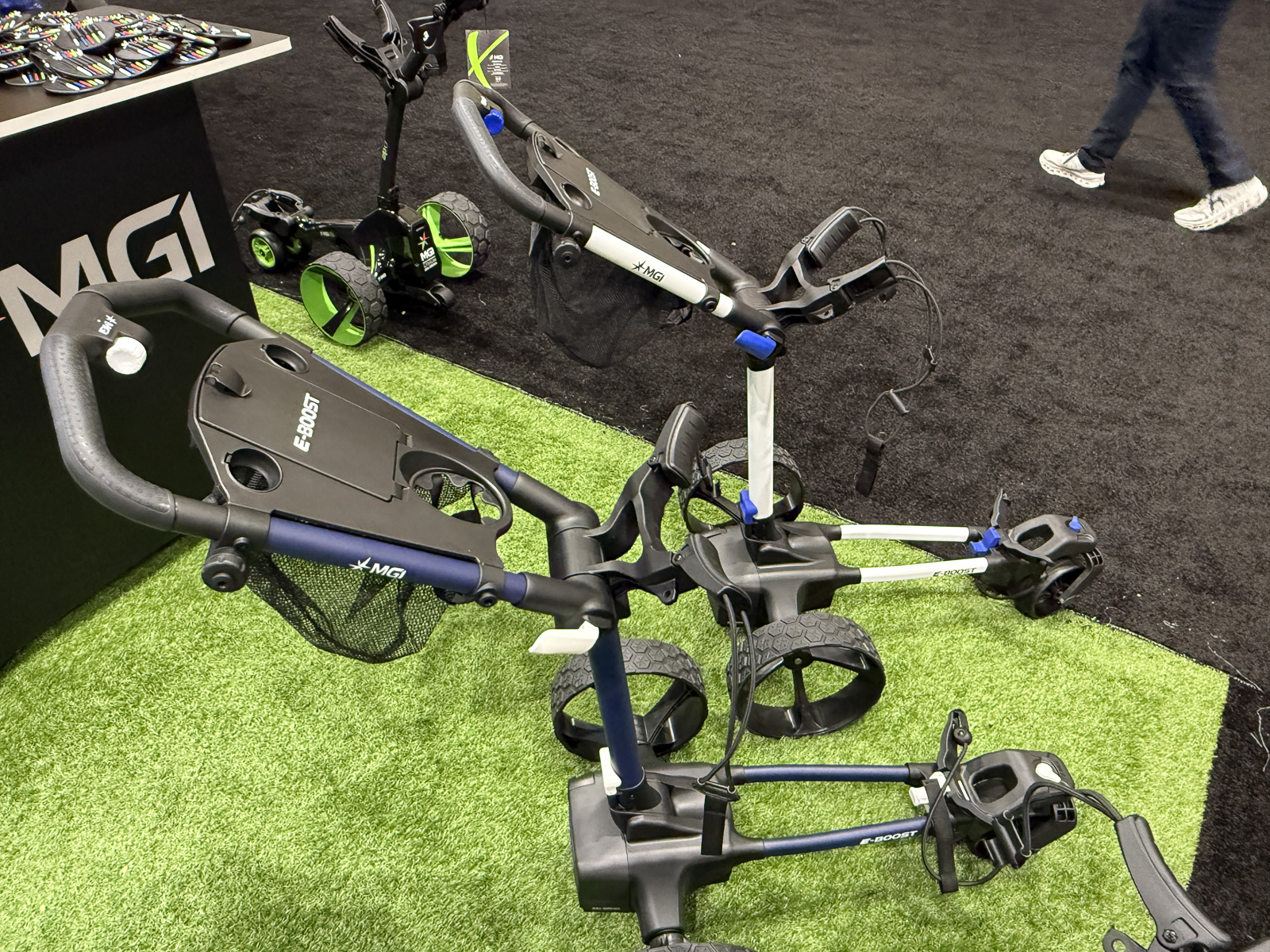
I’m honestly surprised we haven’t seen something like this sooner. Electric caddies are exploding in popularity, but let’s be real—there are still plenty of golfers who aren’t ready (or interested) in committing to that as their full-time golf experience.
Enter the MGI E-Boost. At first glance, it looks like your standard push cart. Clean, traditional, nothing fancy. But hit a button, and suddenly you’ve got a built-in electric motor giving you that extra boost when you need it—uphill climbs, long stretches between holes, or just when your legs are tired on the back nine.
What I loved about this is how sleek and integrated it is. It doesn’t look like a Frankenstein conversion kit. And compared to something like the Stewart Q-Follow or the AT Navigator, it’s far simpler to set up and use. This feels like the perfect middle ground for golfers who want options—not full automation, just a little help when it matters. Smart product.
Vessel Player Air Carbon
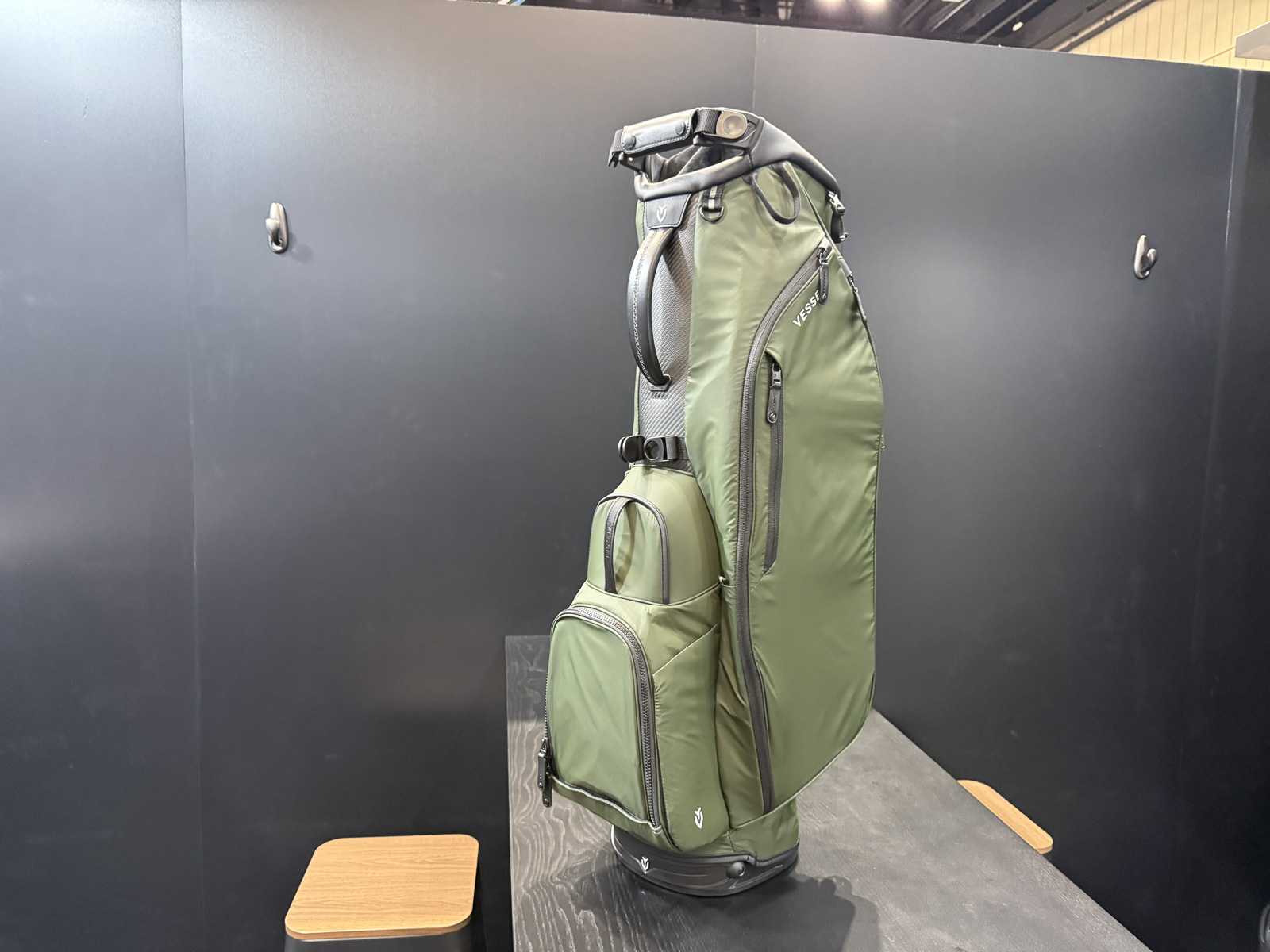
I’m not 100% sure this is the official name, but this is hands down one of the best-looking bags I’ve seen from Vessel. And that’s saying something.
It uses their high-end, lightweight Cordura fabric from the Air series, which is already fantastic. But they’ve blended in carbon fiber elements for added durability and structure, giving it a premium look and feel that stands out on the course.
Functionally, it’s everything you’d expect from Vessel—thoughtful pockets, quality zippers, and that attention to detail they’re known for. But aesthetically? This thing is a showstopper. If you’re the type who cares about how your gear looks (and let’s be honest, we all do), this bag delivers.
Redvanly Performance Pique Polos
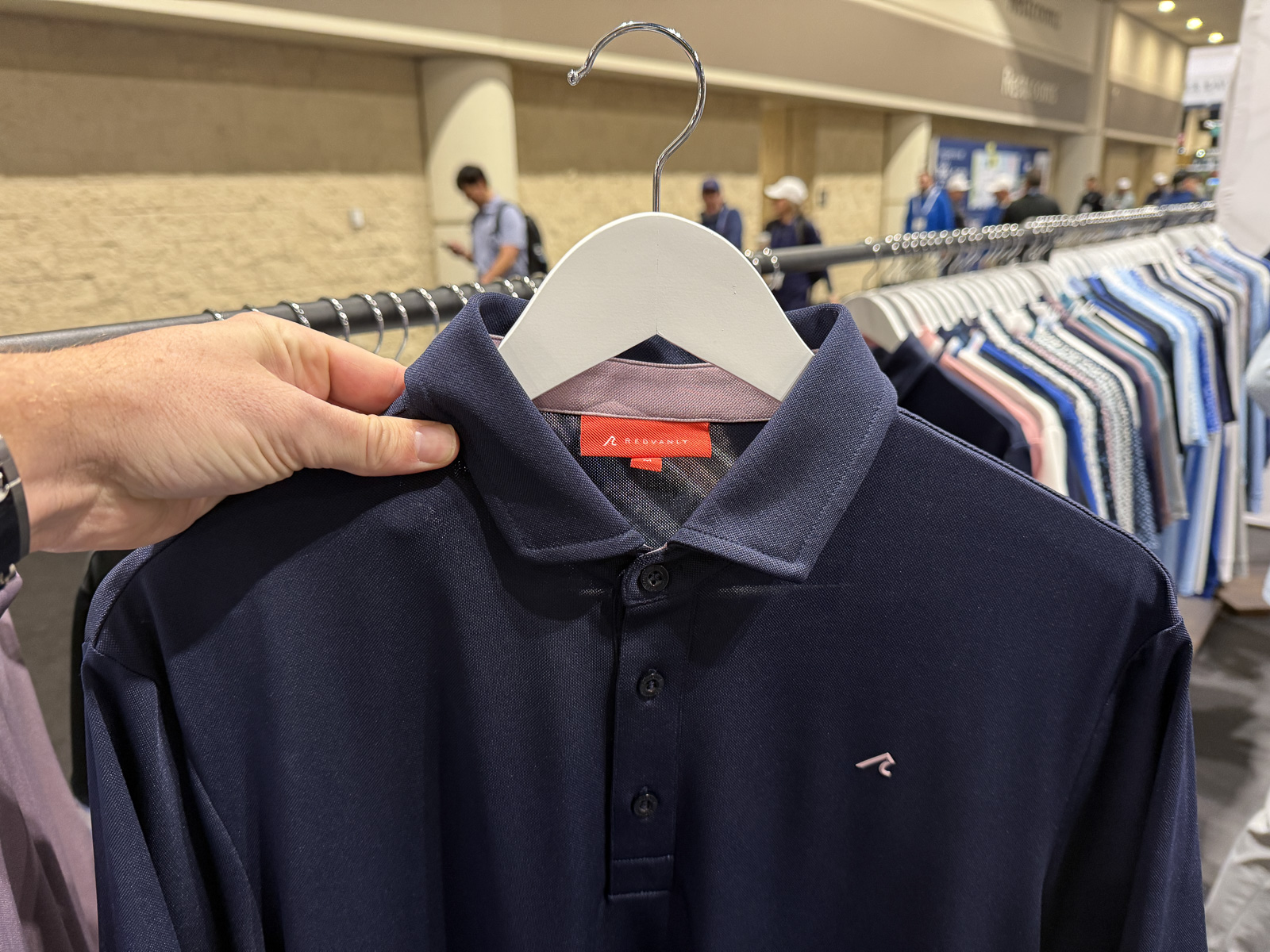
I love Redvanly. Seriously—I don’t think any brand has improved their lineup over the past year more than they have. Their performance polos are fantastic, their fit is on point, and they just keep getting better.
But here’s my thing: I prefer pique fabric for my golf polos. Always have. There’s something about the texture, the structure, the way it breathes and holds up round after round. And up until now, Redvanly hasn’t had a great option in that category.
That just changed. Their new Performance Pique Polo looks incredible. It’s stretchy, breathable, and moisture-wicking—all the performance benefits you’d expect from a modern golf shirt—while still giving you that classic pique feel, structure, and fit. I genuinely can’t wait to get my hands on one and put it through the test. If it performs as well as it looks, this is going to be a staple in my rotation.
Ecco Biom C5
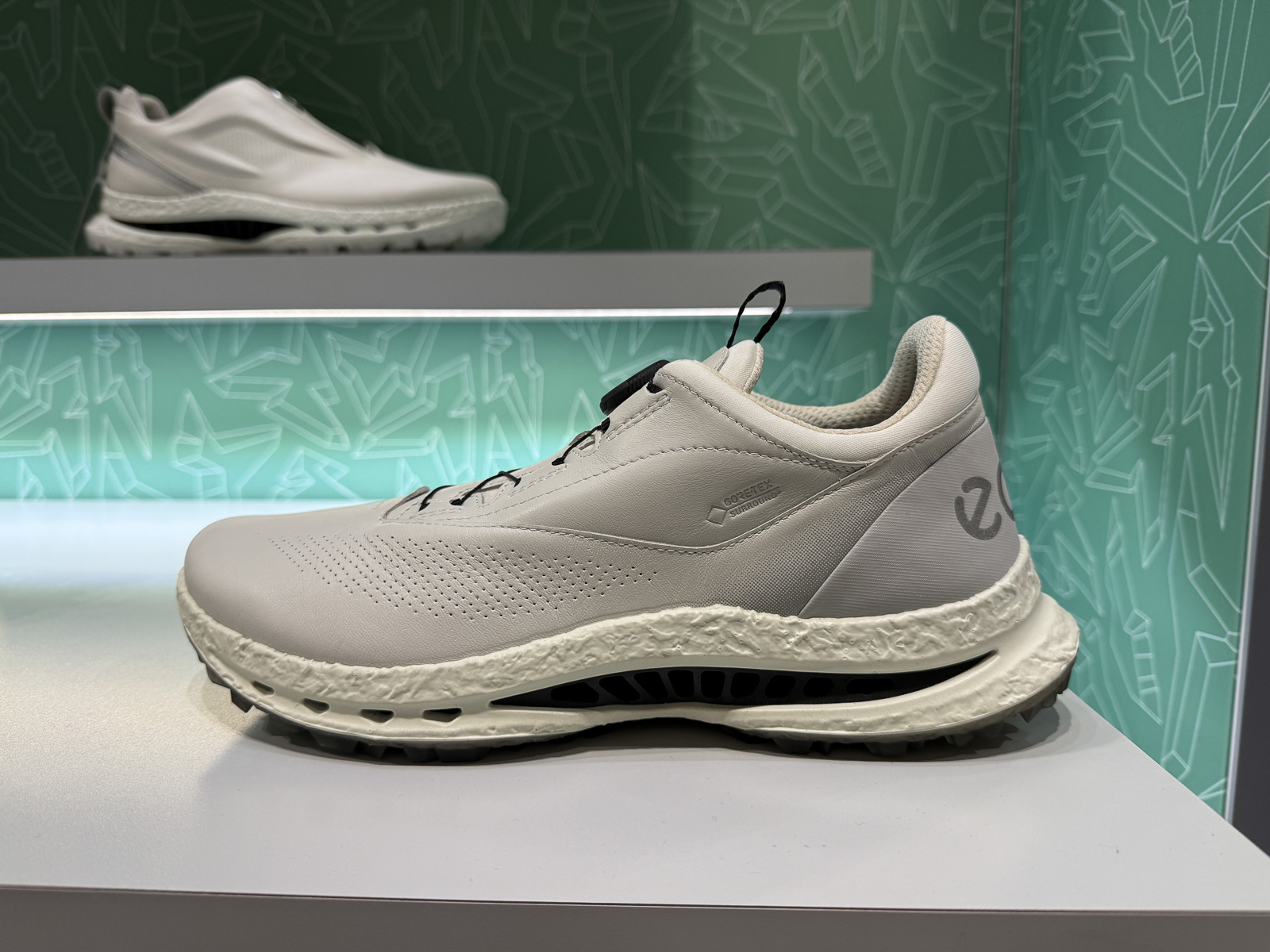
I’ve said it before and I’ll say it again: the Ecco Biom C4 is the most comfortable golf shoe I’ve ever worn. Period.
But it’s also four years old now, and I’ve been patiently waiting for an update. So when I saw the C5 on display, I was pumped. It’s got all the same high-end construction, quality materials, and comfort-first technology that made the C4 (and other Ecco shoes) so successful.
I didn’t get to spend a ton of time with them at the show, but from what I saw, Ecco is sticking to what works while refining the details. If you’ve been holding off on replacing your old Bioms, the C5 should be at the top of your list. Full review coming once I can get a pair on my feet for a few rounds.
Heathlander Shoes
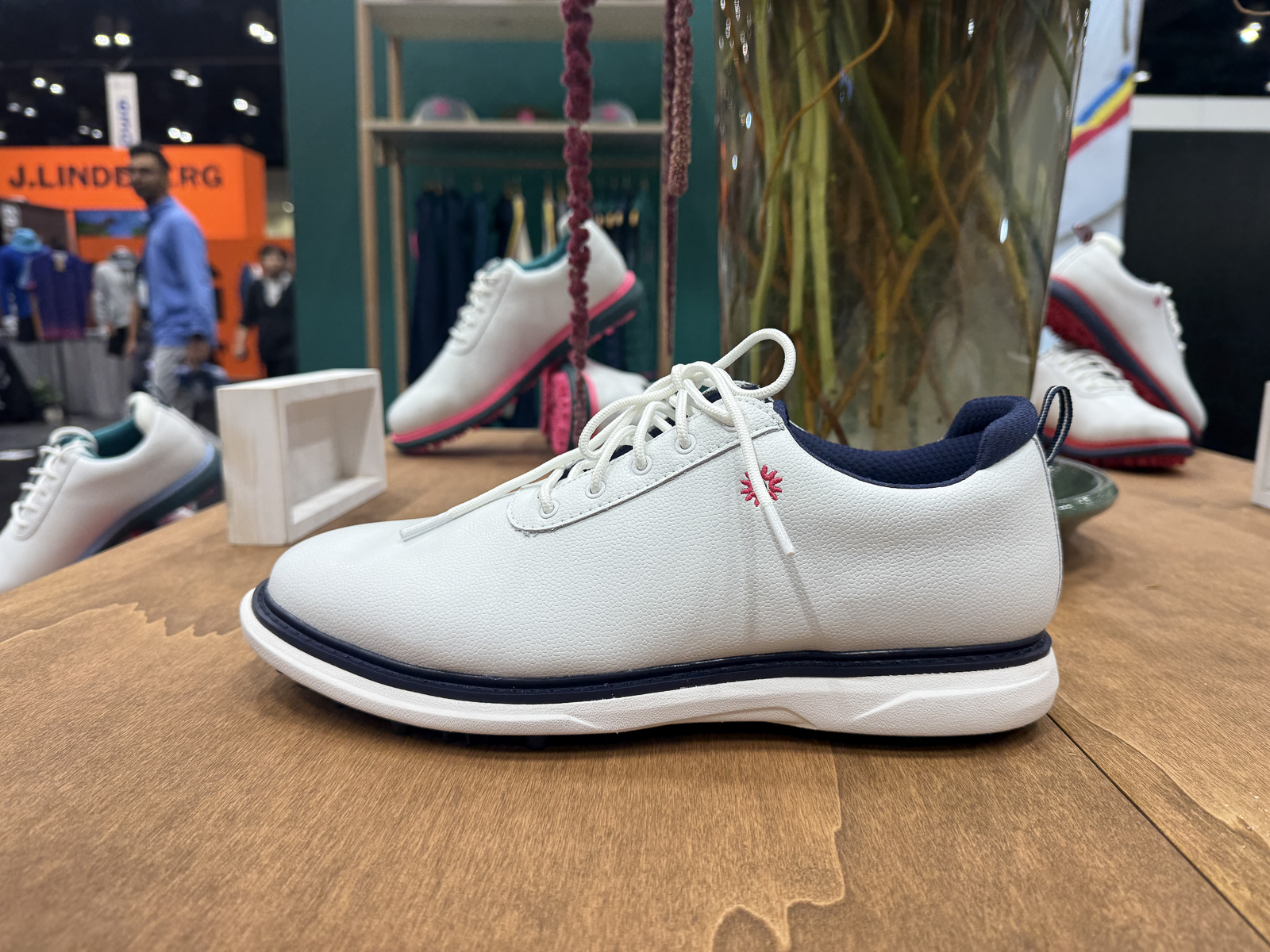
Full transparency: I hadn’t heard of Heathlander until a few weeks ago. Then, in the span of like three days, I had four different people reach out to tell me about them. Naturally, I had to track them down at the show.
And I’m glad I did. The brand has a great story, the shoes look sharp, and they feel really well-made. There’s this blend of modern performance and traditional style that feels slightly adjacent to what G/FORE does with the Gallivanter—but with their own twist.
They’re clearly going after golfers who want something a little different, a little more refined, without sacrificing comfort or functionality. I’m curious to see how they grow, but first impressions were solid. Worth keeping on your radar if you’re looking for something outside the usual Nike/FootJoy/Adidas rotation.
Spyhold Pouch
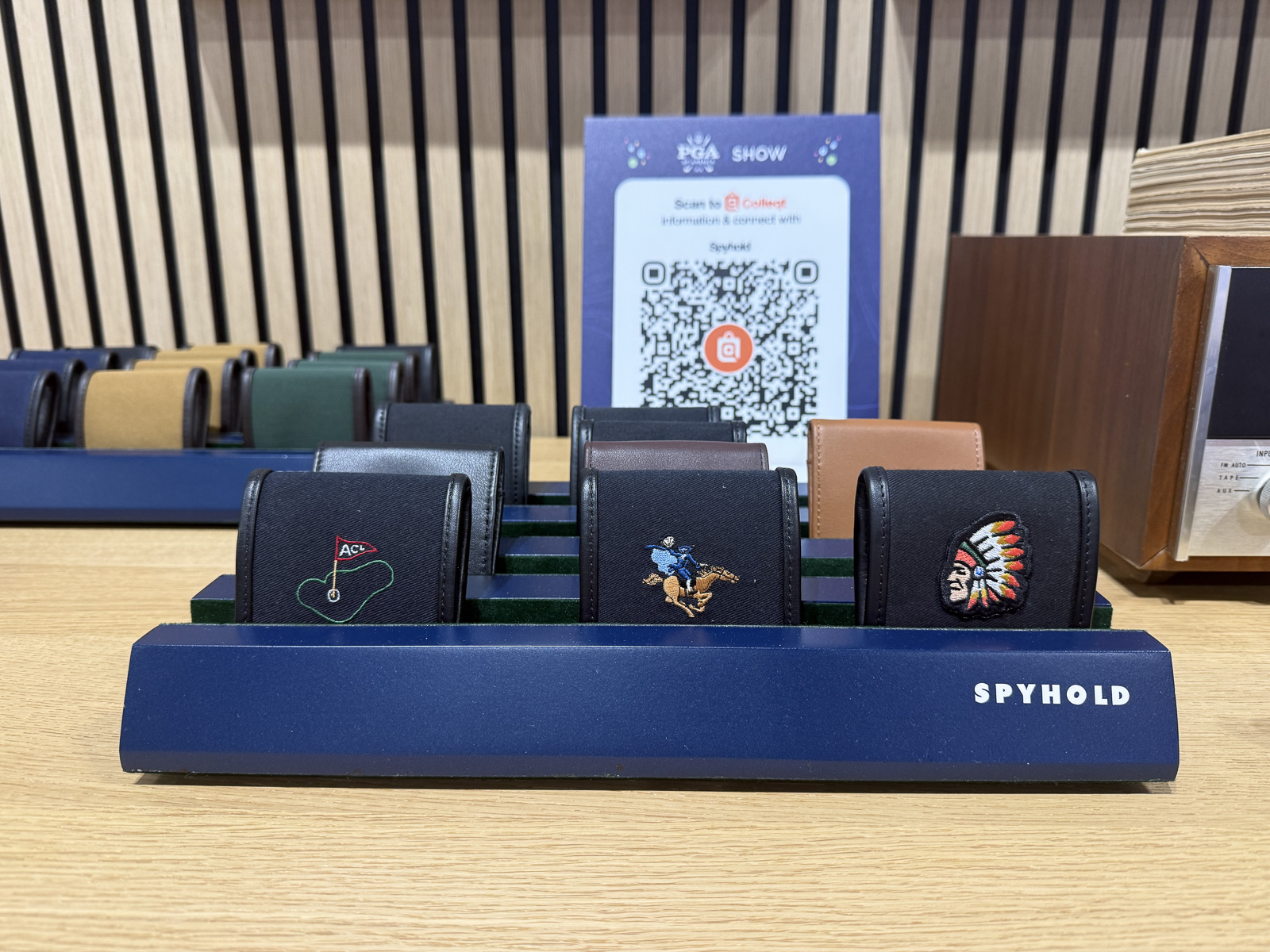
Okay, so I’m not a Zyn guy. But a lot of the people I play with regularly are—and this product solves a very specific, very real problem.
You know those round circles permanently imprinted on the back pocket of your golf pants from carrying a tin of Zyn (or dip, or mints, or whatever)? Yeah. That.
The Spyhold Pouch is a subtle little accessory with a food-grade lining that holds your tin, mints, or whatever else you want to carry without destroying your pants. It’s simple. It’s functional. And honestly, it’s well-designed.
This feels like the perfect impulse buy at a club—grab one with your club’s logo as a little souvenir that’s actually useful. I’m curious to see if they get traction, but I think they’re onto something here. Sometimes the best products solve the smallest problems.
There You Go!
I’m sure there are more items I could throw on this list, but these are the 16 products that genuinely stood out to me—the ones I’m excited to learn more about, test, and report back on.
I’ll do proper, in-depth reviews of as many of these as I can once I get my hands on them, but in the meantime, drop a comment below if you have any questions about any of this stuff. Always happy to chat golf gear.
Now if you’ll excuse me, I need to recover from three days of walking a convention center floor. My feet are begging for those Ecco C5s.

2 Comments
Nice summary. Thought you might have had the shot scope gps device they launched at the show as well. Something you can stick to a buggy or have attached to a trolley. Looked pretty cool too
100%. Forgot about that one, but actually does look really good for the price!