

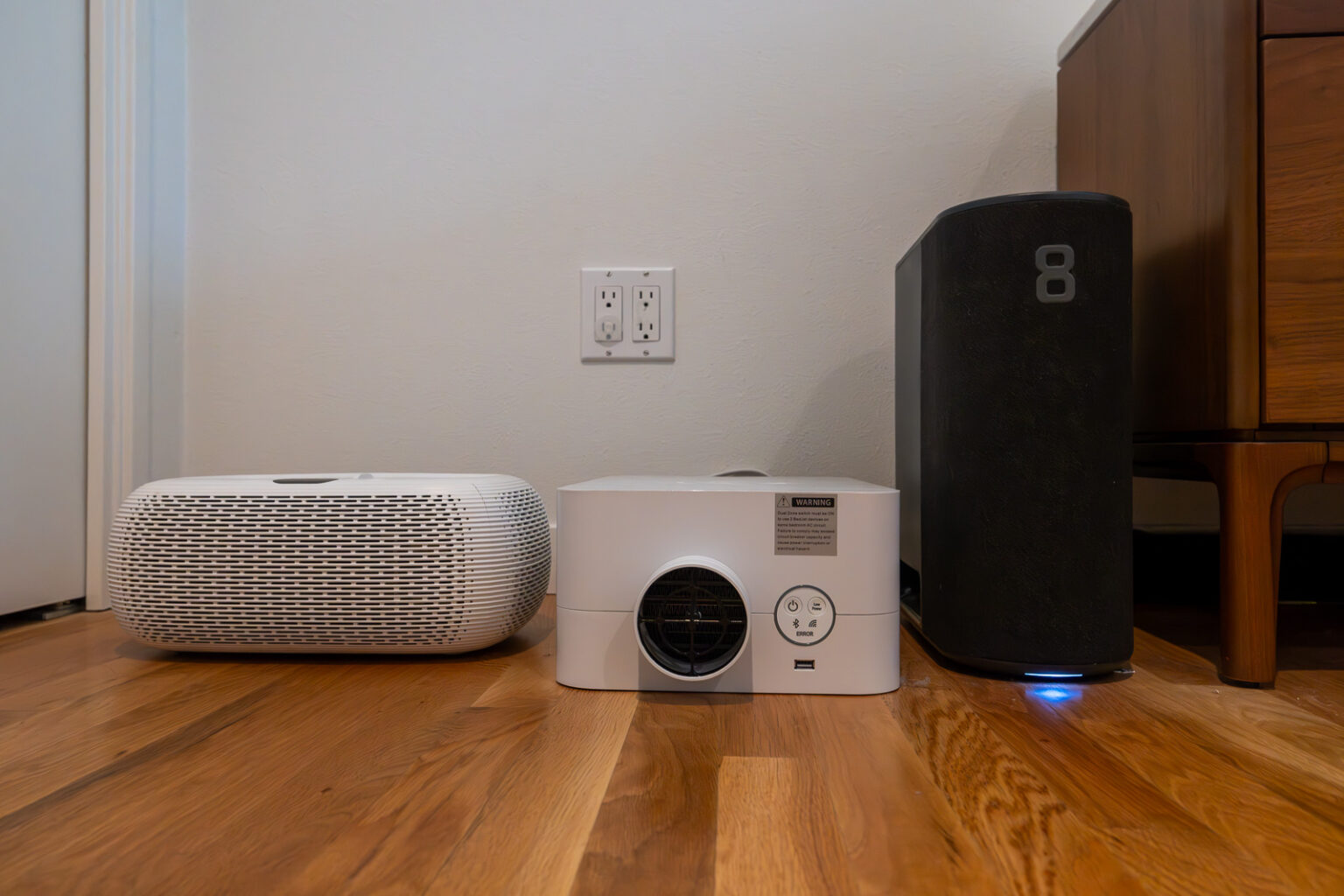
This is a golf blog. I know it’s a golf blog. And yet somehow, over the past several years, I’ve become one of the more credentialed sleep technology reviewers on the internet.
It started with a Sleep.Me Ooler. Then I upgraded to an Eight Sleep Pod 3, which I’ve now used every single night for over four years. And in between, I spent a couple weeks testing the BedJet 3.
If you’ve been going back and forth between these two systems, here’s the honest answer: Eight Sleep is the better product. It isn’t particularly close. But BedJet is a genuinely solid alternative for the right buyer, and I’d never tell someone they wasted their money on one.
Here’s exactly how I’d think through the decision.
The Core Difference: Water vs. Air
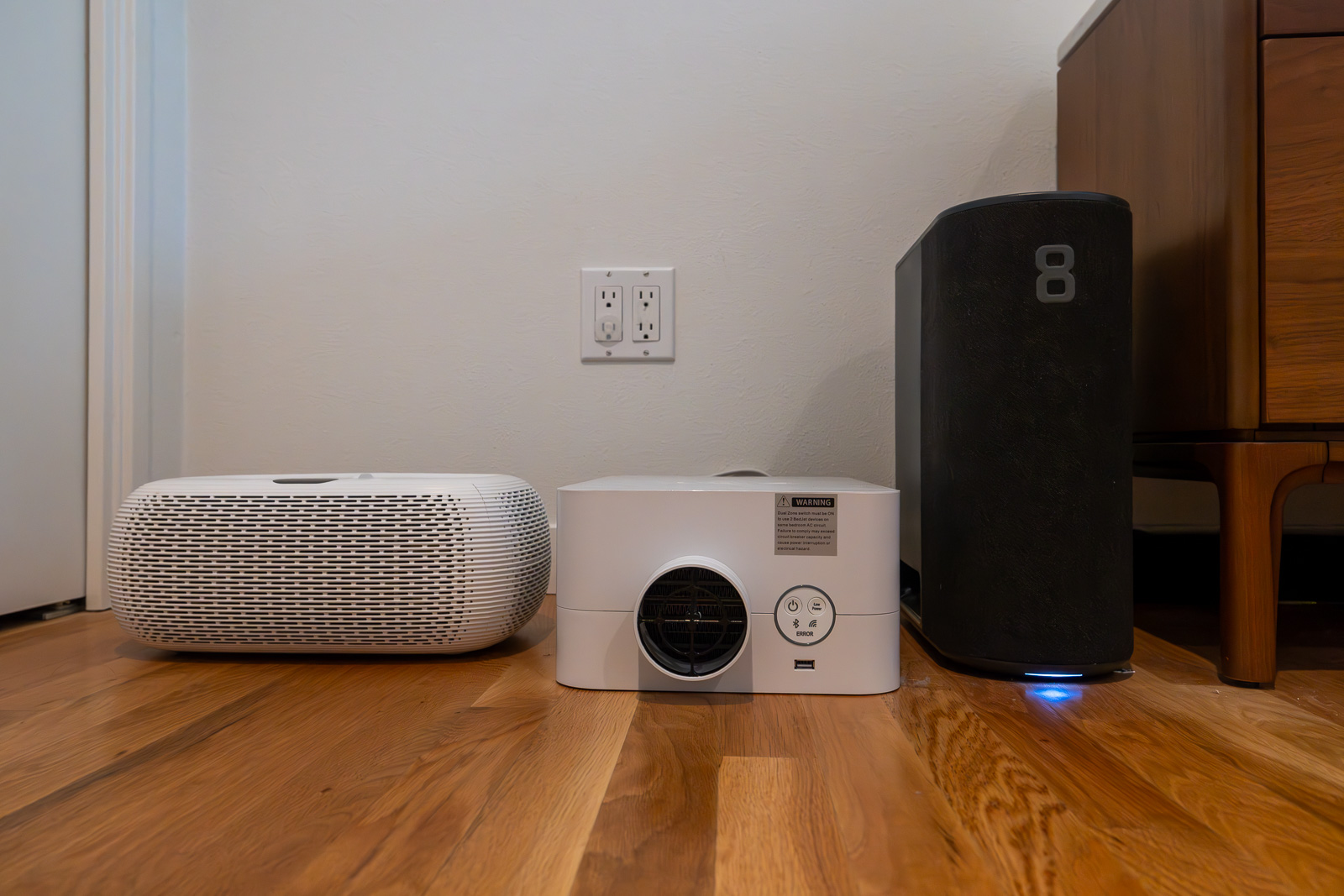
Before you compare prices or features, you need to understand that these two systems work in completely different ways. That difference shapes everything else.
The Eight Sleep Pod is water-based. It circulates water through tiny tubes built into a mattress cover, controlled by a dock that sits beside your bed. That water gets genuinely cold (down to 55 degrees Fahrenheit) or genuinely hot (up to 110 degrees), and you feel it directly against your body through the pad. Each side of the bed has independent temperature control from the same single dock. The current Pod 5 also tracks your sleep without any wearable (HRV, heart rate, sleep stages, breathing rate), and uses an Autopilot feature that automatically adjusts temperature throughout the night based on your patterns.
The BedJet 3 uses air. A unit sits underneath your bed and sends airflow through a hose into a Cloud Sheet that distributes it across your mattress. No water, no tubes in your pad. The thermostat range is 66 to 109 degrees Fahrenheit, but here’s the important caveat: BedJet has no compressor or refrigerant. In cooling mode, it’s circulating room-temperature air. It cannot cool below whatever temperature your bedroom already is.
That single distinction matters more than anything else on the spec sheet.
Eight Sleep: Four Years In, Still the Best Sleep Purchase I’ve Made
My Pod 3 has run every night for over four years. Zero maintenance. Zero parts replaced. Nothing broken. The performance today is exactly what it was on day one.
My wife very rarely cares about the golf gadgets I bring home to test. The Sonos system was “waking up the baby.” The TV “didn’t need to be that big.” But with the Eight Sleep, she has said at least three times: “I love this thing. It’s so much better than the Ooler.”
That’s kind of all you need to know.
The cooling is legitimately impressive. We don’t have air conditioning. In July in Portland, with days above 90 degrees, the Eight Sleep keeps my side of the bed cold. Not just cool. Cold. Set to -9 on the -10 to +10 scale, I’d wake up with the side I’d slept on actually cold to the touch. The newer Pod 4 and Pod 5 are reportedly even better at this, which is honestly kind of hard to imagine.
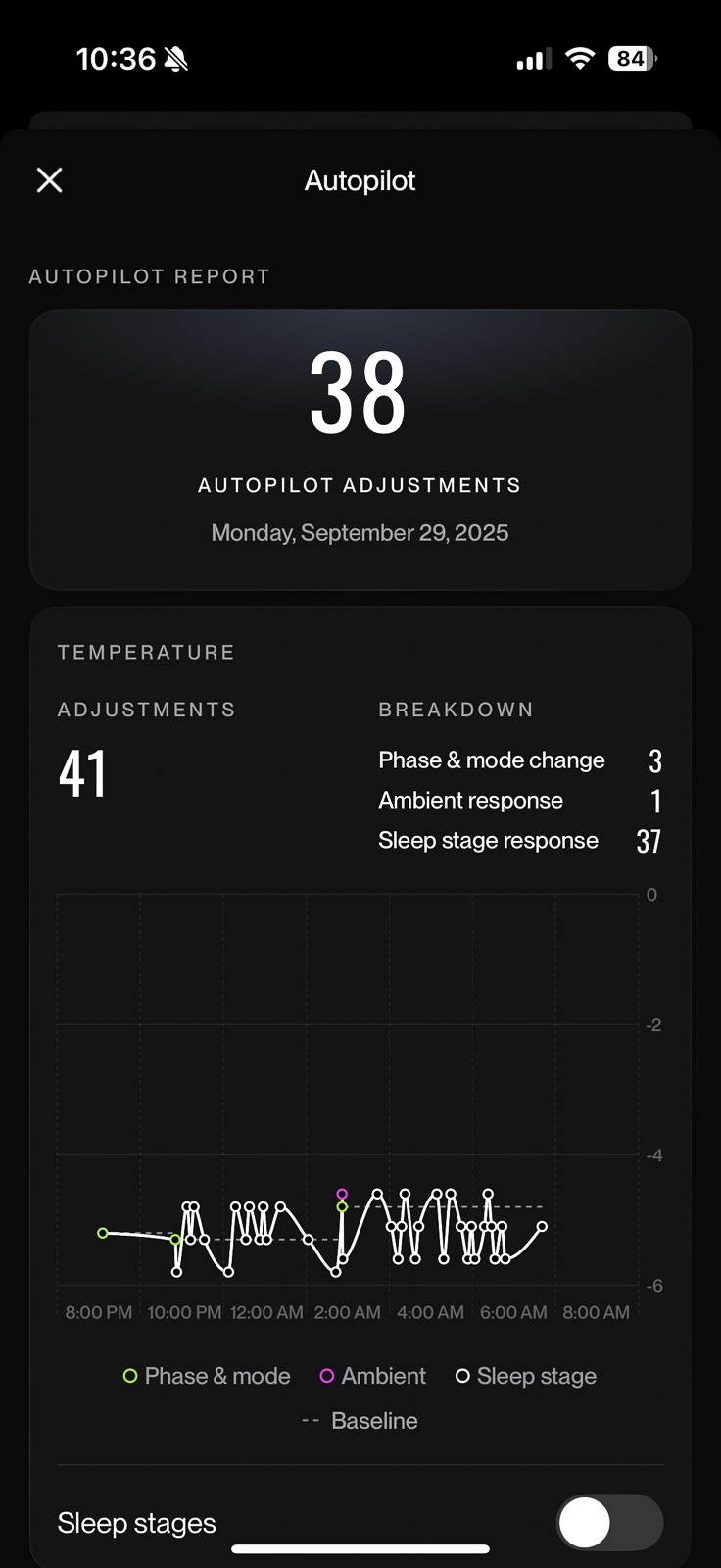
The sleep tracking is the other feature that elevates this from “fancy heated mattress pad” to something I genuinely can’t sleep without. Without wearing anything, it tracks your sleep stages, HRV, heart rate, and breathing rate. I’ve found it to be surprisingly close to what my Garmin watch captures. The Autopilot feature has made over 14,000 micro-adjustments to my temperature settings across four years, silently working to keep me in deeper sleep.
I have it listed as one of my favorite golf recovery tools for good reason. Better sleep compounds. Over months and years, you feel it.
Pricing for the current lineup: the Pod 4 starts at $2,449. The Pod 5 Core (what I’d buy today) starts around $2,849. Eight Sleep requires an Autopilot subscription: Standard is $17/month or $199/year; Enhanced (which extends your warranty to 5 years) is $25/month or $299/year. At the Enhanced level, your first-year all-in cost is roughly $3,148 before any accessories.
All that to say, perfect sleep temperatures and tracking don’t come cheap.
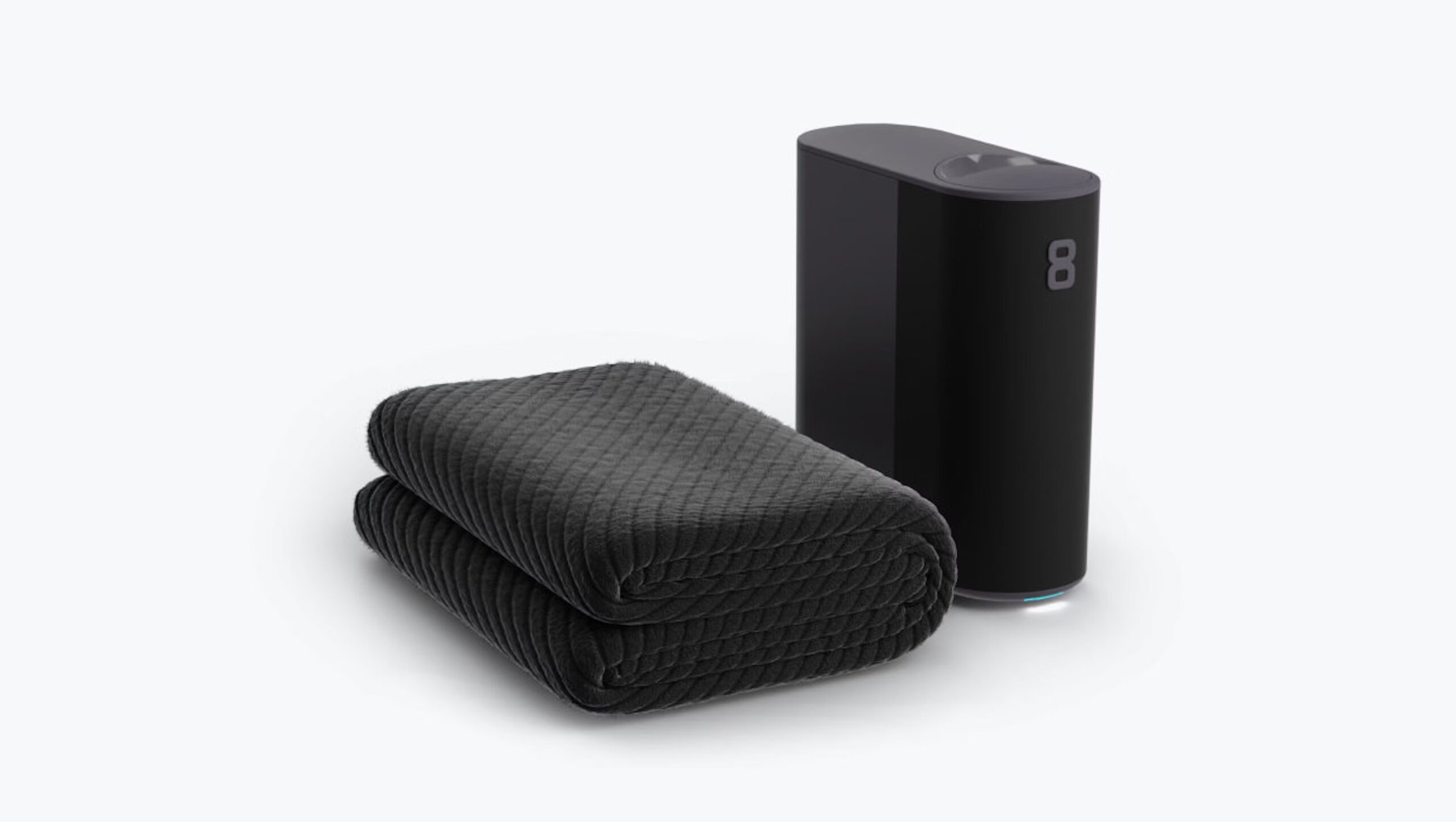
Quite simply, this is the single best investment you could make for your sleep - it's that good. It's expensive, but worth it.
BedJet 3: A Genuinely Good Budget Alternative
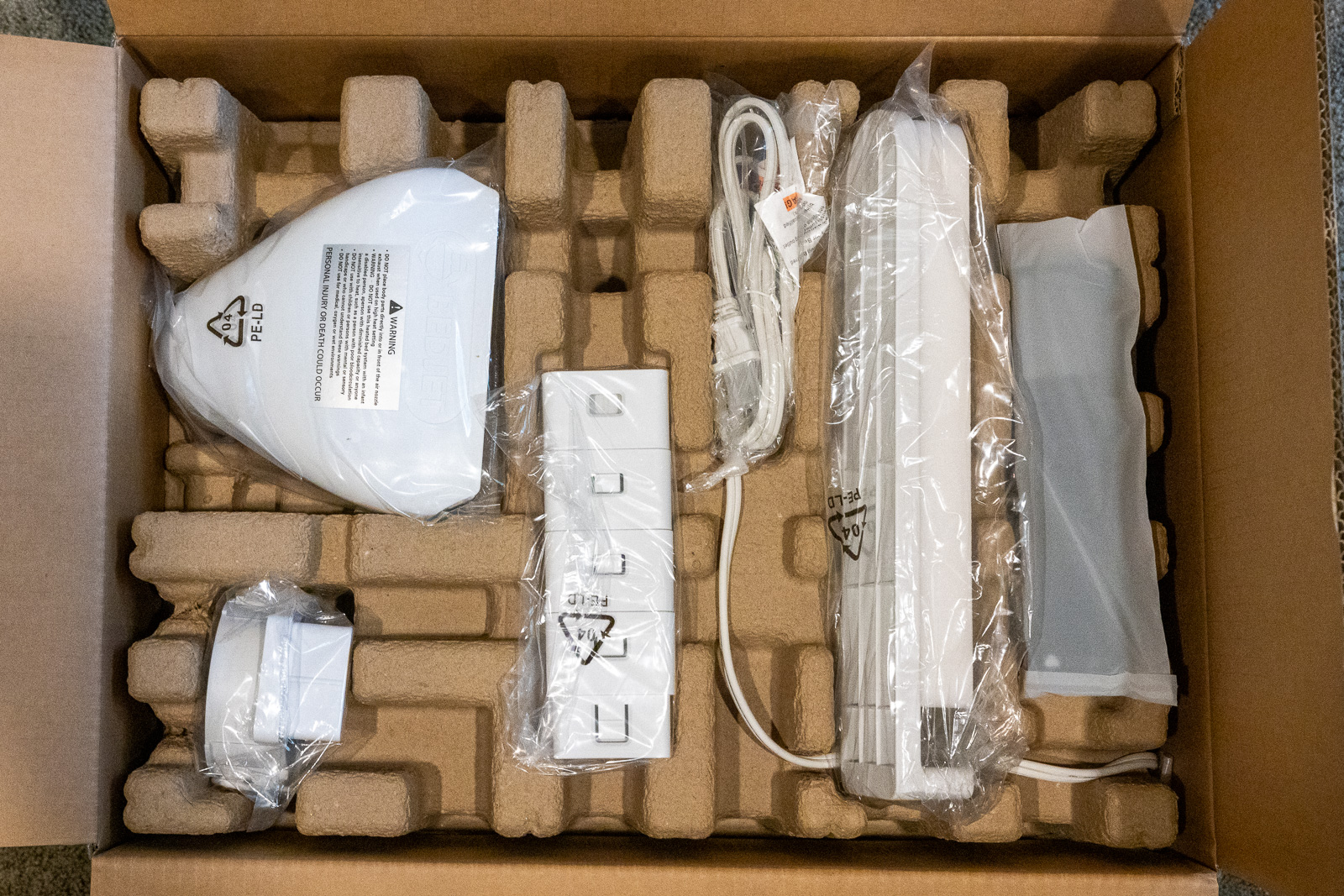
Coming in after the Eight Sleep, I’ll be honest: I expected the BedJet to feel cheap and underwhelming. The packaging is definitely more budget-looking. And the idea of blowing air through a hose into a special sheet seemed like it couldn’t possibly replicate anything close to an Eight Sleep experience.
I was wrong.
Not “just as good as Eight Sleep” wrong. But wrong enough that I’d recommend BedJet without hesitation to someone who doesn’t want to spend $3,000 on a sleep system.
The airflow is different from water in a way some people genuinely prefer. You feel it more like a warm or cool breeze than direct cold or heat against your body. On a cold night, having warm air circulating under your covers is, as I wrote in my full BedJet review, “downright delightful.” For people who get night sweats or just want moisture and body heat moved away from them, BedJet handles this well. It also changes temperatures from cold to warm noticeably faster than water-based systems.
Setup was fast, taking less than 15 minutes from opening the box to running the system. The Eight Sleep took about twice as long, plus three hours of priming before you can actually sleep on it. Not a dealbreaker for Eight Sleep, but worth noting.
The BedJet 3 is currently $499 on sale (regular price $699). The Cloud Sheet, which meaningfully improves air distribution, starts at $139.
And the fact that there is no subscription is by far one of the best selling points here, especially considering how expensive the Eight Sleep subscription has become.
BedJet has also recently launched the BedJet 3 Mini, which is 43% smaller and priced around $478. For couples who want independent temperature control on both sides, the Dual Zone bundle (two BedJet 3 Minis plus a Cloud Sheet) runs about $969 on sale.
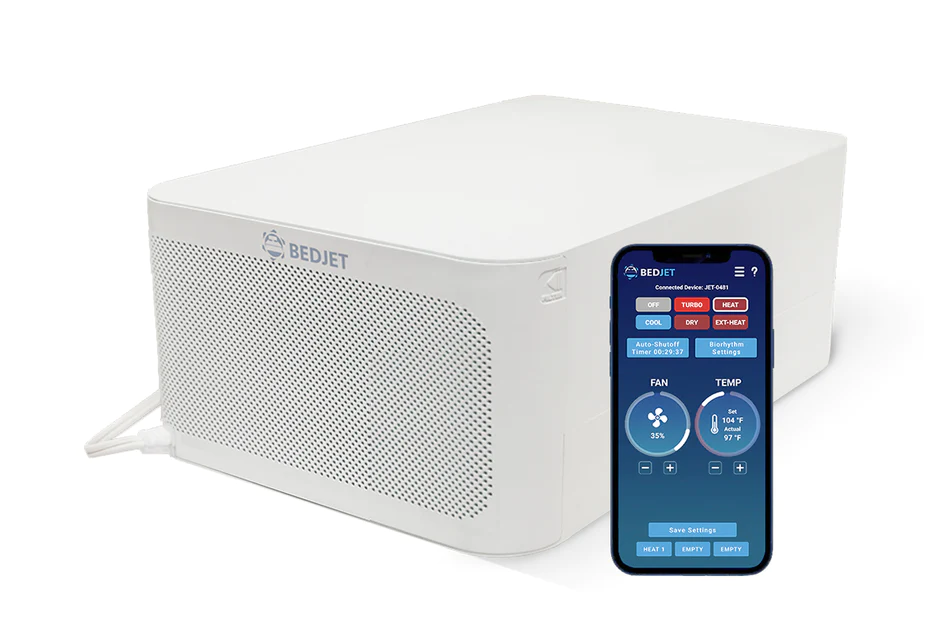
Looking for a sleep system that heats and cools with air instead of water? This is absolutely the one to buy.
Head to Head: The Dimensions That Actually Matter
Cooling Power
Eight Sleep wins, and it isn’t close.
Eight Sleep chills your bed regardless of room temperature. BedJet circulates room-temperature air. On a cool night, BedJet works well. On a hot summer night without air conditioning, it will help move heat and moisture away from you, but it cannot make your bed colder than the room. The Eight Sleep handles hot nights in a completely different league. If staying cool in the summer is your primary reason for buying a sleep system, Eight Sleep is the only answer.
Price
BedJet wins, and it isn’t close either.
The BedJet 3 with Cloud Sheet is around $638 at full price. Eight Sleep’s Pod 5 Core is $2,849 plus the subscription you need to unlock most features. First-year cost for Eight Sleep lands around $3,100 or more. That’s a meaningful gap. Not everyone can spend $3,000 on sleep tech, and it would be condescending to pretend otherwise.
Dual Zone Temperature Control
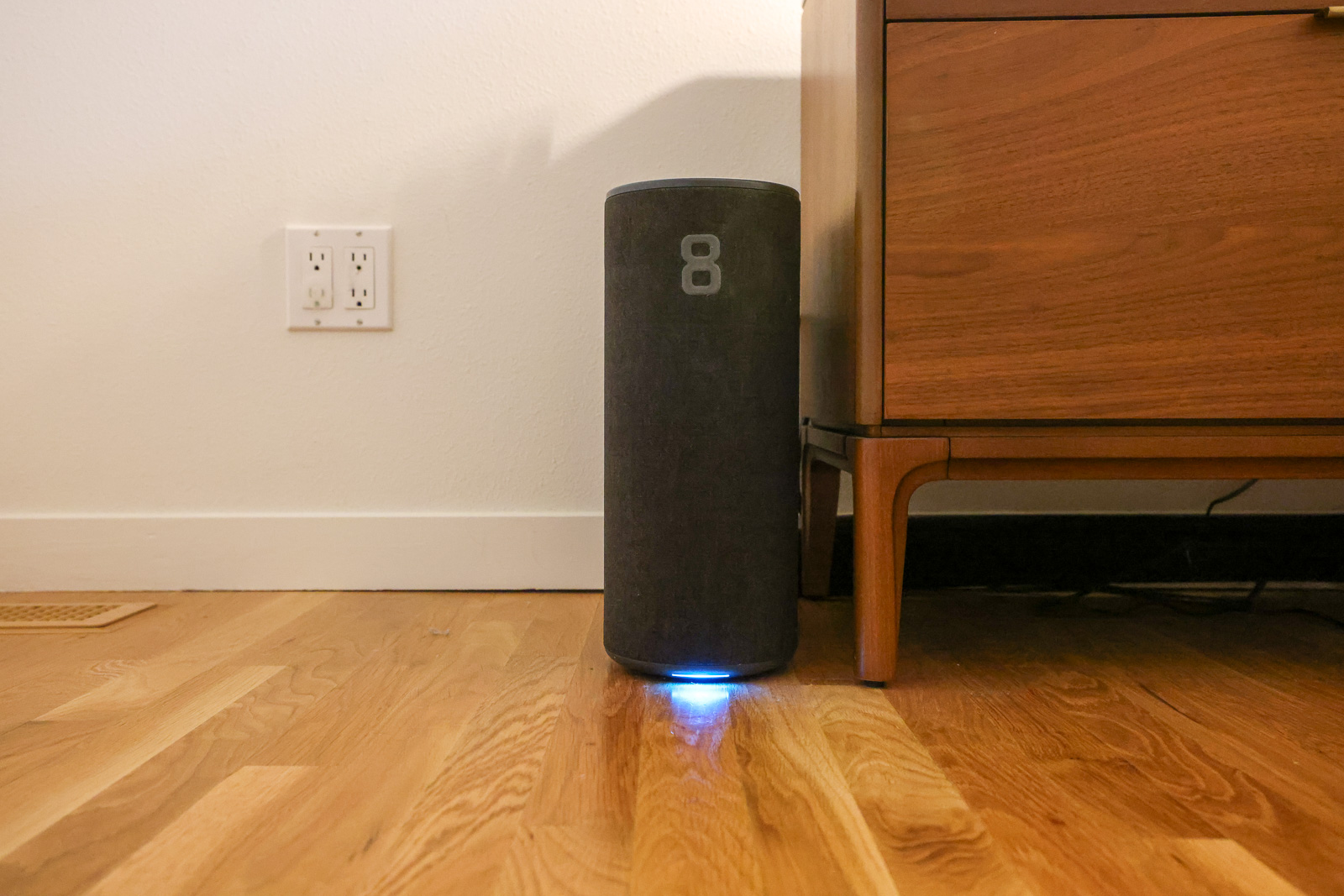
Eight Sleep wins. Dual zones are built into every Pod cover. My wife runs hers warmer; I run mine cold. One dock, no extra hardware.
With BedJet, independent control on both sides means buying two separate units. That’s the Dual Zone bundle at around $969 on sale. Still well below Eight Sleep’s first-year cost, but it removes some of BedJet’s price advantage, especially for couples.
Sleep Tracking and Automation
Eight Sleep wins, easily. BedJet has Biorhythm scheduling (you can set temperature ramps through the night), and that’s genuinely useful. But it’s manual scheduling. Eight Sleep’s Autopilot learns your patterns and adjusts automatically. The non-wearable sleep tracking (heart rate, HRV, sleep stages) is legitimately impressive after four years of using it. BedJet offers nothing comparable in this area.
Noise
This one’s more nuanced. Eight Sleep is nearly silent. You forget it’s there.
BedJet at full cooling power is noticeably loud. At full heating, it’s much quieter. But here’s the thing: cooling mode at full power sounds exactly like a white noise machine. Not a rattling fan. Not the Ooler’s annoying whir. A white noise machine. After a few nights, I genuinely found it soothing. If you already sleep with white noise, you won’t mind it at all. If you’re used to complete silence, give yourself a few nights before making any judgments.
App and Remote Control
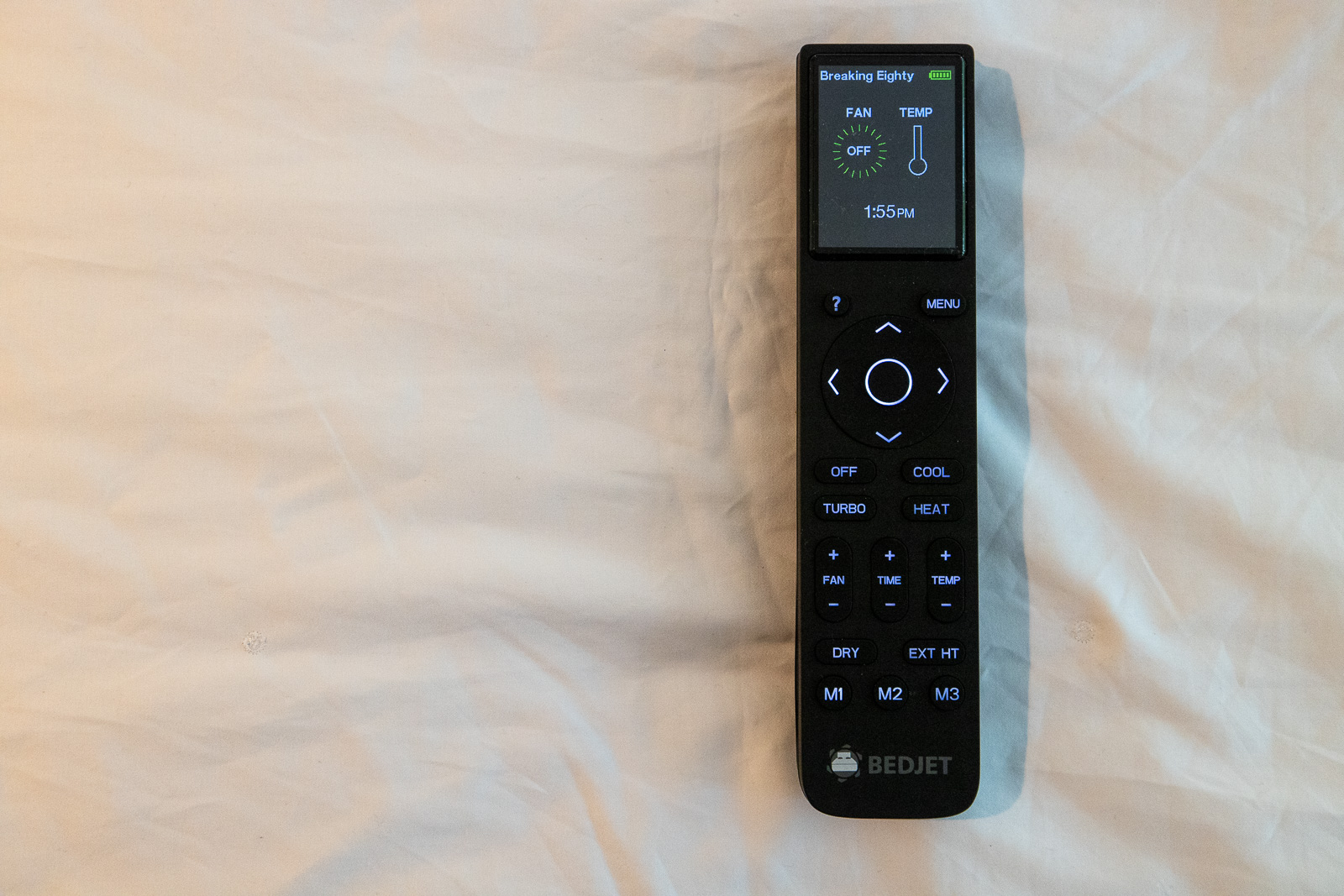
Eight Sleep wins easily. Their app is polished, gets regular updates (they added snoring detection and sleep debt tracking to older Pod 3 covers), and works from anywhere over WiFi. BedJet’s app is functional but looks like it was designed 15 years ago. It’s Bluetooth-only, so you need to be in range. The included LCD remote is a genuine plus for BedJet though since you can control everything without touching your phone at all.
The Subscription Question
BedJet: no subscription, ever. You buy the unit and that’s the entire transaction.
Eight Sleep: you need a subscription to unlock most of what makes the system worth buying. Standard is $17/month or $199/year. Enhanced is $25/month or $299/year and extends your warranty to 5 years. I understand the frustration here. Paying a membership fee after spending nearly $3,000 on hardware feels like a lot. Subscriptions are everywhere now. I’ve reviewed enough products with them (like Arccos) to know they never get less annoying.
But in four years of use, I’ve concluded the Eight Sleep subscription is worth it. The AutoPilot adjustments and sleep tracking are the features that make this system genuinely transformative. If you’re going to spend $2,849 on the hardware, build the subscription into your budget from day one. Otherwise you’re leaving the best parts of the system sitting on the table.
What I Don’t Love About Each
Eight Sleep: The Honest Downsides
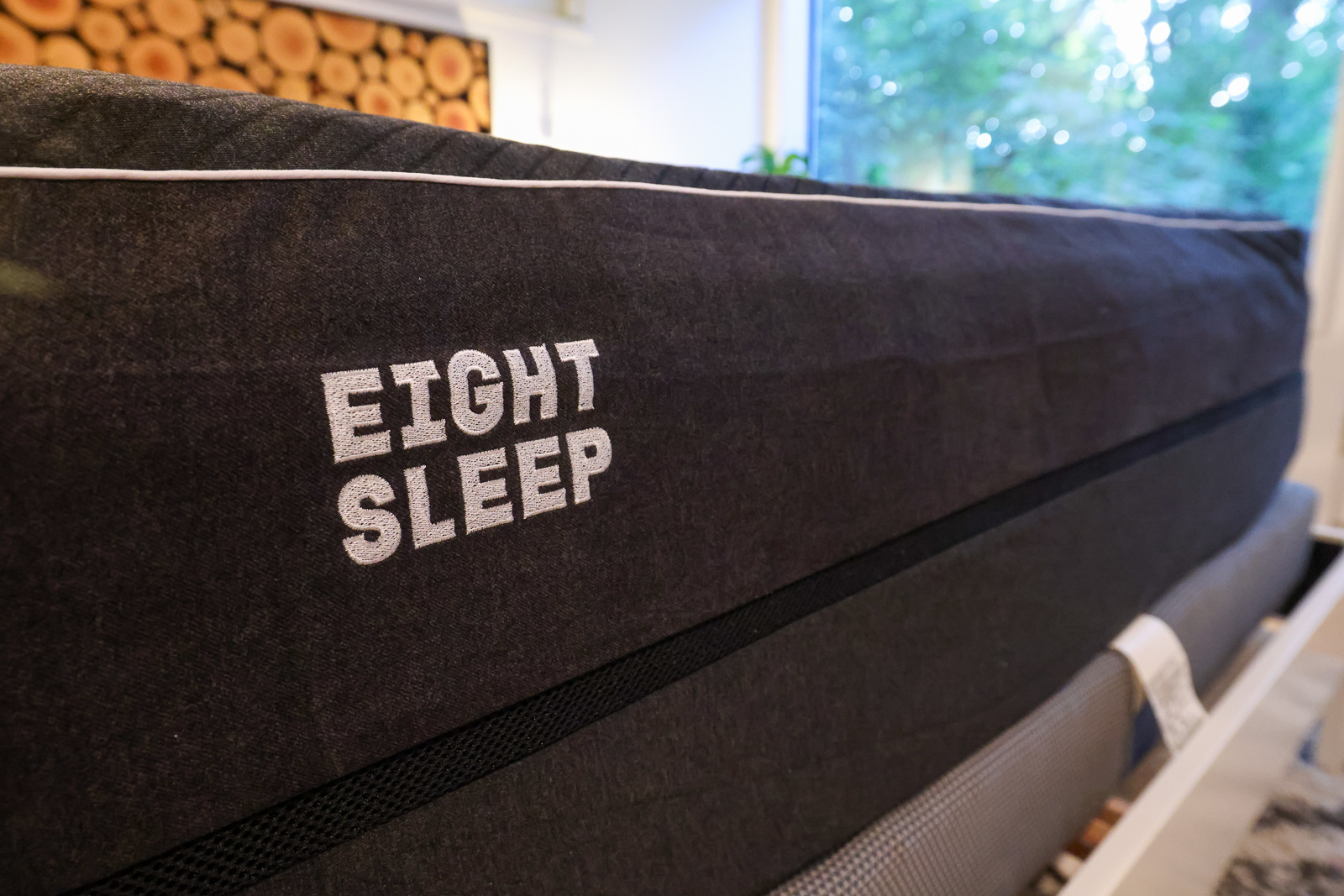
The price is steep. Even for someone who believes in the product (I do), $3,100 in year one is a real ask. The dock doesn’t fit under the bed, so it sits beside it taking up floor space. And occasionally, as I’m falling asleep, the dock makes a sound like water dripping. It doesn’t happen every night, and after four years I barely notice it anymore, but it sounds like a slow leak and takes some adjustment.
Also: the Pod 3 had no manual controls on the cover. You needed your phone to adjust anything. The Pod 4 and Pod 5 fixed this with tap-to-control on the cover itself, which is a genuinely good upgrade.
BedJet: The Honest Downsides
The cooling ceiling is the biggest limitation. If your bedroom is 78 degrees and you want a cold bed, BedJet cannot deliver that. It moves hot air away from your body, which helps, but it won’t chill your bed. The hose also protrudes slightly under the covers, which bothers some people who like a perfectly made bed. And if you and your partner both want independent temperature control, you’re buying two units, which changes the math on BedJet’s cost advantage considerably.
So Which One Should You Buy?
Buy the Eight Sleep if:
- You sleep hot and want genuine cooling power regardless of room temperature
- You sleep with a partner who has a different temperature preference
- Sleep tracking and automatic temperature adjustments matter to you
- Budget isn’t the deciding factor
- You want a completely silent system
Buy the BedJet if:
- You’re working with a budget well under $1,000
- You prefer airflow over direct-contact temperature control (some people genuinely do)
- Your bedroom stays reasonably cool already and you mainly want heat and moisture management
- White noise doesn’t bother you
- You want zero ongoing subscription costs
- You sleep alone, or you and your partner are happy with the same temperature
My Honest Take
If my Eight Sleep died tomorrow, I would order a Pod 5 Core immediately. After four years of nightly use, I know exactly what I’m getting, and I’ve felt the cumulative impact on how I sleep and how I recover. In over 12 years of reviewing products on Breaking Eighty, this is one of my all-time favorites.
Actually, last night at dinner a friend asked “What expensive purchase have you made that’s actually worth the money.”
My immediate answer, was the Eight Sleep.
But I would never tell someone on a real budget to stretch to afford it. BedJet delivers genuine value at a fraction of the price. The heating is effective. The airflow feels good. Setup is fast and painless. There’s no subscription. If you primarily want to stay warm, or manage heat and moisture on cooler nights, BedJet will do that job well.
Eight Sleep if you want the best. BedJet if you want a solid option without the sticker shock.
Both of my individual reviews go into much more detail if you want to dig deeper before deciding: the Eight Sleep review covers four full years of experience, and the BedJet 3 review walks through everything from setup to real-world performance. I also have a full roundup of my favorite golf recovery tools if you want to see how these sleep systems fit into a broader picture.
Quite simply, this is the single best investment you could make for your sleep - it's that good. It's expensive, but worth it.
Looking for a sleep system that heats and cools with air instead of water? This is absolutely the one to buy.
This page contains affiliate links. This means that if you click a link and buy one of the products on this page, we may receive a commission (at no extra cost to you!) This doesn’t affect our opinions or our reviews. Everything we do is to benefit you as the reader, so all of our reviews are as honest and unbiased as possible.
